No, yeast does not work in a septic tank in any way that matters. Flushing a packet of active dry yeast down the toilet is generally harmless, and it will not damage your system, but it will not clean your tank, break down solids, reduce sludge, or help your drain field either. The idea sounds sensible at first, because yeast is alive and it does useful work in bread and beer, yet a septic tank is a very different place from a warm bowl of dough. The yeast cells die off within a day or two in the dark, oxygen free environment of the tank, and while they are alive they can only ferment simple sugars and starches. They cannot digest grease, proteins, paper fiber, or the complex solids that actually build up in a septic system. A healthy tank already has everything it needs, and the best thing you can do for it is far less exciting than a kitchen remedy. Regular pumping, careful water use, and keeping the wrong things out of your drains will do more for your system than any packet of yeast ever could.
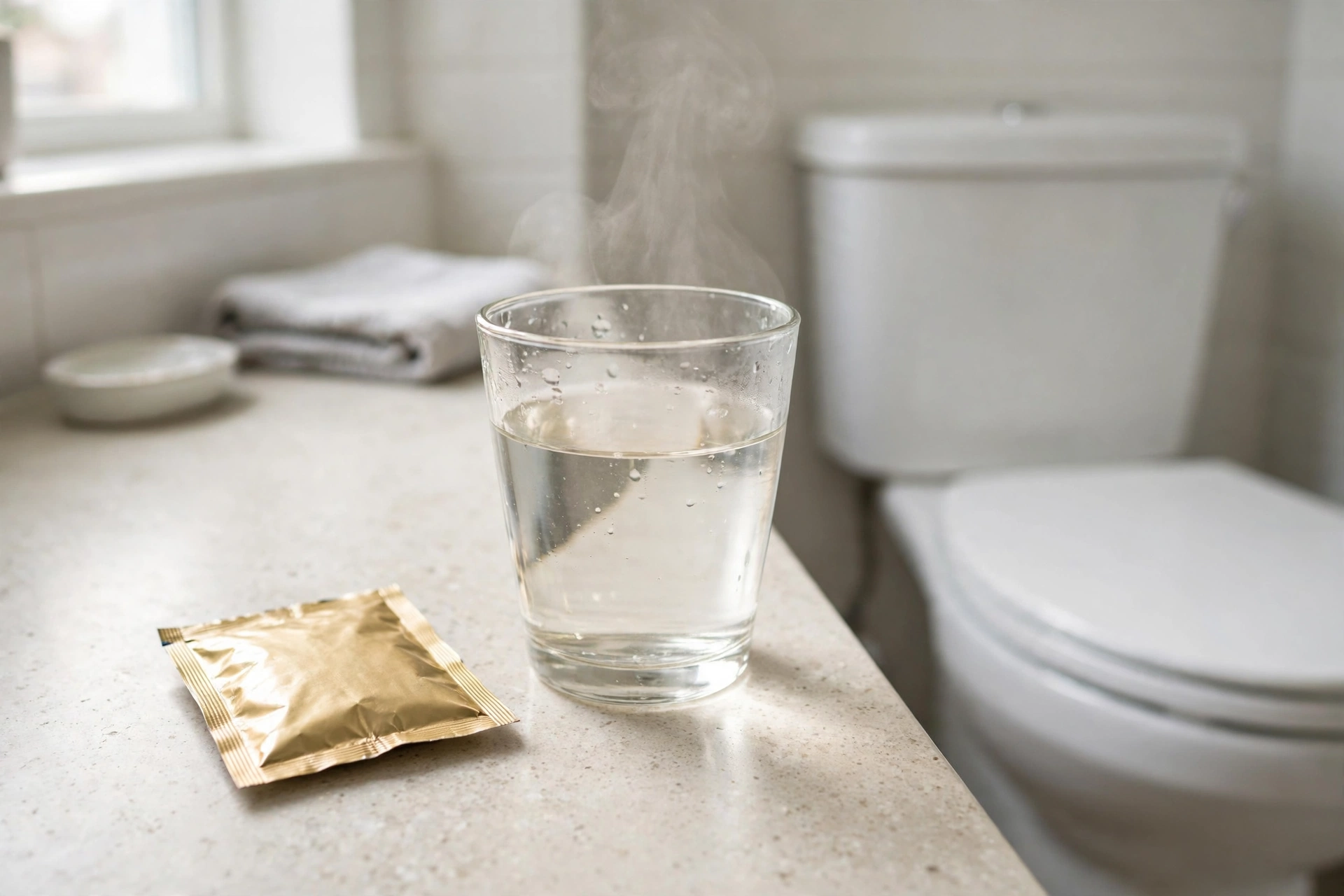
If you have heard this tip from a neighbor, a forum, or a well meaning relative, you are not alone. It is one of the most repeated pieces of septic advice on the internet, because it feels like the simple, cheap fix every homeowner hopes for. A packet of yeast costs very little and it seems natural, so it is easy to believe it must be good for the living system under your yard. The trouble is that feeling right and working right are two different things. This article looks at what yeast actually is, how a septic tank really works, what research has found, and what you should do instead.
What Yeast Actually Is
Yeast is a fungus, not a bacterium. The kind used in the home remedy is Saccharomyces cerevisiae, the same active dry yeast sold for baking bread. In a warm, sugary environment it comes to life quickly. It feeds on simple sugars and starches and turns them into alcohol and carbon dioxide gas. That gas is what makes bread dough rise and gives beer its fizz. It is a remarkable little organism, and it does its job well in the kitchen, where the conditions suit it. Warmth, oxygen, and a steady supply of simple sugars are all present in a bowl of dough, and the yeast can multiply fast enough to change the mixture in a visible way within an hour or two.
None of those conditions exist in a septic tank. The tank is dark, cool, and almost entirely free of oxygen. The food available there is not simple sugar. It is a mixture of grease, proteins, cellulose from toilet paper, soaps, and the many other substances that leave a home through its drains. Yeast has no way to break down most of that material. It lacks the enzymes needed to digest fats and complex proteins, and it cannot chew through paper fiber. Even the sugars it could eat are present only in small amounts, and they are quickly used up. Once the yeast runs out of food it can use, it stops working and dies.
How a Septic Tank Really Works
A septic tank is simpler than most people expect, and understanding it makes the yeast question much easier to answer. Wastewater from your home flows into the tank, which is a buried, watertight container, usually made of concrete, fiberglass, or plastic. Inside the tank, the contents separate into three layers. The lighter materials, such as grease and oils, float to the top and form a layer called scum. The heavier solids sink to the bottom and form sludge. In the middle sits a layer of mostly clear liquid, which flows out of the tank and into the drain field when new water enters.
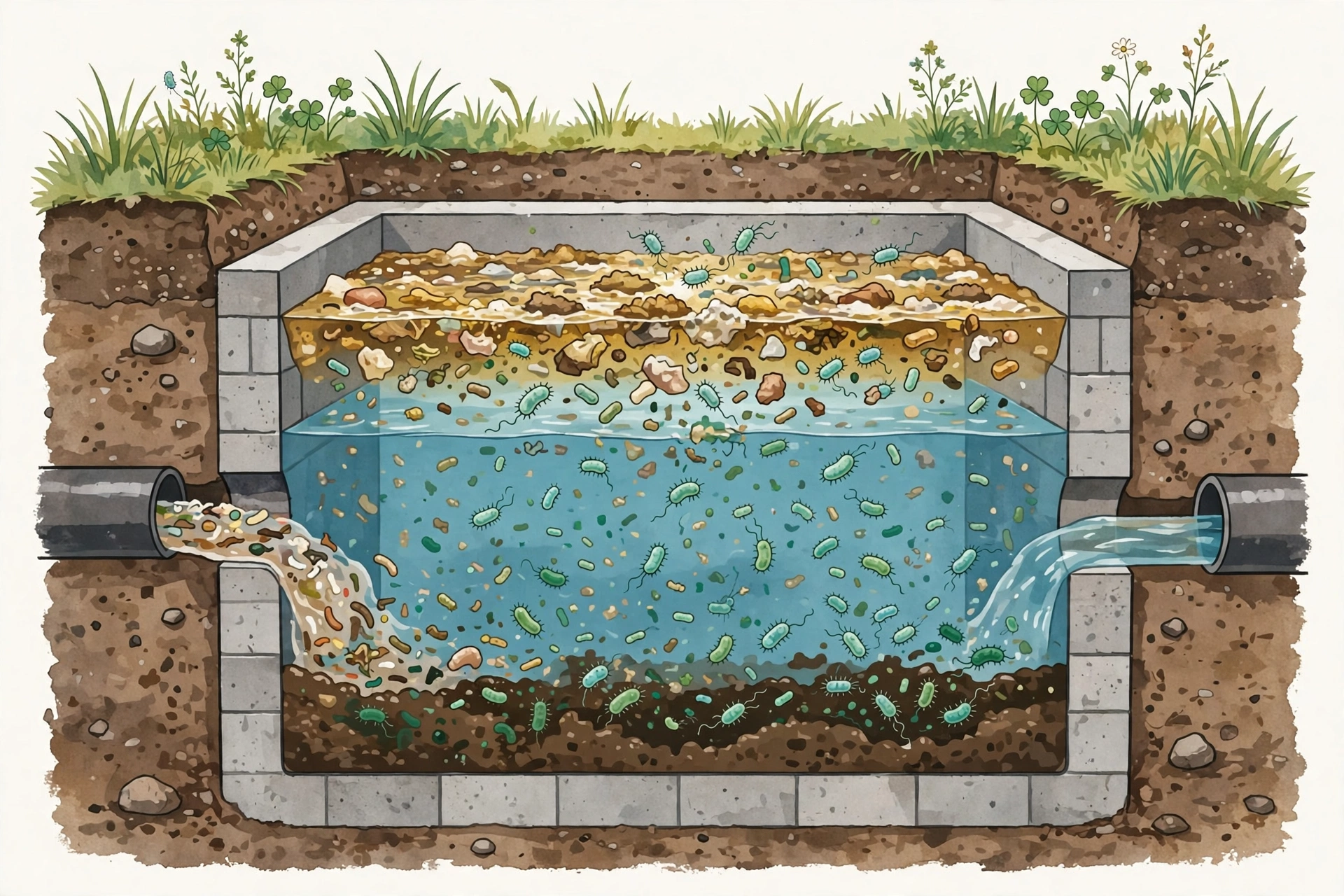
The work of breaking down waste happens slowly, in the sludge and scum layers, and it is done by bacteria that thrive without oxygen. These are called anaerobic bacteria, and they are present in every healthy tank in large numbers. They arrive with normal household wastewater and are reseeded with every flush, shower, and laundry load, so there is no need to add them. They break down organic matter gradually, turning much of it into liquid and gas, and what they cannot break down remains as sludge until the tank is pumped.
The liquid layer then moves on to the drain field, where it seeps through pipes into the soil. There, a second group of organisms finishes the job, filtering and treating the liquid further as it moves down through the ground. The tank does the settling and the first stage of breakdown, and the soil does the final treatment. Neither stage needs help from a packet of yeast.
The Three Layers Inside Your Tank
The scum layer at the top is mostly fats, oils, and grease. It floats because it is lighter than water, and it stays there until pumping removes it. The middle layer is the effluent, the liquid that leaves the tank and enters the drain field. The sludge layer at the bottom holds the heavier solids, including the material that bacteria break down only very slowly. A healthy tank keeps these layers separate, with clear liquid in the middle and the solids held in place. When the sludge and scum layers grow too thick, solids can escape into the drain field, which is where real trouble begins.
This is why pumping on a schedule matters so much. A pump truck removes the accumulated sludge and scum and restores the space the tank needs to separate waste properly. No organism, yeast or bacteria, can make that accumulated material disappear entirely. Some of it will always remain, and it has to be physically removed. That simple fact sits at the heart of honest septic care, and it is the reason experienced septic professionals are skeptical of every additive, not just yeast.
Where the Yeast Remedy Came From
The yeast remedy did not start as a scam. It started as a reasonable guess, repeated often enough that it began to sound like fact. Someone noticed that yeast is alive, that it helps break things down in food, and that a septic tank depends on living organisms. The leap from there to flushing yeast down the toilet is short, and it feels logical. Add a living thing to a living system, and the system should work better. The problem is that the logic skips over the details of what yeast eats, where it can survive, and what a septic tank actually needs.
The remedy also survives because it is almost impossible to disprove by casual observation. A homeowner flushes yeast, nothing bad happens, and the system keeps working as it did before. That feels like success, even though the system would have kept working exactly the same way without the yeast. The tank was already healthy, the bacteria were already doing their job, and the yeast simply passed through and died. Because the remedy is harmless, nobody has a bad story to tell about it, and because it is cheap, nobody feels cheated. So the advice gets passed along, from neighbor to neighbor and from forum to forum, without anyone stopping to check whether it did anything at all.
Does Yeast Work in a Septic Tank
The short answer is no. Yeast does not work in a septic tank in any meaningful sense. It does not reduce sludge, it does not break down solids, it does not clear a drain field, it does not prevent backups, and it does not extend the time between pumpings. The longer answer is only slightly more generous. Yeast may produce a small, brief burst of enzyme activity as it wakes up in warm water and begins to ferment whatever sugars it can find. That activity is minor, it lasts a very short time, and it has no lasting effect on the contents of the tank. Within a day or two, the yeast cells are dead, and the tank is exactly where it was before.
Some people who recommend yeast will say that it cannot hurt, so it is worth trying. That is true in the narrow sense that a single packet is unlikely to damage a healthy system. But harmless and helpful are not the same thing. A remedy that does nothing still costs money and gives a false sense of security. A homeowner who believes the yeast is looking after the tank may put off the pumping that the tank actually needs, and that delay is where a harmless habit can turn into a real problem.
There is one more caution worth mentioning. Excessive fermentation can agitate settled sludge. When yeast ferments, it produces carbon dioxide gas, and that gas can stir up the contents of the tank. In a normal dose, a single packet, this is unlikely to cause trouble. But it is a reminder that adding a fermenting organism to a settling tank works against the design of the system, not with it. The tank needs its contents to stay calm so solids can settle. Anything that stirs them up, even slightly, moves in the wrong direction.
Why Yeast Cannot Do the Job
The reasons yeast fails in a septic tank come down to biology, and they are worth understanding because they explain why so many similar remedies fail too. A septic tank is an anaerobic environment, which means it has almost no free oxygen. Yeast is a facultative organism, which means it can survive for a while without oxygen, but it does not thrive there. It is built for environments where oxygen and simple sugars are plentiful. In the tank, it finds neither, and it cannot establish a lasting population. It arrives, it struggles, and it dies.
The second problem is food. Yeast eats sugars and starches. A septic tank is full of other things. Grease from cooking and from soap coats surfaces and floats in the scum layer. Proteins from food waste and human waste need a different set of enzymes to break down. Toilet paper is mostly cellulose, a tough fiber that yeast cannot digest. The solids that matter most in a septic tank, the ones that build up as sludge and eventually require pumping, are made of exactly the materials yeast cannot use. Giving yeast a tank full of grease, protein, and paper is like giving a vegetarian a steakhouse menu. There is plenty of food in the room, but none of it is food for them.
The third problem is numbers. Even if yeast could survive and eat in a tank, a single packet is a tiny addition to a system that holds hundreds of gallons of wastewater and trillions of bacteria. The bacteria already present are adapted to the tank, they are constantly renewed by household wastewater, and they outnumber any yeast you could add by an enormous margin. The yeast is not joining a workforce that needs reinforcements. It is dropping a handful of strangers into a crowded city where everyone else already has a job and a home.
Yeast Is Not Bacteria
This distinction matters, and it is where much of the confusion begins. Yeast and bacteria are both microscopic living things, and both are used in food and in waste treatment, so it is easy to lump them together. But they are different kinds of organisms with different needs and different abilities. The bacteria in a septic tank include many species, each handling a different part of the waste stream. Some break down proteins, some handle fats, some work on cellulose, and together they cover the range of materials a household sends down its drains. Yeast is a single kind of fungus with a single narrow diet. It cannot replace that team, and it cannot join it in any useful way.
Commercial septic additives often make a similar mistake in their marketing, promising that a dose of bacteria will supercharge a tank. The research on those products tells the same story as the research on yeast. A healthy tank already has the bacteria it needs, and adding more does not change the outcome. If you want a fuller picture of how those products perform, our guide to whether septic tank additives really work walks through the evidence in detail. The same question comes up about bacteria itself, and our guide to whether you need to add bacteria to your septic tank explains why a healthy system already has all it needs. The conclusion is consistent across both DIY and commercial options. The tank does not need reinforcements.
What the Research and the EPA Say
There is no large body of research devoted specifically to yeast in septic tanks, because the idea is simple enough that scientists have not needed to test it over and over. But the research on septic additives in general points firmly in one direction, and it applies to yeast as well. A study from North Carolina State University looked at 48 septic tanks, comparing tanks that received bacterial additives with tanks that were left alone. The researchers found no difference in sludge levels between the two groups. The tanks with additives had just as much sludge as the tanks without them. That is a direct, measured result, and it is hard to argue with. If a purpose built bacterial additive does not reduce sludge, a packet of baker’s yeast is not going to do better.
The Environmental Protection Agency takes the same position from the other side. The EPA says that a properly functioning septic system does not need additives of any kind, whether they come from a store or from a kitchen cupboard. That guidance is based on the simple fact that a healthy tank already contains all the bacteria, enzymes, yeasts, and fungi it needs, continuously reseeded by normal household wastewater. The system is self sustaining by design. It does not run short of organisms, and it does not need topping up. For homeowners who want the official guidance, the EPA septic systems page is a good place to start, and it covers the basics of care and maintenance without selling anything. If you are still weighing the question, our guide to whether septic tank additives are necessary sets out the same answer in plain terms.
It is also worth noting what the research does not say. It does not say that yeast will harm your tank, and it does not say that additives are dangerous. The point is narrower and more useful. These products do not help. You do not need to worry about yeast you have already flushed. You only need to stop expecting it to do a job it cannot do, and to spend your time and money on the care that actually works.
What Happens When You Flush Yeast Down the Toilet
For most homeowners, the honest answer is nothing much. The yeast wakes up briefly in the warm water, ferments whatever sugars it can find, produces a little carbon dioxide, and then dies as it reaches the cold, oxygen free environment of the tank. It becomes part of the organic material in the tank, just like any other small amount of food waste. It does not clog pipes, it does not poison the bacteria, and it does not damage the drain field. If you have already tried it, there is no reason to worry and no cleanup needed.
That said, the lack of harm is not a reason to keep doing it. A habit that does nothing can still mislead. Every time you flush yeast, you are spending a small amount of money and a small amount of attention on a step that does not help. Over a year of monthly doses, that adds up to a real cost, and over several years it adds up to a real delay in the maintenance that matters. The risk is not in the yeast. The risk is in the story the yeast tells, which is that the tank is being looked after when it is not.
The DIY Yeast Recipe and What to Do Instead
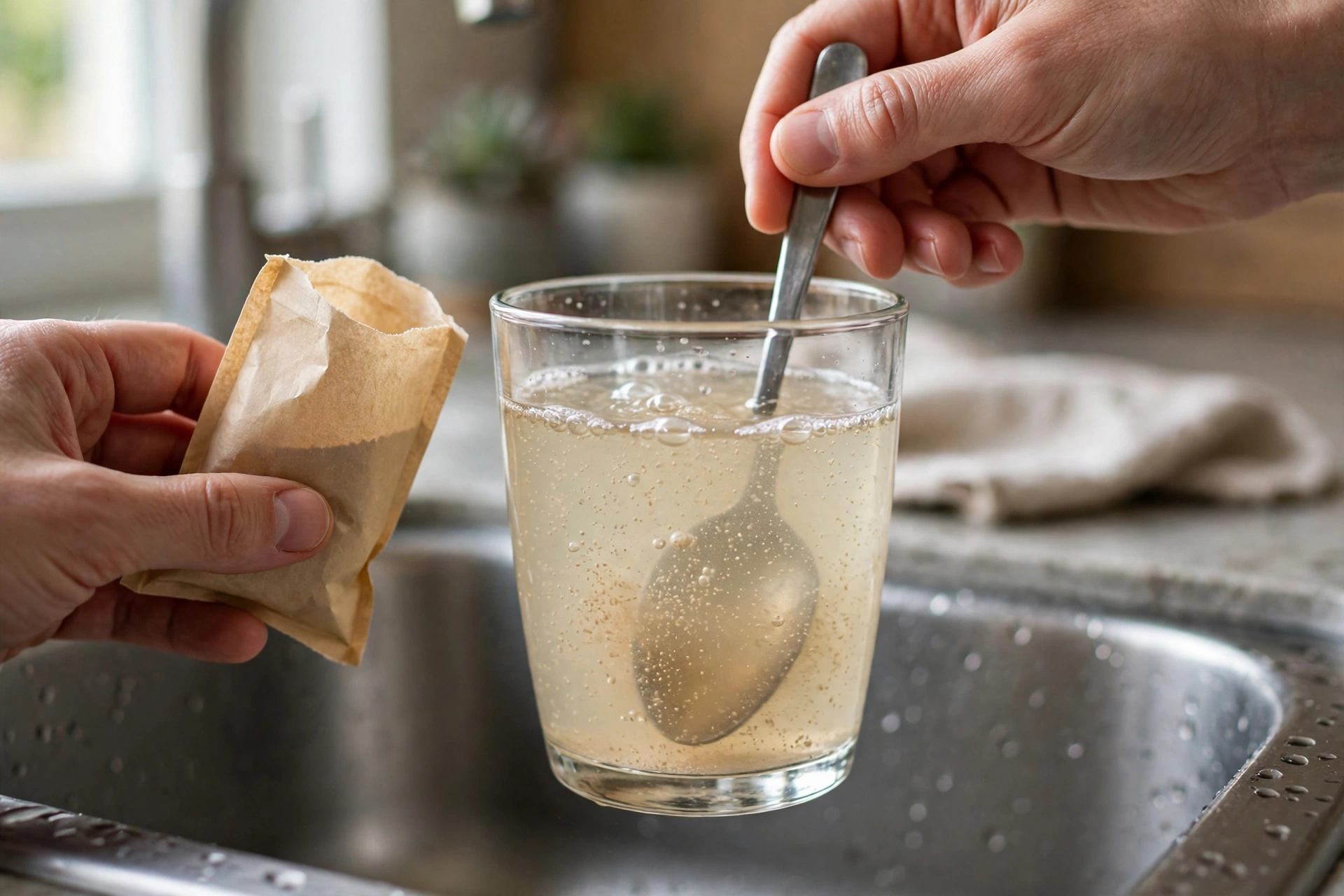
The recipe itself is simple, and it is repeated in much the same form wherever it appears. Dissolve one packet of active dry yeast in a glass of warm water, let it sit for a few minutes until it becomes active and foamy, then pour it down the toilet and flush. Some versions suggest doing this once a month, and some suggest using two packets for a larger household. The warm water is meant to wake the yeast up, and the toilet is meant to carry it straight into the tank. There is nothing complicated about it, and that simplicity is part of its appeal.
If you have already followed this recipe, do not worry about it. One packet of yeast in a septic tank is harmless, and it will not have caused any damage. The honest advice is simply to stop buying yeast for the tank and to put the effort somewhere useful instead. The money you would spend on monthly packets is better saved toward your next pumping, which is the single most effective thing you can do for the system. The time you would spend mixing yeast is better spent checking for leaks, watching your water use, or noting the date of your last pumping.
There is a broader lesson here about home remedies in general. A remedy that is natural, cheap, and harmless can still be a poor use of your attention. The test for any septic treatment is whether it changes the condition of the tank in a way you can measure. Pumping passes that test. Fixing a running toilet passes it. Keeping grease out of the drains passes it. Yeast does not.
Why the Foaming Looks Convincing
Part of the reason the yeast remedy feels like it works is that it looks alive. When you stir active dry yeast into warm water, it foams and bubbles. That activity is visible and satisfying, and it is easy to imagine those bubbles doing useful work inside the tank. But the foaming is fermentation, and fermentation is a short lived process that needs sugar and warmth. Inside the tank, the warmth fades, the sugar runs out, and the bubbling stops. What you see in the glass is real, but it does not survive the journey into the tank. The show ends at the toilet bowl.
The same illusion shows up with other septic products. A treatment that fizzes or foams feels powerful, because our senses tell us something is happening. But a septic tank does not need drama. It needs stillness, time, and the quiet work of bacteria. The most effective septic care is often the least visible.
Other Folk Remedies That Do Not Help Either
Yeast is not the only kitchen remedy that gets recommended for septic tanks, and the others fail for the same reasons. Baking soda is often suggested as a way to balance the tank or to freshen it. In household amounts it is harmless, but it does not treat the tank, and it does not change sludge levels or improve the work of the bacteria. Vinegar gets suggested for similar reasons, and it is equally harmless and equally ineffective as a septic treatment. Sugar is sometimes added alongside yeast, on the theory that it will feed the organisms in the tank. It may feed the yeast briefly, but it does nothing for the bacteria that actually matter.
Milk is another remedy that appears in septic advice, usually soured milk or a carton past its date. The idea is that the bacteria in the milk will help the bacteria in the tank. In practice, the milk adds organic waste and organisms that are not adapted to the tank environment. Like yeast, they die quickly and change nothing.
For a wider look at what can safely go into a tank and what actually helps solids break down, see our guide to what you can put in a septic tank to break down solids. It covers the options in plain terms and separates the habits that help from the ones that only feel helpful. The short version is that the best things you can put in a tank are the things that were always meant to go there, namely human waste, toilet paper, and the water from normal household use. Everything else is either neutral or harmful, and nothing in the kitchen cupboard improves on that list.
What Actually Works for Your Septic System
The care that works is not exciting, and that is part of why it gets overlooked. It is a short list, it is mostly about what you do not do, and it does not come in a packet. The first item on the list is pumping. A septic tank should be pumped every three to five years, depending on the size of the tank, the size of the household, and how much water the household uses. A larger family or heavy water use will shorten the interval, and the professional who pumps your tank can measure the sludge and scum layers and advise on the right schedule for your home.
Pumping is the only way to remove the solids that bacteria cannot break down. It resets the tank, restores the space needed for settling, and protects the drain field from solids that would otherwise escape. Skipping it is the most common and most expensive mistake a septic homeowner can make, because a drain field damaged by solids is far harder and costlier to repair than a tank pumped on time.
The second item is water conservation. A septic system can only handle so much water at a time. When too much water enters the tank too quickly, solids do not have time to settle, and the liquid that leaves the tank can carry solids into the drain field. Spreading laundry loads across the week, fixing running toilets and dripping taps promptly, and using water efficient fixtures all help. Avoid flooding the system in bursts, such as running several loads of laundry back to back on a single morning.
The third item is keeping grease, chemicals, and non-biodegradable items out of the system. Grease should go in the trash, not down the drain. Harsh chemicals, including strong cleaners and solvents, can harm the bacteria that the tank depends on. Items that do not break down, such as wipes, sanitary products, cotton swabs, and cat litter, should never be flushed, even when the packaging says they are flushable. They add to the sludge and can clog pipes and the drain field. This daily attention makes the biggest difference over time.
The Bottom Line on Yeast and Septic Tanks
Yeast in a septic tank does not work. It is a fungus that ferments sugars, not a bacterium that breaks down waste, and it dies within a day or two in the tank. A healthy system already has the organisms it needs, and research has found no benefit from adding more, whether the addition comes from a packet in the kitchen or a bottle from the store. The remedy is harmless, so there is no need to worry if you have tried it, but there is also no reason to keep doing it. Save the yeast for baking, and look after your septic system with the care that actually works. Pump the tank every three to five years, watch your water use, keep grease and chemicals out of the drains, and call a professional when something changes. That is the whole secret, and it has been the answer all along.
Greetings Glows Team is dedicated to creating meaningful, helpful, and thoughtfully curated content for everyday inspiration and special moments.
What We Focus On:
Well-researched and reader-friendly articles.
Meaningful greetings, blessings, prayers, and inspirational messages.
Carefully curated ideas for everyday life and special occasions.
Clear, helpful, and engaging information.
Consistent quality and attention to detail in every publication.
Our goal is simple: to make every visit worthwhile with content that inspires, informs, and brings a little more positivity to your day.