Walk down the septic care aisle at any home improvement store and you will see a wall of bottles, packets, and tubs all promising to keep your septic system healthy. Some claim to add helpful bacteria. Others promise to break down solids, prevent clogs, and even let you skip pumping. The labels sound reassuring, and the price seems small compared with a repair bill. So it is natural to wonder whether you should be using one of these products every month.
For most homeowners with a healthy septic system, the honest answer is no. Septic tank additives are not necessary. Your tank already has everything it needs to do its job, and it gets a fresh supply every single day from normal household use. That does not mean every product on the shelf is dangerous, but the decision deserves a closer look, because some additives do nothing at all while others can quietly damage the system they claim to protect.
This guide walks through what additives claim to do, how your septic tank actually works without them, what the EPA and researchers have found, and the few situations where an additive might genuinely help.
What Septic Tank Additives Claim to Do
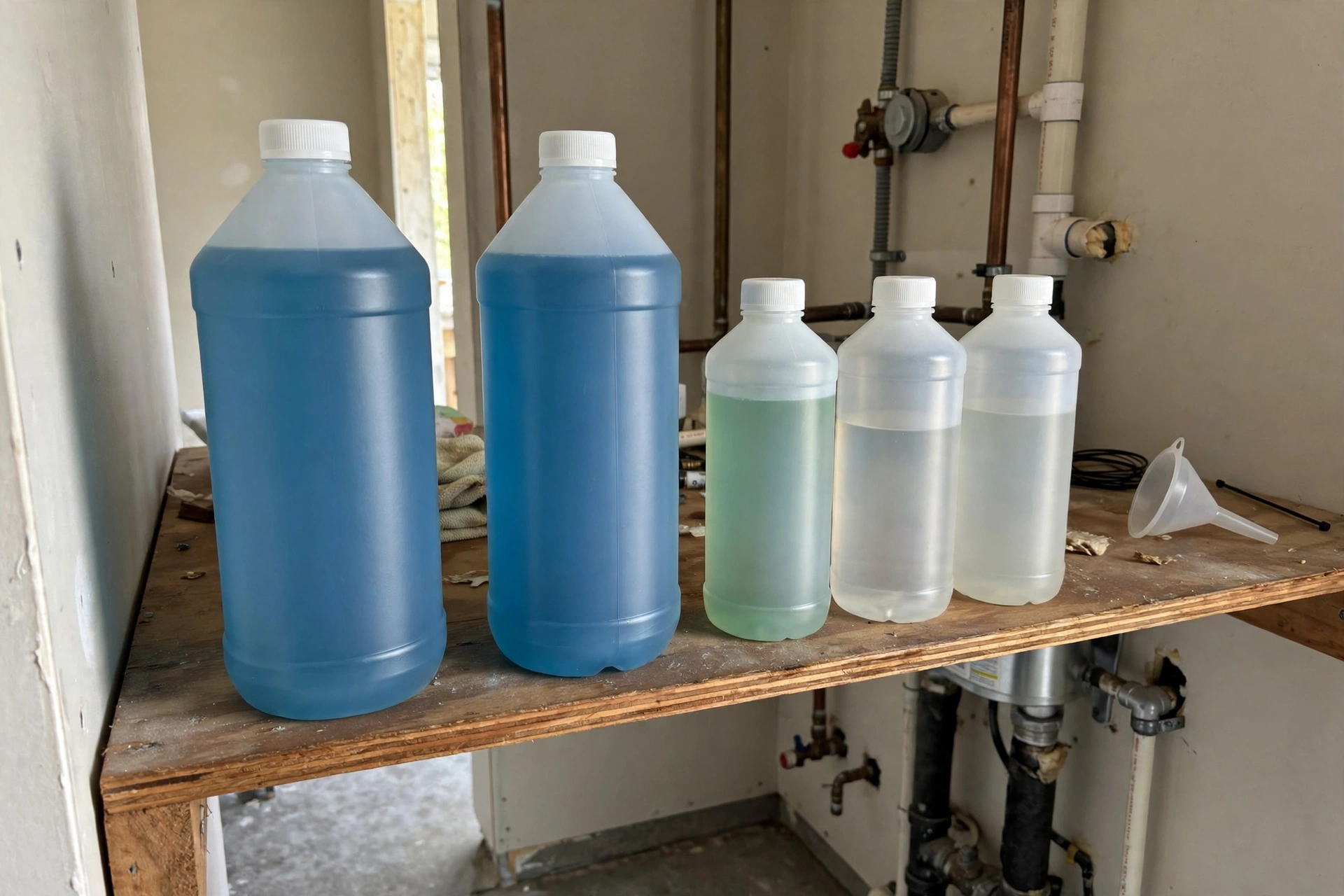
Septic tank additives are products you flush down a toilet or pour down a drain, usually once a month, with the goal of improving how your system breaks down waste. They come in three main types, and understanding the difference matters because they do very different things inside your tank.
Biological additives contain live bacteria, enzymes, or both. The idea is simple. Bacteria break down the organic solids in your tank, and enzymes help speed that process along by splitting fats, proteins, and starches into smaller pieces the bacteria can digest. These products promise to keep sludge levels down, reduce odors, and keep the drain field flowing freely.
Chemical additives take a different approach. Some are strong acids or alkalis meant to dissolve clogs and grease. Others are solvents designed to break up fats and oils. A few contain hydrogen peroxide or similar compounds that claim to oxygenate the tank. These products often promise fast results, and that promise is part of the problem. Anything strong enough to dissolve a clog quickly is usually strong enough to disturb the living ecosystem inside your tank.
Across all three types, the marketing tends to make the same promise, that the product will keep your tank cleaner and reduce or even eliminate the need for pumping. The second claim is the one to watch, because no additive can do what pumping does, and understanding why starts with how your tank actually works.
If you want a closer look at whether these products deliver on their promises, our guide on whether septic tank additives really work breaks down the evidence product by product.
How a Septic Tank Actually Works
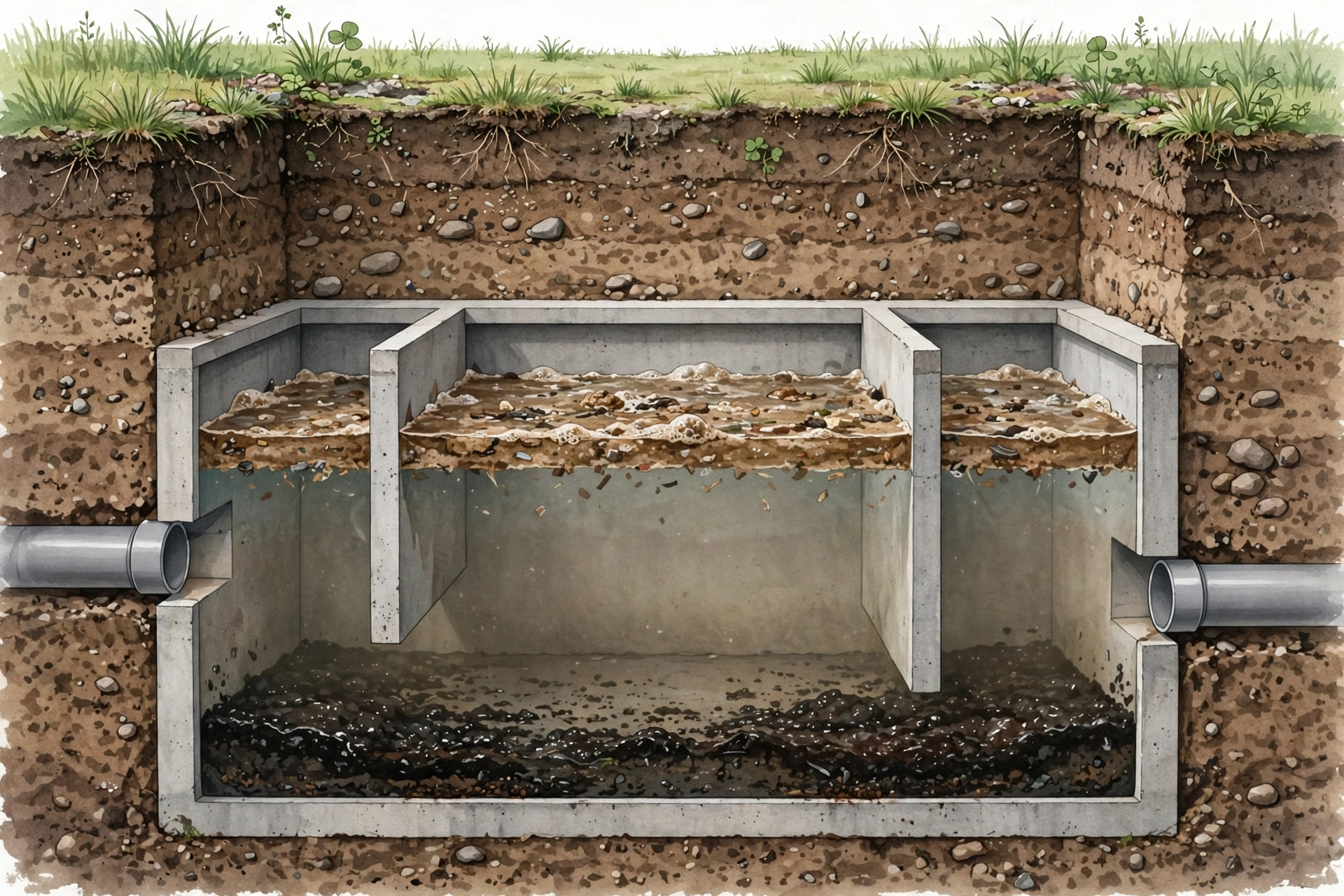
A septic tank is not a complicated machine. It is a buried, watertight container, usually made of concrete, fiberglass, or plastic, that holds wastewater from your home long enough for solids to separate from liquids. Everything that goes down your drains flows into the tank first. From there, only the clarified liquid in the middle layer moves on to the drain field, where soil filters it further.
The separation happens naturally, without any help from a bottle. Heavy solids sink to the bottom and form a layer called sludge. Lighter materials, like grease and oils, float to the top and form a layer called scum. The liquid in between, called effluent, is the only part that leaves the tank, and a baffle at the outlet keeps the scum and sludge inside.
The Bacteria Are Already There
Here is the part the additive labels rarely mention. Your tank is already full of bacteria, and it always will be. Every flush delivers a fresh supply of the same anaerobic bacteria that break down waste. These are organisms that live and work without oxygen, which makes them perfectly suited to the sealed, dark environment inside a septic tank. They arrive with your household wastewater, they multiply on their own, and they keep working around the clock without any maintenance from you.
This is why a healthy septic system is largely self-sustaining. The bacteria digest a large share of the organic solids in the tank, turning them into liquid and gas. What they cannot digest slowly accumulates as sludge on the tank floor. That accumulation is normal, and it is also the reason pumping is unavoidable. No bacteria can digest sand, grit, and other inorganic material, so those solids can only leave the tank through the hose of a pump truck.
The scum layer works the same way. Grease and oils float up, and bacteria slowly work on them, but some of that material always remains. Over time, both the scum and sludge layers grow thicker, which shrinks the space available for the liquid layer. When the layers get too thick, solids can start escaping into the drain field, and that is when real trouble begins.
So Are Septic Tank Additives Necessary?
For a healthy, properly maintained septic system, the answer is no. Additives are not necessary. The bacteria your tank needs arrive with every flush, the separation of solids and liquids happens by gravity, and regular pumping handles the material that bacteria cannot digest. Adding a monthly product on top of that does not fix a problem, because there is no problem to fix.
That is the position of the federal government, most state health departments, and the researchers who have tested these products in real tanks. It is also the experience of septic professionals who open tanks every day. When they pump a tank that has received monthly additives for years, they find the same sludge buildup as in tanks that never received a single dose.
This does not mean these products contain nothing real. Many of them contain live bacteria and enzymes. The issue is that what those ingredients do is redundant, because the tank already has the same organisms doing the same work.
There is one important exception to the short answer, and it is worth understanding before you decide. If something has damaged or disrupted the bacterial population in your tank, a biological additive can help the system recover faster. That is a specific situation with a specific cause, not a monthly routine. We will look at those situations in detail further down, because knowing the difference between routine use and recovery use is the key to spending wisely.
What the EPA Says About Septic Additives
The United States Environmental Protection Agency has studied septic additives for years, and its guidance has stayed consistent. According to the EPA, commercially available biological additives are not necessary for a septic system to function properly when it is treating normal household wastewater. The bacteria that arrive with human waste are sufficient.
The EPA goes further than simply calling these products unnecessary. In its guidance for homeowners, the agency warns that some additives can actively harm a system. Strong acids and alkalis can kill the beneficial bacteria in the tank and corrode concrete and metal parts. Organic solvents can pass through the system and contaminate groundwater, which is a serious risk if your home or your neighbors rely on well water.
The agency also addresses the most common marketing claim directly. No additive eliminates the need for regular pumping. The EPA is clear that pumping on a regular schedule remains essential, no matter what product you use. A tank that never gets pumped will eventually fail, and no bottle of bacteria changes that timeline in any meaningful way.
You can read the EPA’s homeowner guidance for yourself on the agency’s septic systems page at epa.gov/septic, where they explain how a system works and how to care for it. For a fuller breakdown of the EPA’s position, including what it says about each type of additive, see our article on what the EPA says about septic additives.
The EPA is not alone in this view. Washington State reviews septic additives before they can be sold there and has rejected products that could not demonstrate safety and effectiveness. Other states restrict or ban certain chemical additives outright. No state requires homeowners to use additives, and that fact alone says a lot about where the science stands.
What the Research Actually Shows
Government guidance is helpful, but the strongest evidence comes from researchers who tested additives in real septic tanks and measured what happened. Two university studies are worth knowing about, because they looked at the exact question homeowners ask, whether adding bacteria or enzymes changes anything measurable inside the tank.
Researchers at the University of Minnesota ran a controlled field study that followed dozens of septic tanks over a full year. Some tanks received regular biological additive treatments, and others received nothing. The researchers measured sludge accumulation and bacterial populations at regular intervals. At the end of the study, they found no significant long term benefit from the additives. The bacterial populations in the treated tanks were essentially the same as in the untreated tanks, and the sludge built up at the same rate in both groups.
A study from the University of Arkansas Cooperative Extension Service reached a similar conclusion. Tanks that received monthly biological additive treatments showed no meaningful difference in sludge accumulation compared with control tanks, and the added bacteria did not reduce the amount of material that needed to be pumped out.
These results make sense once you understand the biology. A septic tank is already a crowded ecosystem, and the limiting factor is not the number of bacteria. It is the amount of material available for them to digest and the time that material spends in the tank. Adding more of the same organisms does not change that balance.
The research on chemical additives tells a clearer and more worrying story. Laboratory and field studies have shown that strong acids, alkalis, and solvents can kill the bacteria a system depends on, break up the scum layer so that grease flows into the drain field, and leach into groundwater. These are not theoretical risks. They are the reasons several states restrict these products and the reasons septic professionals warn against them.
The Different Types of Additives and Which Ones Can Hurt
Not all additives carry the same risk. Biological products are mostly a waste of money, while chemical products can cause real damage.
Biological Additives: Mostly Harmless, Mostly Useless
Biological additives contain bacteria, enzymes, or a mix of both. They are the most common type on store shelves, and the least risky. In a healthy system, they do little good and little harm, because the bacteria they contain simply join a population that does not need reinforcements.
That does not mean they are entirely without downside. They cost money every month, and over years that adds up to a real sum spent on something with no measurable benefit. They can also create a false sense of security. A homeowner who faithfully adds a packet every month may feel the system is being cared for and put off pumping, which is the one service that actually matters. In that way, a harmless product can indirectly lead to a harmful delay.
If you already use a biological additive and your system is working well, there is no urgent reason to panic. You have not damaged anything. You have simply spent money that could have gone toward pumping or an inspection. The sensible move is to stop buying it and put the savings toward real maintenance.
Chemical Additives: The Ones to Avoid
Chemical additives are a different story. These include strong acids, alkalis, solvents, and chlorinated compounds sold as drain openers, degreasers, or septic treatments. Some are marketed specifically for septic systems, and others are general drain cleaners that homeowners pour down the toilet hoping to clear a sluggish drain.
The problem with these products is that they work by being harsh, and harsh is exactly what a septic tank cannot handle. A strong acid or alkali can kill large numbers of bacteria in a single dose, and without those bacteria, solids stop breaking down properly. Solvents can dissolve the scum layer that keeps grease out of the drain field, and once grease reaches the drain field, it coats the soil and the pipes. That kind of damage is expensive to repair and sometimes impossible to reverse without replacing part of the drain field.
Chlorinated solvents carry an additional risk. They can pass through the septic system and reach groundwater, where they persist for a long time. For homes on well water, that is a direct threat to the drinking water supply. This is why several states have banned or restricted these products and why the EPA specifically warns against them.
One brand name comes up in almost every conversation about septic additives, and it deserves a direct answer. Rid-X is the most widely recognized biological additive, and many homeowners ask whether it helps or hurts their system. The short version is that it falls into the mostly harmless category, but it is still not necessary for a healthy tank. For the full picture, including when it might be a poor choice, see our guide on whether Rid-X is bad for septic systems.
Yeast and Home Remedies
Yeast is one of the most persistent home remedies for septic care, and it is also one of the least effective. The idea sounds reasonable. Yeast breaks down organic matter when baking bread, so it should help in a septic tank. But a septic tank is an oxygen free environment, and the organisms that thrive there are anaerobic bacteria, not yeast. Yeast does not survive long in a tank, and it does not digest waste in the same way. It is harmless in small amounts, but it is not a substitute for bacteria and it will not reduce sludge.
When Additives Might Actually Help
So far, this guide has made a strong case against routine additive use. That case holds for a healthy system. But there are a few specific situations where a biological additive can genuinely help, and knowing them will keep you from dismissing the idea entirely when it actually makes sense.
The common thread in all of these situations is disruption. Something has damaged or reduced the bacterial population in your tank, and the system needs help rebuilding it. In those cases, adding bacteria is not redundant. It is a way to speed up a recovery that would otherwise take longer on its own.
One common example is heavy antibiotic use in the household. Antibiotics do not distinguish between the bacteria making you sick and the bacteria digesting waste in your tank. A long course of strong antibiotics can reduce the bacterial population enough to slow digestion, and a large accidental dose of bleach down the drain can have a similar effect. The system will recover on its own over time, but a biological additive may help that recovery happen faster.
Another situation is a home that has sat empty for months. When a house is vacant, no wastewater enters the tank, and the bacterial population shrinks from lack of food. When the family moves back in, the system needs time to rebuild. A dose of bacteria at move in can help, though the system would also recover on its own within a few weeks of normal use. The additive is a shortcut, not a necessity.
A newly installed septic system is a similar case. A brand new tank starts out empty, and it takes time for a bacterial population to establish itself. Some installers recommend a biological starter product to get the process going. That is a reasonable suggestion for a new system, and it is a one time use, not a monthly habit.
After a tank is pumped, some homeowners wonder whether they need to add bacteria to replace what was removed. The answer is usually no, because a healthy bacterial population remains in the liquid and on the tank walls, and fresh bacteria arrive with the next flush. If you want more detail, see our article on whether you need to add bacteria to your septic tank.
The key point in every one of these situations is that the additive is a short term recovery aid, not a maintenance plan. Use it once or twice while the system rebuilds, then stop. If you find yourself reaching for a bottle every month, ask what problem you are trying to solve. If the system is healthy, there is no problem. If the system is not healthy, an additive is not the fix.
How to Tell If Your System Actually Needs Help
Many homeowners buy additives because they are worried about their system, not because anything is wrong. Worry is understandable, since a septic failure is expensive and messy. But a small monthly purchase only helps if it covers the real risk, and additives do not cover the risks that actually cause failures.
The better approach is to learn the warning signs that mean your system needs attention, and to act on them promptly. Catching a problem early is worth far more than any product on the shelf.
Slow drains throughout the house are one of the earliest signs. If one drain is slow, the problem is usually in that fixture. If every drain is slow at the same time, the issue is more likely in the tank or the drain field. These symptoms often appear gradually, which makes them easy to ignore until they become serious.
Unusual smells are another signal. A faint odor near the tank lid or the drain field after heavy rain can be normal, but a strong sewage smell inside the house or a persistent odor in the yard is not. Smells that come and go with water use often point to a tank that is overdue for pumping or a drain field that is struggling to absorb water.
Wet or unusually green patches over the drain field deserve attention too. A drain field that stays soggy during dry weather may be saturated, and grass that grows much faster and greener over the drain field can mean effluent is reaching the surface instead of filtering down through the soil.
Finally, sewage backing up into the house is the clearest emergency sign. If wastewater comes up through a toilet, shower, or floor drain, stop using water right away and call a septic professional immediately. No additive can fix a backup, and continuing to use water will only make it worse.
If you notice one or more of these signs, the right move is an inspection, not a bottle. A licensed septic professional can measure the sludge and scum levels, check the baffles and the drain field, and tell you exactly what the system needs.
Additives vs Regular Pumping: The Cost Comparison
The cost question is where the additive habit falls apart most clearly. A single bottle is cheap, but additives are a monthly purchase, and monthly purchases add up quietly. Over the years between pumpings, a homeowner who buys a product every month will spend a significant amount on something the research says provides no measurable benefit.
Pumping, by contrast, is an occasional expense. Most households need their tank pumped every three to five years, depending on household size, tank size, and water use. It is a single service visit that removes the sludge and scum no additive can touch. It is also the only maintenance step that directly prevents the most expensive septic problem of all, which is solids escaping into the drain field and damaging it.

Think of it this way. Additives are a small cost repeated many times for no proven return. Pumping is a larger cost paid rarely for a proven and necessary result. When you compare the total spent on additives over three to five years with the cost of one pumping visit, the additives often come out close to the price of the service they were supposed to replace. And the pumping still needs to happen anyway, because the additive never removed the sludge.
The honest math is simple. Take the money you would spend on additives over a year and put it toward your pumping fund instead. You will still need to pump on schedule, but you will have spent nothing extra.
What to Do Instead of Buying Additives
If additives are not the answer, it is fair to ask what is. The good news is that real septic care is simpler and cheaper than the wall of products at the store suggests. It comes down to a handful of habits and a regular service schedule.
First, pump on schedule. This is the single most important thing you can do for your system. Most households should have the tank pumped every three to five years, but the right interval depends on your tank size and how many people live in the home. A professional can measure the sludge and scum levels and recommend a schedule for your situation.
Second, be careful about water use. Spreading laundry loads across the week instead of doing them all in one day gives the drain field time to absorb each batch. Fixing leaking toilets and faucets matters too, because a running toilet can send a surprising amount of extra water into the system every day.
Third, watch what goes down the drain. The only things that should be flushed are human waste and toilet paper. Wipes, even those labeled flushable, do not break down the way toilet paper does. Grease should go in the trash, not down the kitchen sink, because it adds to the scum layer and can coat the drain field.
Fourth, go easy on household chemicals. Normal amounts of cleaning products used as directed are fine. The trouble starts with large doses, like pouring a whole bottle of bleach down a drain or using strong chemical drain cleaners regularly. Never pour solvents, paints, or automotive fluids into your drains.
Fifth, protect the drain field. Keep cars, heavy equipment, and structures off it, because the weight can crush the pipes and compact the soil. Do not plant trees or large shrubs over it, since roots can grow into the pipes, and keep gutters and surface water directed away from the area.
Finally, have the system inspected regularly. An inspection every few years, often done at the same time as pumping, can catch worn baffles, cracks, and early drain field problems before they become expensive failures.
The Bottom Line
Are septic tank additives necessary? For a healthy system that is pumped on schedule, the answer is no. The EPA says so, independent university research says so, and the daily experience of septic professionals says so. Your tank already has the bacteria it needs, and no product can remove the sludge that only pumping can handle.
Biological additives are mostly harmless but mostly useless as a routine. Chemical additives are the ones to avoid, because they can kill the helpful bacteria, damage the drain field, and contaminate groundwater. The few situations where a biological product can help all involve a damaged bacterial population, and there the additive is a short term recovery aid, not a monthly habit.
The money is better spent on the maintenance that actually protects your system. Pump every three to five years, watch your water use, keep grease and wipes out of the drains, and have the system inspected on a regular schedule. Those steps are simple, they are backed by evidence, and they cost less over time than a monthly bottle that does nothing measurable.
If you are standing in the store aisle right now, wondering whether to pick up a bottle, here is the simplest version of this whole guide. Put the bottle back. Write down the date of your last pumping instead, and if you cannot remember it, call a septic professional and book an inspection.
Greetings Glows Team is dedicated to creating meaningful, helpful, and thoughtfully curated content for everyday inspiration and special moments.
What We Focus On:
Well-researched and reader-friendly articles.
Meaningful greetings, blessings, prayers, and inspirational messages.
Carefully curated ideas for everyday life and special occasions.
Clear, helpful, and engaging information.
Consistent quality and attention to detail in every publication.
Our goal is simple: to make every visit worthwhile with content that inspires, informs, and brings a little more positivity to your day.