A septic tank does not usually fail all at once. It gives warnings first, and many of those warnings show up outside, in the yard, where they are easy to miss or easy to explain away. A damp patch after rain, a strip of grass that looks greener than the rest, a faint smell on a warm evening, a drain that seems a little slow. Any one of these on its own might mean nothing. Together, or when one of them keeps coming back, they can mean that wastewater is no longer staying where it belongs. Learning the septic tank overflowing in yard signs early matters because the difference between a small repair and a large one is often a matter of weeks, not years. A tank that is pumped in time, a filter that is cleaned, or a leak that is found early can save a drain field. A problem that is left to grow can damage the soil, contaminate the ground around the home, and leave a family dealing with sewage in the yard and backups inside the house.
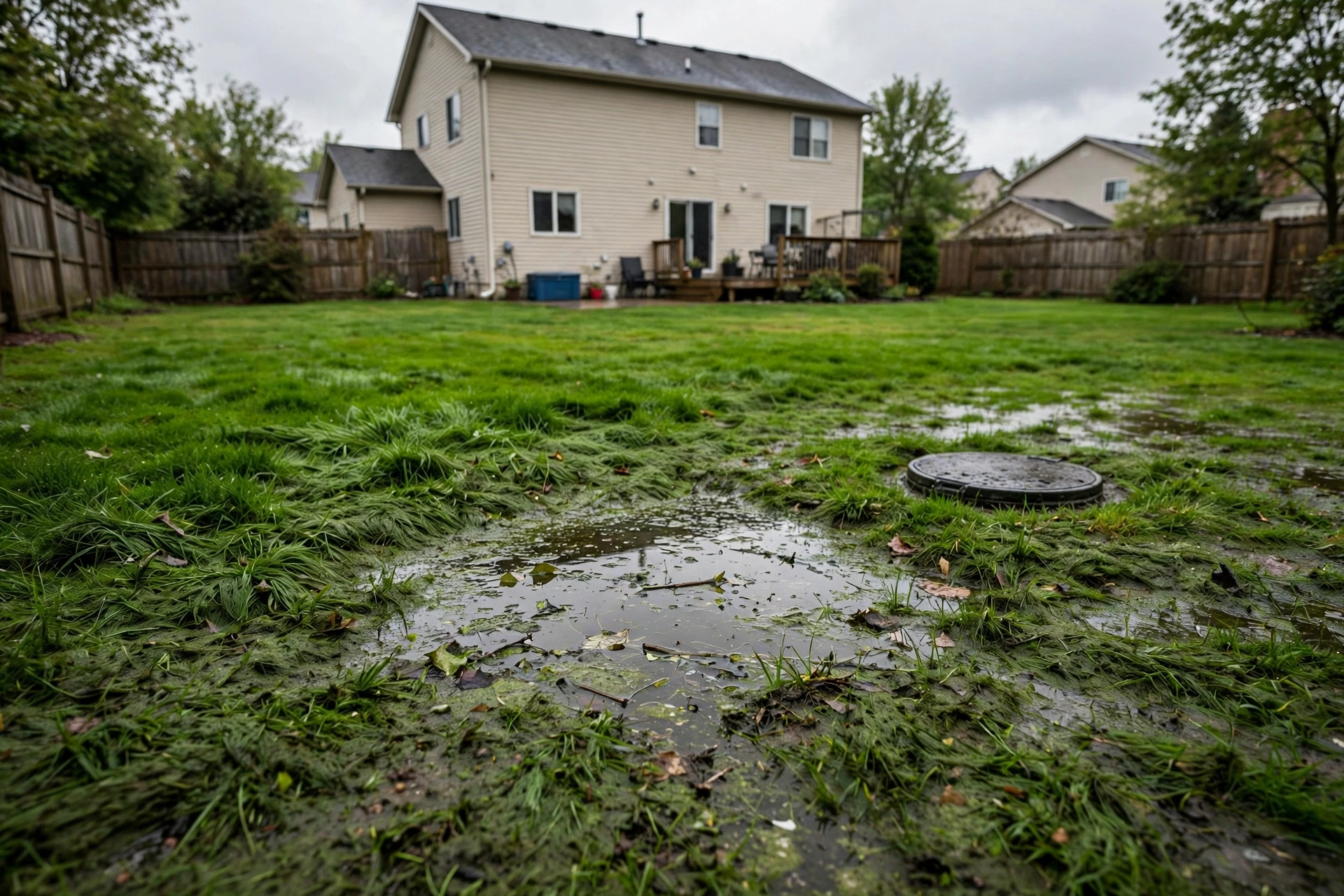
What It Means When a Septic Tank Overflows in the Yard
A septic system is designed to keep wastewater underground and out of sight. Wastewater from the house flows into the tank, where solids settle to the bottom and lighter material floats to the top. The liquid in the middle flows out to the drain field, where it seeps slowly into the soil and is treated naturally as it moves down through the ground. When the system is working well, the surface of the yard stays dry, the grass grows evenly, and there is no smell. An overflow happens when that quiet process breaks down and liquid reaches the surface instead of soaking away underground.
That liquid is not clean water. It is effluent, and in a serious overflow it can contain raw sewage. It may look like ordinary puddle water, especially after rain, and that is part of what makes it dangerous. A homeowner can walk through it, a child can play in it, or a dog can drink from it without realising what it is. The soil underneath may also be saturated, which means the ground cannot absorb more liquid, and the problem will keep returning until the cause is found. An overflow is therefore not only a plumbing problem. It is a health problem, and it deserves to be treated that way from the moment it is noticed.
The Signs of a Septic Tank Overflowing in the Yard
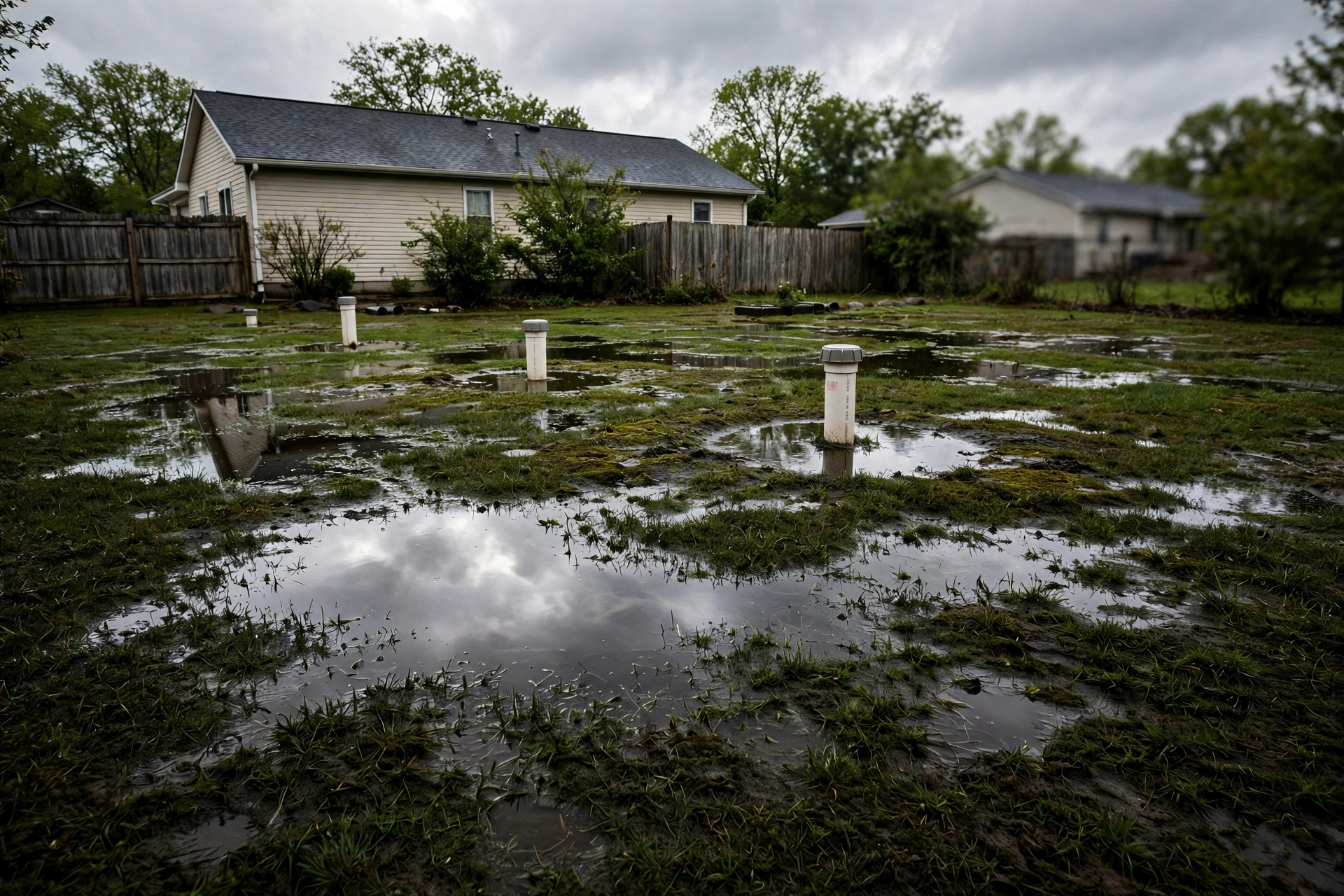
Standing Water Over the Tank or Drain Field
Standing water is the clearest of all the septic tank overflowing in yard signs, and it is the one that should prompt the fastest response. After a period of dry weather, there should be no puddle sitting over the tank or the drain field. If water is pooling there, especially water that looks grey or cloudy or carries a film on the surface, it is likely effluent that has risen from below rather than rain that has fallen from above. Rainwater drains away or soaks in over a day or two. Effluent keeps returning because the source is still feeding it from underneath.
Pay attention to where the water sits and how it behaves. Water over the drain field often appears in a long strip or a series of patches that follow the buried pipes. Water near the tank may gather around the lid or the inspection ports. Water that appears after heavy use inside the house, such as after several loads of laundry or a long round of showers, points to a system that cannot keep up with the flow. Our guide to standing water over a septic drain field explains how to tell the difference between ordinary wet ground and a system that is surfacing effluent, and it is worth reading if this is the sign you have noticed first.
Soggy or Spongy Ground That Does Not Dry Out
Not every overflow forms a visible puddle. Sometimes the ground simply stays soft underfoot long after the rest of the yard has dried. You may notice that a section of lawn feels spongy when you walk across it, that your shoes sink slightly, or that the grass squelches when you step on it. This is a sign that the soil below is saturated, and that liquid is being pushed up from the drain field faster than the ground can absorb it. In dry weather, this kind of wetness stands out. In wet weather, it is easier to miss, which is why it helps to compare one part of the yard with another after rain. If one area stays wet for days while the rest dries, that area deserves a closer look.
Unusually Green or Fast Growing Grass
One of the most misleading signs is a patch of grass that looks healthier than the rest of the lawn. Effluent is rich in nutrients, and when it rises close to the surface it acts like fertiliser. The grass above a failing drain field can grow faster, thicker, and greener than the grass around it, sometimes in a clear strip or rectangle that matches the shape of the buried trenches. In summer, when the rest of the lawn is dry and pale, that patch may stay bright green. It can look like good luck, or like the result of good watering, when it is actually a sign of a leak.
A Sewage Smell in the Yard
Smell is often the first sign a homeowner notices, because it reaches you before you see standing water. It is also the sign that is easiest to get used to, which is a real risk. People who live with a smell every day stop noticing it, while a guest notices it at once. If you have ever wondered whether a smell is normal or not, that question itself is useful information. A smell that makes you pause is a smell to investigate. For a closer look at what different septic smells mean, and when a smell points to a full tank rather than a drain problem, see our guide to what a full septic tank smells like.
Slow Drains and Gurgling Sounds Inside the House
Yard signs and indoor signs often appear together, and slow drains are one of the most common indoor clues. When a tank is full or a drain field is saturated, wastewater has nowhere to go, and the whole system slows down. Toilets may flush weakly, sinks may drain slowly, and showers may leave water standing in the tray. If more than one fixture is slow at the same time, the problem is unlikely to be a single clogged pipe. It is more likely to be a system wide issue, and the yard signs help to confirm that.
Sewage Visible at the Cleanout or Tank Lid
Most septic systems have a cleanout pipe, a short vertical pipe with a cap, usually located between the house and the tank or near the drain field. It gives a professional access to the pipes for inspection and cleaning. If you see liquid, dampness, or sewage around the cleanout, or if the cap has been pushed off or lifted by pressure from below, that is a serious sign. It means wastewater is backing up in the pipes and looking for any way out. The same applies to the tank lid. If the ground around the lid is wet, if the lid itself is damp or stained, or if you can see liquid seeping from the edges, the tank is likely overfull.
The Septic Alarm Going Off
Some systems, especially those with a pump that moves liquid to the drain field, have an alarm that sounds when the liquid level in the tank rises too high. The alarm may be a sound, a flashing light, or both, and it is often located on a small box near the house or on the side of the tank. When it goes off, it means the system has already detected a problem, and it should not be ignored or switched off and forgotten. The alarm may stop if water use drops, but that does not mean the problem has gone away. It means the system has had a brief chance to catch up.
If your alarm is sounding and you also see wet ground or smell sewage in the yard, treat the situation as urgent and reduce water use at once. Our guide to what to do when the septic alarm goes off explains the first checks to make and the steps to take while you wait for help, including how to tell a pump problem from a high water problem. The alarm is there to give you time to act before the overflow reaches the house, so use that time well.
Backups in the Lowest Fixtures
When an overflow has gone on long enough, wastewater may start to back up into the house, usually through the lowest fixtures first. That might be a floor drain in the basement, a shower on the ground floor, or a toilet that overflows when another fixture is used. This is a late sign, and it means the system is no longer able to move wastewater away from the house at all. If you reach this stage, stop using water, keep everyone away from the affected area, and call a professional immediately. Do not try to clear the backup with a plunger or a drain cleaner, and do not keep flushing to see if the problem clears. Every extra flush adds more liquid to a system that is already full.
Why a Septic Tank Overflows in the Yard
Knowing the cause matters because the fix depends on it. Pumping the tank will help if the tank is full, but it will not fix a drain field that has stopped absorbing water, and it will not repair a broken pipe. A homeowner does not need to diagnose the exact cause, but understanding the common ones helps you describe the problem clearly to a professional and helps you avoid the quick fixes that waste money or make things worse.
A Tank That Is Overdue for Pumping
The most common cause is also the simplest. A septic tank needs to be pumped every three to five years, depending on the size of the tank, the number of people in the house, and how much water the household uses. Over time, sludge builds up on the bottom and scum builds up on the top, and the space left for liquid in the middle gets smaller. When those layers grow too thick, solids can escape into the drain field, and liquid can no longer flow out of the tank as it should. The tank fills, the liquid rises, and eventually it finds its way to the surface, often over the drain field or around the tank lid.
A Drain Field That Can No Longer Absorb Water
The drain field is the part of the system that does the final treatment, and it is also the part that is hardest and most expensive to repair. It fails when the soil can no longer absorb liquid at the rate the household produces it. One cause is a layer of biological material, often called a biomat, that forms on the soil surface inside the trenches. A thin biomat is normal and even helpful, because it slows the liquid down and helps treat it. A thick biomat seals the soil and blocks absorption, so liquid pools in the trenches and backs up toward the tank.
Heavy Rain and a High Water Table
Weather can turn a struggling system into an overflowing one. After days of heavy rain, the soil around the drain field becomes saturated, and there is no room left for effluent to soak in. The water table may also rise, especially in spring or after a long wet period, and if it rises close to the bottom of the drain field trenches, the field cannot drain at all. In these cases, the overflow may be temporary, improving as the ground dries out, but it is still a warning. A healthy field should cope with normal rain. A field that overflows after every heavy storm is a field with little capacity left.
Rainwater that is directed into the septic system makes the problem worse. Gutters, sump pumps, and foundation drains should never send water into the tank or the drain field, because that water adds to the load the system must handle. If you know that roof water or surface water drains toward the septic area, that is worth checking. Redirecting it away from the field can make a real difference, and it is a fix that a homeowner can often arrange without major work. The EPA septic systems page explains how a septic system is meant to work and why keeping extra water out of it matters, and it is a useful reference for anyone who wants the official guidance in plain language.
Too Much Water Used Too Quickly
Even a healthy system has a limit, and a household can exceed it in a short time. A weekend with guests, a run of laundry loads back to back, several long showers in a morning, or a leaking toilet that runs day and night can all push more water into the tank than the drain field can absorb. The system does not fail at once. It falls behind, the liquid level rises, and the yard shows the first signs of that stress. This is sometimes called hydraulic overload, and it is more likely in a home with a small tank, an older field, or a large household.
A Blocked Filter, Baffle, or Pipe
Inside the tank, a filter on the outlet and baffles that guide the flow of liquid can become blocked by solids, grease, or debris. When the outlet is blocked, liquid cannot leave the tank, so the tank fills and the overflow appears in the yard or backs up into the house. A blocked filter is a relatively simple fix for a professional, and it is one reason why regular inspection matters. A filter that is cleaned on schedule rarely causes trouble. A filter that has never been cleaned can cause a sudden overflow that looks alarming but is, in fact, straightforward to resolve.
A Failed Pump or a Power Problem
Some septic systems use a pump to move liquid from the tank to the drain field, especially where the field sits higher than the tank or where the soil needs a pressurised dose of liquid. If the pump fails, if a float switch sticks, or if the power supply is interrupted, liquid builds up in the tank and the alarm sounds. This kind of failure can happen suddenly, without the slow build up seen with an overdue pumping. The yard signs may appear quickly, often alongside the alarm, and the fix may be as simple as replacing a switch or as involved as replacing the pump itself.
What to Do Right Now If Your Septic Tank Is Overflowing
First, keep everyone away from the affected area. Tell children and visitors to stay out of the yard, or at least out of the wet area, and bring pets indoors. If you can do so safely, mark the area with a rope, tape, or cones so that no one walks through it by accident, especially after dark. Do not let anyone play, sit, or eat near the overflow, and do not allow barefoot walking in the area. If someone has already come into contact with the liquid, they should wash their hands and any exposed skin thoroughly with soap and warm water, and change out of any clothing that got wet. Shoes that walked through the area should be cleaned outside, not brought into the house.
Second, stop using water inside the house as much as you possibly can. Every flush, every shower, every load of laundry, and every dishwasher cycle adds liquid to a system that is already overflowing. Put off laundry and dishwashing, take very short showers or none at all, and flush only when necessary. If you have a second bathroom or a guest staying over, make sure everyone in the house understands the situation. This is not a time to test whether the system can handle one more load. Reducing water use will not fix the underlying cause, but it will slow the overflow and reduce the amount of sewage reaching the yard while you wait for help.
Third, call a licensed septic professional. Describe what you see, where the water is, whether there is a smell, and whether any drains inside the house are slow or backing up. Mention when the tank was last pumped, if you know, and whether the alarm is sounding. A good professional will ask these questions and will be able to tell you whether the situation needs an emergency visit or can wait until the next working day. If sewage is entering the house, or if the overflow is spreading quickly, say so clearly, because that changes the urgency. Take a few photos from a safe distance before the professional arrives, because they can help with the diagnosis and with any insurance claim, but do not step into the wet area to get a closer shot.
What Not to Do When a Septic Tank Overflows
Some of the most common responses to an overflow make the problem worse, and they are worth naming clearly because they feel like helpful action in the moment. Do not open the tank lid to look inside. The gases inside a septic tank can be harmful, and the space above the liquid is not safe to breathe for long. A person who leans over an open tank can be overcome by gas very quickly, and rescue attempts in that situation have caused serious harm. Leave the lid closed and let the professional open it with the right equipment and precautions.
Do not pour chemicals, drain cleaners, or septic additives into the system in the hope of clearing the blockage. Bleach, caustic cleaners, and solvents will not fix a saturated drain field or a blocked outlet, and they can kill the bacteria that the system depends on. Additives that promise to clear a field or dissolve sludge do not work in the way their packaging suggests, and they can give a false sense of progress while the real problem continues. Do not use a plunger or a drain snake aggressively on a backup caused by a full system, because forcing more liquid through the pipes can push sewage further into the house.
How a Professional Diagnoses an Overflow
A professional will usually start by pumping the tank, because that gives immediate relief and makes the rest of the system easier to inspect. Once the tank is pumped, the technician can check the sludge and scum levels, look at the baffles and the outlet filter, and see whether liquid is flowing freely to the drain field. If the tank fills again quickly after pumping, the problem is likely in the field or in a pipe. If it stays at a normal level, the problem may have been an overdue pumping or a short period of heavy water use.
When to Call a Septic Professional
Call a professional as soon as you see standing sewage, smell sewage persistently in the yard, or notice that more than one drain is slow at the same time. Do not wait to see if the problem clears on its own, because a system that is surfacing effluent is already failing, and the longer it is left, the more damage it can do to the drain field and the soil. Call the same day if the alarm is sounding, if sewage is backing up into the house, or if the overflow is near a well, a stream, or a neighbour’s property. Those situations need urgent attention, and a professional can tell you on the phone whether an emergency visit is needed.
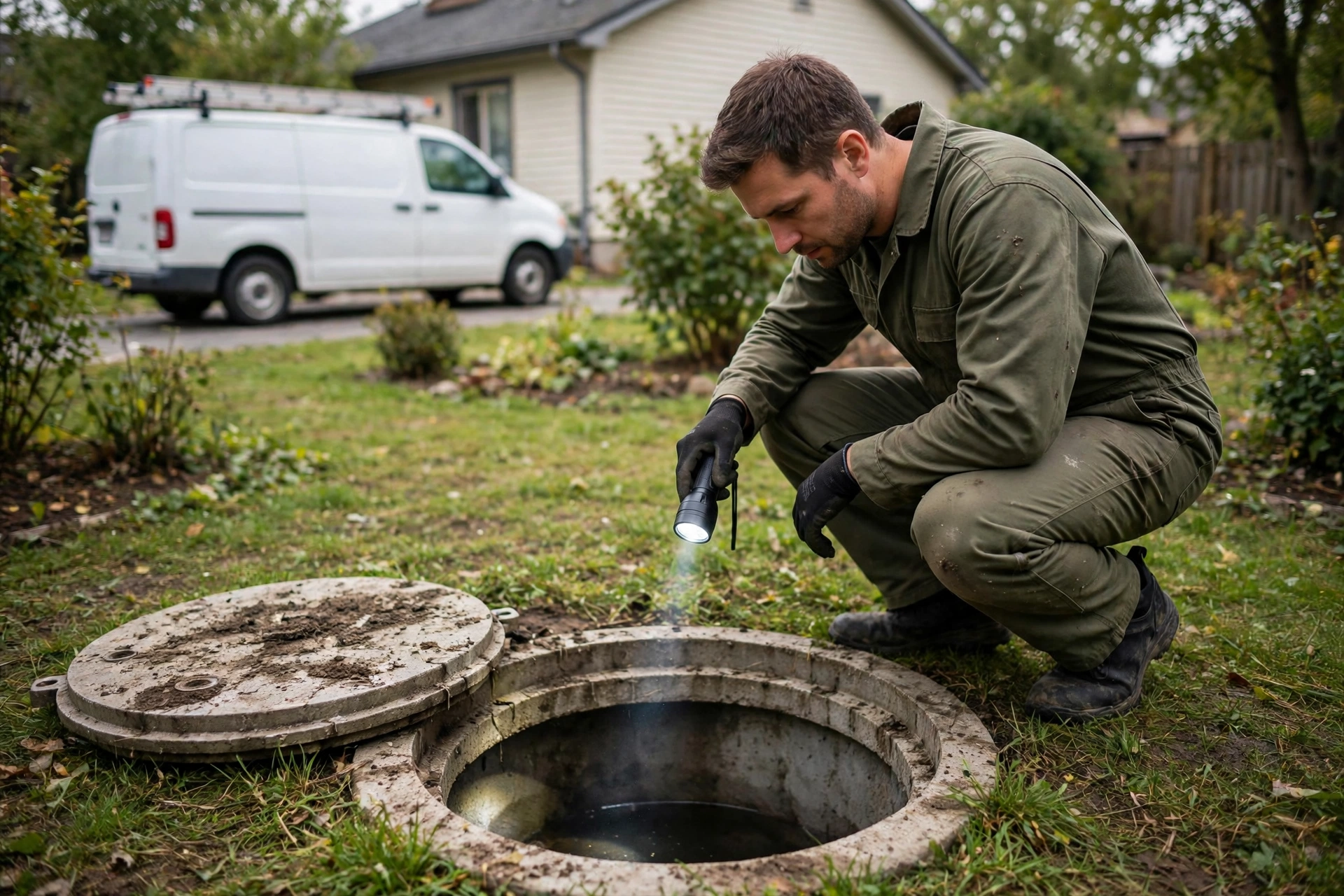
If you are unsure whether the signs you have seen are serious enough to call, it is still worth calling. A short conversation with a licensed professional costs nothing, and it can save you from a much larger repair later. Describe the signs clearly, mention when they started, and say what you have already done to reduce water use. For guidance on the situations that should never wait, see our guide to when to call a septic professional immediately. The general rule is simple. If the yard is wet with sewage, if the smell is strong, or if the house is backing up, call now and let the professional decide how urgent it is.
Preventing the Next Overflow
Prevention is mostly a matter of routine. Pump the tank every three to five years, or on the schedule your professional recommends for your household, and keep a record of the date. Spread laundry across the week, fix leaking toilets and taps promptly, and avoid sending large amounts of water into the system in a short time. Keep grease, wipes, and chemicals out of the drains, and keep vehicles, heavy equipment, and new construction off the drain field. Direct gutters and surface water away from the septic area, and keep trees with aggressive roots at a distance from the pipes and the field.
What Happens to the Yard After an Overflow
Once the cause has been fixed and the tank has been pumped, the yard still needs time to recover. The wet area should be left alone until it dries, and it should not be mowed, dug, or walked on more than necessary while the soil is still saturated. Grass that was damaged by sewage will often recover on its own once the source is gone, but it may take several weeks, and the soil may need to be tested if the overflow was large or went on for a long time. A professional can advise whether testing is needed, especially if the overflow was near a vegetable garden, a play area, or a well.
Cleanup of the surface is a job to approach with care. Do not hose the area toward a drain, a stream, or a neighbour’s yard, because that only spreads the contamination. Solid waste should be removed with gloves and disposed of as the professional advises, and any tools or shoes that touched the area should be washed outside with soap and water. If sewage entered the house as well, the indoor cleanup needs disinfecting and drying, and soft materials that cannot be cleaned properly may need to be thrown away. The yard will look ordinary again long before the soil has fully recovered, so keep children and pets off the area for longer than feels necessary, and let the ground dry and settle before treating it as normal lawn again.
The Bottom Line
An overflowing septic tank rarely arrives without warning. Standing water, soggy ground, unusually green grass, a sewage smell, slow drains, and a sounding alarm are all signs that the system is struggling, and they deserve attention while the fix is still manageable. Keep children and pets away from any standing sewage, stop using water as much as you can, and call a licensed professional to find the cause. With prompt action and regular care, most overflows can be resolved before they damage the drain field or the home, and the yard can return to being an ordinary yard again.
Greetings Glows Team is dedicated to creating meaningful, helpful, and thoughtfully curated content for everyday inspiration and special moments.
What We Focus On:
Well-researched and reader-friendly articles.
Meaningful greetings, blessings, prayers, and inspirational messages.
Carefully curated ideas for everyday life and special occasions.
Clear, helpful, and engaging information.
Consistent quality and attention to detail in every publication.
Our goal is simple: to make every visit worthwhile with content that inspires, informs, and brings a little more positivity to your day.