A full septic tank smells like rotten eggs or raw sewage, and the exact character of the smell tells you what is going on. A sharp sulfur or rotten egg odor comes from hydrogen sulfide gas, which anaerobic bacteria release as they break down waste in an overfull tank. A heavier, more putrid raw sewage smell usually means solids are escaping where they should not, or that wastewater is surfacing. Here is the part most guides skip: where you smell it matters more than the smell itself. An odor at your bathroom drain points to a different problem than the same odor over your yard, and each one leads to a different fix.

One honest note before we go further. A healthy septic system is essentially odorless. You should not be able to smell your tank from the yard, and you should never smell sewage inside your house. If you are noticing an odor, something in the system is off. That does not always mean an emergency, but it does mean the system is asking for attention.
The two signature smells
Almost every septic smell falls into one of two categories. Learning to tell them apart is the first step in figuring out what is wrong.
Rotten egg or sulfur smell
This is the most common septic odor and usually the first sign that a tank is getting full. The smell is sharp and unmistakable, like eggs that have gone bad. It comes from hydrogen sulfide, a gas produced by anaerobic bacteria as they digest organic waste without oxygen. Some hydrogen sulfide is always present inside a working tank, and under normal conditions it vents safely up through your roof vent. When the tank is nearly full, solids take up so much space that gas has less room and more pressure, and more of it gets pushed into places you can smell it. You might notice this smell near the tank lid, around the yard, or drifting from a roof vent on a still day.
A faint rotten egg whiff near the tank right after pumping or during hot weather can be temporary. A strong or persistent sulfur smell is not. It usually means the tank needs service, the lid is not sealing properly, or the vent stack is blocked and gas is finding an easier path out.
Raw sewage odor
This one is heavier, earthier, and more nauseating than the sulfur smell. It smells like exactly what it is: untreated wastewater. You notice it when effluent or solids are reaching the surface or backing up into the home. Common causes include a drain field that is failing and letting effluent pond at the surface, a tank so full that solids are washing out toward the field, or a backup pushing sewage into drains and toilets. If you walk across your yard and catch a strong sewage smell, especially over the drain field area, treat it as the most serious of the common septic smells.
Where the smell shows up, and what the location means
Two homeowners can describe the exact same smell and need completely different fixes, because location is the real diagnostic clue. Work through where you notice the odor and compare it to the patterns below.
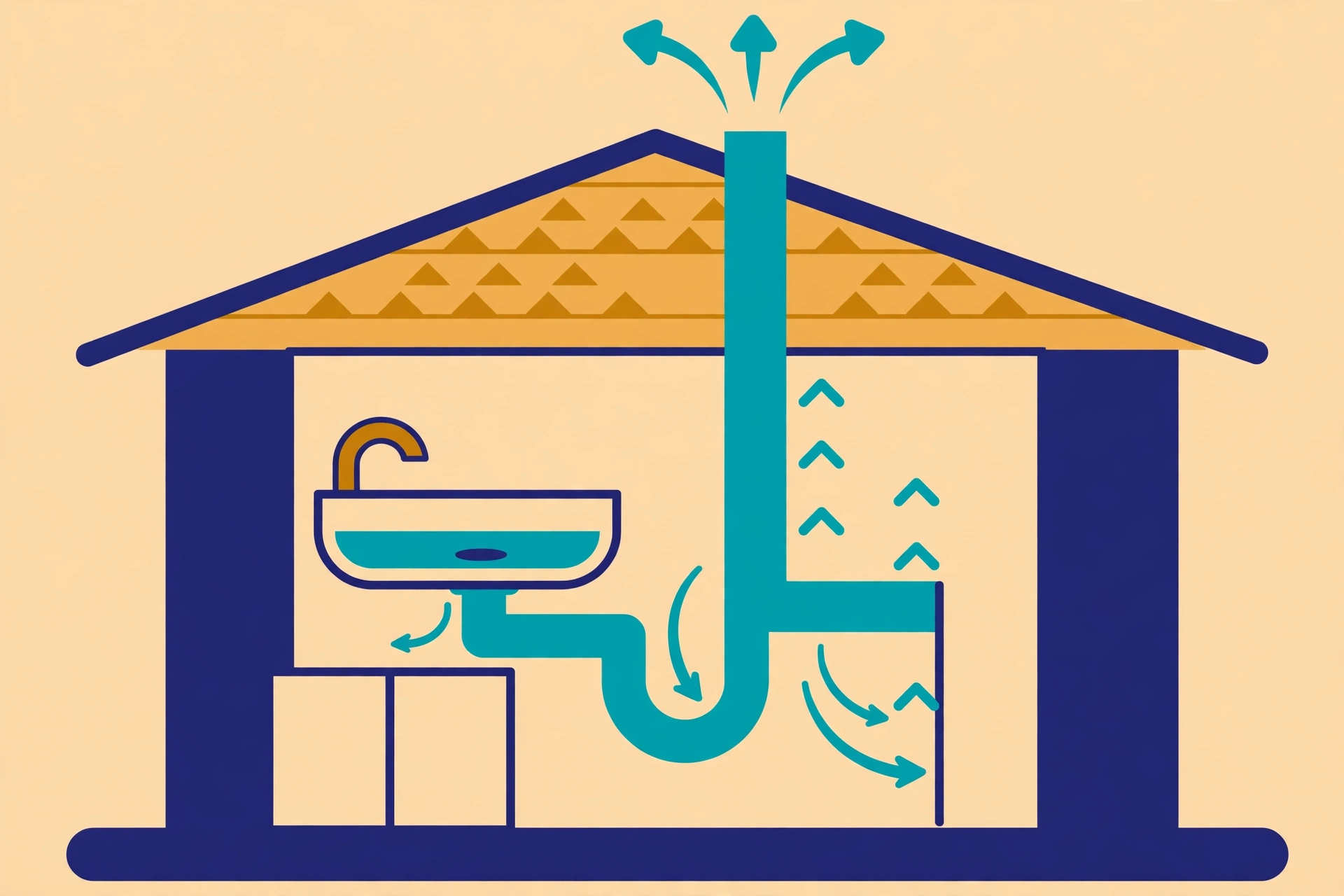
Smell coming from indoor drains or toilets
When the odor is inside the house, especially around sinks, showers, or toilets, sewer gas is traveling back up through the plumbing. Every drain in your home has a curved section of pipe called a P-trap that holds a small amount of water. That water forms a seal that blocks sewer gas from entering the room. If a trap dries out because a guest bathroom has not been used in weeks, the seal breaks and gas flows in freely. This is the easiest septic smell to fix, and it has nothing to do with whether your tank is full.
Indoor smells can also come from a blocked roof vent. Your plumbing system breathes through a vent pipe that runs up through the roof. When it works, it carries sewer gas safely up and out while keeping drain pressure balanced. When it gets blocked by leaves, a bird nest, or ice, pressure builds in the lines and gas can be forced through drain traps into the house. If the smell shows up in several fixtures at once, or if drains are gurgling along with the odor, a vent problem is a strong suspect. Our guide to diagnosing indoor sewage smells walks through this in more detail.
Smell near the tank lid in the yard
A sulfur smell right around the tank itself often means the tank is due for pumping. As sludge builds up, the gas layer gets compressed and pushes harder against the lid and any weak seals. If the lid is cracked, shifted, or poorly sealed, that gas escapes right where you can smell it. Wind direction matters here. On a breezy day the smell may vanish; on a still, humid evening it can hang around the yard. Smell near the tank that fades and returns with the weather is still worth taking seriously, because it confirms gas is escaping from a tank under more pressure than it should be.
Smell over the drain field
This is the one to act on fastest. The drain field, sometimes called the leach field, is where treated liquid from the tank disperses into the soil. In a healthy system, you should never smell anything there. A sewage or sulfur smell over the field means effluent is reaching the surface instead of filtering down through the soil. That can happen when a full tank pushes solids into the field and clogs the soil pores, or when the field itself is saturated from heavy rain or excessive water use. Look for soggy ground, unusually lush grass, or standing water in the same area. Any of these alongside the smell means the field is struggling, and this is the smell that most urgently needs a professional.
Smell near the roof vent
A faint odor near the roof vent on a calm day is usually normal. That vent exists to release the gases your tank naturally produces. But a strong or persistent smell at the vent, or a smell from the vent that you notice from the ground, can signal that the tank is generating more gas than usual or that the vent is partially blocked and releasing gas in bursts. It is also worth knowing that wind and roof shape can push vent air down toward patios or open windows, which makes a normal vent seem like a problem. If the smell at the vent is new or much stronger than usual, add it to the evidence rather than dismissing it.
To make the mapping quick to scan, here is the short version:
| Where you smell it | Likely cause | How urgent |
|---|---|---|
| One indoor drain | Dry P-trap | Low, usually a five-minute fix |
| Several indoor drains | Blocked roof vent or full tank | Moderate, investigate promptly |
| Around the tank lid | Full tank or bad lid seal | Moderate, schedule pumping |
| Over the drain field | Failing or saturated field | High, call a professional |
| At the roof vent | Normal venting or blockage | Low to moderate, watch and check |
Why a full tank produces these gases
Understanding what is happening inside the tank makes the smells less mysterious and the fixes more obvious. Your septic tank is a settling chamber. Wastewater flows in, heavy solids sink to the bottom as sludge, lighter material floats to the top as scum, and relatively clear liquid in the middle flows out to the drain field.

Anaerobic bacteria live in the sludge layer and slowly digest the solids. This digestion is exactly what you want, and it produces gases as a byproduct, mainly hydrogen sulfide and methane. In a tank with plenty of free space, these gases collect in the airspace above the liquid and exit harmlessly through the vent system. This is the quiet, odorless operation you never notice.
When pumping is overdue, the sludge layer grows thicker and thicker until it eats into the clear zone. Three things happen at once. First, there is less airspace, so the same amount of gas gets squeezed into a smaller volume at higher pressure. Second, the bacteria have more sludge to digest, so they produce gas faster. Third, solids get closer to the outlet, where they can wash into the drain field. The pressurized gas looks for any exit: a weak lid seal, a dry trap, a partially blocked vent. That is why a full tank smells and an empty one does not. The bacteria in your tank are doing their job either way. They just need enough room to work in, which is why pumping on schedule matters so much.
Simple checks to try before calling anyone
Before you pick up the phone, run through these homeowner checks. They cost nothing, take minutes, and rule out the most common non-emergency causes.
Start inside. If the smell comes from one drain, run water in it for thirty seconds. If the drain has not been used in a while, the P-trap was probably dry, and refilling it restores the seal. Check every rarely used fixture: guest bathrooms, basement sinks, floor drains. If the smell fades within an hour, you found it.
Next, think about the roof vent. You do not need to climb up there yourself. From the ground with binoculars, or from an upstairs window, look for visible leaves, debris, or a nest around the vent opening. If you had recent snow or an ice storm, the vent may be capped with ice. A blocked vent is a common cause of whole-house odors and gurgling drains, and clearing it often solves the problem immediately.
Then consider recent water use and weather. Did you do several loads of laundry back to back, host guests, or run the dishwasher repeatedly? A sudden surge of water can stir up the tank and push gas and odors through the system temporarily. Heavy rain can do something similar by saturating the soil around the drain field, which slows absorption and lets smells surface. If the odor appeared right after a big rain or a house full of visitors and fades within a day or two, the system may just be catching up.
Finally, walk the yard. Note exactly where the smell is strongest: at the tank lid, spread across the drain field, or drifting from one spot. Check for soggy ground or unusually green grass over the field. This quick walk gives a professional enormously useful information if you do end up calling one.
When to call a septic pumper, and when to call a plumber
Homeowners often call the wrong professional first and lose days. The split is straightforward: plumbers handle the pipes inside and around your house, while septic pumpers and septic service companies handle the tank and drain field.
Call a plumber when the problem is clearly in the house plumbing. That includes a blocked roof vent you cannot safely clear yourself, persistent odors from fixtures after you have refilled the traps, or gurgling drains with no yard symptoms. A plumber can camera-inspect the lines, clear vent blockages, and confirm the indoor plumbing is sound.
Call a septic pumper or septic service company when the signs point to the tank or field. That means a sulfur smell concentrated around the tank lid, odors over the drain field, soggy ground, sewage surfacing in the yard, or slow drains throughout the whole house that suggest the tank is full. If you cannot remember the last pumping, or it has been more than three to five years, start with the pumper. Pumping is routine maintenance, and a good pumper will also inspect the tank and tell you if something bigger is wrong.
A word on urgency. A faint, occasional sulfur whiff near the tank can wait for a scheduled pumping appointment. Sewage smells inside the house, sewage surfacing in the yard, or any smell paired with backups or standing water should be treated as urgent. Wastewater where people or pets can contact it is a health hazard, and a failing drain field gets more expensive the longer it is ignored.
A quick note on safety
Septic gases deserve respect. Hydrogen sulfide and methane are the main ones your tank produces. In the open air of a yard, at the low levels that drift from a vent or a lid, they are unpleasant rather than dangerous, which is why a smell outdoors is a warning sign and not an emergency in itself. The real danger is in enclosed spaces: a tank interior, a pump chamber, or a pit where gases can concentrate.
Never enter a septic tank, and never lean into an open tank to look around. If a lid is off and the smell is strong, step back, ventilate the area by simply moving away, and keep children and pets clear. If someone feels dizzy or ill near an open tank or in a confined space with sewage odor, get them to fresh air immediately and call emergency services. This is not the place for do-it-yourself courage. The gases can displace oxygen without much warning, and that is how routine tank mishaps turn tragic.
How to keep the smell from coming back
Once the immediate problem is handled, a few steady habits keep your system odor-free for years.
The single most effective habit is pumping on schedule. For most households that means every three to five years, adjusted for tank size and the number of people in the home. Mark it on the calendar the way you would any other home maintenance. Waiting until you smell something means waiting too long.
Watch your water habits. Septic systems handle a steady flow far better than sudden floods. Spread laundry across the week instead of doing it all on Saturday, fix running toilets and dripping faucets promptly, and avoid dumping large volumes of water down the drains in a short burst. Each surge stirs up the tank and gives solids a chance to reach the field.
Be careful what goes down the drains. Grease, coffee grounds, wet wipes even the ones labeled flushable, and harsh chemical cleaners all make the bacteria’s job harder and sludge accumulate faster. The faster sludge builds, the sooner the tank fills, and the sooner the smells return. The EPA’s SepticSmart homeowner guidance is a solid, plain-language reference for what a septic system can and cannot handle.
Finally, protect the drain field. Keep vehicles, heavy equipment, and livestock off it, since compacted soil cannot absorb effluent properly. Do not plant trees or large shrubs near it, because roots seek out the moisture and invade the pipes. And direct roof gutters and surface water away from the field so it never has to absorb rainwater on top of your household wastewater.
The bottom line
A full septic tank announces itself with a rotten egg sulfur smell or a heavy raw sewage odor, and the location of the smell tells you what is wrong. Indoor drain smells usually trace back to a dry trap or a blocked vent. Smells at the tank lid point to a tank that needs pumping. Smells over the drain field are the most serious and deserve a professional promptly. Work through the simple checks first, call the right professional second, and keep up with pumping and water habits so the smell never comes back. Your nose is one of the best early warning tools your septic system has. When it speaks up, listen.

Greetings Glows Team is dedicated to creating meaningful, helpful, and thoughtfully curated content for everyday inspiration and special moments.
What We Focus On:
Well-researched and reader-friendly articles.
Meaningful greetings, blessings, prayers, and inspirational messages.
Carefully curated ideas for everyday life and special occasions.
Clear, helpful, and engaging information.
Consistent quality and attention to detail in every publication.
Our goal is simple: to make every visit worthwhile with content that inspires, informs, and brings a little more positivity to your day.