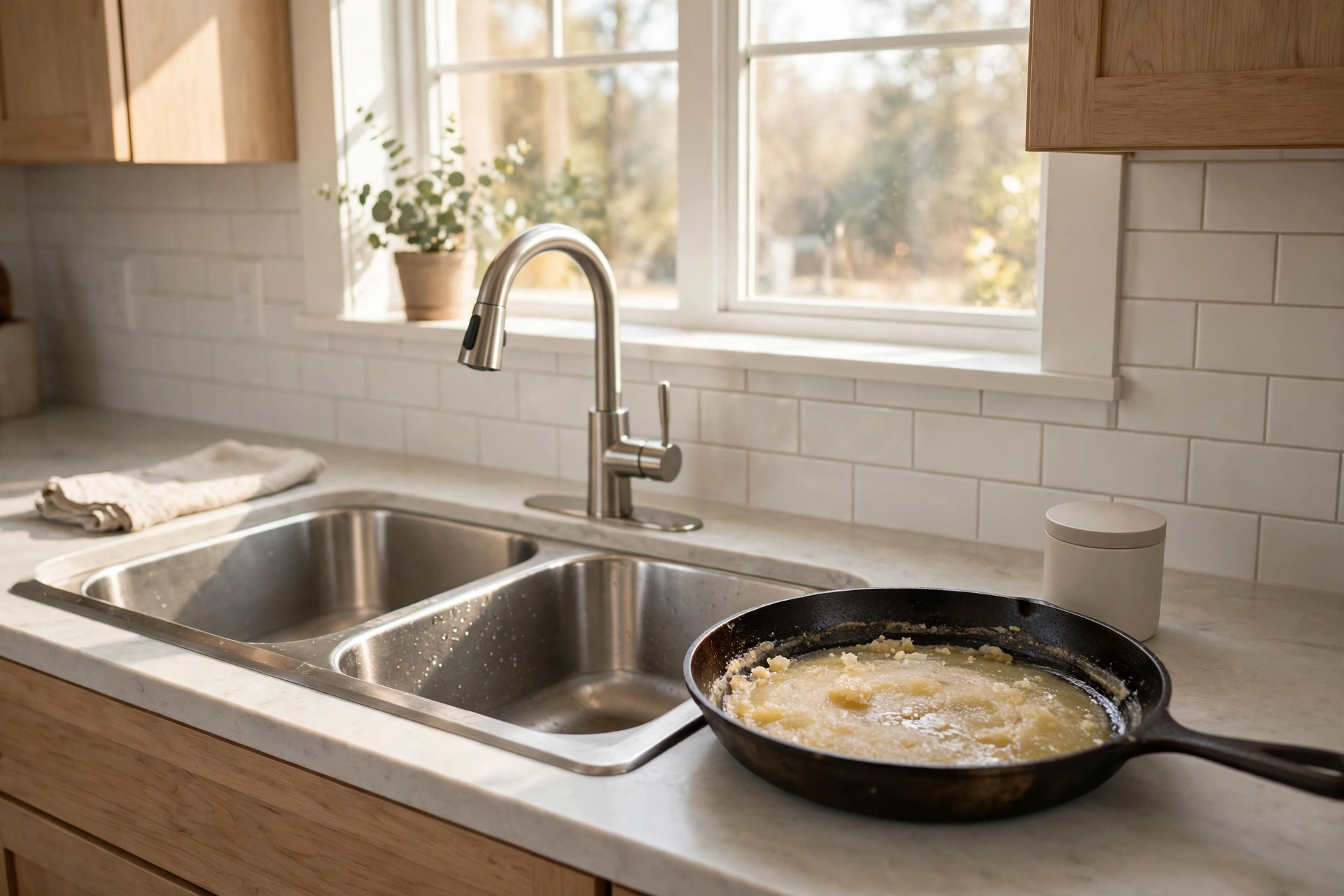
Every home cook has faced the same moment. The bacon is done, the pan is full of hot fat, and the sink is right there. It feels like the easiest thing in the world to tip the pan and let the grease wash away. If your home runs on a septic system, though, that small habit can cause real trouble, and the damage usually builds quietly over months before anything seems wrong.
So can you pour grease down drain with septic? The short answer is no. Cooking grease, oil, and fat do not belong in any drain connected to a septic system, even in small amounts and even when they look liquid. The United States Environmental Protection Agency advises homeowners never to pour cooking oil or grease down the drain, and that advice exists for a good reason. Grease cools, hardens, and sticks. It coats pipes, thickens the scum layer in the tank, and can eventually reach the drain field, where it is far harder and more expensive to deal with.
This guide explains what actually happens to grease after it leaves your sink, why the usual workarounds like hot water and dish soap do not help, and what to do with cooking grease instead. It also covers the warning signs that grease has already caused a problem and what to do if you have been pouring it down the drain for a while. None of this requires special equipment or a big change to how you cook. It only takes a small change to how you clean up.
Can You Pour Grease Down Drain With Septic? The Short Answer
No, you should not pour grease down the drain when your home has a septic system. That includes bacon fat, frying oil, melted butter, meat drippings, and the oily liquid left in a roasting pan. It also includes the thin film of oil left on a plate or in a skillet after cooking. All of it travels to the same place, and all of it adds to the same problem.
The reason is simple. A septic system is not a sewer. In a home connected to a city sewer, wastewater leaves the property and enters a large public system built to handle it. In a septic home, everything that goes down the drain stays on the property. Wastewater flows into the septic tank, where solids settle and fats float, and then liquid effluent moves out to the drain field in the yard. The system depends on bacteria breaking down waste slowly and on soil absorbing and treating the liquid. Grease interferes with both of those jobs.
Grease is liquid when it is hot, which is exactly why it seems harmless. It pours easily, it disappears down the drain, and the sink looks clean afterward. But household pipes cool quickly once the grease moves away from the stove. Within a short distance, the fat begins to solidify and cling to the inside of the pipe. The next load of grease sticks to the first. Over time the opening narrows, water drains more slowly, and food particles and other debris catch on the sticky surface. What started as a thin coating can become a real blockage.
Some of the grease does make it past the house plumbing and into the septic tank. There it floats to the top and joins the scum layer, the floating mat of fats, oils, and light solids that sits above the liquid in the tank. A normal scum layer is expected and manageable. A scum layer that grows too thick can block the outlet baffle, the fitting that lets liquid leave the tank while holding solids back. When that happens, solids and grease can escape into the drain field, where they coat soil particles and reduce the soil’s ability to absorb water. Drain field damage is the most serious outcome, because it is the hardest and most expensive part of the system to repair or replace.
What Happens to Grease After It Goes Down the Drain
Following a spoonful of grease through the system makes the problem easy to understand. It travels through three stages, and it can cause trouble at each one. The first stage is the house plumbing. The second is the septic tank. The third is the drain field. Most homeowners only notice a problem at the first stage, when a drain slows down, but the later stages are where the real cost lives.
Stage One: Grease Coats the Pipes
Hot grease leaves the pan as a liquid and enters the drain. Almost immediately it meets cooler water and cooler pipe walls. Kitchen drain pipes run through walls and under floors that are far cooler than a hot skillet, especially in winter. As the grease cools it turns from a free-flowing liquid into a soft solid, then into a firm, waxy coating on the inside of the pipe.
The coating is sticky. Soap scum, food crumbs, coffee grounds, and hair catch on it and add to the buildup. Each cooking session adds another thin layer. The pipe does not clog all at once. It narrows gradually, so the first sign is often a sink that drains a little more slowly than it used to, or a faint gurgling sound when the dishwasher runs. Homeowners sometimes assume the drain is just getting old. In many cases it is simply lined with grease.
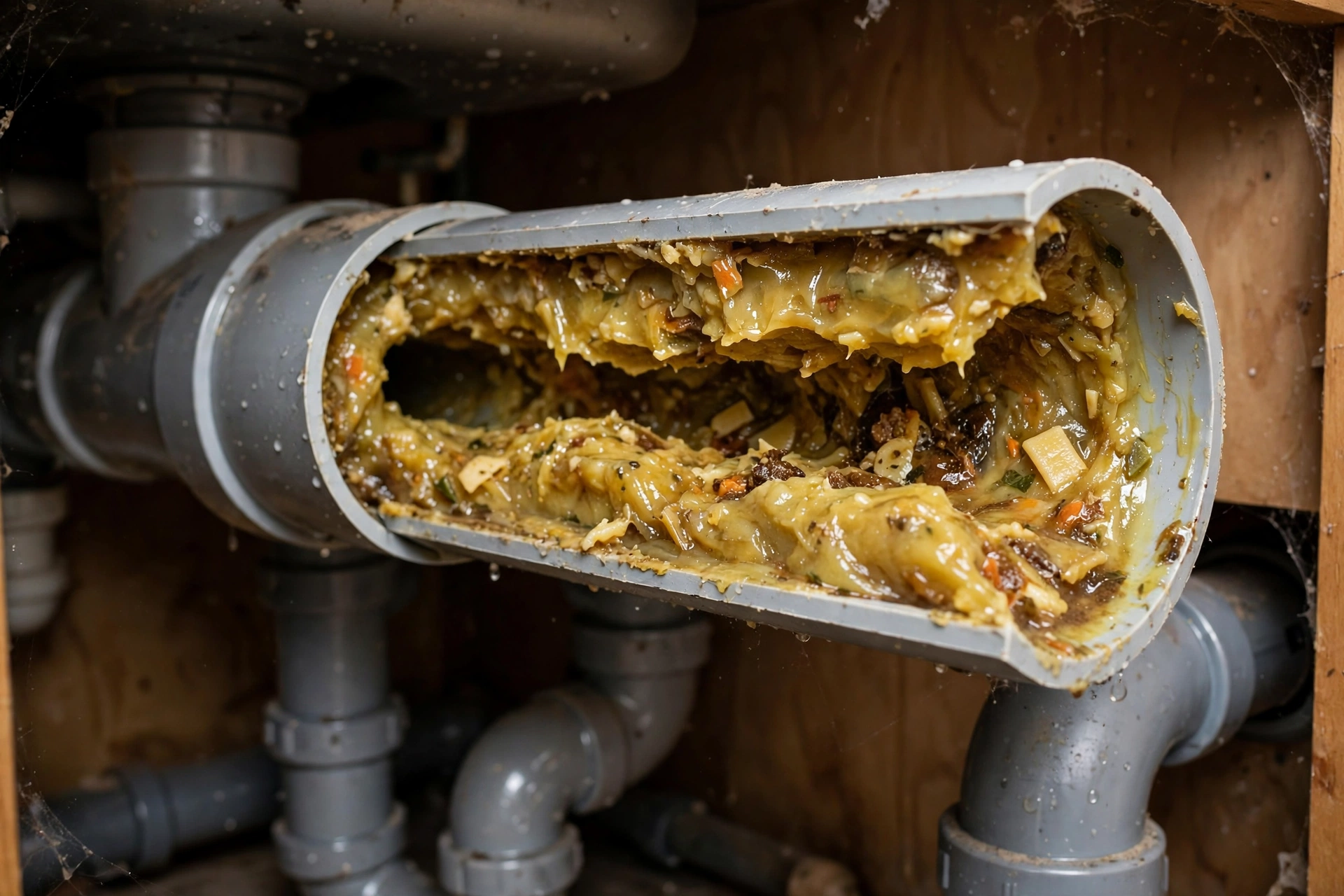
Kitchen drains are the most common trouble spot, but grease can also affect the main building drain that carries all household wastewater to the tank. A heavy buildup there can slow every fixture in the house. If several drains slow down at the same time, the problem may be further along the line than the kitchen sink.
Stage Two: Grease Thickens the Scum Layer in the Tank
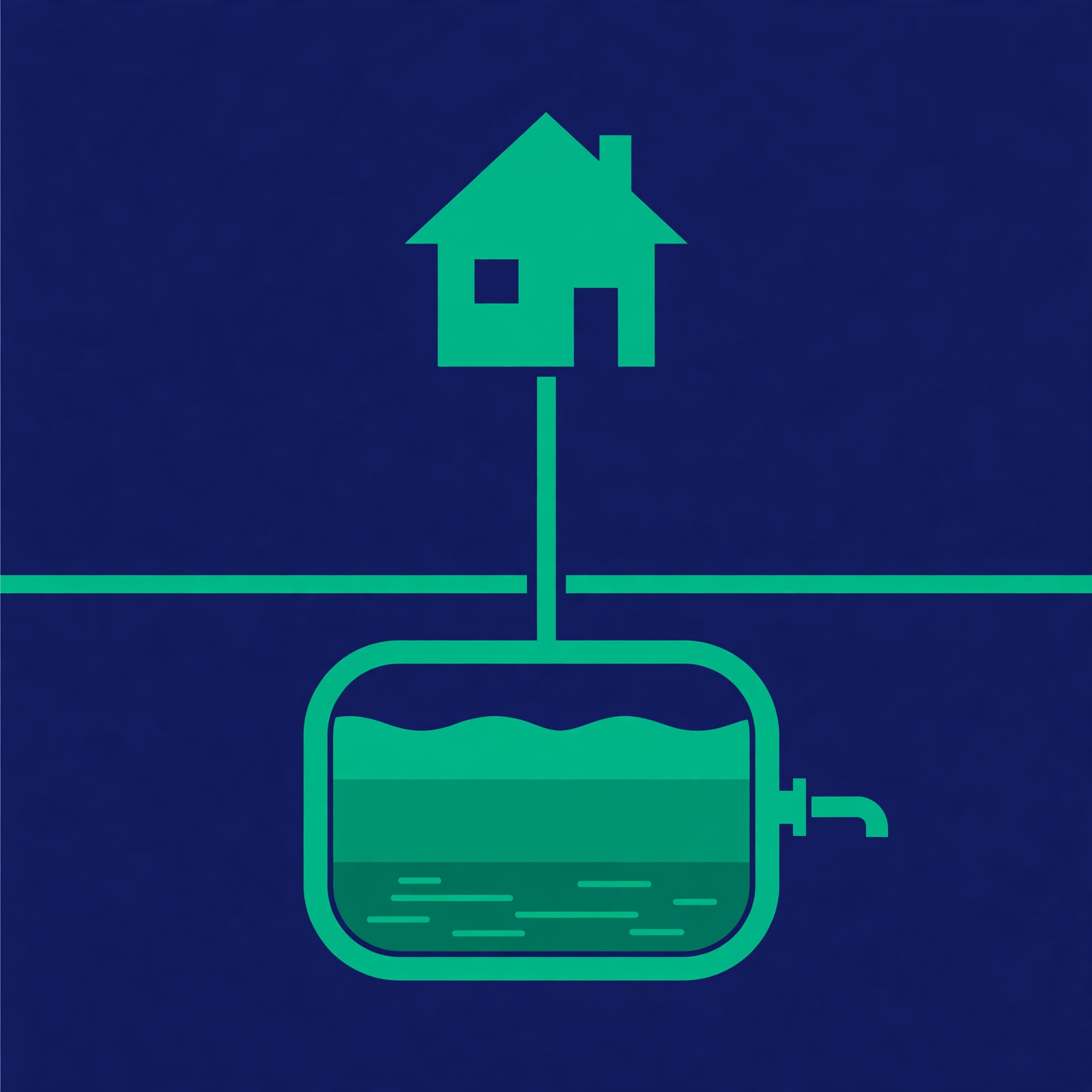
Whatever grease gets past the house plumbing arrives in the septic tank, where it floats. The tank works by separation. Heavy solids sink to the bottom and form sludge. Lighter material, including fats, oils, and grease, rises to the top and forms the scum layer. Clear liquid sits in the middle and flows out to the drain field. This separation only works when there is enough room in the tank for all three layers.
Grease adds directly to the scum layer, and it does not break down quickly. The bacteria in a septic tank digest organic waste slowly, and fats are among the slowest materials to break down. A steady diet of grease makes the scum layer grow thicker than it should. A thick scum layer can reach the outlet baffle or the effluent filter, if the tank has one, and restrict the flow of liquid out of the tank. In the worst case, scum and solids can be pushed through the outlet and into the drain field.
This is also why grease can make the tank seem full sooner than expected. The tank is not actually full of wastewater. It is full of scum and sludge that have taken up the space meant for separation. The only fix at that point is pumping, and a tank that needs pumping more often than it should is a sign that too much solid material is entering it. Grease is one of the easiest sources of that material to control.
Stage Three: Grease Reaches the Drain Field
The drain field is a network of shallow trenches or pipes buried in the yard, surrounded by soil and gravel. Treated liquid from the tank flows into the field and seeps into the soil, where natural processes finish treating it. The soil needs open pores to absorb the liquid. Grease that escapes the tank coats those soil particles with a thin, water-resistant film. The soil can no longer absorb liquid as well as it should.
A drain field damaged this way does not fail overnight. It fails gradually, as more and more of the soil becomes coated. The early signs are subtle. The grass over the field may grow greener and lusher than the rest of the yard, because it is getting extra moisture and nutrients. The ground may feel soft or spongy after rain. Later the signs become harder to ignore, with standing water over the field, sewage odors in the yard, or wastewater backing up into the house.
Repairing a failed drain field is one of the most expensive septic jobs a homeowner can face. In many cases the field cannot simply be cleaned. It must be repaired or replaced, and that can involve excavation, new pipe, and sometimes a whole new field in a different part of the yard. Local rules may also require permits and inspections before the work can begin. Keeping grease out of the system is a small daily habit that protects against a very large bill.
Why Hot Water, Dish Soap, and the Garbage Disposal Do Not Fix It
Most people who pour grease down the drain are not careless. They have a workaround in mind, and the workaround sounds reasonable. The three most common ones are running hot water, adding dish soap, and using the garbage disposal. Each of them feels like it solves the problem. None of them does, because none of them removes the grease from the wastewater. They only move it to a different part of the system.
Hot water is the most popular trick. The idea is that if the water is hot enough, the grease stays liquid all the way to the tank, where it will somehow be fine. The flaw is that the water cools as it travels. Household drain pipes are not heated. By the time the water reaches the tank, it is close to the temperature of the ground around the pipes, and the grease has already begun to solidify. Hot water simply moves the problem further down the pipe, where it is harder to reach and harder to clean. Boiling water poured after the grease does the same thing on a smaller scale. It may clear the trap under the sink for a day, but the grease reforms further along the line.
Dish soap seems like a better answer, because soap is designed to cut grease. In a sink full of soapy water, soap does break grease into tiny droplets that stay suspended in the water. That is exactly the problem. The grease is still in the wastewater. It still flows to the tank, where the soap eventually dilutes and the droplets join the scum layer again. Soap does not destroy fat. It only changes its form for a while. A small amount of dish soap used for normal washing is fine and expected. Pouring a large amount of soap after a pan of grease is not a solution, and it adds its own load to the system.
The garbage disposal is the third workaround, and it is the most misleading of the three. A disposal grinds food into smaller pieces. It does not remove anything from the wastewater. Grease poured into a running disposal goes down the same drain as grease poured straight from the pan, along with a load of ground-up food solids. The disposal makes the problem worse, not better, because it adds solids to the tank at the same time. If you want to understand how disposals and septic systems interact, it helps to read more about whether you can use a garbage disposal with a septic tank. The short version is that most septic professionals recommend limiting disposal use or skipping it entirely, and grease is one of the reasons why.
How Much Grease Is Too Much?
Homeowners often ask whether a small amount is harmless. A teaspoon of oil rinsed off a plate is not going to damage a septic system. Normal dishwashing leaves a small amount of fat in the wastewater, and the system is built to handle that. The tank always has some scum layer, and routine pumping takes care of it. The question is not whether any grease at all can enter the system. It is whether you are deliberately sending grease down the drain as a disposal method.
The line is practical, not scientific. If you are pouring or scraping a visible amount of fat from a pan, a roasting tray, or a deep fryer into the sink, that is too much. If you are rinsing a greasy pan and the water runs cloudy with oil, wipe the pan first. If you fry food regularly or cook large holiday meals, the amounts add up quickly, and the habit matters more than any single incident. A household that fries bacon every weekend and pours the fat down the sink is sending a steady supply of grease into the tank all year.
What to Do With Cooking Grease Instead
The good news is that disposing of grease properly is simple, and it takes less than a minute once it becomes a habit. The basic method is to let the grease cool, collect it in a container, and put it in the trash. Everything else is a variation on that theme.
Start by letting the pan cool enough to handle safely. Hot grease is a burn risk, and pouring it into a thin plastic container while it is still bubbling can melt the container. Once it is warm rather than hot, pour or scrape it into a container with a lid. An empty metal can, a glass jar, or a sturdy plastic container all work well. Many households keep a dedicated grease jar near the stove so the step becomes automatic.
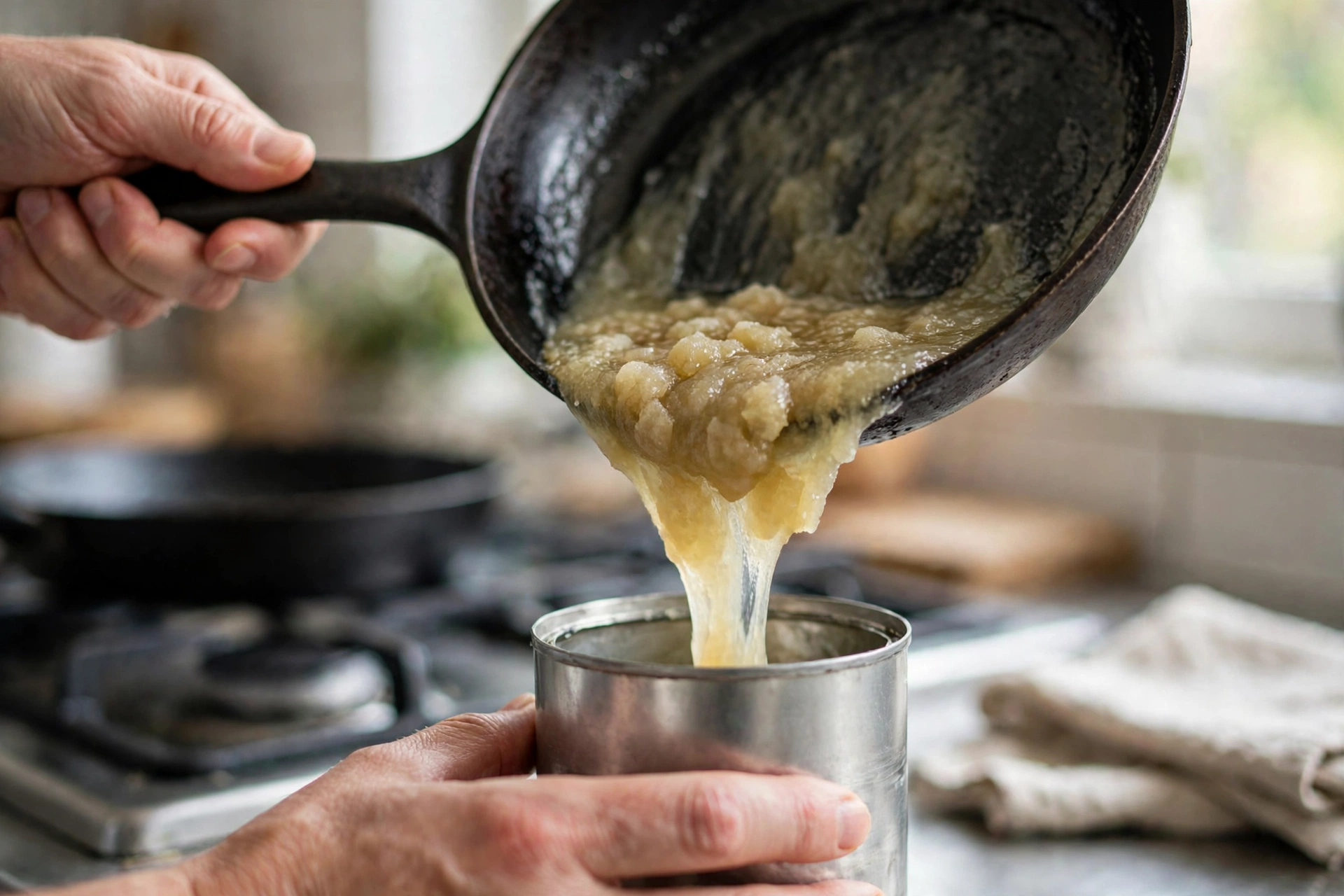
When the container is full, seal it and put it in the household trash, following your local waste rules. Some areas ask residents to double-bag grease containers or to place them in a sealed bag. If your community has a cooking oil recycling program, that is an even better option. Many towns and counties collect used cooking oil at drop-off sites or through household hazardous waste events, and some recycling centers accept it year round. Larger amounts, such as oil from a turkey fryer, are worth taking to one of these programs rather than putting in the trash. A quick check of your local waste authority website will tell you what is available near you.
For the thin film left in a pan after the bulk of the grease is gone, wipe it out with a paper towel before washing. The towel goes in the trash, and the pan can then be washed normally. This one step keeps a surprising amount of fat out of the drain, because most pans hold more residue than they appear to. It also makes washing easier, since the pan is no longer slick with oil.
There are two places grease should never go. The first is the toilet. Flushing grease is no better than pouring it down the sink, and it can clog the toilet drain as well. The second is the yard or a storm drain. Pouring grease outside creates odors, attracts pests, and can wash into waterways. The trash, or a recycling program, is the right destination. If you are unsure what else belongs in the trash rather than the drain, our guide to what not to flush with a septic system covers the full list.
A Simple Grease Routine for Everyday Cooking
The routine that works best is the one you do not have to think about. Keep a lidded container next to the stove, and wipe out pans before washing them. When you finish cooking, let the pan cool while you eat or clean up the rest of the kitchen. Pour the cooled fat into the container. Wipe the pan with a paper towel, then wash it as usual. When the container fills up, seal it and throw it away. That is the whole system.
Signs Grease Has Already Caused a Problem
Grease damage usually announces itself gradually. The signs start small, and they are easy to dismiss one at a time. Together, they tell a clear story. If you notice more than one of these, it is worth taking the problem seriously and getting help before it grows.
The earliest sign is a kitchen sink that drains slowly. Water pools for a few seconds before disappearing, or the sink fills up while the dishwasher is running. You may also hear gurgling from the drain when water is running elsewhere in the house. Gurgling means air is trapped in the pipes, which often happens when a partial blockage restricts flow. A single slow drain usually points to a problem in that fixture. Several slow drains at once point to a problem further along the line, possibly in the main drain or the tank itself.
Odors are another early warning. A greasy drain can develop a sour or rancid smell, especially in warm weather. The smell comes from food and fat decomposing in the pipes and the tank. It is different from the sharp smell of a dry trap, which usually clears after running water for a few seconds. A persistent smell that returns day after day is worth investigating.
Later signs are more serious. If wastewater backs up into a bathtub, shower, or floor drain, the system is telling you that liquid cannot get out as fast as it is coming in. Standing water or unusually lush grass over the drain field is another late sign, and it suggests that liquid is not being absorbed properly in the soil. Sewage odors in the yard point in the same direction. At that stage, the problem has moved beyond the kitchen pipes and into the system itself, and a septic professional should be called.
What to Do If You Have Already Been Pouring Grease Down the Drain
If you have been pouring grease down the drain for months or years, the first thing to do is stop. That sounds obvious, but it is the single most important step. Every pan of grease you keep out of the system from today onward is grease the tank and the drain field never have to handle. The system does not need a dramatic rescue. It needs the input to stop.
If the kitchen drain is already slow, a plumber can clear the line. Be clear with the plumber that the home has a septic system, so they use methods that are safe for it. Mechanical snaking is the usual approach for a grease buildup. Avoid chemical drain cleaners, which can harm the bacteria in the tank, and avoid pouring boiling water or solvents down the drain in an attempt to dissolve the grease. Those methods move the problem rather than solving it.
Do not try to fix the tank itself with additives or home remedies. Products that claim to dissolve grease in the tank or restore the bacteria are not a substitute for pumping, and some can do more harm than good. The bacteria in a healthy tank recover on their own once the overload stops. If you want to support the system naturally, focus on the basics: keep grease and other solids out of the drains, use water sensibly, and pump the tank on schedule. Our guide to how to clean a septic tank naturally explains the gentle habits that help a tank stay healthy without harsh chemicals or unproven products.
Finally, take a look at what else has been going down the drains. Households that pour grease down the sink often send other things down too, like coffee grounds, food scraps, and cooking water full of starch. Cleaning up the grease habit is a good moment to review the whole picture. Knowing what you can put in a septic tank to break down solids helps you separate the materials that genuinely break down from the ones that only add to the scum and sludge layers.
Grease and Septic Tank Pumping
Grease affects pumping in a straightforward way. The more grease and solid material enters the tank, the faster the scum and sludge layers grow, and the sooner the tank needs to be pumped. Most households pump their tank every three to five years, depending on household size, tank size, and water use. A household that regularly pours grease down the drain may find that schedule shortening, which means more frequent pumping bills and more chances for something to go wrong between visits.
Pumping removes the accumulated scum and sludge, including the grease that has collected on top. It does not clean grease out of the house pipes, and it does not repair a drain field that has already been coated. That is why pumping is maintenance, not a cure. It resets the tank so the system can keep working, but it cannot undo damage further downstream. The best pumping schedule is the one your tank actually needs, and the best way to keep that schedule reasonable is to keep grease out of the system in the first place.
Frequently Asked Questions
What about liquid cooking oil? It never hardens.
Liquid oil still causes problems. It coats the inside of pipes, it floats in the tank and adds to the scum layer, and it can coat soil particles in the drain field. It may stay liquid longer than bacon fat, but it does not disappear. The same rule applies: cool it, contain it, and throw it away or recycle it.
Can I put grease down the garbage disposal?
No. A garbage disposal grinds food into smaller pieces. It does not remove grease from the wastewater, and it adds ground food solids to the tank at the same time. Pouring grease into a running disposal sends grease and solids down the same pipe.
What should I do with a large amount of frying oil?
Let it cool completely, which can take several hours for a large pot. Pour it into a sturdy jug with a tight lid. Take it to a cooking oil recycling drop-off if one is available in your area, or seal it and place it in the household trash according to local waste rules. Never pour it down a drain, a toilet, or a storm drain.
I have been pouring grease down the drain for years. Is my septic system ruined?
Not necessarily. Many systems absorb years of grease without failing, especially if the tank has been pumped regularly. Stop pouring grease down the drain now, watch for warning signs like slow drains and odors, and have the tank inspected and pumped if it is due. A professional can measure the scum and sludge layers and tell you whether the system is in good shape or needs attention.
Does the EPA really say not to pour grease down the drain?
Yes. The EPA advises septic system owners never to pour cooking oil or grease down the drain, along with other guidance on keeping solids and chemicals out of the system. You can read the full guidance on the EPA septic systems page, which covers everyday care, what not to put down the drain, and when to have the system inspected and pumped.
The Bottom Line
Pouring grease down the drain with a septic system is one of those habits that feels harmless in the moment and causes trouble over time. The grease cools in the pipes, thickens the scum layer in the tank, and can eventually reach the drain field, where it is expensive to fix. Hot water, dish soap, and the garbage disposal do not change that. They only move the grease to a different part of the system.
The fix is simple and it costs nothing. Let grease cool, pour it into a container, and put it in the trash or take it to a recycling drop-off. Wipe greasy pans before washing them. Keep a container by the stove so the habit becomes automatic. That small change protects the pipes, the tank, and the drain field, and it keeps the pumping schedule where it should be.
Greetings Glows Team is dedicated to creating meaningful, helpful, and thoughtfully curated content for everyday inspiration and special moments.
What We Focus On:
Well-researched and reader-friendly articles.
Meaningful greetings, blessings, prayers, and inspirational messages.
Carefully curated ideas for everyday life and special occasions.
Clear, helpful, and engaging information.
Consistent quality and attention to detail in every publication.
Our goal is simple: to make every visit worthwhile with content that inspires, informs, and brings a little more positivity to your day.