Most septic problems do not start underground. They start in the bathroom, at the kitchen sink, or at the laundry room, in the small moment when something goes down a drain that should have gone in the trash instead. A septic system is a quiet, hardworking setup, and it handles exactly what it was built to handle. Give it anything else, and the trouble builds slowly, out of sight, until one day a drain runs slow, a toilet gurgles, or sewage backs up into the house.
The good news is that protecting your system costs nothing. It is mostly a matter of knowing what belongs in the toilet and what does not, and then building a few simple habits around that knowledge. This guide covers the full list of things you should never flush with a septic system, explains why each one causes harm, clears up the gray areas people ask about most, and shows what to do if something wrong has already gone down the drain.
How a Septic System Handles What You Flush
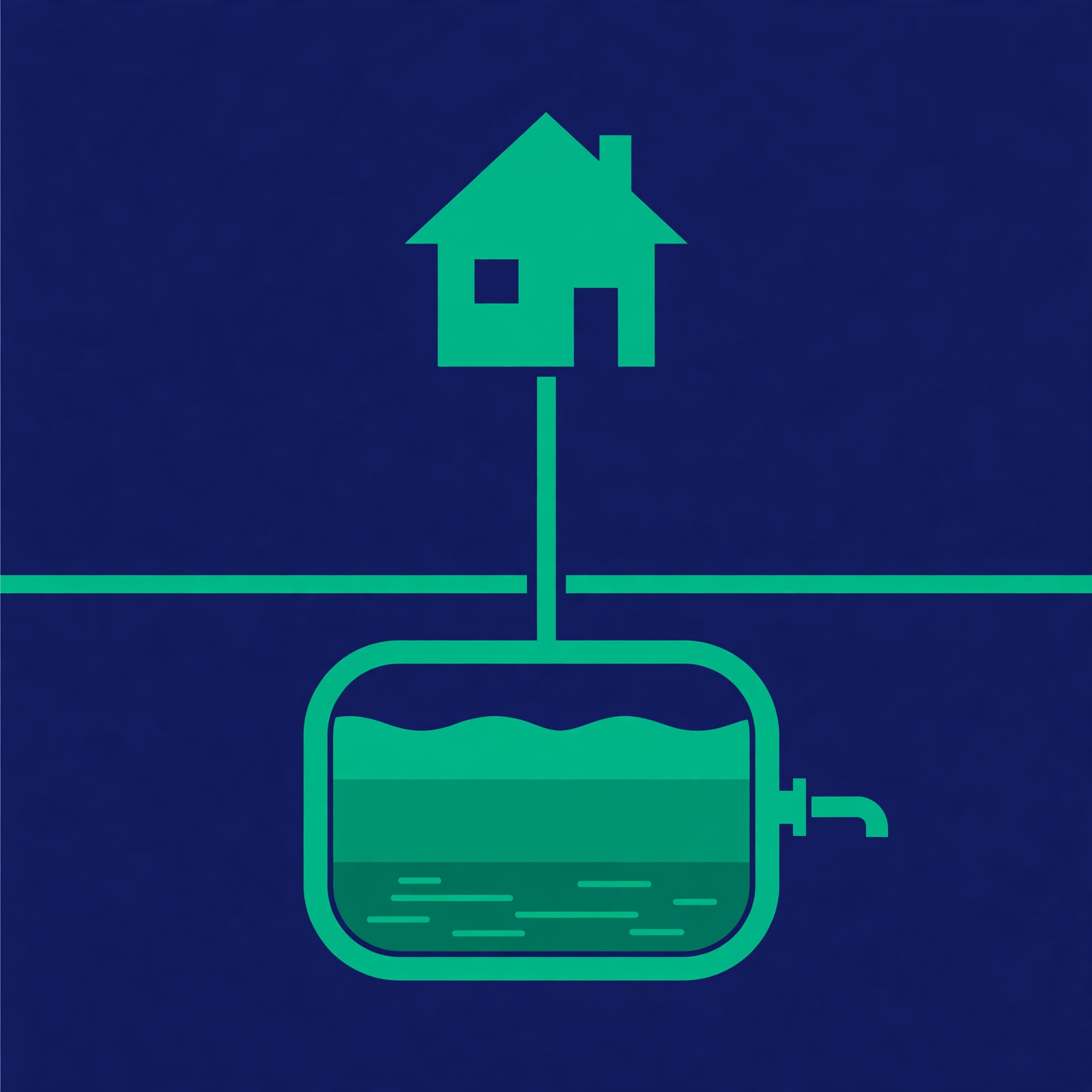
To understand why flushing the wrong things matters, it helps to know what happens after you press the handle. Everything from your home flows into a buried tank, usually made of concrete, fiberglass, or plastic. Inside the tank, waste separates into three layers. Heavy solids sink to the bottom and form sludge. Oils and grease float to the top and form a scum layer. In the middle sits a layer of mostly clear liquid called effluent.
Living bacteria do the real work in the tank. They break down the organic waste in the sludge and scum layers, slowly and steadily, day after day. The liquid in the middle then flows out through a pipe into the drainfield, a network of perforated pipes buried in shallow trenches in your yard. There, soil filters the liquid further and naturally occurring microbes finish treating it before it rejoins the groundwater.
This whole process depends on two things: only the right materials entering the tank, and enough time for bacteria and soil to do their work. When you flush something that does not break down, it adds to the sludge or scum layer, or it tangles into a mat that blocks pipes and filters. When you pour in chemicals that kill bacteria, the breakdown process stalls. When solids escape into the drainfield, they clog the soil, and soil that can no longer absorb liquid is very hard and very expensive to fix. A system that is treated well can last for decades. A system that is treated like a trash can will not.
The Simple Rule: Only the Three Ps
Septic professionals use a simple test that is easy to remember. Only three things should ever be flushed down a toilet connected to a septic system: pee, poo, and paper. That is human waste and toilet paper, and nothing else. Toilet paper is engineered to fall apart quickly in water. Almost everything else that looks disposable was designed for a municipal sewer, or for the trash, and it behaves very differently inside a tank.
If you are ever unsure about an item, the safest answer is the trash can. A small bathroom bin with a lid costs a few dollars and solves most of the problem before it starts. Keep one beside every toilet in the house, and make sure guests can see it. Many septic backups trace back to a visitor who flushed something because there was no obvious alternative.
Things You Should Never Flush
The list below covers the items that cause the most damage. Some of them clog pipes right away. Others build up slowly over months and years, filling the tank with material that bacteria cannot digest. A few harm the bacteria themselves, which weakens the whole system. All of them belong in the trash, not the toilet.
Wipes, Including Those Labeled Flushable
Wipes are the single most common cause of septic clogs, and the label on the package is the reason so many people get caught out. Baby wipes, cleaning wipes, makeup wipes, and wipes sold as flushable are made from tough fibers that hold together when wet. That is exactly what makes them useful for cleaning, and exactly what makes them a problem in a septic tank. Toilet paper falls apart within seconds of hitting water. A wipe can travel through your pipes intact, tangle with other debris, catch on the tank baffles, clog the effluent filter, and wrap around a pump if your system has one.
Over time, flushed wipes gather into dense mats that technicians find during pumping. These mats do not break down, and they can block the outlet pipe so that liquid cannot leave the tank. The result is a backup into the house or a flooded drainfield. The packaging may say flushable, but that claim is generally tested against municipal sewer pipes, not against a septic tank and drainfield. In a septic system, there is no safe wipe to flush. Every wipe goes in the trash, every time.
Feminine Hygiene Products
Pads, tampons, and panty liners are designed to absorb liquid and hold their shape. That is the opposite of what a septic tank needs. They do not break down in the tank, they swell with water, and they add solid material that has to be pumped out. Tampons have a string that can tangle with other debris and catch on filters and pump parts. Pads are large enough to block pipes on their own. Wrap these products and put them in the bathroom trash, where they belong.
Diapers and Incontinence Products
Disposable diapers, adult incontinence pads, and similar products are built from super-absorbent polymers and plastic backing that will never break down in a septic tank. A single diaper can absorb a large amount of water and expand to many times its original size, which makes it a serious clog risk. These items belong in the household trash. For families with babies or adults who use incontinence products, a lidded diaper pail or a dedicated trash bin in the bathroom makes the right choice the easy one.
Cotton Balls and Cotton Swabs
Cotton balls and cotton swabs seem small and harmless, which is why so many of them end up flushed. The problem is that cotton does not dissolve in water. Cotton balls clump together and add to the sludge layer. Cotton swabs are worse, because their plastic or wooden sticks can snag on pipes and filters, and the cotton ends come loose and tangle with other debris. A few swabs a week add up to a real volume of indigestible material over a year. Both belong in the trash.
Dental Floss
Dental floss deserves a special warning because it causes damage far out of proportion to its size. Floss is essentially a thin string of plastic that never breaks down. In a septic tank, it wraps around pump parts, tangles other debris into a net, and can bind wipes and paper into a solid mass. A single piece of floss is harmless on its own. A household habit of flushing floss every night creates a web of plastic string inside the tank that a technician will eventually have to remove by hand. Drop used floss in the trash.
Paper Towels, Tissues, and Napkins
Paper towels, facial tissues, and napkins feel like paper, so they seem like they should behave like toilet paper. They do not. These products are made to hold together when wet, because that is their job. A paper towel stays intact in water for a long time, and in a septic tank it becomes a sheet of soggy material that clogs filters and adds to the sludge. Facial tissues are similar, though softer, and they break down far more slowly than toilet paper. Napkins and shop towels are the worst of the group, since they are thick and heavily bonded. If it is not toilet paper, do not flush it.
Condoms
Condoms are made from latex or other synthetic materials that bacteria cannot break down. They float in the tank, they can clog the effluent filter, and they can pass into the drainfield, where they contribute to clogging the soil. They belong in the trash, wrapped in tissue if you prefer, and never in the toilet.
Medications
Old or expired medicines should never be flushed or poured down a drain. Prescription drugs, over-the-counter medicines, and especially antibiotics can kill the beneficial bacteria in your septic tank. Antibiotics are designed to destroy bacteria, so they do exactly that to the microbes your system depends on. Other medicines, including hormonal drugs, can pass through the treatment process and persist in groundwater. The safe way to dispose of unused medication is a pharmacy take-back program, which most communities offer, or by following the disposal directions on the medicine label. If no take-back option is available near you, the usual guidance is to mix the medicine with an unappealing substance such as used coffee grounds, seal it in a bag, and put it in the household trash.
Cat Litter
Cat litter should never be flushed, even when the bag says it is flushable. Clay and silica litter do not break down in water. They settle to the bottom of the tank as heavy grit, take up space meant for waste, and can clog pipes and the drainfield. The litter also carries parasites and pathogens that a septic system is not designed to treat. Scoop litter into a bag and put it in the trash.
Cigarette Butts
Cigarette butts are small, so they are easy to drop in the toilet without thinking. But the filter is made from a plastic fiber that does not break down, and it carries nicotine and other chemicals that can harm the bacteria in the tank. A household habit of flushing butts adds a steady stream of toxic, non-biodegradable material to the system. Use an ashtray or the trash instead.
Hair
Hair from the shower drain, from a hairbrush, or from shaving does not belong in the toilet either. Hair does not break down in a septic tank, and it tangles easily with other debris to form clumps that catch on filters and pump parts. Clean the shower drain catcher regularly, and throw hair in the trash.
Bandages and Personal Care Items
Adhesive bandages, contact lenses, makeup removal pads, and similar personal care items are all made from plastics and fibers that will not break down in a septic tank. They are small, so they seem harmless, but they accumulate and contribute to clogging. Keep a small trash bin within reach of the sink and the toilet, and these items will naturally end up in the right place.
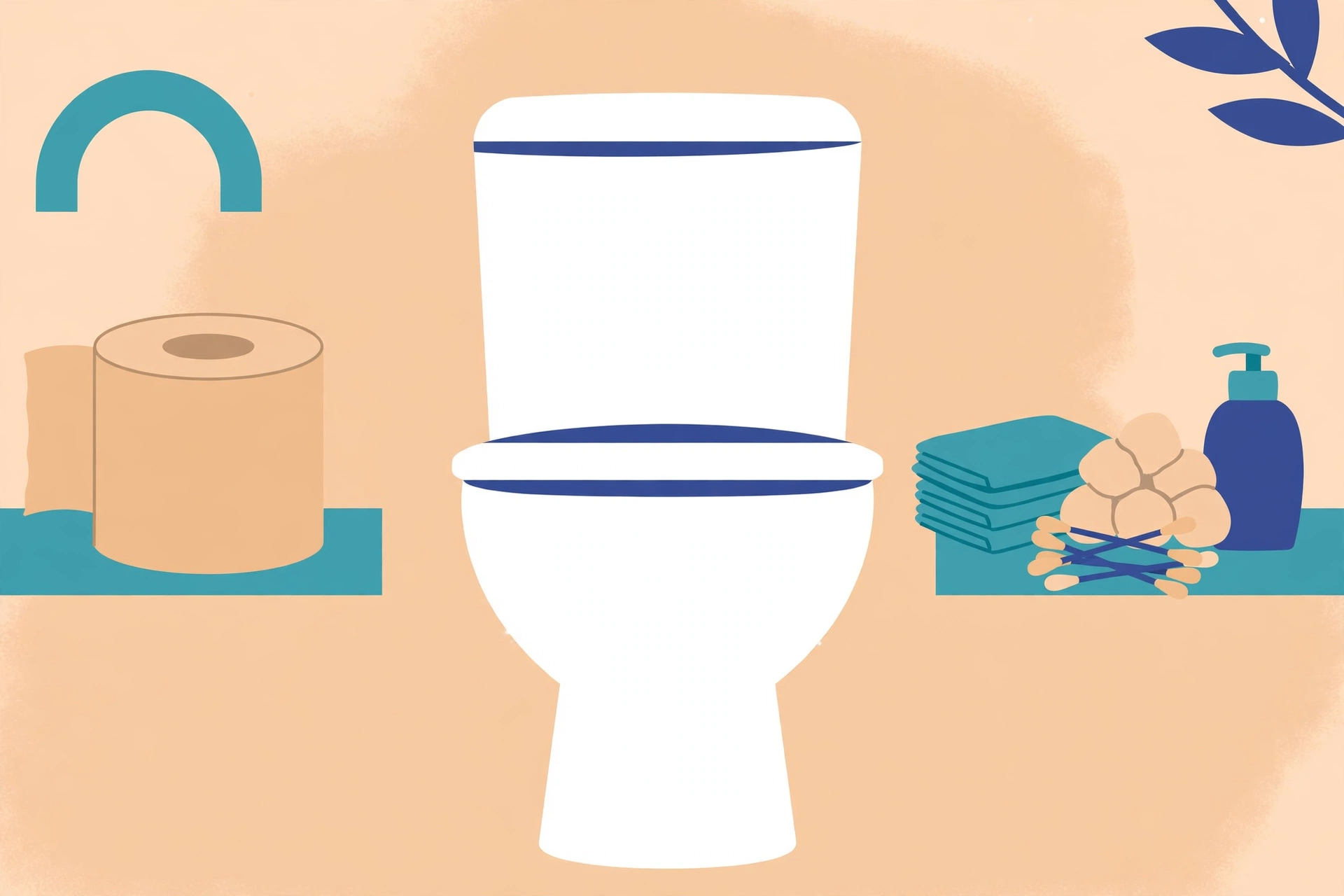
Things You Should Never Pour Down the Drain
The toilet is not the only entry point into your septic system. Everything that goes down a sink, shower, or laundry drain ends up in the same tank. Some of the worst damage comes from the kitchen and from cleaning products, so the rules for drains matter just as much as the rules for the toilet.
Cooking Grease, Oil, and Fat
Grease, cooking oil, butter, and animal fat should never be poured down a drain connected to a septic system. These substances flow as liquid when hot, but they cool, harden, and coat the inside of pipes and the walls of the tank. In the tank, they float and thicken the scum layer, which means the tank fills faster and needs pumping sooner. Grease also traps other solids as it moves through the system and can clog the pipes leading to the drainfield. Wipe greasy pans with a paper towel into the trash before washing, pour used cooking oil into a sealed container and dispose of it with household trash, and scrape plates into the garbage or compost before rinsing them.
Coffee Grounds and Food Scraps
Coffee grounds do not break down in a septic tank. They settle to the bottom as grit and add to the sludge layer. Eggshells and fibrous vegetable matter, such as celery strings, corn husks, and onion skins, are similarly resistant to bacterial breakdown. Food scraps in general add unnecessary solid load to the tank. A garbage disposal makes this worse, not better, because it turns food into small particles that look harmless but still have to be digested by the tank bacteria. If your home has a garbage disposal, use it sparingly, scrape plates into the trash or compost first, and never use it for coffee grounds, grease, or fibrous vegetables. For more on what actually helps bacteria break down solids, see our guide to what you can put in a septic tank to break down solids.
Household Chemicals, Paint, and Solvents
Paint, paint thinner, solvents, pesticides, herbicides, motor oil, antifreeze, and other household chemicals are among the most harmful things you can send into a septic system. They kill the bacteria that the system depends on, and many of them pass straight through the tank and drainfield into the soil and groundwater. Even small amounts matter, because a single dose of a strong chemical can knock back the bacterial population for days, and repeated doses can keep it from recovering. Never use a toilet, sink, or floor drain to dispose of leftover paint, brush washings, gasoline, motor oil, or garden chemicals. Take them to a household hazardous waste collection point in your area instead. The U.S. Environmental Protection Agency offers homeowner guidance on septic care at epa.gov/septic, including what should never enter the system.
Too Much Bleach and Antibacterial Cleaner
Normal household use of bleach is not a problem. A load of laundry or a cleaned bathroom sink uses amounts that the bacteria in a well-maintained tank can handle. The trouble starts when bleach or antibacterial cleaners are used in large quantities or poured down the drain in concentrated form. A strong dose can kill a large share of the tank bacteria, which slows down waste breakdown until the population recovers. Drain openers and heavy-duty antibacterial products are the worst offenders. Use regular cleaners in normal amounts, and avoid pouring straight bleach or drain cleaner into the system. If you want the details on safe amounts, our article on whether you can use bleach with a septic system covers exactly how much is safe and when to be careful.
What Happens When the Wrong Things Go In
The damage from flushing the wrong things rarely shows up all at once. It builds in stages, and the early warning signs are easy to miss or explain away. Knowing what happens inside the system makes it easier to take those signs seriously.
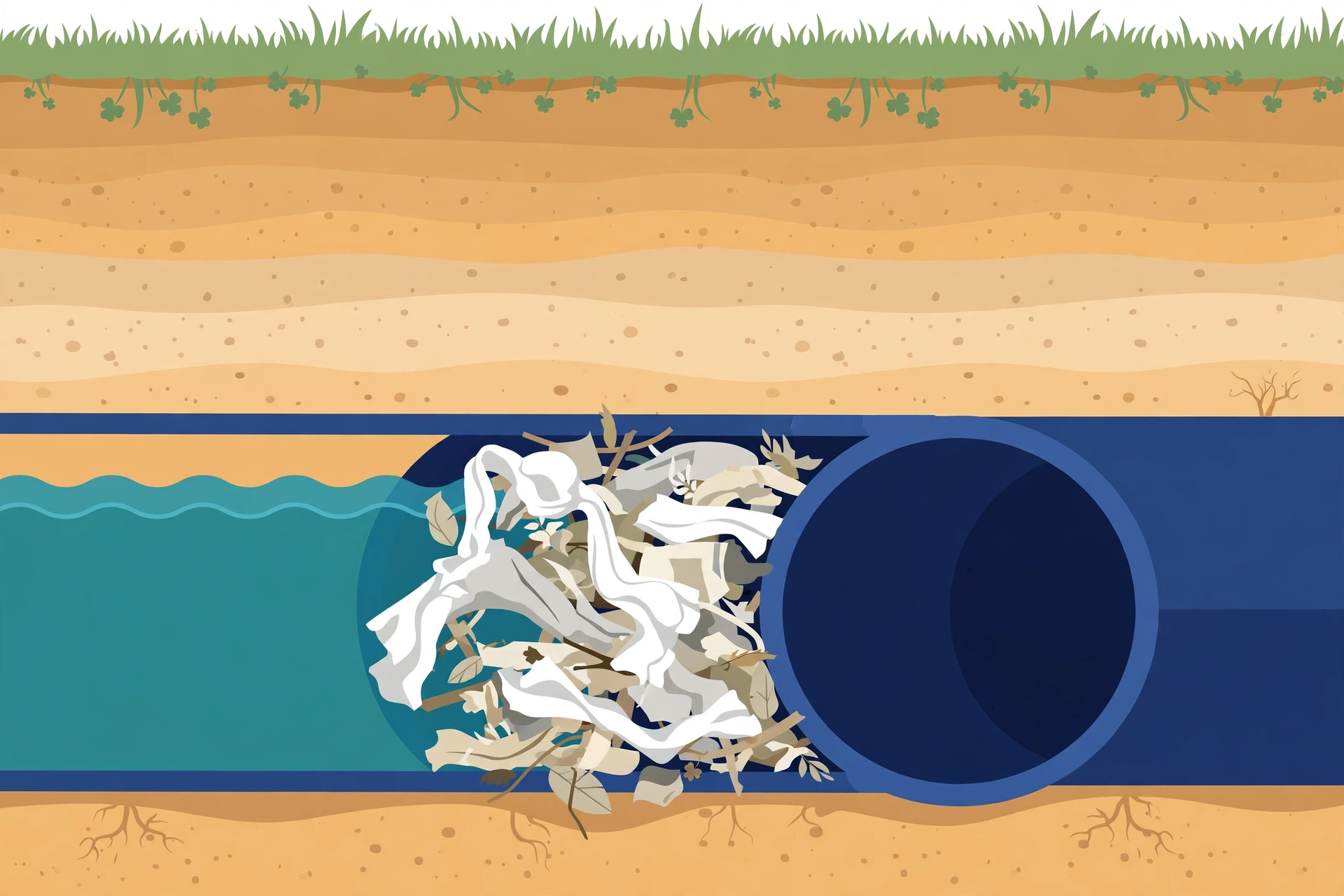
First, non-biodegradable items add to the sludge and scum layers. The tank has a fixed capacity, so every wipe, cotton ball, and paper towel that goes in takes up space that should be available for waste. The tank fills faster, which means it needs pumping more often, and a tank that is not pumped on time starts sending solids out into the drainfield.
Second, wipes, floss, hair, and similar materials tangle into mats. These mats catch on the inlet and outlet baffles, block the effluent filter, and can jam a pump. A partially blocked outlet pipe slows the whole system down, and a fully blocked one causes sewage to back up into the lowest drains in the house, usually a basement shower or a ground-floor toilet.
Third, chemicals and medicines harm the bacteria. When the bacterial population drops, waste breaks down more slowly, odors increase, and partially treated liquid flows into the drainfield. The drainfield is the most expensive part of the system to repair, and it is also the hardest to fix once the soil is clogged with solids. A failed drainfield can mean digging up the yard, replacing pipes and gravel, and spending thousands of dollars. In many cases the cost of a single drainfield repair is far more than the cost of years of careful habits.
Watch for the warning signs. Drains that run slowly throughout the house, gurgling sounds from toilets and sinks, sewage smells indoors or near the tank, and wet or unusually green patches of grass over the drainfield all suggest the system is under stress. If you notice these signs, stop flushing anything questionable right away and call a licensed septic professional for an inspection. Regular pumping and a sensible maintenance routine help too, and our month-by-month septic maintenance schedule lays out what to check and when.
What Is Safe to Flush
The safe list is short, and that is the point. Human waste and toilet paper are the only things that should be flushed. For toilet paper, choose a septic-safe brand or a standard single-ply or two-ply paper that breaks down quickly. You can test any toilet paper at home by putting a few sheets in a jar of water, shaking it, and seeing whether the paper falls apart within a minute or so. Thick, quilted, or lotion-coated papers break down more slowly, so they are not the best choice for a septic home.
Normal household wastewater is also fine in reasonable amounts. Water from sinks, showers, and laundry flows into the same tank, and the system is designed for it. What matters is not avoiding water, but avoiding overloads. Spreading laundry loads across the week instead of running many loads in one day gives the tank and drainfield time to process the water. Fixing a running toilet or a dripping faucet matters too, since a constant flow of extra water leaves less time for treatment and can push solids into the drainfield.
Gray Areas People Ask About
Some items sit in a gray area, where the answer is not a simple yes or no. These are the questions homeowners ask most often, and they deserve honest answers rather than blanket rules.
Flushable Wipes
There is no gray area here, despite the label. Wipes marketed as flushable are tested to pass through a toilet and a sewer pipe, not to break down in a septic tank. Independent testing by wastewater professionals has repeatedly found that these wipes stay intact far longer than toilet paper. Some brands soften eventually, but none of them break down fast enough to be safe in a septic system. Treat every wipe, whatever the package says, as trash.
Facial Tissues
Facial tissues are softer than paper towels, so people often assume they are safe. They are not a good idea, but they are less harmful than wipes or paper towels. A tissue will break down eventually, just much more slowly than toilet paper. An occasional tissue flushed by accident will not ruin a system, but making a habit of it adds up. Use the trash can for tissues as a rule.
Small Amounts of Bleach
Small amounts of bleach from normal cleaning and laundry are fine. The system can absorb a normal dose without trouble, and the bacteria recover quickly. The problem is quantity and concentration. Pouring a large amount of undiluted bleach down a drain, using bleach-based cleaners heavily every day, or dumping a bucket of bleach water into the system can kill enough bacteria to slow the tank down for days. Use bleach the way you would in any home, in normal amounts, and avoid chemical drain openers entirely.
Food Scraps and the Garbage Disposal
A garbage disposal is not forbidden with a septic system, but it adds a real burden. Food waste increases the solid load in the tank and shortens the time between pumpings. The practical approach is to use the disposal as little as possible, scrape plates into the trash or compost first, and keep grease, coffee grounds, and fibrous vegetables out of it entirely. If your household uses the disposal heavily, plan on pumping the tank more often and keep an eye on the maintenance schedule.
Septic Additives
Many homeowners wonder whether a store-bought additive can make up for something that was flushed by mistake. The honest answer is that additives do not fix clogs, do not dissolve wipes, and do not replace pumping. A healthy tank already has all the bacteria it needs, and adding more does not speed up the process. Some products can even disrupt the balance of the tank. Our guide to whether septic tank additives really work explains the evidence in detail, but the short version is simple: no product can undo the damage of flushing the wrong things, and the money is better spent on regular pumping.
What to Do If Something Wrong Was Already Flushed
Almost every homeowner has flushed something they should not have, at least once. A single wipe, a cotton swab, or a tissue will not destroy a healthy system. What matters is what you do next, and whether it becomes a habit.
First, do not panic, and do not flush more water to try to push the item through. Extra water does not dissolve a wipe, and it can push solids toward the drainfield. Second, stop the habit that caused it. Put a trash bin beside the toilet, move the wipes out of the bathroom if people keep reaching for them, and let everyone in the house know the rule. Third, watch for warning signs over the next few days: slow drains, gurgling, or odors. If any of these appear, call a septic professional rather than waiting to see whether it clears up on its own.
If a large amount of a chemical was poured down the drain, the advice is different. A gallon of paint, a strong solvent, or a large dose of drain cleaner can kill a significant share of the tank bacteria. In that case, call a septic professional and explain what happened and how much went in. They may recommend pumping the tank sooner than planned, or simply monitoring the system until the bacteria recover. Do not pour in an additive or a bacterial product to try to fix it yourself, since that rarely helps and can complicate the picture for the professional.
If the wrong item was flushed a long time ago and you only just learned the rule, the best move is a pumping and inspection. A technician can measure the sludge and scum layers, check the baffles and the effluent filter, and tell you whether the tank is in good shape or needs attention. That single service call gives you a clear starting point, and from there, good habits will do the rest.
Simple Household Habits That Protect Your System
Protecting a septic system is mostly about making the right choice the easy choice. The habits below cost little or nothing, and they prevent the problems that lead to expensive repairs.
Keep a small lidded trash bin beside every toilet in the house, and empty it regularly. When the bin is visible and convenient, nobody has a reason to flush wipes, cotton swabs, or hygiene products. Put a second small bin near the bathroom sink for cotton balls, floss, and bandages.
In the kitchen, keep a container for used cooking oil and grease. An old jar with a lid works well. Let the oil cool, pour it in, and throw the sealed container in the trash when it is full. Wipe greasy pans with a paper towel before washing, and scrape plates into the trash or compost before rinsing them. Keep a sink strainer in place to catch food scraps and hair before they reach the drain.
In the laundry room, use liquid detergent or a septic-safe powder in normal amounts, and spread loads across the week. Avoid pouring leftover cleaning chemicals or strong solvents down any drain. Store paint, pesticides, and automotive fluids away from sinks, and take leftovers to a hazardous waste collection point.
Talk to everyone in the household, including children and guests, about the three Ps rule. A short, friendly explanation is enough. Most people flush the wrong things because nobody told them, not because they do not care. A small note in a guest bathroom can help visitors too, since guests are often the ones who flush wipes or hygiene products simply because they do not know the house is on a septic system.
Finally, keep up with routine care. Have the tank pumped on the schedule your professional recommends, usually every three to five years for a typical family home, and have the system inspected at the same time. A professional can spot a clogged filter, a damaged baffle, or a rising sludge level long before it becomes a backup. Regular care, combined with careful flushing habits, is what keeps a septic system working for decades.
Final Thoughts
A septic system asks very little of the people who use it. It does not need special products, and it does not need constant attention. It needs only the right things going in, and the wrong things staying out. Human waste and toilet paper are the only things that belong in the toilet, and everything else belongs in the trash, the compost, or a hazardous waste collection point.
The payoff for that small discipline is real. A tank that receives only what it can digest needs pumping less often, produces fewer odors, and protects the drainfield, which is the most expensive part of the system to replace. A household that treats its drains with care avoids backups, saves money, and keeps wastewater safely treated before it returns to the soil.
Start today. Put a bin beside the toilet, move the wipes to the trash, pour the cooking oil into a jar instead of the sink, and tell the household the rule. Those four small steps will do more for your septic system than any product you can buy.
Greetings Glows Team is dedicated to creating meaningful, helpful, and thoughtfully curated content for everyday inspiration and special moments.
What We Focus On:
Well-researched and reader-friendly articles.
Meaningful greetings, blessings, prayers, and inspirational messages.
Carefully curated ideas for everyday life and special occasions.
Clear, helpful, and engaging information.
Consistent quality and attention to detail in every publication.
Our goal is simple: to make every visit worthwhile with content that inspires, informs, and brings a little more positivity to your day.