Can you use bleach with a septic system? Yes — in normal, everyday amounts, household bleach is fine. The bleach in a load of white laundry or a wiped-down kitchen counter gets so diluted by the rest of your household’s wastewater that by the time it reaches your septic tank, it’s essentially a non-issue.
But there’s a catch, and it’s the same one that sits behind nearly every septic question: volume. Your septic tank runs on living bacteria, and bleach is a disinfectant — its entire job is killing microbes. A little bit, diluted, arrives too weakened to matter. A lot of it, concentrated, can temporarily knock out the bacterial workforce your system depends on. Here’s how to stay on the right side of that line, what the warning signs look like if you cross it, and what to reach for instead when you want to be extra safe.
How Bleach Affects the Bacteria in Your Tank
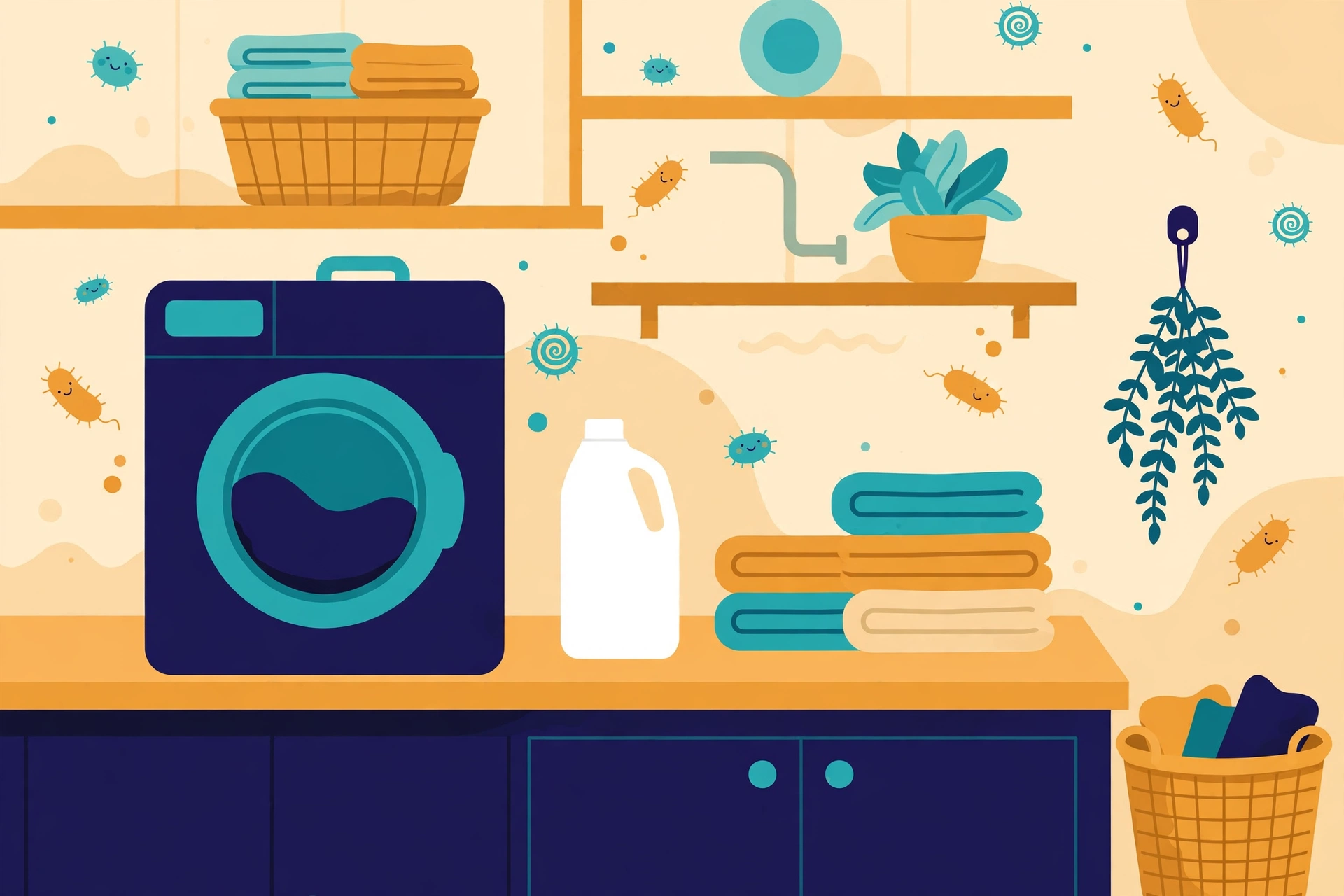
Everything starts with what’s actually happening underground. Your septic tank isn’t just a holding box — it’s a living ecosystem. Anaerobic bacteria (the kind that thrive without oxygen) live in the tank and break down the solids that settle to the bottom. That digestion is what keeps sludge from accumulating too fast and what keeps undigested solids out of your drain field. No bacteria, no treatment — just a very expensive hole in the ground filling up with waste.
Household bleach’s active ingredient is sodium hypochlorite, a powerful oxidizing agent. It sanitizes by attacking organic material indiscriminately — and that includes the bacteria in your tank. When a concentrated slug of bleach reaches the tank, it can kill a meaningful share of that microbial population, slowing or temporarily stalling the digestion process.
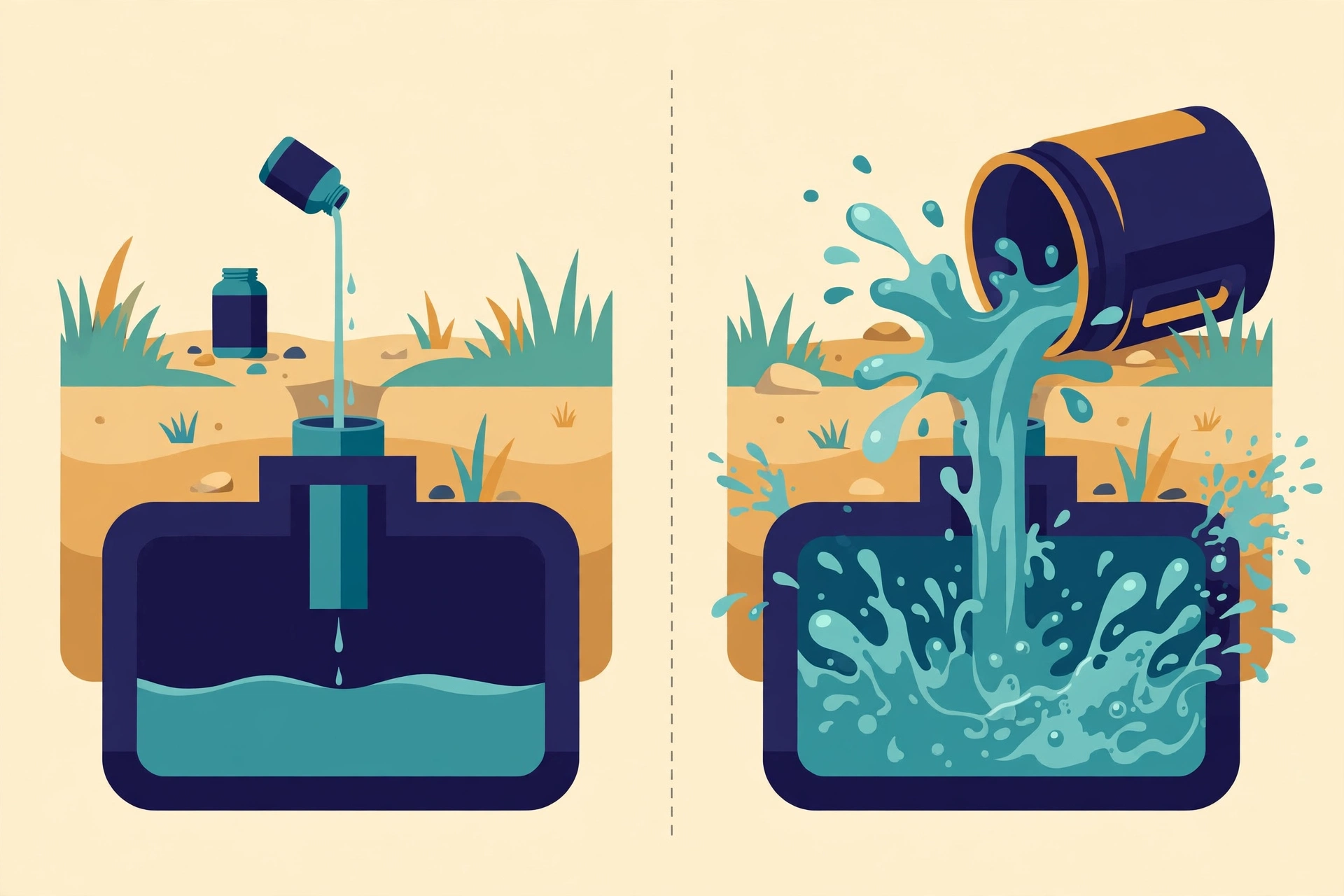
Here’s the part that matters for daily life: dilution. A typical household sends hundreds of gallons of wastewater through the system every day — showers, toilets, sinks, the dishwasher. Against that volume, the bleach from a single laundry load arrives heavily diluted, and much of it has already reacted with organic matter (dirt, detergent, soap residue) in the washing machine and plumbing before it ever reaches the tank. The surviving bacteria then repopulate on their own. That’s why normal household bleach use doesn’t harm septic systems: the tank’s ecosystem is far larger and more resilient than the small doses you send it. The EPA’s general homeowner guidance for septic care reflects this same idea — septic bacteria typically recover quickly after small amounts of ordinary household cleaning products enter the system, which is one reason the EPA’s septic care pages emphasize sensible use and following product labels rather than a blanket ban on cleaners.
The Real Danger Is Volume, Not Your Laundry
Damage, when it happens, almost always comes from concentration — not routine use. The scenarios that actually hurt septic systems look like this:
- Dumping a gallon of bleach (or more) down a drain in one go — for example, sanitizing in bulk after a flood, a sewage backup, or a major cleaning project.
- Shock-chlorinating a well and letting the highly chlorinated water flow straight into the septic system.
- Filling a bathtub with bleach water to sanitize something large, then draining the whole thing at once.
- Running several bleach-heavy laundry loads back to back on the same day, sending a concentrated slug all at once instead of spacing it out.
- Mop water. A bucket of strong bleach solution dumped down the drain is one of the most common concentrated doses a septic system actually sees — and people who mop with bleach daily do this over and over.
A large, concentrated dose can temporarily suppress or wipe out the tank’s bacterial population. When digestion stalls, solids stop breaking down, sludge builds faster, odors rise, and undigested material can get pushed toward the drain field — the one part of the system you really don’t want solids reaching.
Safe Amounts in Plain Terms
Here’s where many articles hand you a precise-sounding number — a cup a week, three-quarters of a cup per load. Be honest with yourself about those numbers: there is no scientifically established “safe per-flush” limit for bleach in a septic system. Tank sizes vary, household water use varies, and how much organic matter the bleach reacts with on the way down varies. Any exact number you read online is someone’s estimate, not a measured threshold.
What actually keeps you safe is the total load, spread over time. Think in practical terms rather than teaspoons:
- A normal laundry load with a normal dose of bleach is fine. Just don’t run several bleach loads back to back — spread them across the week.
- Follow the label’s recommended amounts. Bleach and cleaner labels usually call for less product than people assume, and your tank benefits from that restraint.
- Never pour straight, undiluted bleach down a sink, toilet, or drain. If you’re sanitizing a surface, use a diluted solution and rinse it down with plenty of water afterward.
- Respect mop water. If you mop with bleach regularly, use the weakest solution that does the job, and don’t make it a daily habit. When the bucket’s done, more rinse water with it is always better.
- Take “septic safe” labels with a grain of salt. The phrase is marketing language, not a regulated claim — common sense and moderation matter more than any badge on a bottle.
Signs You May Have Overdone It
Most of the time, a little too much bleach just means the tank’s bacteria take a temporary hit and recover on their own. But after a heavy bleach event — especially within a day or two — watch for these signs:
- Sewage or rotten-egg odors inside the house or around the tank and drain field.
- Drains slowing down across the whole house — not just one sink, but everything.
- Gurgling sounds from toilets or drains.
- The septic alarm going off, if your system has one.
If odors are the main symptom, it may be something simpler than a bacterial die-off — like a dry drain trap. Our guide to tracking down sewage smells in your house walks through how to tell the difference before you assume the worst.
What to Do After Accidental Overuse
So you dumped something you shouldn’t have, or a cleaning project went overboard. Don’t panic — tanks recover. Here’s the playbook:
- Stop sending chemicals down the drains. Switch to plain water and mild soap for a few days. Give the system a break from any harsh cleaners.
- Flush with clean water over the next few days. Run showers, do (bleach-free) laundry, and use water normally — time and dilution do the real work. There’s no magic flush, and you can’t rinse a tank the way you rinse a glass.
- Give the bacteria time. A healthy tank repopulates on its own; it doesn’t need to be “restarted.” Resist the temptation to dump several different products in at once — that’s usually how a small problem becomes a big one.
- Be realistic about bacterial additives. In a healthy system they’re not necessary — your tank already contains the bacteria it needs. After a chemical upset they won’t hurt, but they’re no substitute for time and water, and they absolutely don’t replace pumping. We break down the claims honestly in our article on whether septic tank additives really work.
- Watch for about a week. If odors fade and drains run normally, you’re in the clear. If problems persist — slow drains, persistent smells, an alarm that won’t stay quiet — call a septic professional rather than pouring in more fixes.
Septic-Safe Alternatives to Chlorine Bleach
If you’d rather disinfect with less worry, plenty of options work well for everyday cleaning and go easy on the tank:
| Alternative | Good for | Notes |
|---|---|---|
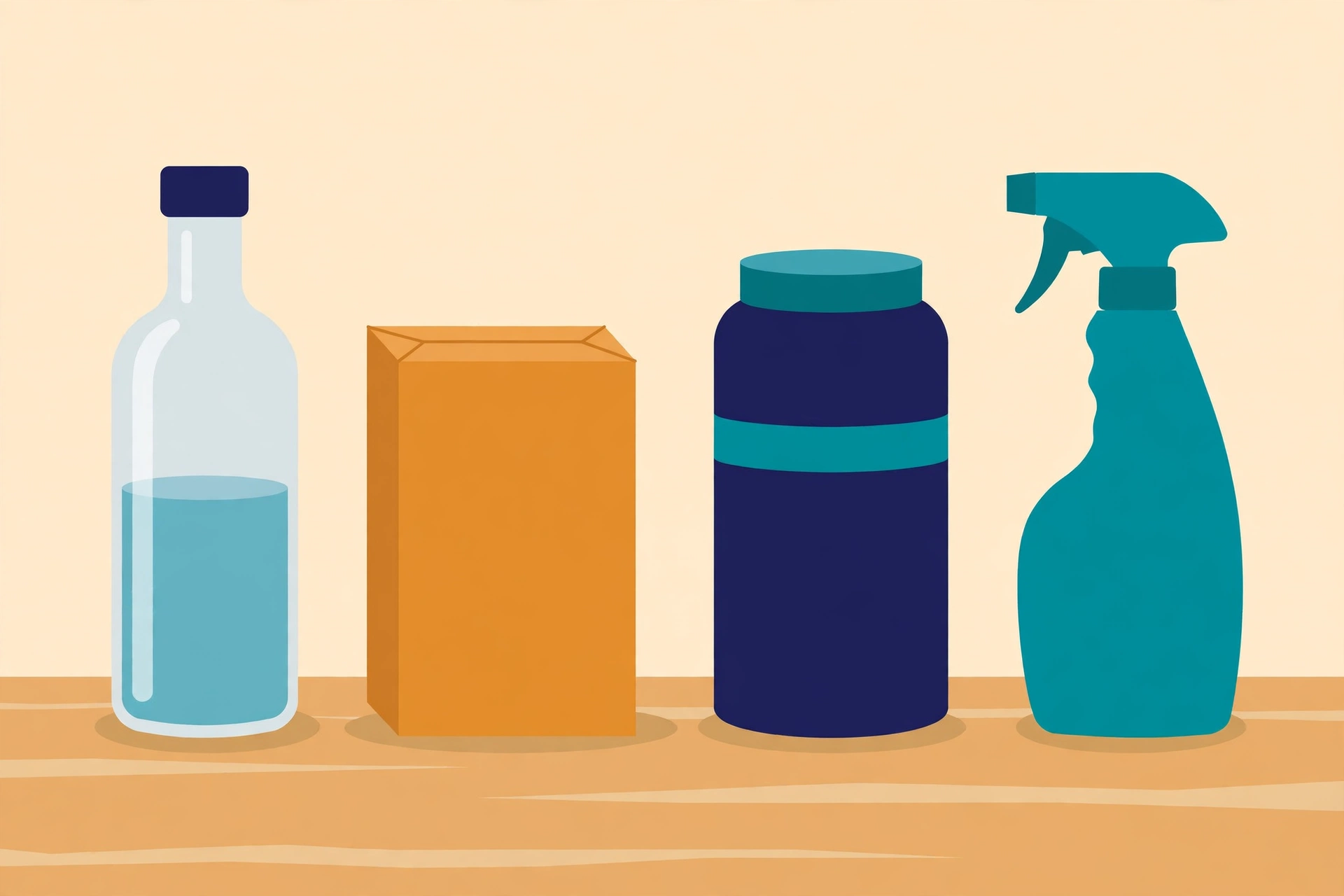
| Distilled white vinegar | Mineral deposits, hard-water stains, glass, deodorizing | A mild acid that cuts grime without harming tank bacteria. Note: never mix vinegar with bleach — the reaction releases dangerous chlorine gas. |
| Baking soda | Scrubbing, deodorizing, mild abrasive cleaning | Completely harmless to the tank’s bacterial balance. |
| Oxygen bleach (sodium percarbonate) | Whitening laundry, stain removal | Chlorine-free; breaks down into water, oxygen, and soda ash. The closest like-for-like swap for laundry bleaching. |
| Hydrogen peroxide (3%) | Surface disinfection | Breaks down into water and oxygen; effective and tank-friendly when used in moderation. |
| Castile soap | General-purpose cleaning | Plant-based and biodegradable; a good everyday cleaner for floors and surfaces. |
One safety rule that has nothing to do with septic but matters for you personally: never mix bleach with ammonia, acids (including vinegar), or other cleaners. The reactions release toxic gases — chloramine or chlorine gas — and that combination is dangerous no matter what kind of plumbing you have.
When Bleach Is Never Okay
To close out the picture, a short list of things that are always a bad idea with a septic system:
- Pouring bleach (or anything) directly into the tank — opening the lid and pouring chemicals in delivers an undiluted dose straight to the bacteria.
- Using bleach to “fix” a clogged drain. It won’t dissolve the clog, and a concentrated dose sitting in the pipes is the worst-case scenario for your tank. Use a plunger or a drain snake instead.
- Shock-chlorinating well water without diverting the discharge. If you need to shock your well, your water-treatment guidance should tell you how to route the super-chlorinated water away from the septic system — don’t let it run through your drains.
- Making a habit of pouring leftover bleach, cleaning concentrates, or antibacterial products down the drain. Occasional and diluted is one thing; routine concentrated disposal is another.
The Bottom Line
Can you use bleach with a septic system? Yes. Keep doing your laundry normally, wipe your counters, and don’t lose sleep over the bleach in your routine cleaning. Just respect the dose: small and diluted is fine; dumped and concentrated is not. And if you’d like the lowest-risk routine, the alternatives above clean just as well for nearly everything a household needs.
If you’re new to septic ownership in general, our first-time homeowner septic system guide covers the habits that matter most in your first year, and our Start Here page maps out the whole SepticWise library.
Greetings Glows Team is dedicated to creating meaningful, helpful, and thoughtfully curated content for everyday inspiration and special moments.
What We Focus On:
Well-researched and reader-friendly articles.
Meaningful greetings, blessings, prayers, and inspirational messages.
Carefully curated ideas for everyday life and special occasions.
Clear, helpful, and engaging information.
Consistent quality and attention to detail in every publication.
Our goal is simple: to make every visit worthwhile with content that inspires, informs, and brings a little more positivity to your day.