When the drains in your house start acting strange, the first question most homeowners ask is whether the septic tank is full or whether a pipe is clogged. The two problems feel almost identical from inside the house. Drains slow down, toilets gurgle, and a faint smell creeps into the bathroom. Yet the fix for each one is completely different, and guessing wrong can cost you time, money, and a messy cleanup. Learning how to tell if septic tank is full or clogged will help you make the right call and avoid paying for the wrong service.
What Full Really Means for a Septic Tank
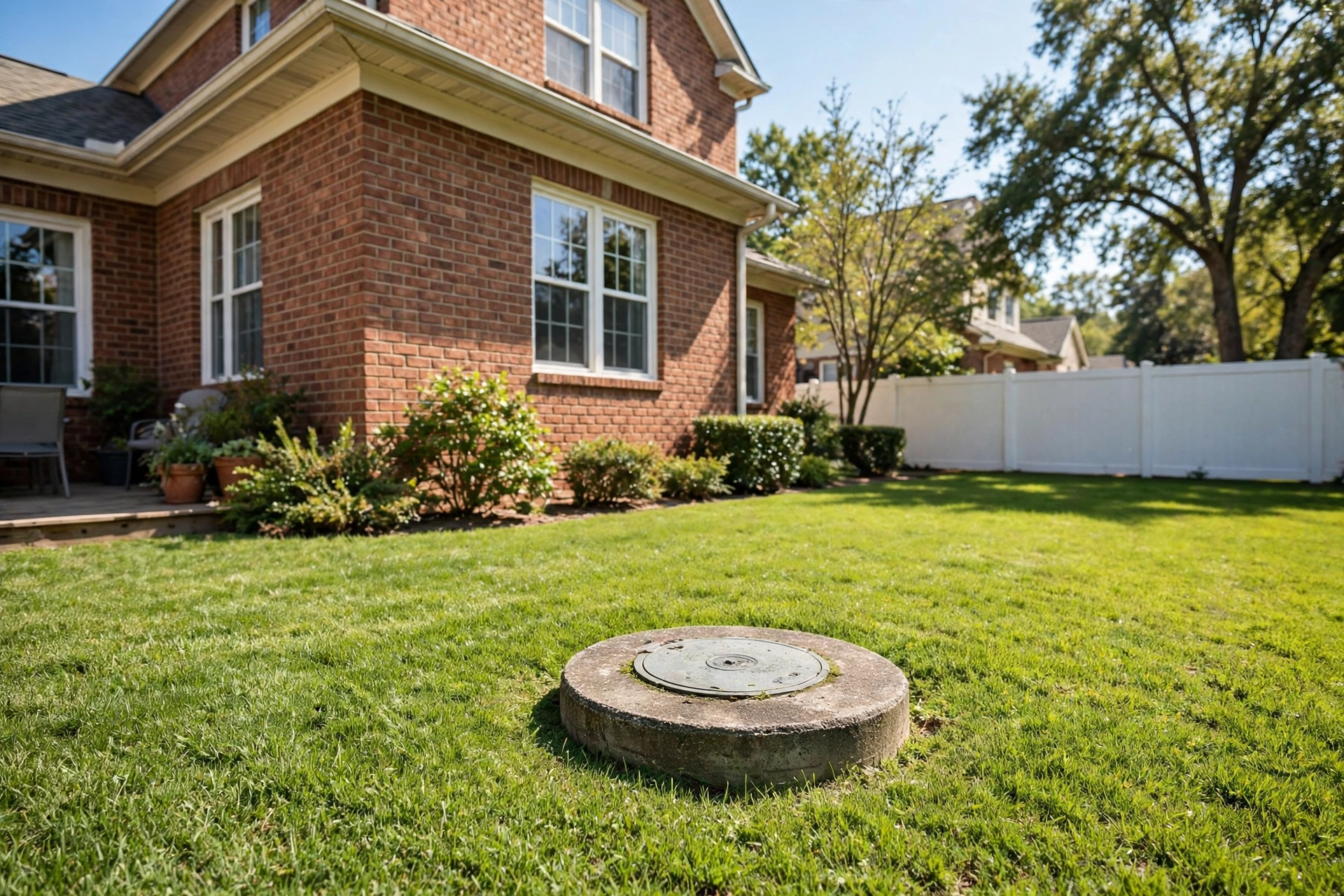
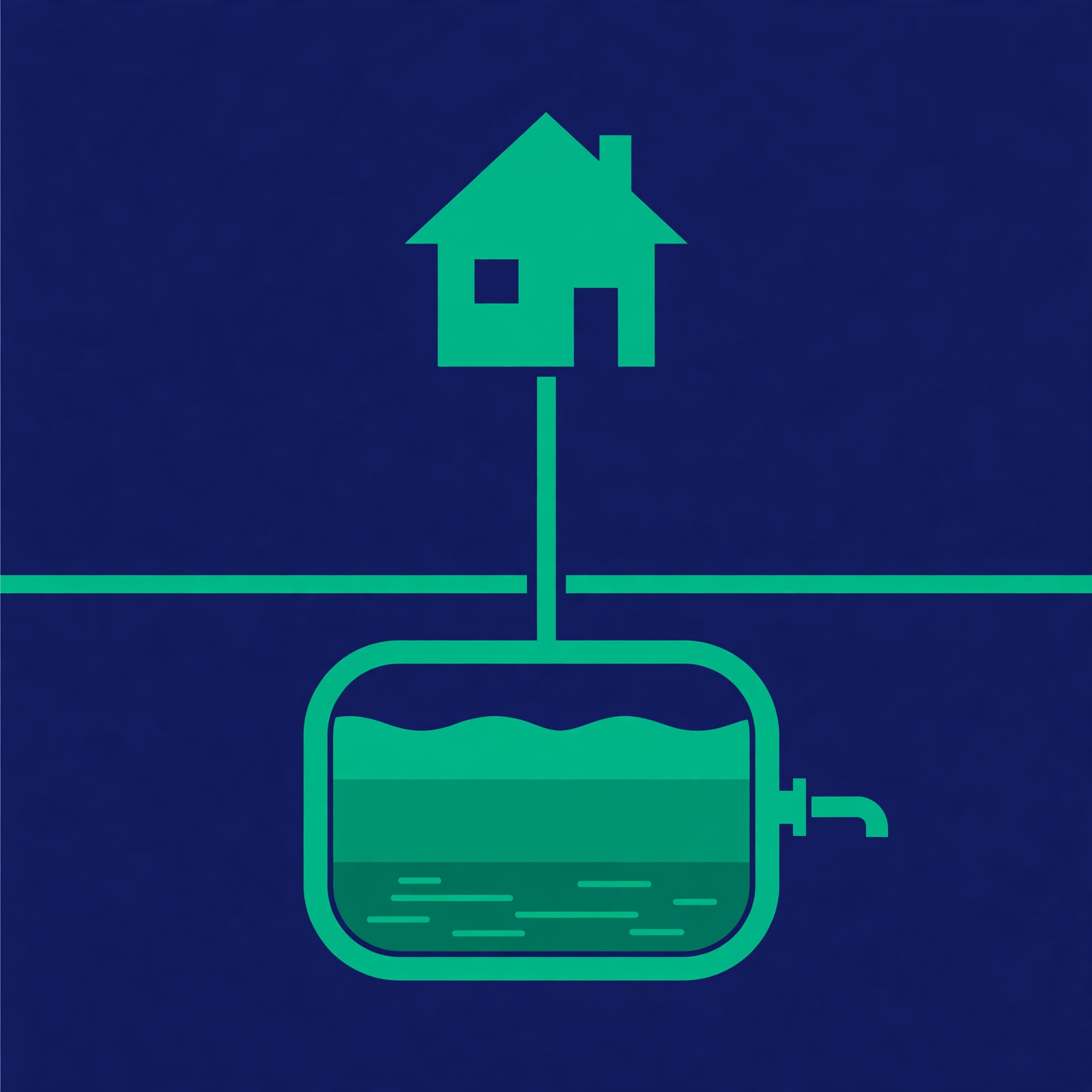
A working septic tank is never empty. It always holds liquid, and that is exactly how it is supposed to work. Wastewater from your home flows into the tank, where it separates into three layers. Heavy solids sink to the bottom and form sludge. Grease and lighter material float to the top and form scum. The clearer liquid in the middle flows out to the drain field, where the soil filters it.
A tank becomes full in the practical sense when the sludge and scum layers grow so thick that the clear zone in the middle becomes too small to do its job. Solids start to crowd the outlet, liquid cannot move through at a normal pace, and the whole system backs up. This happens gradually over years of normal use, which is why pumping on a schedule matters so much.
The EPA septic system guide describes the standard pumping triggers in plain terms. A tank should be pumped when the bottom of the scum layer sits within six inches of the bottom of the outlet pipe, when the top of the sludge layer sits within twelve inches of the outlet, or when sludge and scum together take up more than a quarter of the liquid depth. These are measurements a pumping professional checks during a visit, and they explain why a tank can be due for pumping even when nothing looks wrong from the surface.
A clog, by contrast, is a blockage in a pipe. It can sit in a single fixture trap, in a branch line that serves one bathroom, or in the main line that carries wastewater from the house to the tank. A clog does not mean the tank is full. It means water cannot get where it needs to go. A tank can be freshly pumped and still back up if the line feeding it is blocked.
How to Tell If Septic Tank Is Full or Clogged
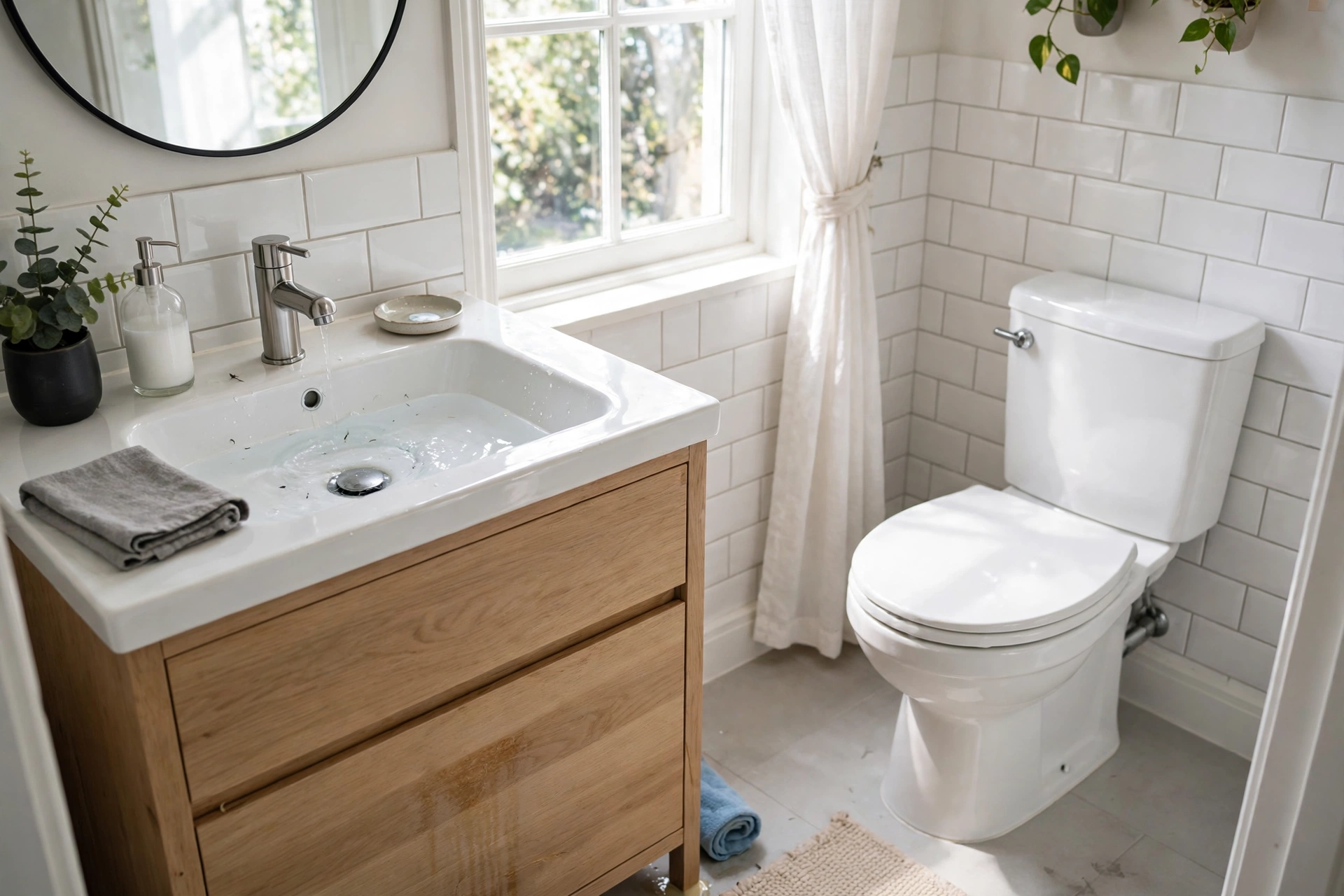
The simplest way to separate the two problems is to look at how widely the symptoms spread. A full tank affects the whole house because every fixture shares the same tank. A clog usually affects one fixture, or one group of fixtures, because the blockage sits in a single pipe.
Start by walking through your home and testing each fixture one at a time. Run the kitchen sink, then the bathroom sink, then the shower, then flush each toilet, and note what you see at each one. If only the shower drains slowly while everything else works fine, you are almost certainly dealing with a local clog, most likely hair and soap buildup in that one drain. If the kitchen sink, the shower, and the toilets all slow down within the same few days, the cause is further down the line, in the main pipe, the tank, or the drain field.
Pay attention to timing as well. A full tank tends to get worse on heavy water days. Laundry day, a house full of guests, or several showers in a row will push a crowded tank over the edge, while a quiet morning may seem almost normal. A clog, on the other hand, usually stays the same no matter how much water you use, because the blockage is fixed in place.
Your pumping history is another useful clue. If the tank was pumped within the last year or two and the symptoms have returned, a clog or a drain field problem is more likely than a full tank, because sludge does not rebuild that fast under normal use. If it has been three to five years since the last pumping, or you have never had it pumped, a full tank moves to the top of the list.
The Signs of a Full Septic Tank
A full tank rarely fails all at once. It usually sends a series of small warnings over days or weeks, and the homeowners who catch them early avoid the worst of the damage. Here are the signs to watch for.
Every drain in the house slows down at once
This is the clearest early sign of a full tank. When the shower, the kitchen sink, the bathroom sinks, and the toilets all begin draining slowly within the same stretch of days, the problem is not in any one pipe. It is in the shared part of the system, and that usually means the tank has run out of working space. If you want a fuller picture of what slow drains can mean, our guide on toilets flushing slowly all at once walks through the same pattern from the toilet side of the house.
Toilets gurgle, bubble, or flush weakly
Toilets are often the first fixtures to warn you, because they move the most water in the shortest time. When the tank is crowded, flushing pushes air back through the pipes, and you hear it as a gurgle or a bubbling sound in the toilet bowl, the shower drain, or a nearby sink. You may flush one toilet and hear another one gurgle in response, or notice that the flush has lost power and leaves the bowl slow to clear. Occasional pipe noise is normal, but gurgling that repeats, spreads to more than one fixture, and gets worse over a few days is a sign worth taking seriously.
Sewage smells inside or outside the house
A persistent sewage smell is one of the most unpleasant warnings a septic system can give. Inside the house, the odor may hang around a bathroom or rise from a floor drain. Outside, you may notice it near the tank lid or over the drain field, especially on warm days or after rain. When a tank is overfull, gases that normally travel up the roof vent can escape where wastewater is crowding the system. A smell that appears once and fades may be a dry drain trap, which you can fix by running water into the drain. A smell that keeps coming back, or that you can trace to the yard, points to the tank or the field. Our article on what a full septic tank smells like explains the different odors in more detail and what each one tends to mean.
Soggy ground or standing water over the tank or drain field
Walk out to the area over your tank and drain field after a dry stretch of weather. If the ground there is soft, spongy, or holding standing water while the rest of the yard is dry, the system is not absorbing wastewater the way it should. This can happen when a full tank sends solids into the field and clogs the soil, or when the field itself has stopped accepting water. Keep children and pets away from the area, and do not drive or park over it.
Grass that is greener and faster growing over the system
A stripe of grass that is noticeably greener, thicker, or faster growing than the rest of the lawn can be an early clue, especially if it lines up with the tank or the drain field. Extra moisture and nutrients reaching the surface feed that patch of grass. On its own it does not prove a problem, since disturbed soil from the original installation can also grow greener grass, but when it appears alongside slow drains or odors, it strengthens the case that wastewater is reaching the surface.
Sewage backing up into the lowest fixture
This is the most serious sign and the one that calls for immediate action. When wastewater comes up into a bathtub, a shower, a floor drain, or a basement toilet, the system has stopped moving water out of the house. The lowest fixture backs up first because gravity sends the water to the lowest point it can reach. If this happens, stop using water right away, including the dishwasher and the washing machine, keep people and pets away from any standing sewage, and call a septic professional the same day.
The Signs of a Clogged Line
A clogged line has its own pattern, and once you know it, the difference from a full tank becomes easier to spot. The defining feature is that the problem stays local. One sink drains slowly while the rest of the house works perfectly. One toilet backs up when another fixture drains, but everything else is fine. The yard looks normal, there is no smell outside, and the rest of the plumbing behaves the way it always has.
Kitchen clogs usually come from grease, food scraps, and soap buildup, and they develop slowly over months. Bathroom clogs usually come from hair, soap scum, and personal care products. A clog in the main line that runs from the house to the tank is harder to tell apart from a full tank, because it affects the whole house too, but it often starts at the lowest drain and stays there, while a full tank spreads its symptoms more evenly. Another clue is what comes back up. A branch line clog sends water back into the fixture nearest the clog, while a full tank sends wastewater up through the lowest fixture in the entire house. If the backup simply seeks the lowest point, the tank deserves a closer look.
Full Tank vs Clogged Line: A Side-by-Side Comparison
When the symptoms overlap, a direct comparison can make the picture clearer. The table below lines up the most common signs against the three problems homeowners usually face: a full tank, a clogged line, and a failing drain field. The field belongs in the comparison because it shares many of the same symptoms as a full tank, and confusing the two can lead to pumping a tank that does not need it while the real problem sits untouched in the yard.
| Sign | Full tank | Clogged line | Drain field trouble |
|---|---|---|---|
| Which drains are affected | Every drain slows down | One fixture or one area | Every drain slows down |
| Toilets | Gurgling across the house | One toilet may back up | Gurgling across the house |
| Smell | Odor near the tank or field | Odor at one fixture only | Odor over the field |
| Yard | Soggy ground or green grass over the tank or field | Nothing unusual | Soggy ground or green grass over the field |
| After heavy rain | Often worse | No change | Often much worse |
| Lowest drain | Backs up when the tank is very full | Backs up first if the clog is in the main line | Backs up when the field cannot take more water |
| Typical fix | Pump the tank, then check the field | Clear or jet the line | Professional inspection and field repair |
Use the table as a starting point, not a final diagnosis. Real systems do not always follow neat categories, and two problems can exist at the same time. A tank that is overdue for pumping can send solids into the field and damage it, and a clogged outlet can make a tank look full when the real fault is a blocked pipe.
Simple Checks You Can Do Safely at Home
You do not need to open the tank or handle sewage to narrow down the problem. The checks below take less than half an hour, use nothing more than your eyes, your ears, and the fixtures you already have, and they are safe for any homeowner. If a check ever feels risky or you are unsure what you are looking at, stop and call a professional.
Test one fixture at a time
Turn on a single faucet and watch how it drains. Then try the next fixture, and the next. If only one fixture is slow, the problem is almost certainly a local clog in that fixture or its branch line, and a plunger or a drain snake may solve it. If several fixtures are slow, the problem sits further down the system.
Watch the lowest drain while water runs upstairs
Run water in an upstairs sink or flush an upstairs toilet while someone else watches the lowest drain in the house, usually a basement shower, a floor drain, or a ground-floor tub. If that low drain bubbles, gurgles, or starts to fill, wastewater is meeting resistance on its way out, in the main line, the tank, or the field. If the low drain stays calm, the main line is probably clear, and the problem may be limited to one branch.
Check the cleanout
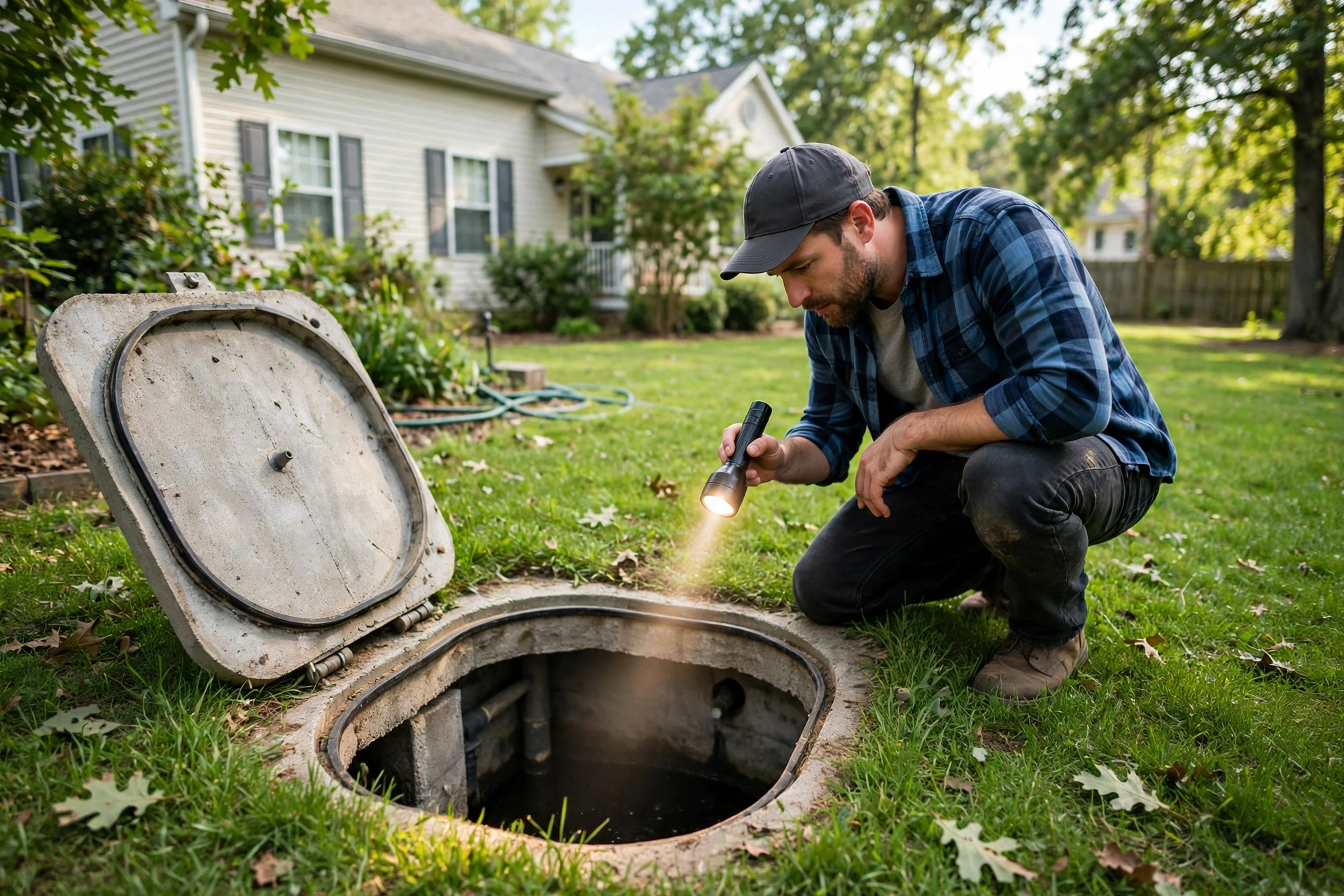
Many homes have a sewer cleanout, a capped pipe near the foundation, in the yard, or in a crawl space, that gives access to the main line. If you can find yours and reach it safely, carefully loosen the cap while keeping your face and hands clear, and have towels ready. If the pipe is full of standing water, the blockage is downstream, toward the tank. If the pipe is dry or nearly empty, the blockage is more likely upstream, in the house plumbing. Put the cap back on snugly when you are done. If water spills out under pressure, stop, replace the cap, and call a professional.
Walk the yard
Walk slowly over the tank and drain field area and look for the outdoor signs described earlier. Press the ground gently with your foot in a few spots. Soft or spongy ground, standing water on a dry day, a sewage smell, or a stripe of unusually green grass all point toward the tank or the field rather than a pipe clog. Take a photo of anything unusual so you can describe it accurately if you call for help. Do not dig, and do not drive over the area.
Know when to stop checking and start calling
Home checks are for narrowing down the problem, not for fixing a failing system. If sewage is backing up into the house, if you smell sewage strongly indoors, or if the yard is soggy with wastewater, the checking phase is over. Stop using water, keep people and pets away from the affected area, and call a septic professional. The same applies if you cannot find your cleanout or your tank, or feel unsure at any point. A professional visit costs far less than a cleanup after a backup, and a good technician will measure the tank, check the outlet, and tell you plainly whether the problem is the tank, the line, or the field.
What About the Drain Field?
Many homeowners focus on the tank and forget the drain field, but the field causes a large share of the problems that look like a full tank. The drain field is the network of shallow trenches in your yard that receives the liquid from the tank and lets the soil filter it. When it stops accepting water, the liquid has nowhere to go, and it backs up into the tank and then into the house.
A failing field produces many of the same symptoms as a full tank: slow drains across the house, gurgling toilets, odors over the yard, soggy ground, and green grass. The key difference is what happens after pumping. If the symptoms disappear, the tank was the problem. If they return within days or weeks, the field is the more likely culprit, because a healthy field should accept water easily once the tank has room again.
Fields fail for several reasons. Age is one of them. Over decades, a natural layer called a biomat forms in the bottom of the trenches and thickens, slowly reducing how much water the soil can absorb. Solids escaping from an overdue tank can clog the field much faster, which is one more reason regular pumping matters. Heavy rain can saturate the soil and overwhelm a field that was already struggling, and driving or parking over the field can crush pipes and compact the soil. None of these are problems a homeowner can fix with a plunger or a bottle of additive, and all of them call for a professional inspection.
When to Call a Septic Professional Right Away
Some septic problems can wait a few days while you gather information. Others cannot. Call a septic professional the same day if sewage is backing up into any fixture, if you smell strong sewage inside the house, if there is standing wastewater in the yard, or if the ground over the tank or field is wet and spongy. These are signs that wastewater is already escaping the system, and every hour of continued water use makes the cleanup bigger.
Call within the week if several drains are slow at once, if toilets gurgle across the house, or if a mild sewage smell keeps returning outdoors. These signs usually mean the tank is due for pumping or the field needs attention. A pumping visit is also the right time to have the technician measure the sludge and scum layers, check the outlet and baffles, and look for leaks, because that inspection turns a guess into a clear answer.
Our guide on when to call a septic professional immediately covers the emergency signs in more detail, including what to do while you wait for help. The short version is simple: stop running water you do not need, keep people and pets away from sewage, and do not try to open the tank yourself. Tank lids are heavy, the gases inside are dangerous, and a fall into a tank can be fatal.
What Not to Do When You Suspect a Problem
The urge to fix a septic problem quickly is understandable, but some of the most common quick fixes make things worse. Chemical drain cleaners are first on the list. The harsh chemicals in these products can kill the bacteria that break down waste in your tank, and they can damage pipes and the drain field without ever reaching the real blockage. A plunger is fine for a single slow toilet or sink. A bottle of caustic cleaner poured into a struggling septic system is not.
Septic additives deserve the same caution. Products that promise to dissolve sludge, unclog a field, or replace pumping do not do what the label suggests. The bacteria your system needs are already present in normal household wastewater, and no additive can clear a field that has stopped accepting water or a tank that is full of solids.
Do not ignore the problem and hope it passes. Septic trouble almost never resolves itself. A tank that is full today will be fuller next month, and a clog that slows one drain today can grow until it blocks the main line. Do not keep running the washing machine, the dishwasher, and long showers while the system is struggling, because each load of water pushes the problem closer to a backup. Cut back on water use until you know what is wrong, and get the answer sooner rather than later.
Finally, do not open the tank lid yourself. Beyond the weight of the lid and the risk of falling in, the gases inside a septic tank can overcome a person quickly in an enclosed space. Measuring sludge and scum, inspecting baffles, and checking the outlet are jobs for a trained technician with the right tools.
How to Prevent This From Happening Again
Once you have sorted out whether the problem was a full tank or a clog, the next step is making sure it does not come back. Prevention is mostly a matter of routine.
Pump on a schedule, not on a crisis. Most households need pumping every three to five years, but the right interval depends on tank size and household size, and a large family in a small house may need it more often. If you are unsure where your household falls, our septic tank pumping frequency chart by household size gives a clear starting point. Keeping the pumping date on your calendar and treating it like any other home maintenance appointment is the single most effective thing you can do for the system.
Watch what goes down the drains. Only human waste and toilet paper belong in a septic system. Wipes, even those labeled flushable, do not break down the way toilet paper does and can snag in pipes and pile up in the tank. Grease should go in the trash, not down the kitchen sink, because it hardens in pipes and floats as scum in the tank. Feminine hygiene products, cotton swabs, dental floss, and cigarette butts all belong in the trash as well.
Spread out heavy water use. A septic system handles a steady flow far better than a sudden flood. Running the washing machine, the dishwasher, and several showers in the same hour can overwhelm a tank that was coping fine with normal use. Spreading laundry across the week and fixing leaking toilets keeps the daily load within what the system can absorb.
Protect the drain field. Keep vehicles, heavy equipment, and livestock off it. Do not pave over it or build structures on top of it. Plant only grass over the field, and keep trees and large shrubs at a distance so their roots cannot reach the lines. Direct roof gutters and surface water away from the area so the soil is not saturated by rain it was never meant to handle.
Frequently Asked Questions
Can a septic tank be full and clogged at the same time?
Yes, and it happens more often than people expect. A tank that is overdue for pumping can push solids toward the outlet and clog it, and a clogged outlet can make the tank behave as though it is full. The two problems feed each other, which is why a professional usually measures the tank and checks the outlet during the same visit.
How fast will a full tank back up into the house?
There is no fixed timeline, because it depends on how much water the household uses and how much working space is left in the tank. Some homes show slow drains for weeks before anything backs up. Others go from gurgling toilets to a backup in a few days, especially after a weekend of heavy water use or a rainstorm. Treat slow drains across the whole house as a warning with an unknown deadline, and schedule service promptly.
Is it safe to use the toilets while waiting for a pumping appointment?
If the drains are slow but nothing is backing up, limited use is usually fine, but keep water use to a minimum until the visit. Flush only when needed, take short showers, and postpone laundry and dishwasher loads. If sewage has already backed up into any fixture, stop using water entirely and call for emergency service.
How do I know if the problem is the drain field instead of the tank?
The most reliable clue is what happens after pumping. If the symptoms clear up and stay clear, the tank was the problem. If they return quickly after pumping, the field is likely struggling to absorb water, and it needs a professional inspection. Soggy ground, standing water, and unusually green grass over the field also point toward the field.
Figuring out how to tell if septic tank is full or clogged comes down to watching where the problem shows up and how far it spreads. One slow fixture is usually a clog. Every drain slowing together, gurgling toilets, smells in the yard, and soggy ground point toward the tank or the field. The safe checks in this guide will help you narrow it down, and a pumping visit with a proper measurement will settle the question for good. Catch the signs early, pump on a schedule, and keep the wrong things out of the drains.
Greetings Glows Team is dedicated to creating meaningful, helpful, and thoughtfully curated content for everyday inspiration and special moments.
What We Focus On:
Well-researched and reader-friendly articles.
Meaningful greetings, blessings, prayers, and inspirational messages.
Carefully curated ideas for everyday life and special occasions.
Clear, helpful, and engaging information.
Consistent quality and attention to detail in every publication.
Our goal is simple: to make every visit worthwhile with content that inspires, informs, and brings a little more positivity to your day.
1 thought on “How to Tell If Septic Tank Is Full or Clogged”