Finding sewage coming up through the basement floor drain is one of the worst surprises a homeowner can face. The water is dark, it smells terrible, and it keeps rising every time someone upstairs flushes a toilet or runs a tap. If your home runs on a septic system, this kind of backup usually means wastewater has nowhere left to go, so it takes the easiest path back into the house. That path is almost always the lowest drain in the building, and in most homes that is the basement floor drain.
This guide walks through what to do in the first half hour, why a sewage backup in basement floor drain septic systems happens, how a professional finds the cause, and how to keep it from happening again. The advice here applies to homes on a septic system. If your home connects to a public sewer, some of the causes are different, but the safety steps in the first section are the same either way.
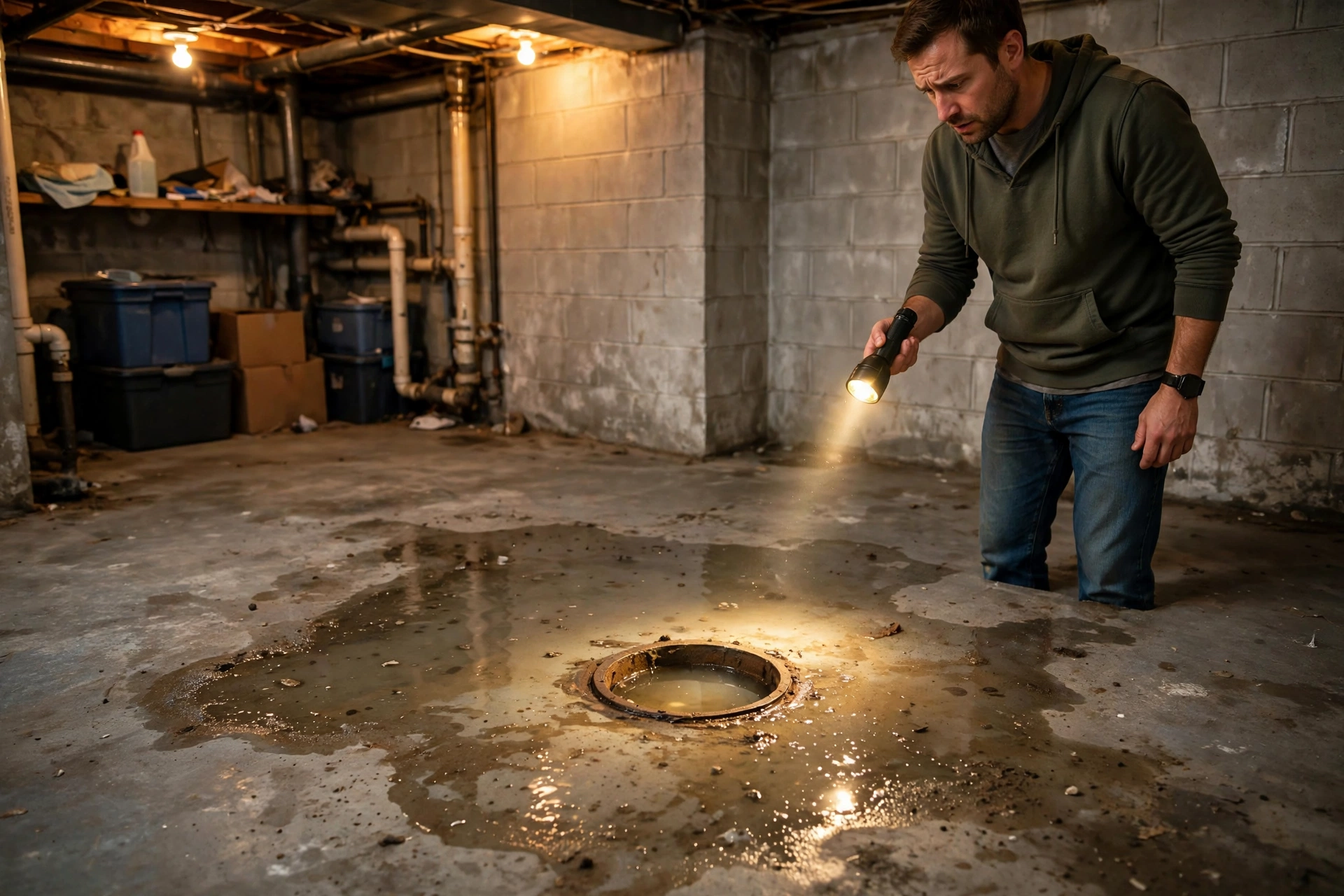
What to Do in the First 30 Minutes
Speed matters with a sewage backup, but so does staying safe. Raw sewage carries bacteria, viruses, and parasites that can make people seriously ill. The water may look mostly like dirty water, especially in the early stages, but it should always be treated as contaminated. Children, older adults, pregnant women, and anyone with a weakened immune system should stay out of the basement entirely.
The first thing to do is stop using water in the house. Tell everyone in the home right away. No flushing toilets, no showers, no running taps, no dishwasher, and no washing machine. Every bit of water that goes down a drain adds to the water coming up through the floor drain, because it all travels through the same main line toward the septic tank. Stopping water use is the single most effective thing you can do while you wait for help, and it costs nothing.
Next, keep people and pets away from the affected area. Do not walk through the water in bare feet, socks, or ordinary shoes. If you must step near it to reach a shutoff or to move something valuable, wear rubber boots, waterproof gloves, and eye protection, and wash your hands thoroughly afterward. Clothing that touches sewage should be washed in hot water or thrown away.
Be careful with electricity. If the water is near outlets, a furnace, a water heater, or the electrical panel, do not step into the water to reach the panel. If you can switch off power to the basement from a dry location, do that. If the panel itself is wet or you would have to stand in water to reach it, stay out and call an electrician or your utility for guidance.
Take photos and a short video of the drain, the water level, and anything that got wet before you move or clean anything. Your insurance company will want this record, and it also helps the septic professional understand how bad the backup was. Note the time you first noticed it and whether it followed a heavy rain, a large laundry load, or a house full of guests. Those details help with the diagnosis later.
Then call a licensed septic professional. Many septic companies offer emergency service for active backups, and this is the kind of problem that should not wait until morning. If you have a regular septic service, call them first. If not, look for a licensed septic pumper or installer in your area and explain that sewage is actively coming up through a basement floor drain. When the technician arrives, tell them what you noticed, when it started, and when the tank was last pumped. That information narrows down the cause quickly.
There are a few things you should not do while you wait. Do not pour chemical drain cleaner into the floor drain. It cannot clear a main line blockage, and it can damage your septic system by killing the bacteria in the tank. Do not open the septic tank lid yourself. A tank holds toxic gases, and opening it without proper equipment is dangerous. Do not keep testing the drain by pouring water into it. Each test sends more contaminated water into the basement.
Is It Sewage or Just Water
Not everything that comes up through a basement floor drain is sewage. Groundwater, a leaking pipe, or a backed up washing machine drain can all leave water on a basement floor. Knowing which one you are dealing with changes what happens next, so it is worth taking a careful look before anyone starts cleaning.
Sewage is usually dark or gray, and it carries a strong, unmistakable smell. It may contain bits of toilet paper or solid waste. It often rises when water is used somewhere else in the house, for example when someone flushes a toilet upstairs or the washing machine drains, and it may fall again when water use stops. Clean groundwater, by contrast, is usually clear and has little or no smell, and it often appears during or after heavy rain. A leaking supply pipe produces clean water too, and it keeps flowing whether or not anyone is using a fixture.
If you are unsure, treat the water as sewage. That is the safe assumption, and it is the one a professional would make. If the water is clearly clean and has no smell, you may be dealing with a foundation or drainage issue rather than a septic problem, but even then a plumber should confirm it.
Why Sewage Comes Up Through the Basement Floor Drain
All the drains in a house join one main pipe that runs under the lowest floor and out to the septic tank. When that pipe is blocked, or when the tank and drain field cannot accept any more wastewater, the water has nowhere to go. It fills the main pipe and rises until it finds an opening. Because water finds its own level, the first opening it reaches is the lowest one connected to the drain system. In a home with a basement, that is usually the floor drain. After that come a basement shower or laundry tub, then a basement toilet.
That is why a backup often seems to appear out of nowhere. The system may have been struggling for weeks, with drains slowing a little and toilets gurgling now and then, but the first dramatic sign is water on the basement floor.
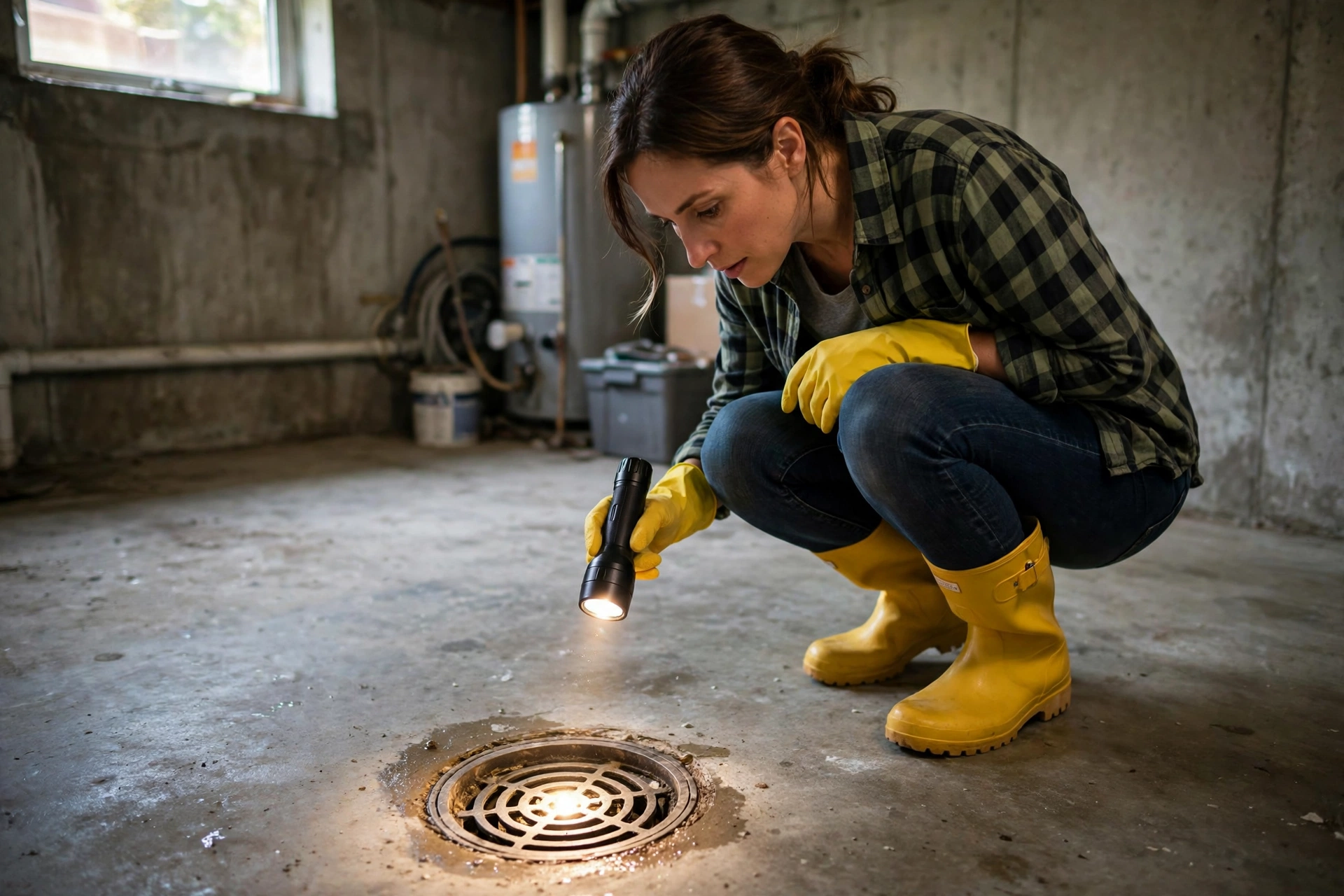
The Most Common Causes on a Septic System
A sewage backup in a basement floor drain on a septic system usually comes down to one of a handful of causes. Some are simple and quick to fix. Others point to a system that needs real repair work. Here is how to think about each one, and what the fix typically looks like.
A tank that needs pumping
The most common cause is a tank that has gone too long without pumping. Inside a septic tank, solids settle to the bottom as sludge and float to the top as scum. The liquid layer in the middle flows out to the drain field. When the tank is pumped on schedule, usually every three to five years for a typical household, those layers stay at safe levels. When pumping is overdue, sludge and scum take up more and more of the tank, and solids start washing out through the outlet. That can clog the outlet, the effluent filter, and eventually the drain field itself.
A tank in this condition does not always announce itself loudly. Drains may slow a little over a few weeks. A toilet may gurgle after a shower. Then a busy weekend, a house full of guests, or a few loads of laundry push the system past its limit, and sewage appears at the floor drain. If your tank has not been pumped in five years or more, this is the first thing a professional will check.
A clogged line between the house and the tank
The pipe that runs from the house to the tank can become blocked for several reasons. Tree roots are a frequent culprit. Roots seek out moisture, and even a small crack or loose joint in the pipe gives them an entry point. Once inside, they grow into a mat that catches paper and waste until the pipe is nearly closed. Grease, wipes, hygiene products, and paper towels cause the same kind of slow buildup. A single flush of the wrong item rarely blocks a main line, but years of small mistakes add up.
A blocked line often shows a clear pattern. Drains throughout the house slow down together, and the backup gets worse whenever a lot of water is used at once. A washing machine cycle or a long shower may be enough to bring water up through the floor drain, while a single toilet flush may not. A plumber or septic technician can confirm a line blockage with a camera inspection, which shows exactly where the clog sits and whether the pipe itself is damaged. Most line clogs can be cleared with a mechanical snake or a hydro jet, which uses high pressure water to scour the inside of the pipe.
A clogged effluent filter or a broken baffle
Many modern septic tanks have an effluent filter at the outlet. Its job is to catch solids before they can reach the drain field, and it does that job well. But a filter that has never been cleaned will eventually clog, and when it does, liquid cannot leave the tank. The tank level rises, and wastewater backs up toward the house. A clogged filter is a common cause of a sudden backup in a system that seemed fine the week before, and it is also a sign that the tank probably needs pumping at the same time.
Baffles serve a similar protective role. The inlet baffle directs incoming wastewater down into the tank so it does not disturb the scum layer, and the outlet baffle keeps floating scum from leaving the tank. If a baffle breaks or falls off, scum and solids can flow straight into the drain field. A technician can check both baffles during a pumping visit, and replacing a broken baffle is a small repair that can prevent a much larger drain field problem.
A failing or saturated drain field
The drain field is where treated liquid from the tank soaks into the soil. When it works properly, you never think about it. When it fails, it is usually the most expensive problem a septic owner can face, and a basement backup is often the first clear warning.
Drain fields fail in a few ways. Soil can become clogged with solids that escaped from an unpumped tank, forming a slimy layer that seals the bottom of the trenches. Pipes in the field can crack, crush, or settle out of level. The soil can simply stay saturated for too long, after a wet season or because the household is sending more water into the system than the field can absorb. In all of these cases, the tank has nowhere to send its liquid, so the liquid backs up toward the house.
The telltale sign of a drain field problem is a backup that comes back soon after the tank is pumped. If pumping fixes things for a few days or a few weeks and then the floor drain fills again, the problem is probably not the tank. It is downstream. Other clues include wet or spongy ground over the drain field, sewage odors in the yard, or grass over the field that grows much greener and faster than the rest of the lawn. A professional can confirm drain field trouble with an inspection, and in some cases with a camera or a soil test. Repairs range from resting the field and reducing water use to replacing part or all of it, so getting an honest written assessment matters more here than with any other cause. If you want a fuller picture of what a full tank looks like before the backup stage, read our guide on how to tell if a septic tank is full or clogged.
Heavy rain and high groundwater
Rain can cause a backup even in a system that is in good shape. After several days of heavy rain, the soil in the drain field becomes saturated and cannot take in more liquid. The water table can rise high enough to press against the tank and the field. At that point the system is effectively full, even if the tank itself was pumped recently, and wastewater has nowhere to go but back toward the house.
This is also why backups sometimes happen at the worst possible moment, during a storm, when nobody can get a truck out to pump the tank. If your backup followed a period of heavy rain, reduce water use as much as possible and give the soil time to drain. In many cases the system recovers on its own once the ground dries out. If it does not recover within a day or two of dry weather, call a professional, because the rain may have exposed a problem that was already developing. For a closer look at how wet weather affects septic systems, see our article on whether heavy rain can cause a septic tank backup.
What a Professional Will Check
Knowing what happens during a service visit takes some of the stress out of it. A good technician follows a logical order, starting with the simplest and cheapest checks and moving toward the more involved ones.
First, they will ask about the history. When was the tank last pumped. How many people live in the home. When did the backup start, and what was happening at the time. Whether other fixtures are affected. Whether it rained recently. These answers point them in the right direction before they touch anything.
Then they will open the tank and measure the sludge and scum levels. This is the only sure way to know whether the tank is simply full. While the tank is open, they will check the inlet and outlet baffles, the effluent filter, and the general condition of the tank itself.
If pumping does not fix it, or if the tank level stays high, they will look further. A camera inspection of the line from the house to the tank can reveal roots, a collapsed pipe, or a belly in the line where water pools. If the line is clear, attention turns to the drain field. The technician may check the distribution box, probe the soil, or look for signs of ponding in the field.
Ask for a written report that names the cause and lists the recommended fix with a price before any repair work begins. A reputable company will be glad to provide one. If the first company you call cannot explain the cause clearly, or pressures you into a large repair on the spot, get a second opinion. Drain field replacement is a major expense, and it should never be sold on the basis of a guess.
As for cost, it varies widely by region, by the size of the system, and by what is wrong. A routine pumping and inspection is the least expensive visit. Clearing a blocked line costs more, and drain field repair or replacement costs far more than either. Your technician should be able to give you a clear estimate once the cause is known.
Cleaning Up After a Backup
Once the cause is fixed and the water has stopped rising, the basement still needs a proper cleanup. Sewage is not like ordinary flood water. It soaks into porous materials, and the bacteria and viruses it carries can linger long after the floor looks dry. A careful cleanup protects your family and your home.
Start by removing standing water with a pump rated for sewage, not a household wet vacuum. For a backup of any real size, hiring a professional cleanup crew is worth it. If the backup was small and you handle it yourself, wear rubber boots, waterproof gloves, and eye protection, and keep the area ventilated.
Anything porous that touched sewage should usually be thrown away. That includes carpet and padding, drywall that wicked up water, cardboard boxes, and upholstered furniture. Hard surfaces such as concrete, tile, and sealed wood can be cleaned and disinfected. Wash them with soap and water first, then disinfect with a household bleach solution, following the dilution directions on the bottle. Never mix bleach with ammonia or other cleaners. Open windows and run fans to dry the space thoroughly. Dampness left behind invites mold, and mold after a sewage backup is a second problem you do not need.
Do not put sewage soaked items in your regular trash without checking local rules. Some areas have specific disposal requirements for contaminated materials. Your cleanup company or your local health department can tell you what applies where you live.
Finally, contact your insurance company as soon as you can. Many homeowners policies do not cover sewer backup by default. It is often an optional addition to a policy, and many homeowners only discover that after a backup has already happened. Your photos and notes from the first hour will help with the claim.
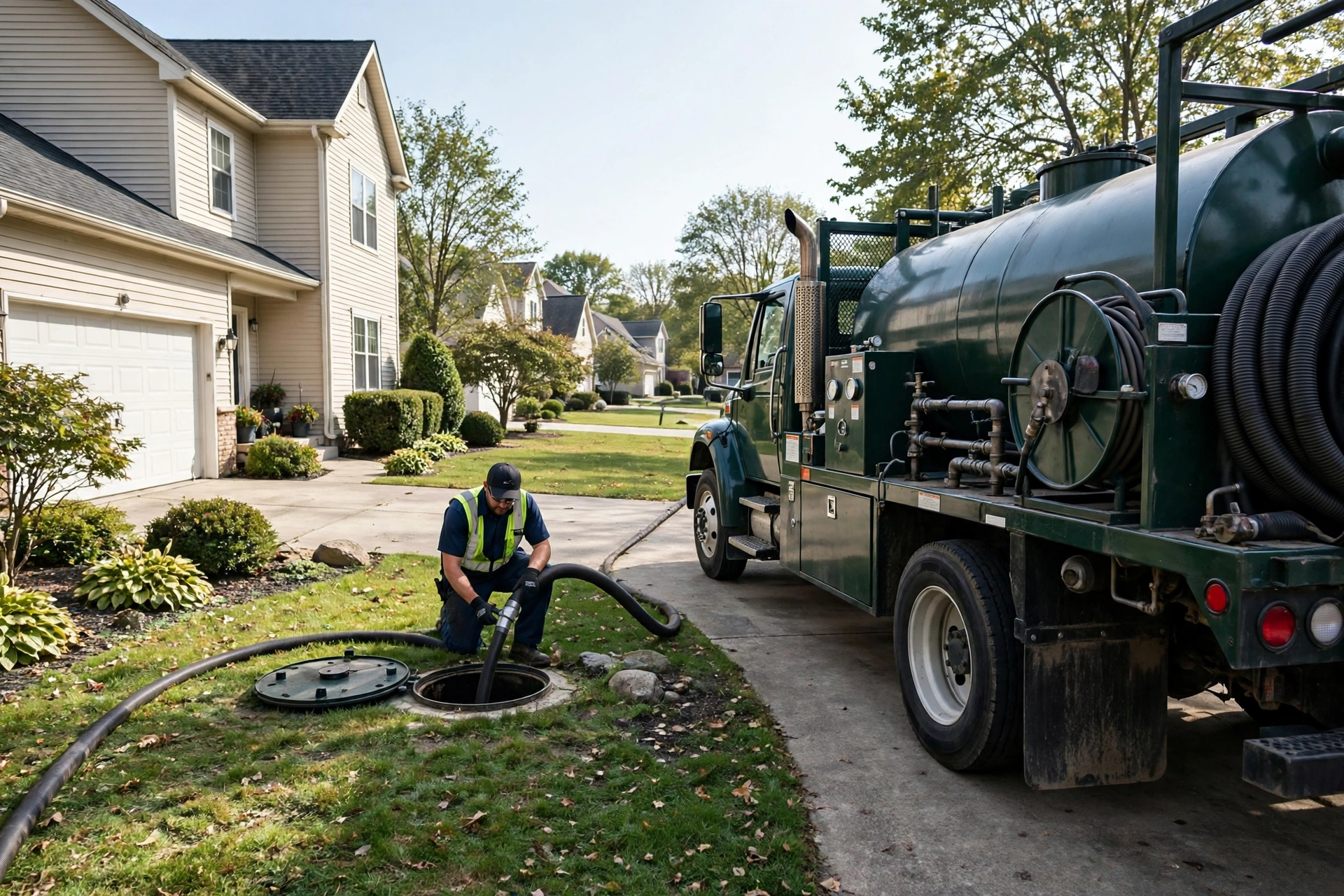
How to Prevent It From Happening Again
A sewage backup is a miserable experience, and most of the causes are preventable with steady, ordinary maintenance. None of this is complicated. It is mostly a matter of doing the simple things on time and being careful about what goes down the drains.
Pump the tank on schedule. For most households, that means every three to five years, and more often if the household is large, if there is a garbage disposal, or if the home sees heavy water use. Keep a written record of each pumping and inspection.
Watch what goes down the drains. The only things that should be flushed are human waste and toilet paper. Wipes, even those labeled flushable, do not break down the way toilet paper does. Paper towels, hygiene products, cotton swabs, and dental floss all belong in the trash. In the kitchen, keep grease out of the sink, and use a strainer to catch food scraps. A garbage disposal makes the problem worse, because it sends ground up food into a tank that was not designed to digest it.
Spread out water use. A septic system handles a steady flow much better than a sudden flood. Avoid running the dishwasher, the washing machine, and several showers all in the same hour. If you do laundry, space the loads across the day rather than running them back to back. This matters most during wet weather, when the drain field is already working hard.
Protect the drain field. Do not drive or park over it, do not build on it, and do not plant trees nearby, because roots will find the pipes. Keep roof gutters and surface water directed away from the field so it does not stay saturated. And if your tank has an effluent filter, ask your technician to clean it at each pumping visit.
Pay attention to early warnings. Slow drains throughout the house, gurgling toilets, and sewage smells are not annoyances to live with. They are the system asking for attention, usually weeks before a full backup. A house where all the toilets flush slowly at once is a house with a problem somewhere between the fixtures and the drain field, and catching it early is almost always cheaper than cleaning up a backup. If you notice more than one of these signs at the same time, schedule an inspection rather than waiting to see if it gets better.
When to Call a Professional Immediately
Some septic problems can wait a day or two. A sewage backup in the basement is not one of them. Call a licensed septic professional right away if sewage is actively coming up through a floor drain or any other fixture, if the backup returns after the tank has been pumped, if more than one fixture is affected at the same time, or if you see sewage or wet, foul smelling ground over the drain field.
Call sooner rather than later if anyone in the home is ill, elderly, pregnant, or has a weakened immune system, since they are more vulnerable to the germs in sewage. And if you are ever unsure whether a situation is safe to handle yourself, that uncertainty is itself a good reason to call. A professional visit costs money, but a backup that is left to get worse costs far more, in repairs, in cleanup, and in damage to the home. Our guide on when to call a septic professional immediately covers the warning signs in more detail.
Frequently Asked Questions
Will pumping the septic tank stop the backup
Sometimes. If the tank is simply overdue for pumping, pumping it will usually stop the backup right away. But if the cause is a blocked line, a clogged filter, or a failing drain field, pumping will only help for a short time. If the backup returns within days or weeks of a pumping, the real cause is downstream of the tank, and it needs to be found and fixed.
Can I fix a basement floor drain backup myself
You can take the safety steps in this guide, stop using water, document the damage, and keep the area safe. Clearing the underlying cause, though, is a job for a licensed professional. The blockage may be in the main line, in the tank, or in the drain field, and finding it requires opening the tank, running a camera, or inspecting the field. Opening a septic tank or working in a flooded pump chamber is dangerous without the right training and equipment.
Does homeowners insurance cover a sewage backup
It depends on your policy. Many standard homeowners policies exclude sewer backup unless you have added specific coverage for it, often called water backup coverage. Check your policy or call your insurer. If you do not have this coverage, it is usually inexpensive to add, and it is worth having before a backup happens rather than after.
Why does the backup happen only when it rains
Heavy rain saturates the soil in the drain field and can raise the water table around the tank. When the field cannot absorb more liquid, wastewater backs up toward the house. A backup that only happens during wet weather often means the field is working near its limit, and it is worth having the system inspected before a dry weather backup follows.
Is sewage in the basement a health hazard
Yes. Raw sewage can carry bacteria such as E. coli, viruses, and parasites that cause serious illness. The U.S. Environmental Protection Agency provides guidance on septic system care and what to do when a system fails, and it is a good place to start if you want an authoritative source. You can find it at the EPA septic systems page. Keep children and pets away from the affected area, avoid contact with the water, and wear protective gear if you must go near it. A professional cleanup is the safest option for any backup beyond a small spill.
The Bottom Line
A sewage backup in basement floor drain septic systems is stressful, messy, and unpleasant, but it is also a clear message from your septic system. Something between the house and the drain field is not working, and the system is telling you so in the only way it can. The right response is calm and quick. Stop using water, keep everyone safe, document the damage, and call a licensed septic professional.
Once the cause is fixed, a little steady maintenance goes a long way. Pump the tank on schedule, keep the wrong things out of the drains, spread out water use, and pay attention when the drains start to slow or gurgle. The work you do now is what keeps the basement dry the next time it rains.
Greetings Glows Team is dedicated to creating meaningful, helpful, and thoughtfully curated content for everyday inspiration and special moments.
What We Focus On:
Well-researched and reader-friendly articles.
Meaningful greetings, blessings, prayers, and inspirational messages.
Carefully curated ideas for everyday life and special occasions.
Clear, helpful, and engaging information.
Consistent quality and attention to detail in every publication.
Our goal is simple: to make every visit worthwhile with content that inspires, informs, and brings a little more positivity to your day.