One slow toilet is annoying. Every toilet in the house flushing slowly at the same time is a different kind of problem, and it deserves your full attention. When several toilets slow down together, the trouble is rarely inside any single toilet. It is far more likely to sit somewhere the toilets share, such as a main drain line, a vent pipe, or your septic system itself.
That distinction matters because it changes what you should do next. A single weak toilet might need a plunger or a simple repair inside the tank. A house-wide problem can grow into a sewage backup if it is ignored, and backups are messy, stressful, and far harder to clean up than an early repair. The good news is that you can narrow down the cause with a few calm checks before you pick up the phone, and you do not need any special tools to do it.
This guide walks through what slow flushing across the whole house usually means, how to tell a local clog from a septic problem, what you can safely check yourself, and when it is time to stop using water and call a professional. It is written for homeowners on a septic system, but much of it applies to any home where several fixtures start acting up together.
Why All Your Toilets Slowing Down at Once Matters
Think of your home plumbing as a tree. Each toilet, sink, shower, and washing machine is a branch, and those branches join into a larger trunk that carries everything out to the septic tank. When one branch has a problem, only the fixture on that branch suffers. When the trunk has a problem, everything connected to it feels the effect.
That is why plumbers and septic professionals pay close attention to the pattern. One slow toilet points toward that toilet. Two or three slow toilets, especially on different floors or in different bathrooms, point toward something they share. Add in slow sinks or a tub that drains sluggishly, and the case for a shared problem gets stronger still.
A slow flush on its own does not prove your septic system is failing. Vents can clog, main lines can collect buildup, and a period of very heavy water use can temporarily overwhelm a system that is otherwise healthy. But when the pattern is house-wide, your septic system belongs near the top of the list of suspects, and it should not be pushed to the bottom while you try one toilet fix after another.
Paying attention early also saves you from a worse outcome. Wastewater that cannot flow freely has to go somewhere. If pressure keeps building in a blocked line, it may eventually push back into the lowest drain in your home, such as a basement floor drain or a ground floor shower. Catching the problem at the slow flush stage gives you time to act before that happens.
Start With the Simplest Test: One Toilet or Every Toilet
Before you worry about the septic tank, take a few minutes to map the problem. Walk through the house and flush each toilet once, watching how the water behaves. Notice whether the bowl empties weakly, whether the water rises higher than usual before draining away, and whether you hear gurgling from another fixture at the same time. Then run a sink or shower briefly and see whether that changes anything.
You are looking for a pattern, not a perfect diagnosis. The pattern tells you where to focus, and it gives a professional useful information when you call. A clear description of what you observed can save time and help them bring the right equipment.
Signs the Problem Is Probably Just One Toilet
If only one toilet flushes slowly while the rest of the house works normally, the cause is most likely local to that toilet. A partial clog in the bowl or trap, a worn flapper that is not lifting fully, or a low water level in the tank can all weaken a flush. Mineral buildup in the small holes under the rim can also reduce the force of the water entering the bowl, which makes the flush look tired even though the drain itself is clear.
In that situation, start with the toilet itself. A good plunging session often clears a partial clog, and checking the water level and flapper in the tank costs nothing. If the toilet improves after that, you have probably found your answer, and there is no reason to suspect the septic system.
Signs the Whole House Is Involved
The picture changes when more than one toilet is slow, or when toilets are slow alongside other fixtures. If the shower drains slowly too, if the washing machine makes a toilet gurgle, or if water bubbles up in a tub when a toilet flushes, the fixtures are telling you they share a problem. Air and water are struggling to move through a common pipe, and the disturbance shows up wherever it finds an opening.
Low fixtures deserve special attention. Because they sit closest to the main line leaving the house, they often show trouble first. A ground floor toilet that flushes weakly while an upstairs toilet still works, or a basement drain that gurgles when the upstairs bathroom is used, can be an early sign that the main line or the system beyond it is under strain.
Common Causes When Every Toilet Is Slow
Once you know the problem is house-wide, the next question is what is causing it. Several culprits can produce the same symptom, and they range from a straightforward clog to a system that needs professional care. Understanding each one helps you describe the problem well and avoid wasting money on the wrong fix.
A Blockage in the Main Drain Line
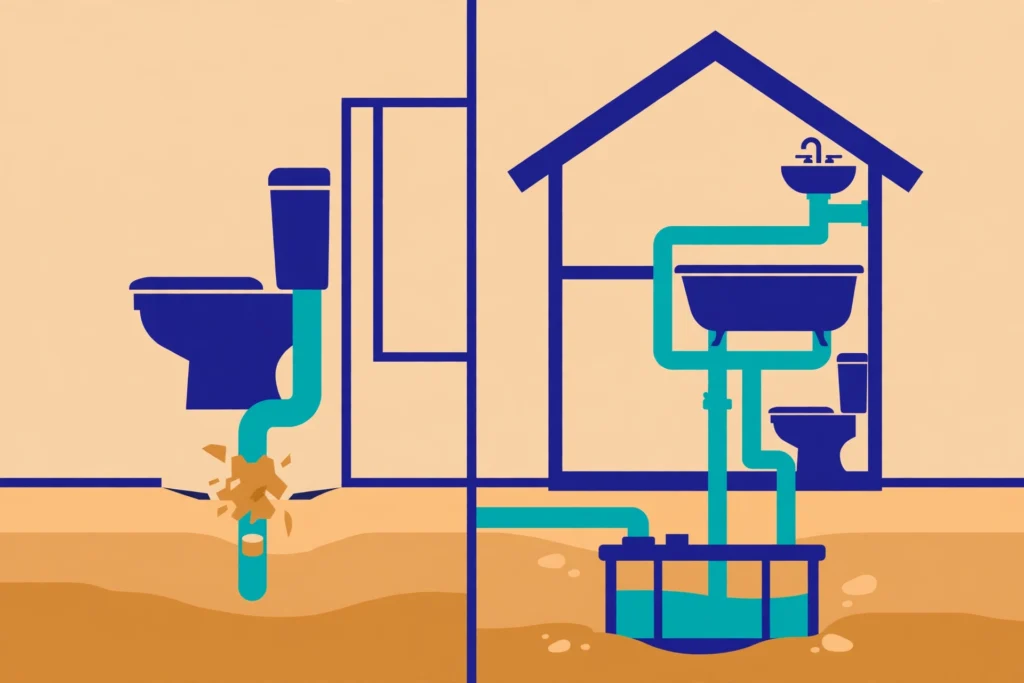
The main drain line carries all of your household wastewater to the septic tank. If something narrows or blocks that line, every fixture upstream feels it. Grease washed down a kitchen sink can harden and build up over time. Wipes marketed as flushable, paper towels, and other items that do not break down easily can snag inside the pipe and collect more debris behind them. Tree roots can also work their way into joints and cracks in older pipes, especially where a pipe runs near large trees or shrubs.
A main line blockage often comes on gradually. Flushes get a little weaker, drains take a little longer, and gurgling becomes more frequent. That slow build is easy to dismiss until the day the line finally closes enough to cause a real backup. If your toilets slowed down together over days or weeks rather than all at once overnight, a developing blockage is a strong possibility.
A Septic Tank That Needs Pumping
Your septic tank is designed to hold wastewater long enough for solids to settle and scum to rise, while clarified liquid flows on to the drain field. Over time, the settled solids and scum build up and leave less room for incoming water. When the tank gets too full, wastewater entering from the house meets resistance, and fixtures throughout the home start to drain slowly.
This is one of the more common reasons for house-wide slow flushing, and it is also one of the most preventable. If it has been a long time since your last pump out, or if you are not sure when the tank was last serviced, that uncertainty alone is worth acting on. Our guide to septic tank pumping frequency by household size can help you think through how often your home may need service based on the size of your household and how much water you use.
Pumping is not a cure for every septic problem, but when a full tank is the cause, it often restores normal flushing quickly. A professional can also inspect the tank while it is open and tell you whether anything else needs attention.
A Drain Field That Is Struggling
After the tank, liquid flows into the drain field, where soil filters and treats it. If the drain field cannot absorb liquid as fast as your home produces it, the whole system backs up from the far end. The tank stays fuller than it should, and the pipes leading into it drain more slowly. This can happen when the soil is saturated after heavy rain, when the drain field is overloaded by a sudden surge of water use, or when the field itself is aging or damaged.
Outdoor clues can help here. A drain field area that stays soggy when the rest of the yard is dry, grass over the field that looks unusually lush or green compared with the surrounding lawn, or a sewage smell outside near the field are all worth noting. None of these signs proves the drain field is failing on its own, but together with slow toilets they strengthen the case for a professional inspection.
A Blocked Vent Pipe
Every drain system needs air to work properly. Vent pipes run up through your roof and let air into the plumbing so water can flow freely. Without that air, a vacuum forms behind draining water and the flush loses power. Leaves, debris, bird nests, or ice in cold weather can block a vent opening, and the result can look surprisingly like a septic problem.
A vent blockage is worth considering when slow flushing comes with loud gurgling, especially if the gurgling appears in sinks or tubs as well as toilets. Vent problems are also more likely if the trouble started after a storm or during a season when debris collects on the roof. Clearing a vent is not a job to attempt on a steep or high roof without the right safety equipment, so this is one check best left to a professional if you cannot reach the vent safely from the ground or a stable, low ladder.
Heavy Water Use All at Once
Sometimes the system is not broken, just overwhelmed for a short time. Running several loads of laundry, the dishwasher, and multiple showers back to back sends a large volume of water into the tank in a short period. The tank and drain field need time to process that water, and during the surge, fixtures may flush and drain more slowly than usual.
If slow flushing appears during a busy laundry day and clears up on its own once water use drops, heavy use may be the explanation. That pattern is still useful information. It tells you your system has limited spare capacity during peak use, and spreading out laundry and baths can reduce strain. But if the slowness persists after water use returns to normal, do not settle for that explanation. A persistent problem needs a closer look.
What to Check Before You Call Anyone
There are a few safe, simple checks you can make while you are deciding what to do. Start by cutting back on water use. Avoid running the washing machine and dishwasher, keep showers short, and flush only when necessary. Reducing the flow into the system buys time and lowers the risk of a backup while you assess the situation.
Next, check whether the problem is truly house-wide. Flush each toilet, run each sink briefly, and note which fixtures are affected and which are fine. Write down what you see, including any gurgling, bubbling, or odors, and when each symptom started. That note will be genuinely helpful to a plumber or septic professional, who will otherwise have to rediscover the pattern from scratch.
Look outside as well, but do not open the septic tank yourself. Septic tanks contain dangerous gases, and the lids are heavy and sometimes fragile. You can still walk the yard and look for standing water, soggy ground, or unusual smells near the tank and drain field area without disturbing anything. You can also check whether your home has a cleanout access point outside, which a professional may use to inspect the main line.
Try a plunger on one toilet if you suspect a local clog, but do not rely on chemical drain cleaners. Harsh chemicals can damage pipes and disrupt the helpful bacteria your septic system depends on. If plunging does not help, or if the problem clearly affects the whole house, further do it yourself attempts are unlikely to reach the real cause, and they can delay the professional help that will.
Finally, think about recent changes in your home. Have you had guests staying over, which would increase water use? Has there been heavy rain? Has any work been done near the drain field or the tank? Has it been a long time since the tank was pumped? These details may seem small, but they often point straight to the cause.
Warning Signs That Mean Stop and Call a Professional
Some symptoms mean you should stop troubleshooting and get help promptly. Sewage backing up into a toilet, tub, or floor drain is the clearest one. So is water rising in a toilet bowl without flushing, or wastewater appearing in a fixture you did not use. These are not problems to watch for a few more days. Reduce water use to the minimum, avoid the affected fixtures, and call a septic professional or plumber.
A strong sewage smell inside the house is another sign to act on. Odors can come from a dry trap in a rarely used drain, which is harmless and easy to fix by running water into it, but a persistent smell alongside slow flushing points to something more serious. Our guide to sewage smells in the house from a septic tank explains how to tell the difference, and our article on what a full septic tank smells like covers the outdoor and indoor odors that often accompany a tank that needs attention.

Outdoor warning signs matter too. Standing water or sewage surfacing in the yard, especially near the tank or drain field, suggests liquid is no longer being absorbed properly. A high water alarm, if your system has one, should never be ignored or silenced and forgotten. It is there to warn you that water levels in a pump chamber or tank are higher than they should be.
If anyone in the household is ill, elderly, or very young, take extra care around any sewage contact. Sewage carries bacteria and other contaminants, and affected areas should be kept off limits until they are properly cleaned. Do not try to bail out or mop up a significant sewage backup yourself without protective equipment and a clear plan for disinfection, and when in doubt, let a professional handle it.
What a Septic Professional Will Usually Do
Knowing what to expect can make the service call less stressful. A professional will usually start by asking about the pattern you observed, which fixtures are affected, and when the tank was last pumped. Your notes from the checks above will make this conversation much smoother.
From there, they may inspect the main line, check the tank level, and look at the drain field area. If the tank needs pumping, they will pump it and inspect the inside while it is accessible. If a blockage is suspected in the main line, they may use a camera or a cleaning tool to locate and clear it. If the drain field is the concern, they may test how well it absorbs water and look for signs of damage or saturation.
Be wary of anyone who recommends a major repair without first doing this kind of basic inspection. A full tank and a blocked main line can produce similar symptoms, but they call for very different work, and a careful diagnosis protects you from paying for the wrong fix. Ask questions, ask what was found, and ask what options exist before agreeing to extensive work.
How to Prevent This From Happening Again
Once the immediate problem is resolved, a few steady habits go a long way toward keeping it from returning. The most important is regular pumping and inspection on a schedule suited to your household. A professional can recommend an interval based on your tank size, household size, and water use, and keeping to that schedule prevents the slow buildup that causes so many house-wide symptoms.
Water habits matter just as much. Spreading laundry loads across the week instead of doing them all in one day gives the system time to recover between surges. Fixing running toilets and dripping faucets promptly keeps unnecessary water out of the tank. These small changes cost little and reduce strain every single day.
What goes down the drain matters too. Only human waste and toilet paper belong in a toilet. Wipes, paper towels, cotton products, grease, and harsh chemicals do not belong in a septic system, even when a product label suggests otherwise. Keeping them out protects both your pipes and the bacteria that keep your system working.
Finally, protect the drain field itself. Keep vehicles, heavy equipment, and structures off it, since weight can compact the soil and damage pipes. Avoid planting deep rooted trees or shrubs nearby, and direct roof runoff and surface water away from the area so the soil is not constantly saturated. The United States Environmental Protection Agency offers homeowner guidance on septic care at epa.gov/septic, which is a solid starting point if you want to learn more about how your system works and how to look after it.
The Bottom Line
When all your toilets flush slowly at once, your home is giving you useful information. The pattern itself is the clue. A single slow toilet usually means a local problem. Several slow toilets, especially with slow sinks, gurgling drains, or outdoor warning signs, usually mean a shared pipe or your septic system needs attention.
Start by confirming the pattern, cut back on water use, and note what you observe inside and outside the house. Try the simple toilet level fixes only if the trouble is clearly limited to one fixture. If the problem is house-wide, persistent, or accompanied by backups, strong odors, surfacing water, or an alarm, call a septic professional promptly rather than waiting to see whether it improves on its own.
Slow flushing is an early warning, and early warnings are a gift. Acting on one now is almost always simpler and less disruptive than dealing with a backup later. With a clear diagnosis, a sensible maintenance schedule, and a few careful water habits, you can get your toilets flushing properly again and keep your septic system in good shape for the long run.
Greetings Glows Team is dedicated to creating meaningful, helpful, and thoughtfully curated content for everyday inspiration and special moments.
What We Focus On:
Well-researched and reader-friendly articles.
Meaningful greetings, blessings, prayers, and inspirational messages.
Carefully curated ideas for everyday life and special occasions.
Clear, helpful, and engaging information.
Consistent quality and attention to detail in every publication.
Our goal is simple: to make every visit worthwhile with content that inspires, informs, and brings a little more positivity to your day.