Walk into any hardware store and you will find a shelf full of septic tank treatments promising cleaner tanks, fewer odors, and fewer pump outs. Three names come up more often than any others: Rid-X, SeptiFix, and Bio-Clean. They all claim to help your septic system, but they work in different ways, cost very different amounts, and suit different kinds of homeowners. This Rid-X vs SeptiFix vs Bio-Clean comparison looks at each product on its own terms, what it contains, how you use it, what it costs, and what the evidence actually supports, so you can decide whether any of them is worth your money.
One thing to know before we start: no independent lab test comparing these three products head to head was found while researching this article. The figures below come from the makers and from independent review sites, and prices change often, so treat the costs as a guide rather than a promise.
The Short Answer
If you want the cheapest and easiest option, Rid-X is the one you will find on almost any store shelf. A monthly packet or pod costs roughly ten to fifteen dollars a month at common retail prices, and the routine could not be simpler. It uses a modest dose of bacteria and enzymes, and it is best thought of as basic maintenance.
SeptiFix sits in the middle on price. One tablet goes down the toilet once a month, and the maker says it releases oxygen and billions of bacteria into the tank. At the prices listed on the maker website in late 2026, it works out to about eight to twelve dollars a month depending on the package you buy. It is sold online only, so you cannot pick it up at a local store.
Bio-Clean is the most versatile of the three and the most work. It is a powder you mix with warm water, and it treats drains as well as the tank itself. A two pound container costs roughly fifty eight to seventy dollars and can last a year or more of monthly maintenance doses. The trade off is effort, because the first treatment runs five days in a row.
None of the three replaces pumping. A septic tank still needs to be pumped every three to five years no matter which treatment you use, and none of them can repair a failing drain field or fix a tank that is already full.
First, What the EPA Says About Septic Additives
The United States Environmental Protection Agency takes a cautious position on septic additives. Its guidance for homeowners explains that a properly functioning septic system already contains the bacteria it needs, because those bacteria arrive naturally with the wastewater from your home. The agency does not recommend additives for a typical healthy system, and it is clear that no additive eliminates the need for regular pumping and inspection. You can read the EPA guidance for yourself on the EPA septic systems page.
That position is backed by university research as well. The University of Minnesota Extension, which has studied septic additives for years, has concluded that biological additives are not necessary for a properly functioning septic system. The Georgia Department of Public Health has stated that additives will never eliminate the need for regular inspection and pumping.
None of this means additives are harmful. Used as directed, the three products in this comparison are generally considered safe for septic systems. It means the starting question is not which product is best, but whether your system needs help in the first place. If your tank is pumped on schedule and your drains run freely, an additive is unlikely to make a measurable difference. We cover this question in more detail in our guide to whether septic tank additives really work, and our summary of what the EPA says about septic additives goes deeper into the official guidance.
Keep this context in mind as you read the rest of the comparison.
How These Treatments Are Supposed to Work
Wastewater from your home flows into the tank, where it separates into three layers. Heavy solids sink to the bottom and form sludge. Grease and lighter material float to the top and form a scum layer. In the middle sits a layer of partly clarified water that flows out to the drain field.
Bacteria do the real work in the tank. They feed on the organic waste in the sludge and scum layers and break it down into simpler compounds, water, and gases. Most of the bacteria in a septic tank are anaerobic, which means they live without oxygen. They work slowly but steadily, and they are the reason a tank can go years between pump outs as long as it is not overloaded.
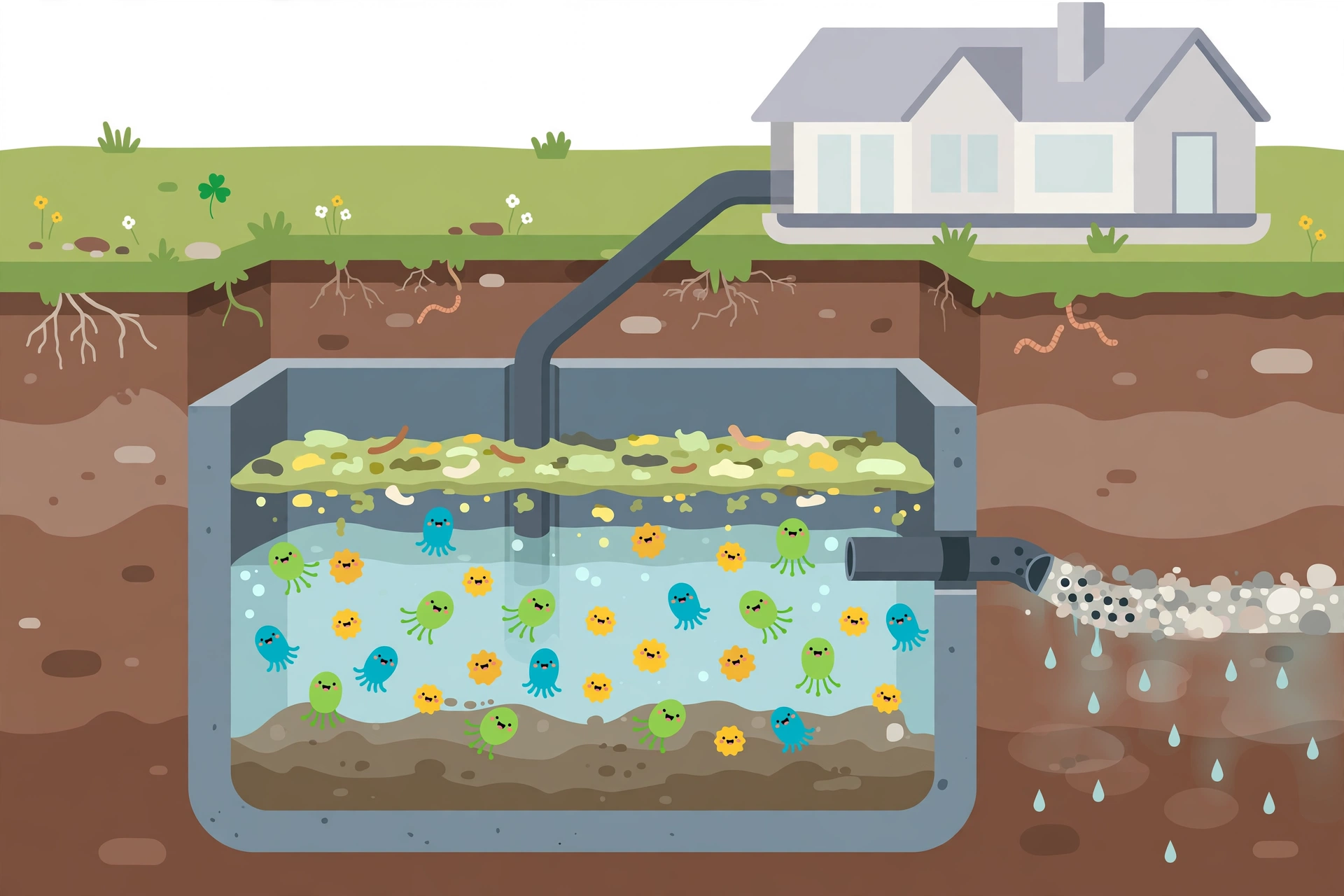
Septic treatments try to support that natural process in one of two ways. Some add more bacteria to the tank, in the hope that a larger population will break waste down faster. Others add enzymes, which break large waste molecules into smaller pieces that bacteria can digest more easily. The four enzyme types that matter most are lipase for fats and oils, protease for proteins, cellulase for paper and plant fiber, and amylase for starches.
CFU stands for colony forming units, a measure of how many live bacteria are in each dose. Some reviewers suggest avoiding any product with fewer than ten billion CFUs per dose for a standard one thousand gallon tank, but makers measure and report them in different ways, and some do not publish them at all. Treat CFU figures as one clue among many, not as a final verdict.
Rid-X: The Store Shelf Standard
Rid-X is the best known septic treatment in the United States, and for most homeowners it is the first product that comes to mind. It has been sold for decades, and you can buy it at hardware stores, home centers, supermarkets, and online. That availability is a genuine advantage.
What Is in Rid-X
Rid-X contains a blend of bacteria and four enzymes: cellulase, lipase, protease, and amylase. That covers the full range of household waste, from toilet paper and plant fiber to fats, proteins, and starches.
The bacterial dose is modest. Review sites that have examined the product report roughly one point three billion CFUs per dose, which is far below the ten billion threshold some reviewers recommend and far below the doses claimed by several competitors. Rid-X relies more heavily on its enzymes than on live bacteria, and enzymes alone do not repopulate a tank the way a large bacterial dose might.
The product comes in two main forms: the original powder in monthly packets, and pre measured dissolvable pods. Both are designed for a standard residential tank, and the instructions call for one dose a month. Larger households or larger tanks may need a double dose, so check the label for your tank size.
How You Use Rid-X
Using Rid-X could not be much simpler. Once a month, you flush one packet of powder or one pod down the toilet. There is no mixing, no measuring, and no need to treat individual drains. The whole routine takes less than a minute, which is why so many homeowners stick with it for years.
What Rid-X Costs
Rid-X is the cheapest option of the three at common retail prices, with monthly powder packets typically working out to around ten to fifteen dollars a month, depending on the size of the box and where you buy it. Pods tend to cost a little more per dose than the powder. Prices vary by retailer and change often, so check the shelf price rather than relying on any figure in this article.
Strengths and Weaknesses
Rid-X has three clear strengths. It is widely available, it is cheap, and it is easy to use, and its enzyme blend is well documented. The weaknesses are just as clear. The bacterial dose is small compared with competitors, and reviewers who have compared user reports tend to describe modest odor reduction and minimal improvement in drainage. It is basic maintenance, not a treatment for a struggling system.
Some homeowners swear by it, while others say they noticed no change at all. Both experiences are plausible, because the effect of a low dose additive on a healthy tank is likely to be small either way. Our article on whether Rid-X is bad for septic systems looks at the safety question in detail. The short version is that Rid-X is not considered harmful to a septic system when used as directed, but it is also not a substitute for pumping.
SeptiFix: The Oxygen Tablet
SeptiFix is the newest of the three products and the most heavily marketed. It is sold directly through the maker website, not in stores, and it comes with bold claims about odor elimination and reduced pumping. Some of those claims deserve a careful look, because the independent evidence for them is thin.
What Is in SeptiFix
Each SeptiFix tablet weighs fifty five grams and contains fourteen strains of aerobic bacteria, according to the maker. Aerobic bacteria need oxygen to live, which is different from the anaerobic bacteria that naturally dominate a septic tank. The maker says each tablet contains over ten billion bacteria per gram, though no standard per dose CFU count is published, so a direct comparison on that point is not possible.
The tablet also contains oxygen releasing compounds, described by the maker as sodium carbonate peroxyhydrate, which release oxygen as the tablet dissolves. The maker says a single tablet releases up to ten liters of oxygen into the tank. It also contains sodium carbonate, which acts as a pH buffer. A tank that has become too acidic can slow bacterial activity and allow the rotten egg smell of hydrogen sulfide to build up, and the buffer is meant to correct that acidity.
How You Use SeptiFix
Using SeptiFix is as simple as using Rid-X. Once a month, you flush one tablet down the toilet. There is no mixing, no measuring, and no loading phase. The maker says odors can improve within three to five days of the first tablet, and several review sites report that users notice odor reduction within the first week, though those reports come from customer reviews rather than controlled testing.
What SeptiFix Costs
SeptiFix is sold only through the maker website, and the prices listed there in late 2026 were sixty nine dollars for a six month supply, one hundred eighteen dollars for a twelve month supply, and one hundred forty seven dollars for an eighteen month supply, with free shipping on the larger two packages. That works out to roughly eight to twelve dollars a month depending on which package you buy.
Those prices put SeptiFix in the middle of the three products for monthly cost, slightly cheaper than Rid-X at the larger package sizes. Every order from the official site comes with a sixty day money back guarantee, which lowers the risk of trying it. Be aware that prices on the maker website change, so check the current price before you order.
Claims Worth a Closer Look
SeptiFix makes the boldest claims of the three products, and this is where honesty matters most. The maker has suggested that the product can reduce, and in many cases eliminate, the need to pump your tank. No independent study supporting that claim has been published, and public health agencies say the opposite: no additive eliminates the need for regular pumping.
The maker has also claimed that the product can destroy harmful bacteria such as E. coli and salmonella in the tank. Again, no independent data has been found to support that claim, and the idea that a tablet can selectively eliminate pathogens while leaving helpful bacteria untouched is not something any independent source has verified.
What reviewers have been able to confirm is more modest. The oxygen release mechanism is real as a piece of chemistry, but its effect is temporary, because the tank returns to its natural oxygen free state within hours or days after each treatment. About seventy to eighty percent of users report noticeable improvements in odor and drainage, but those improvements tend to level off after the first two or three months.
Bio-Clean: The Powder for Drains and Tanks
Bio-Clean is the oldest style product of the three. It is a professional grade powder that plumbers and septic companies have recommended for years, sold through plumbing suppliers and online retailers rather than on supermarket shelves. It is the only product here designed to treat your drains and your septic tank with the same formula, which makes it the most versatile and also the most demanding to use.
What Is in Bio-Clean
Bio-Clean is a powdered blend of natural bacteria and enzymes designed to digest dead organic waste. The maker says it targets six categories of waste, including fats and oils, proteins, carbohydrates, and paper and cellulose. The bacteria activate within about thirty minutes of contact with water, according to the maker.
One credential Bio-Clean does carry is NSF certification, which means an independent body has checked that the product is safe for its intended use.
How You Use Bio-Clean
Bio-Clean asks more of you than either Rid-X or SeptiFix. The maker recommends starting with a five day loading treatment, applying the product to each drain for five consecutive days, then switching to a once a month maintenance dose. Each dose is mixed with warm water, never boiling water, because boiling water kills the bacteria. It is best applied at bedtime, when the drains will not be used for six to eight hours.
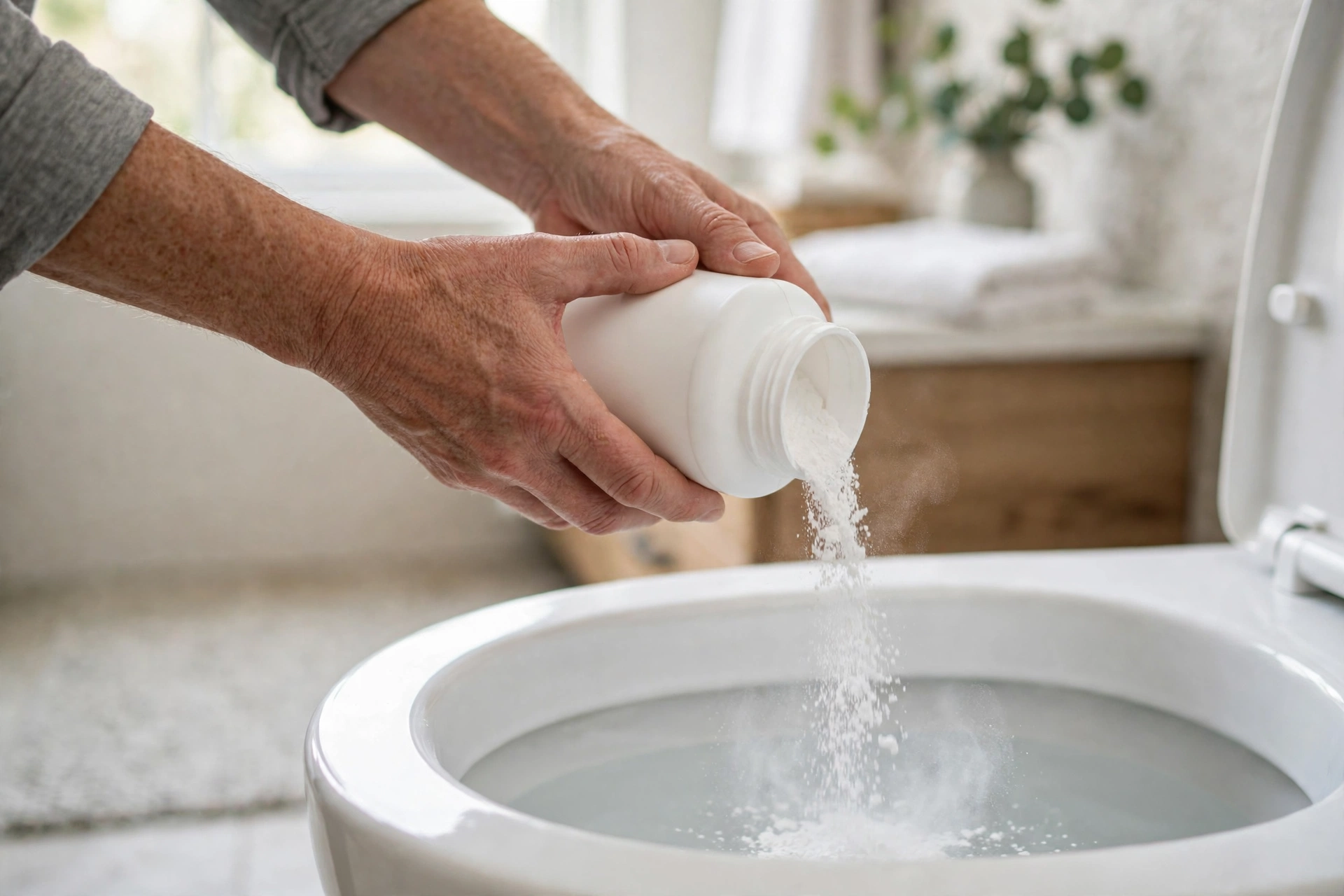
For a septic tank, the initial treatment is two pounds of Bio-Clean mixed with four gallons of water, poured into the toilet closest to the tank and flushed. The monthly maintenance dose is one cup flushed down the toilet. For individual drains, the doses are smaller: one tablespoon mixed with one pint of warm water for a sink, bathtub, or shower, and two tablespoons mixed with two pints of warm water for a toilet.
What Bio-Clean Costs
A two pound container of Bio-Clean costs roughly fifty eight to seventy dollars at online retailers, and it lasts twelve months or more of monthly maintenance dosing. That works out to about five to six dollars a month for maintenance, which makes it the cheapest of the three per month once you are past the initial treatment. But the upfront cost is the highest of the three, and the first treatment uses a full two pounds for the tank alone.
Reviewers have put the effective monthly cost at fifteen to twenty five dollars a month when the drain treatments are included, because treating every drain in the house uses more product than tank maintenance alone. Prices vary by retailer, and the product is sometimes harder to find than Rid-X.
Strengths and Weaknesses
Bio-Clean has real strengths. It is the only product here that treats the whole plumbing system, not just the tank, which makes it a good fit for a home with slow drains as well as a septic tank to maintain. It is NSF certified, it has a long history with plumbing professionals, and a single container goes a long way. The weaknesses are effort and transparency. The five day startup and the mixing routine are a genuine commitment, and many homeowners will not keep it up. The company does not publish its bacterial strains or counts, so you are buying on trust and reputation.
For a healthy, regularly pumped system, Bio-Clean is unlikely to make a measurable difference, just like the other two. Where it may help most is after antibiotic use, heavy chemical exposure, or a long period when the system sat unused. It is also a reasonable choice if your main problem is slow drains with organic buildup rather than the tank itself.
Side-by-Side Comparison
The table below puts the three products next to each other. Prices are approximate, based on retailer and maker listings from late 2026, and they change often.
| Feature | Rid-X | SeptiFix | Bio-Clean |
|---|---|---|---|
| Form | Powder packets or dissolvable pods | 55 gram flushable tablet | Powder concentrate |
| Active ingredients | Bacteria plus four enzymes: cellulase, lipase, protease, amylase | 14 aerobic bacterial strains plus oxygen releasing compounds and a pH buffer | Natural bacteria plus enzymes; full strain list not published |
| Bacterial dose | About 1.33 billion CFUs per dose, as reported by review sites | Maker claims over 10 billion per gram; no standard per dose figure published | Not published by the maker |
| How you use it | Flush one packet or pod down the toilet once a month | Flush one tablet down the toilet once a month | Mix with warm water; five day loading treatment, then monthly |
| Monthly cost | About 10 to 15 dollars | About 8 to 12 dollars | About 5 to 6 dollars for tank maintenance; 15 to 25 dollars if treating all drains |
| Where to buy | Hardware stores, supermarkets, online | Maker website only | Plumbing suppliers and online retailers |
| Guarantee | Retailer returns, usually 30 days | 60 day money back guarantee | Retailer returns, usually 30 days |
| Best for | Simple, cheap monthly maintenance | Odor control and a simple monthly routine | Slow drains plus tank maintenance |
What Does Each One Cost Per Year
Monthly prices only tell part of the story, because the way you buy each product changes what you spend over a year. Rid-X at ten to fifteen dollars a month works out to roughly one hundred twenty to one hundred eighty dollars a year. That is the highest annual cost of the three if you buy month by month, though sales and bulk boxes can bring it down.
SeptiFix at eight to twelve dollars a month works out to roughly ninety six to one hundred forty four dollars a year, and the eighteen month pack brings the annual cost to just under one hundred dollars. The catch is that you pay upfront for six, twelve, or eighteen months at a time.
Bio-Clean looks expensive at first, because a two pound container costs fifty eight to seventy dollars. But if you only maintain the tank, that container can last a year or more, which makes it the cheapest of the three on an annual basis, at roughly sixty to seventy dollars a year. If you treat every drain monthly as well, the annual cost rises to roughly one hundred eighty to three hundred dollars.
To put those numbers in context, a professional pump out typically costs three hundred to six hundred dollars, and a drain field replacement can run five thousand dollars or more. None of these products replaces a pump out, so the money you spend on them is on top of normal maintenance, not instead of it. A product you actually use every month is worth more than a cheaper one that sits in the cupboard because the routine is too much trouble.
Which One Fits Your Situation
Choose Rid-X if you want the simplest possible decision. It is cheap, it is on the shelf at the store you already visit, and the routine takes less than a minute a month. It is a reasonable pick if your system is healthy and you just want a basic monthly habit. The low bacterial dose means you should keep your expectations modest.
Choose SeptiFix if odor is your main concern and you want the easiest monthly routine. The tablet format is genuinely convenient, and the sixty day guarantee means you can try it and get your money back if you notice nothing. Just do not buy it expecting to skip pump outs, because that claim is not supported by independent evidence.
Choose Bio-Clean if your problem is slow drains as much as the tank itself, or if you prefer a product with a long professional history and NSF certification. It is not the right pick if you want a one minute monthly habit, because the mixing and the five day startup will test your patience.
Choose none of them if your system is healthy, pumped on schedule, and running well. That is a perfectly reasonable decision, and it is the one the EPA guidance points toward. If you are unsure whether your system needs help, our guide to whether septic tank additives are necessary walks through the signs that matter.
When No Additive Will Help
It is important to know the limits of all three products, because using one in the wrong situation wastes money and delays the repair you actually need. No additive can fix a tank that is full and overdue for pumping. If your drains are backing up, sewage is surfacing in your yard, or your toilets are flushing slowly all at once, the tank almost certainly needs to be pumped.
No additive can repair a failing drain field. If the soil in your drain field is clogged with biomat, the pipes are crushed, or the field is saturated with standing water, bacteria in the tank will not restore it. Those are structural problems that need a professional inspection.
No additive can clear a fully blocked pipe. A drain that is completely stopped needs a plunger or a drain snake first. Biological treatments work on organic buildup over days and weeks, not on a solid blockage right now. Bio-Clean is honest about this in its own instructions, and the same applies to the other two.
No additive can undo the damage from years of flushing the wrong things. Grease, wet wipes, feminine hygiene products, and harsh chemicals cause problems that a monthly dose of bacteria cannot reverse. If your system has been abused for years, the fix is a professional inspection, a pump out, and a change in habits.
Finally, check your local rules before buying any additive. Some states regulate or restrict septic additives, and your county may have its own rules. A quick call to your local health department will tell you what applies where you live.
The Honest Verdict
There is no clear winner in this comparison, because the three products are built for different homeowners. Rid-X wins on availability and low effort. SeptiFix wins on convenience and odor control, with the strongest guarantee. Bio-Clean wins on versatility and professional credibility. None of them wins on proven performance, because no independent head to head test exists, and none of them is necessary for a healthy, properly maintained system.
If you are going to buy one, match the product to your actual problem. For basic monthly maintenance on a healthy system, Rid-X is the simplest and cheapest way in. For odor problems and a routine you will actually keep, SeptiFix is the most convenient option, and the sixty day guarantee makes it low risk to try. For slow drains across the house as well as the tank, Bio-Clean is the most thorough choice.
Whatever you choose, keep the basics in place. Pump your tank every three to five years, watch what goes down your drains, fix leaks promptly, and spread out laundry loads. Those habits protect your septic system far more than any bottle, packet, or tablet on the shelf. A treatment can support a good maintenance routine, but it can never replace one.
Frequently Asked Questions
Can I switch from one product to another?
Yes. There is no rule against switching treatments, and the bacteria from one product do not conflict with another. If you are switching because the first product did not seem to help, give the new one at least two or three months before judging it, since bacterial treatments work slowly.
How long before I notice a difference?
That depends on what you are measuring. Odor improvements are the fastest change people report, sometimes within a few days with SeptiFix and within a few weeks with the others. Drainage improvements take longer, typically two to four weeks of regular use for mild organic buildup. If you notice no change at all after three months, a professional inspection is a better next step than trying a different bottle.
If you are still weighing whether to use any treatment at all, start with the question that matters most: is your system healthy and pumped on schedule? If the answer is yes, you can skip the shelf entirely and spend the money on your next pump out instead. If the answer is no, one of the three products above is a reasonable, low risk place to start. Just keep your expectations honest and follow the label.
Greetings Glows Team is dedicated to creating meaningful, helpful, and thoughtfully curated content for everyday inspiration and special moments.
What We Focus On:
Well-researched and reader-friendly articles.
Meaningful greetings, blessings, prayers, and inspirational messages.
Carefully curated ideas for everyday life and special occasions.
Clear, helpful, and engaging information.
Consistent quality and attention to detail in every publication.
Our goal is simple: to make every visit worthwhile with content that inspires, informs, and brings a little more positivity to your day.