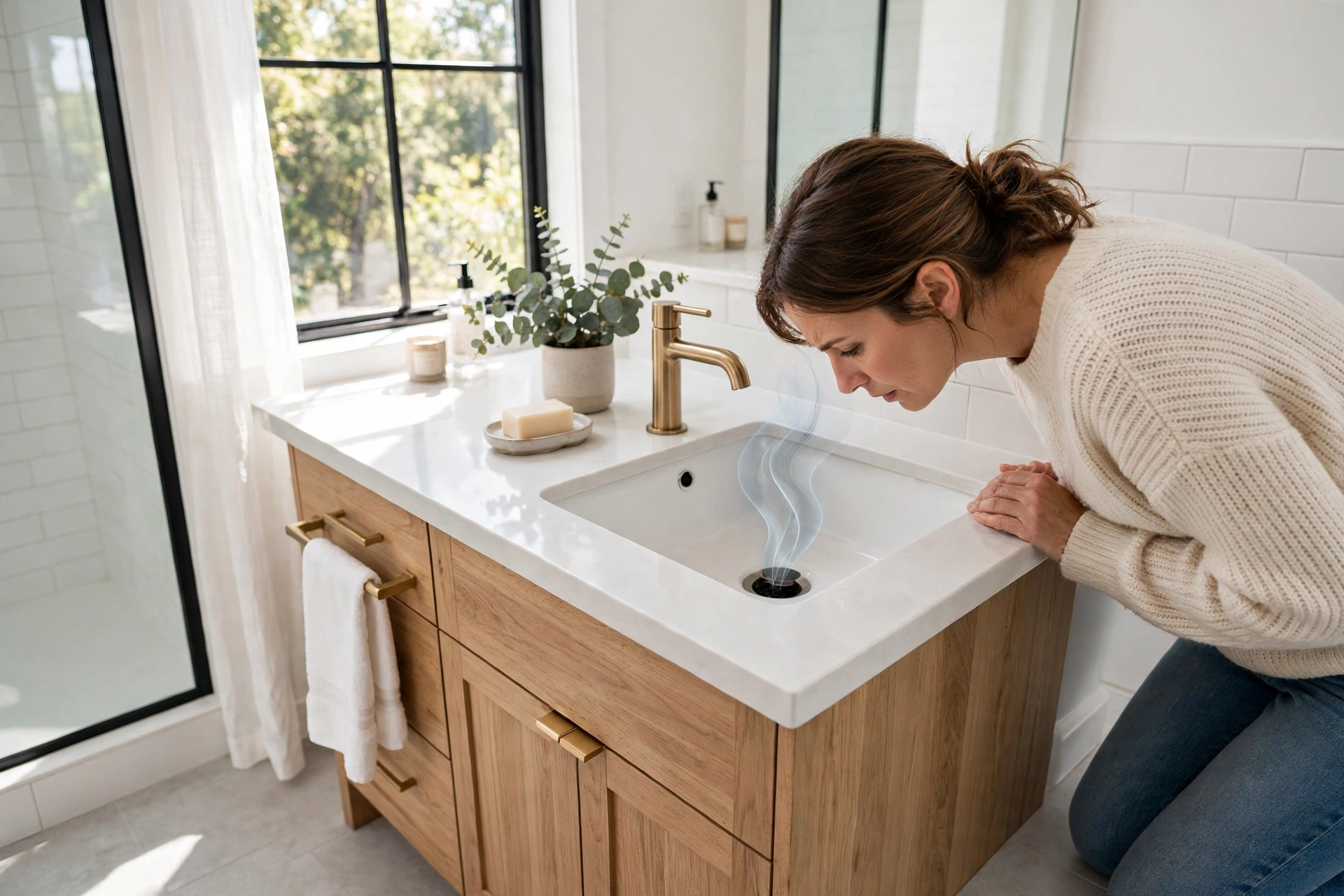
There’s no mistaking it — that rotten-egg stench drifting from a drain or hanging in the hallway. If you’re smelling sewage inside your house and you have a septic system, your first instinct might be panic about a five-figure repair. Take a breath. Most indoor sewage smells come from simple, cheap plumbing issues — not a failing septic system. The trick is working through the causes in the right order, from the five-minute free fixes to the problems that actually need a professional.
This guide gives you that order. We’ll start with a quick safety note, then a simple way to narrow down the source, then a step-by-step diagnostic you can do yourself — and clear guidance on when to stop DIY-ing and call a pro.
First: A Quick Word on Safety
That rotten-egg smell is hydrogen sulfide, a gas produced when waste breaks down without oxygen. In the tiny amounts that leak from a dry drain, it’s unpleasant but not dangerous. But take it seriously if:
- The smell is very strong or getting stronger quickly
- You feel dizzy, nauseous, or get a headache that fades when you leave the room
- The odor is concentrated in a basement or other enclosed, poorly ventilated space
In those cases, ventilate the area (open windows, run exhaust fans), avoid the space, and call a plumber or septic professional promptly. High concentrations of sewer gas can cause real health effects, and methane — the odorless gas mixed in with it — is flammable in confined spaces. For everyday mild odors, though, work through the steps below.
Step 0: Narrow It Down — One Room or the Whole House?
Before touching anything, spend two minutes figuring out the pattern. It tells you where to look:
- Smell is strongest at one drain or in one room (a guest bathroom, the laundry room, a basement floor drain) → almost certainly a plumbing issue: dry trap, bad seal, or a local vent problem. Start with Steps 1–3.
- Smell is in multiple rooms or throughout the house → points toward the main vent system or the septic tank itself. Still do Steps 1–3 first (they’re free), then move to Steps 4–6.
- Smell is strongest outside, near the tank or drain field → that’s a septic system issue, not an indoor plumbing one. Skip to Step 5.
- Smell appeared right after heavy rain → saturated soil can push gases back through the system. Note it, do the indoor checks, and watch whether it clears as the ground dries.
Step 1: Refill Every Dry Drain (5 Minutes, Free)
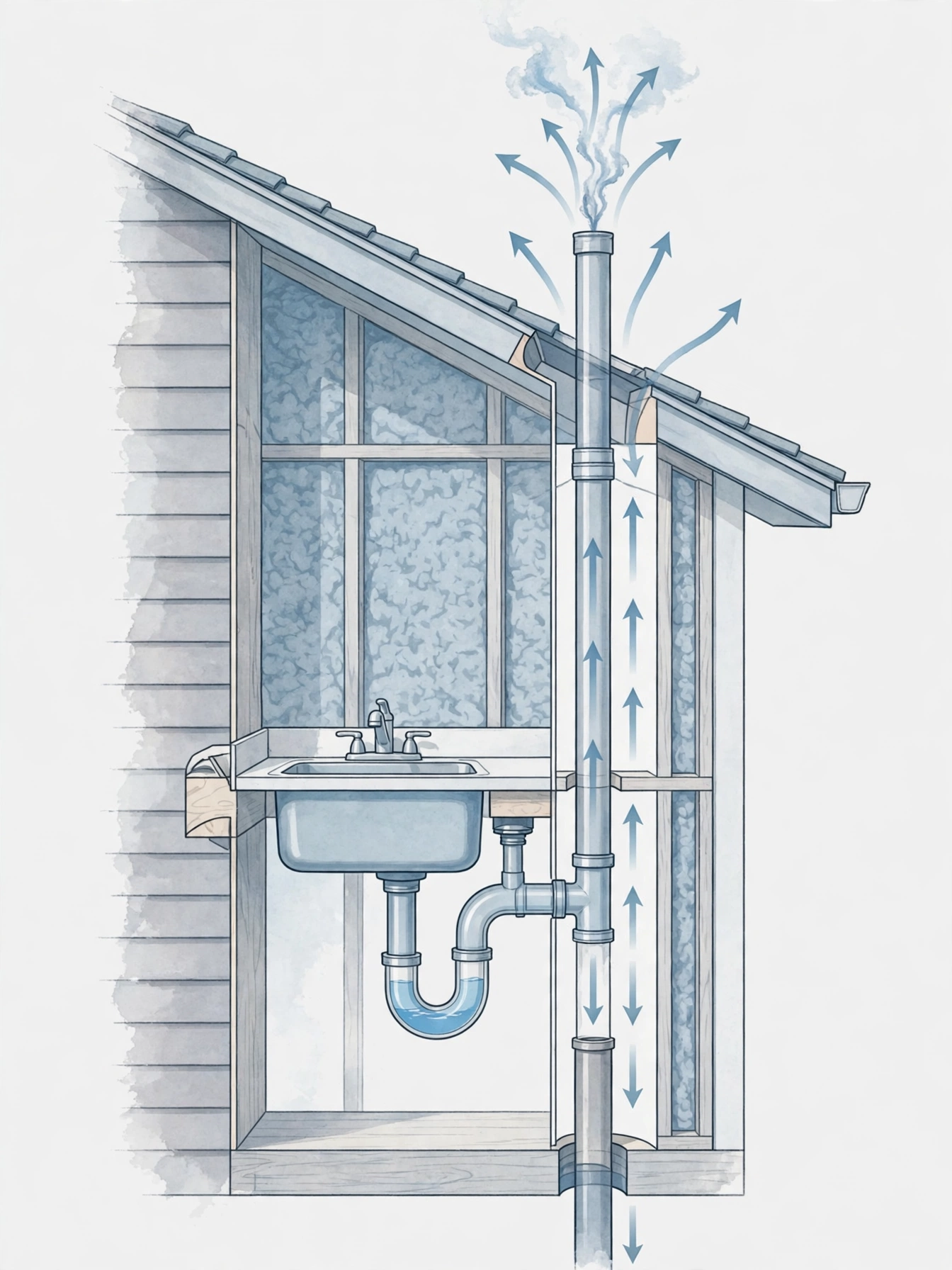
This fixes more sewage smells than everything else on this list combined. Every sink, shower, tub, and floor drain in your home has a U-shaped bend called a P-trap that holds a small amount of water. That water is a physical barrier — sewer gas can’t pass through it. But in drains that sit unused (guest bathrooms, basement floor drains, laundry sinks), the water evaporates over a few weeks, leaving an open pipe straight from your septic tank to your living room.
The fix couldn’t be simpler:
- Run water in every sink, shower, and tub for 30–60 seconds.
- Flush every toilet once.
- Pour a quart of water into every floor drain — basement, laundry room, garage.
Then wait an hour. If the smell fades, you’ve found it. To prevent it recurring in rarely used drains, pour a tablespoon of mineral oil into the drain after refilling — the oil floats on top and slows evaporation for months.
Step 2: Check the Toilets (10 Minutes, Free)
If Step 1 didn’t solve it, look at your toilets. Each toilet sits on a wax ring that seals the base to the floor drain — an airtight and watertight gasket. When that ring fails, sewer gas escapes right at the base.
Signs of a failing wax ring:
- Odor concentrated around the base of a toilet
- The toilet rocks or wobbles slightly when you sit
- Discoloration, softness, or dampness in the flooring around the base
- A faint sewage smell that gets worse after flushing
A wobbling toilet is the giveaway — it means the seal is compromised. Replacing a wax ring is a $5 part and a manageable DIY job if you’re handy (shut off the water, drain the tank and bowl, unbolt, lift, scrape, replace, reset). If the flooring underneath is soft or damaged, though, call a plumber — water may have been leaking longer than the smell suggests.
Step 3: Check the Vent Stack (20 Minutes, Free — From the Ground)
Your plumbing has a vent stack — a pipe that runs from your drain system up through the roof. Its job is to release sewer gases safely above your home and to keep air pressure balanced so drains flow properly. When it’s blocked, gases get forced back down into the house.
From the ground (no ladder needed for the first check), look at the vent pipe on your roof with binoculars or your phone’s zoom. Common blockages:
- Bird nests or leaves packed around the opening
- A cap or cover that shifted and sealed the pipe
- In cold climates, frost or ice buildup (less common in Georgia, but possible in north GA winters)
- Debris from nearby trees or recent storms
Also check: was any recent work done on the roof? Roofers sometimes accidentally cover or damage vent pipes. If you can see an obvious blockage and can reach it safely, clear it. If the vent needs hands-on work on the roof and you’re not comfortable up there, this is a quick, inexpensive plumber visit — not a septic emergency.
Step 4: Look at Water-Using Appliances
Sometimes the smell isn’t coming from a drain at all:
- Washing machine: Front-loaders especially can harbor odor-causing buildup in the door gasket and drain hose. Run an empty hot cycle with washing machine cleaner. Also check that the drain hose isn’t shoved too far into the standpipe — it needs an air gap.
- Dishwasher: Food debris in the filter plus a missing or failed air gap can let odors back up. Clean the filter and check the air gap device (the small cylinder on the sink edge).
- Garbage disposal: Run it with ice cubes and citrus, then flush with cold water. A disposal caked with old food smells like sewage to most noses.
If the smell disappears after cleaning an appliance, the septic system was never the problem — just everyday grime.
Step 5: Consider the Septic Tank Itself
If you’ve worked through Steps 1–4 and the smell persists across multiple rooms, it’s time to suspect the system outside. The most common septic-side causes:
An overdue pumping
When sludge and scum build up past the tank’s working capacity, the system can’t separate waste properly. Gases intensify and pressure pushes them back through your plumbing. If it’s been more than 3–5 years since your last pump-out — or you can’t remember the last one at all — this is the prime suspect. Check our guide to septic tank pumping costs in Georgia so you know what the service should run.
A clogged or failed effluent filter
Many modern tanks have an effluent filter on the outlet that keeps solids out of the drain field. When it clogs, wastewater backs up and odors follow. A technician can clean or replace it during a service visit — it’s a $50–$150 job, not a system replacement.
A saturated or failing drain field
If the drain field can’t absorb wastewater — because of soil saturation, clogging, or age — sewage can surface in the yard and gases can travel back toward the house. Warning signs outside: soggy patches over the drain field, unusually lush grass in stripes, or sewage odors in the yard. This one needs a professional assessment.
Chemical damage to tank bacteria
Pouring harsh chemicals — strong drain cleaners, paint, solvents, large amounts of bleach — down your drains can kill the beneficial bacteria that break down waste. A struggling bacterial colony means incomplete digestion and stronger odors. The fix is to stop the chemical assault and let the biology recover, not to pour in more products. (And despite what the labels promise, septic tank additives aren’t the answer — the EPA doesn’t recommend them.)
Step 6: Know When to Call a Professional
Stop DIY-ing and call a plumber or septic contractor if:
- The smell persists after Steps 1–4 and you can’t identify the source
- Multiple drains are slow and smelly (suggests a main-line or tank issue)
- Toilets gurgle when other fixtures drain (pressure/venting problem deeper in the system)
- You see sewage backing up into tubs, showers, or floor drains — this is urgent
- There are wet, smelly patches in the yard over the tank or drain field
- Anyone feels ill from the odor
When you call, describe what you’ve already checked. “I’ve refilled all the traps, checked the toilets, and the vent looks clear — the smell is in every bathroom” gets you a faster, more accurate diagnosis than “my house smells bad.” You’ll also avoid paying a professional to pour water down your guest bathroom drain.
What NOT to Do
- Don’t pour chemical drain cleaners down smelly drains. They rarely fix odor causes, and harsh chemicals damage the bacterial balance your septic system depends on.
- Don’t just mask it. Air fresheners and scented candles hide a symptom that may be warning you about a real problem — including one that gets more expensive the longer it waits.
- Don’t ignore a sudden, severe smell. A smell that appears abruptly and strongly, especially with slow drains or gurgling, can signal a backup in progress. Act the same day.
- Don’t assume the worst immediately. On the flip side, a mild odor in one bathroom is overwhelmingly likely to be a dry trap. Work the steps before worrying about the drain field.
Preventing Sewage Smells Long-Term
- Run water in rarely used drains monthly (or add the mineral-oil trick from Step 1).
- Pump the tank on schedule — every 3–5 years for most households.
- Keep harsh chemicals, paint, and solvents out of your drains entirely.
- Have the vent stack checked whenever you have roof work done.
- Fix wobbling toilets promptly — a $5 wax ring beats subfloor repair.
- Conserve water during heavy rain when the drain field is already saturated.
The EPA’s septic care guide covers these habits in more depth — most of them cost nothing and prevent the majority of odor problems before they start.
Frequently Asked Questions
Can a full septic tank cause a sewage smell inside the house?
Yes. When the tank is overdue for pumping, excess sludge and scum disrupt normal separation, gas production increases, and pressure can force sewer gases back through your drains. If the smell is house-wide and it’s been 3+ years since pumping, schedule a service visit.
Why does my house smell like sewage only sometimes?
Intermittent odors usually point to a drain that dries out between uses (guest bathroom, floor drain) or a venting issue affected by wind and weather. Note when it happens — patterns are diagnostic gold.
Is a sewage smell in the house dangerous?
Mild, occasional odors from a dry drain are unpleasant but not hazardous. Strong, persistent, or worsening smells — especially with headaches, nausea, or dizziness — warrant ventilation, avoiding the area, and professional help. Sewer gas contains hydrogen sulfide and methane, which are harmful at high concentrations.
Why do I smell sewage in my bathroom but nowhere else?
A single-room smell is almost always plumbing, not septic: a dry trap in an unused shower, a failing toilet wax ring, or a localized vent issue. Work through Steps 1–3 above before suspecting anything bigger.
Can heavy rain cause sewage smells in the house?
Yes. Saturated soil around the drain field slows absorption, which can push gases and wastewater back toward the house. If the smell appears after storms and fades as the ground dries, rain is the likely trigger — but recurring episodes still deserve a professional look at the drain field.
Will a septic tank additive fix the smell?
No — and it may make things worse. Additives don’t fix dry traps, bad seals, blocked vents, or full tanks, which are the actual causes of indoor sewage smells. Some products can even disrupt the tank’s biology. Fix the real cause instead.
The Bottom Line
Work the problem in order: refill dry drains, check toilets, inspect the vent, rule out appliances — then consider the septic tank. Most indoor sewage smells surrender at Step 1 or 2. The ones that don’t are telling you something worth hearing, whether it’s a $5 wax ring or a tank that’s overdue for pumping. Either way, you’ll now know exactly which one you’re dealing with.
If your investigation points to the tank, our Start Here guide will get you oriented on the maintenance schedule your system needs — and our recommended tools page covers the simple gear (like riser kits and effluent filters) that keeps small issues small.
Greetings Glows Team is dedicated to creating meaningful, helpful, and thoughtfully curated content for everyday inspiration and special moments.
What We Focus On:
Well-researched and reader-friendly articles.
Meaningful greetings, blessings, prayers, and inspirational messages.
Carefully curated ideas for everyday life and special occasions.
Clear, helpful, and engaging information.
Consistent quality and attention to detail in every publication.
Our goal is simple: to make every visit worthwhile with content that inspires, informs, and brings a little more positivity to your day.
5 thoughts on “Sewage Smell in Your House? Here’s How to Find the Source”