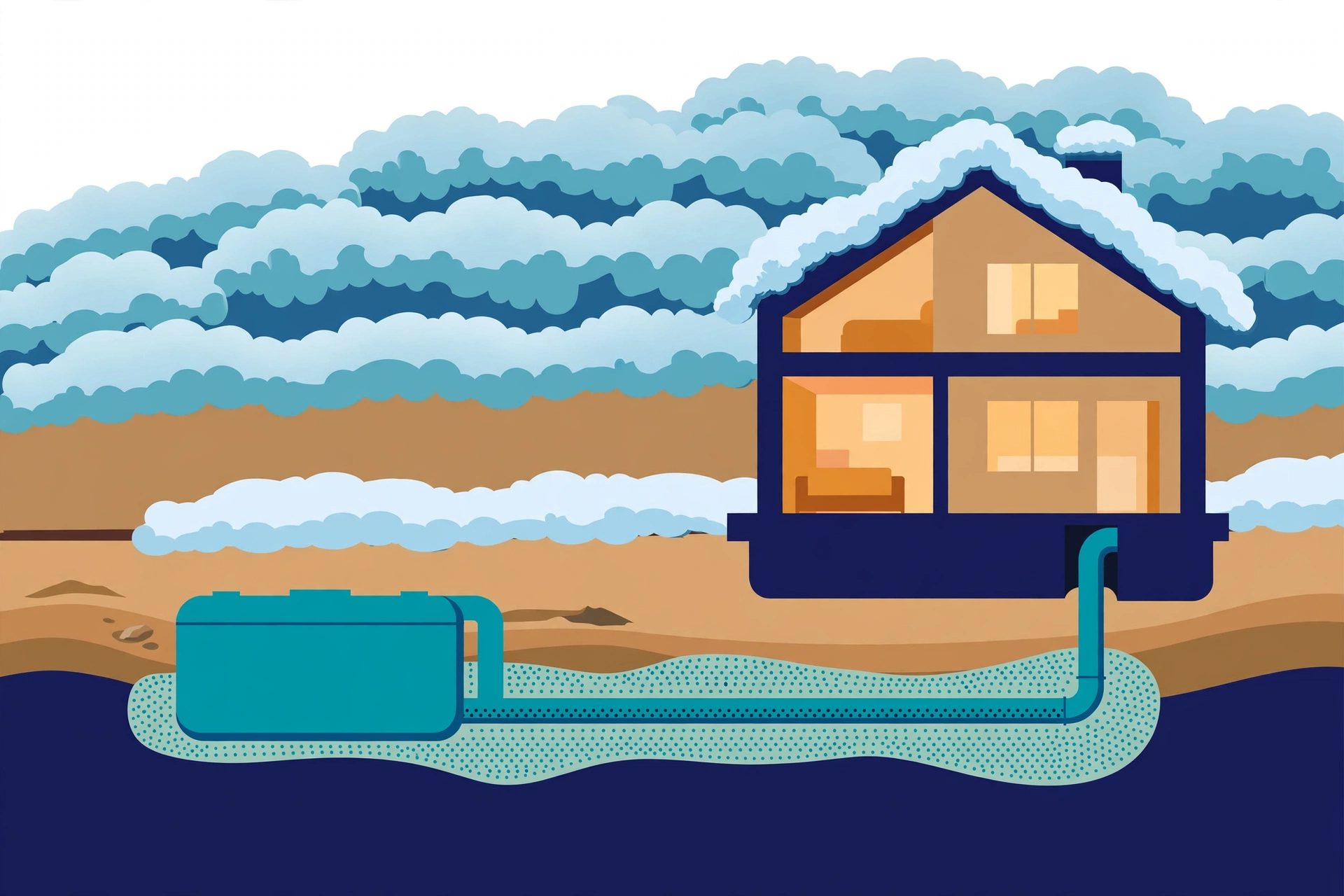
Can a septic tank freeze in winter? Here is the straight answer: the tank itself almost never freezes solid. It holds a huge volume of wastewater, and the bacteria breaking down that waste generate heat, so the liquid inside usually stays safely above freezing. The parts of your system you actually need to worry about are the pipes — the inlet pipe carrying wastewater from your house, the outlet pipe leading to the drain field, and any pump or lift station in the line. Those are the components that freeze, and when they do, everything backs up.
So yes, winter can absolutely cause septic problems — but the trouble starts with a frozen pipe, not a frozen tank. The good news is that nearly all frozen septic systems are preventable with a little fall preparation. This guide covers exactly where your system is vulnerable, what causes freeze-ups, your complete fall winter-prep checklist, the mistakes to avoid, the warning signs of a frozen system, and what to do if it happens anyway.
Which Parts of a Septic System Can Freeze in Winter?
A septic system has more components than the tank itself, and each one has a different risk profile. Knowing where the weak points are helps you focus your winter prep in the right places.
The inlet pipe (house to tank)
This is the most common freeze-up spot. The pipe that carries wastewater from your house to the tank is where trouble starts, especially where it exits the foundation or basement wall. Pipes running through an unheated crawl space or a cold basement are also exposed. The inlet side is at particular risk on the north and west sides of the house, where cold winds strip away snow cover and drive temperatures down — and where there is less sun to warm the ground. A thin trickle of water in this pipe is far more likely to freeze than a full flow, which is why plumbing leaks are such a hazard in winter (more on that below).
The outlet pipe and drain field
The pipe carrying liquid from the tank to the drain field can freeze too, particularly if it is shallow or the soil above it has been compacted by vehicles, foot traffic, or snowmobiles. The drain field itself spreads effluent thinly through the soil, and if the ground over it freezes deeply, the field cannot absorb liquid the way it should. This is also why snow cover over your tank and drain field is so valuable — a blanket of fluffy, undisturbed snow is excellent natural insulation.
Pump and lift stations
If your property sits lower than the drain field, you probably have a pump chamber or lift station that pushes effluent uphill. These smaller chambers hold less water than the main tank, so they cool faster, and the pumps, floats, and electrical components inside are exposed to freezing air whenever the lid is opened. Keep those lids closed and well-insulated in winter.
Vent pipes
The plumbing vents that poke out of your roof can ice over in extreme cold. A frozen vent blocks the air your drains need to flow properly, which produces gurgling drains and — you guessed it — sewage smells inside the house. If you are getting sewer odors and slow drains during a cold snap, a iced-up vent is one of the first things to check.
What Puts Your System at Risk of Freezing
Frozen septic systems rarely happen by bad luck alone. They happen when a combination of risk factors lines up. Here is what to look for at your home.
An empty or mostly vacant house
Normal household use is your system’s best antifreeze. Every shower, load of laundry, and toilet flush sends warm water into the tank, keeping the temperature up. If your house sits vacant for a week or more — a holiday trip, a rental turnover gap, a for-sale vacancy — that warm inflow stops and the system cools steadily. Homes that are empty through the winter are the classic candidates for freeze damage, which is why there is a whole section for seasonal cabins later in this article.
No snow cover over the system
Snow is free insulation. About 10 inches of fresh, fluffy snow provides roughly the insulating value of R-18 — comparable to several inches of rigid foam board. When the ground over your tank and drain field is bare, frost drives much deeper into the soil. The NDSU Extension, which serves North Dakota homeowners who know cold weather, specifically recommends leaving snow undisturbed over septic components rather than clearing or packing it down. Every path you shovel, sled hill you flatten, and driveway you extend over the system strips away that protection.
Compacted soil and snow
Fluffy snow insulates because of the air trapped between the flakes. Pack it down and you squeeze out that air — and the insulation value with it. Driving cars, ATVs, or snowmobiles over the tank and drain field compacts the snow and the soil beneath it, letting frost penetrate deeper. Letting livestock congregate over the system in winter has the same effect. Keep traffic off your septic area all winter long.
Leaky plumbing fixtures
A dripping faucet or a toilet that runs constantly sends a thin, steady trickle of cold water into the septic line. Small amounts of slow-moving water freeze far more easily than full flows, and over days the trickle can build into an ice dam that blocks the pipe entirely. This is one of the most common — and most avoidable — causes of frozen septic lines. Fix every leak before the first hard freeze.
A shallow system installed above the frost line
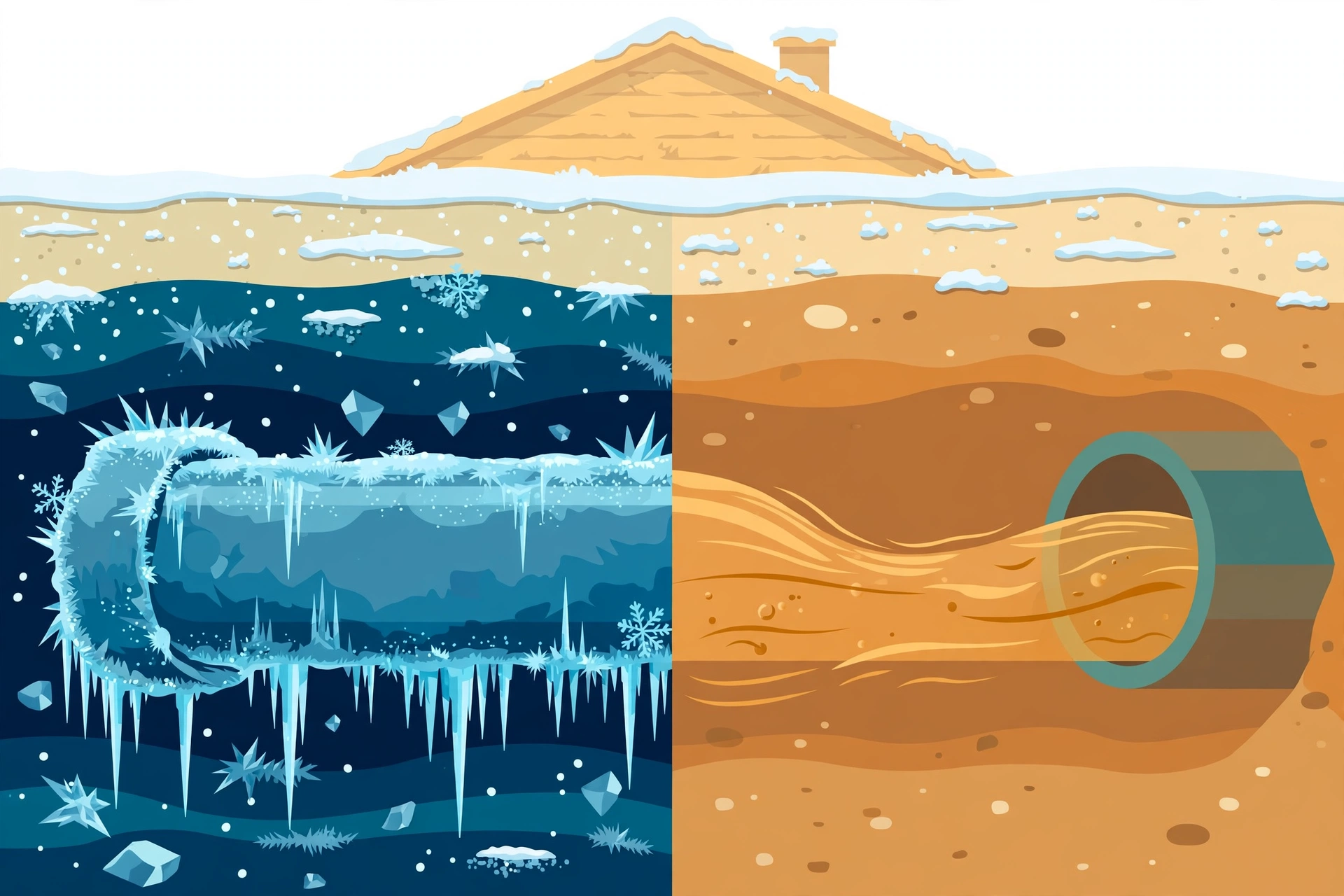
The frost line — the depth to which soil freezes in a typical winter — runs roughly 20 to 50 inches deep across most of the continental United States, and can reach 100 inches in northern Minnesota, according to NOAA data referenced by This Old House. Septic components installed above the local frost line are inherently more exposed. If your system was installed shallow, or you live in a region with deep frost, insulation measures like mulch and foam boards (covered in the checklist below) matter even more.
Your Fall Winter-Prep Checklist
The best time to protect your septic system is in the fall, before the ground freezes. Run through this checklist in October or early November — it will take an afternoon at most.
- Fix all plumbing leaks. Walk the house and check every faucet, toilet, and water softener drain. A trickling faucet is not a winter strategy — it is a freeze-up strategy. Replace worn flapper valves, reseat loose faucets, and make sure your water softener’s backwash cycle is not running continuously.
- Leave the snow alone. Once snow falls, let it pile up undisturbed over the tank and drain field. Do not shovel paths across it, do not pile cleared snow compactly onto it, and do not drive over it. Mark the edges of your septic area with stakes in the fall so the snowplow driver and the kids with the sleds know where not to go.
- Add mulch over shallow components. If you have pipes, the tank lid, or field lines within a couple of feet of the surface, spread 8 to 12 inches of straw, hay, or loose mulch over them before freeze-up. This is cheap insurance for shallow systems. Just remember where you put it so you can remove or rake it back in spring if it interferes with maintenance access.
- Keep the house heated if you are away. If you leave home for winter travel, keep the thermostat at 56–58°F rather than turning the heat all the way down. An unheated house means no warm wastewater and a colder soil environment around the tank — exactly the combination that invites a freeze.
- Stop mowing late in the season. That final fall mowing over the septic area? Skip it. Longer grass and vegetation trap snow and add a layer of insulation over the system. Rake leaves onto the area rather than off it — every layer helps.
- Crown the soil over the tank. Check the grade over your tank and add soil so it crowns slightly, shedding surface water away instead of letting it pool. Standing water above the tank wicks cold downward and also works its way into seams and lids.
- Have the tank pumped before winter. If you are due (or overdue) for pumping, schedule it in the fall. A freshly serviced tank with the correct operating level is more resilient, and starting winter with a known-good baseline means one less variable to worry about. If you are budgeting for the service, our breakdown of septic tank pumping costs will help you know what to expect from a service quote.
- Insulate shallow lines properly. For pipes buried above the frost line, 2- to 4-inch rigid foam insulation boards laid over the line before backfilling (or laid on the surface over the trench for existing lines) add serious protection. This is a fall project, not a January one.
- Know where everything is. If you do not have a current map of your tank, lines, and drain field, make one this fall. A simple sketch with measurements from the house corners is enough. If a pipe freezes in February, knowing exactly where it runs will save the repair crew hours of probing in frozen ground.

6 Things You Should NOT Do in Winter
Some of the worst frozen-septic advice circulates every year online. Here is what to avoid:
- Do not pour antifreeze into your system. Automotive antifreeze, RV antifreeze dumped in quantity, or any chemical de-icer poured down your drains will poison the bacteria that digest waste in your tank. Kill the biology and the whole system stops working — you will trade a potential freeze for a guaranteed failure.
- Do not leave a faucet running all winter. The old advice to let a tap trickle to prevent frozen pipes works for municipal water lines, but on a septic system it overloads the tank and drain field with constant cold inflow, and the thin trickle can freeze into an ice dam in the septic line. The EPA recommends protecting your septic system by conserving water, not wasting it.
- Do not rig heat tape carelessly. Heat tape on an exposed pipe section can help thaw a freeze — but improvised electrical heating around a septic system is a genuine fire risk. If you use heat tape, use a listed product installed per the manufacturer’s instructions on an accessible pipe, never on buried lines, and never leave homemade heating rigs running unattended.
- Do not drive or park over the system. This applies all winter. Compacted snow and soil over the tank, lines, and field let frost drive deeper. The drain field is especially sensitive — compaction there can cause long-term damage beyond just freezing.
- Do not open the tank lid in winter. The lid and the soil above it are part of your insulation system. Opening the tank to “check on it” vents out the warm air and lets cold air pour in. If a professional needs access, let them be the one to open it.
- Do not ignore early warning signs. Slow drains, gurgling, and odors during a cold spell are not things to wait out. A partial freeze caught early can sometimes be thawed simply; a complete blockage means a backup into your home.
Signs Your Septic System Is Freezing Up
Frozen components announce themselves with the same symptoms as a failing system. Watch for these during and after cold snaps:
- Sewage backing up into toilets, tubs, or floor drains — the clearest sign that a pipe is blocked by ice.
- Gurgling drains when fixtures are used, caused by air trapped behind a partial blockage.
- Sewage odors inside the house, often from frozen vent pipes or from pressure pushing gases back through dry traps.
- Standing effluent or unusually green grass over the drain field, suggesting the field is not absorbing properly.
- Alarms going off on a pump chamber or lift station, indicating the pump cannot move water.
If you are getting odors without an obvious cold-weather cause, work through our guide to finding the source of sewage smells in your house to rule out other issues like dry P-traps or a failing wax ring.
How to Thaw a Frozen Septic System
If you suspect a freeze, act quickly — but do not reach for the boiling kettle.
- For a minor freeze near the house: Running hot (not boiling) water down the affected drain can melt a small ice blockage in the line close to the house. Hot water is safe; boiling water can crack porcelain fixtures and damage PVC pipe joints. Use it in moderation — you are trying to melt ice, not flood the tank.
- For an exposed pipe section: A properly installed heat tape on an accessible, above-ground or crawl-space section of pipe can thaw it safely. Follow the product instructions exactly.
- For a main line, tank outlet, or drain field freeze: Call a septic professional. Thawing buried lines often requires a high-pressure water jetter or a steam unit, both of which are pro equipment. A pumper can also tell you whether the problem is actually ice or something else, like a tank that is overdue for service.
While you wait for help, stop using water as much as possible. Every gallon you send into a blocked system has nowhere to go but back up into your house.
Winterizing a Seasonal Home or Cabin
Seasonal homes are the single most freeze-prone category of septic system, because they combine the two biggest risk factors: no warm water inflow and no one around to notice the warning signs. If you close up a cabin for the winter:
- Have the tank pumped before freezing temperatures arrive. A freshly pumped tank removes the bulk of the liquid that could freeze and gives you a clean start in spring. Per NDSU Extension guidance, pumping before winter is one of the most effective protections for a system that will sit idle. Our Start Here guide walks through pumping schedules and other maintenance timing if you are new to septic ownership.
- Shut off the water and drain the plumbing. Turn off the main water supply, drain the pipes, and winterize fixtures so supply lines do not burst and flood the system with cold water mid-winter.
- Add non-toxic antifreeze to traps and toilet bowls — not the tank. RV-grade antifreeze in sink traps and toilet bowls protects the fixtures from cracking. Do not pour it down the drains in quantity and into the septic tank, where it will harm the bacterial colony.
- Insulate above the system. Lay straw or mulch over the tank and any shallow lines before you lock up, and let the snow do the rest of the work undisturbed all winter.
- Arrange a midwinter check if possible. If a neighbor, caretaker, or property manager can walk the property during a deep freeze, early signs like odors or wet spots over the field can be caught before they become spring disasters.
The Bottom Line on Septic Tanks and Winter
So, can a septic tank freeze in winter? The tank itself is the least of your worries — its volume and biological activity keep it warm. It is the pipes, the pump chamber, and the vent stack that freeze, and they freeze when snow cover is stripped away, the house sits empty, fixtures leak, or traffic compacts the ground above them.
The encouraging part is that prevention is simple and almost free: fix leaks in the fall, leave the snow alone, add mulch over shallow components, keep the heat on if you travel, and get the tank pumped before winter if it is due. Do that, and your system should sail through even a brutal winter without a hiccup.
For more on keeping your system healthy year-round, browse our recommended tools and supplies for maintenance gear, and if you are just getting started with septic ownership, the Start Here guide covers everything a first-time homeowner needs to know. Winter is only one season — a little care in the others keeps the whole system running strong.
Greetings Glows Team is dedicated to creating meaningful, helpful, and thoughtfully curated content for everyday inspiration and special moments.
What We Focus On:
Well-researched and reader-friendly articles.
Meaningful greetings, blessings, prayers, and inspirational messages.
Carefully curated ideas for everyday life and special occasions.
Clear, helpful, and engaging information.
Consistent quality and attention to detail in every publication.
Our goal is simple: to make every visit worthwhile with content that inspires, informs, and brings a little more positivity to your day.