A septic pump alarm that sounds once is a warning. A septic pump alarm that keeps going off is a message you have not answered yet. You silence the buzzer, the red light clears for a while, and then the noise starts again in the middle of the night or right after you run the washing machine. A single alarm can come from one heavy laundry day or a brief power cut. An alarm that returns again and again means something in the system is not keeping up.
This guide is about that repeating pattern. It explains how the alarm works, the reasons it keeps coming back, how to work out which reason fits your home, what you can safely check yourself, and when to call a professional. If your alarm has only gone off once, our general guide to what to do when a septic alarm goes off covers the basic first steps.
What It Means When the Alarm Keeps Coming Back
Every time the alarm sounds, the liquid in your pump chamber has risen to the high-water float. That float sits above the level where the pump should have switched on and moved water out to the drainfield. Each alarm means the same thing: water is arriving faster than it is leaving. When that happens once, the cause may be temporary, like a weekend of guests or a storm. When it happens repeatedly, the balance between water coming in and water going out is wrong in a lasting way.
Think of the alarm as a symptom rather than the problem itself. Silencing the buzzer only stops the noise. The red light usually stays on until the water level drops back below the alarm float, which is why the light is a better guide than the sound. If the light clears within a few hours of cutting back on water use, the pump is still working and the system was overloaded. If it stays on through a quiet night with almost no water use, something is failing, or the drainfield is no longer taking water.
How a Septic Pump Alarm Works
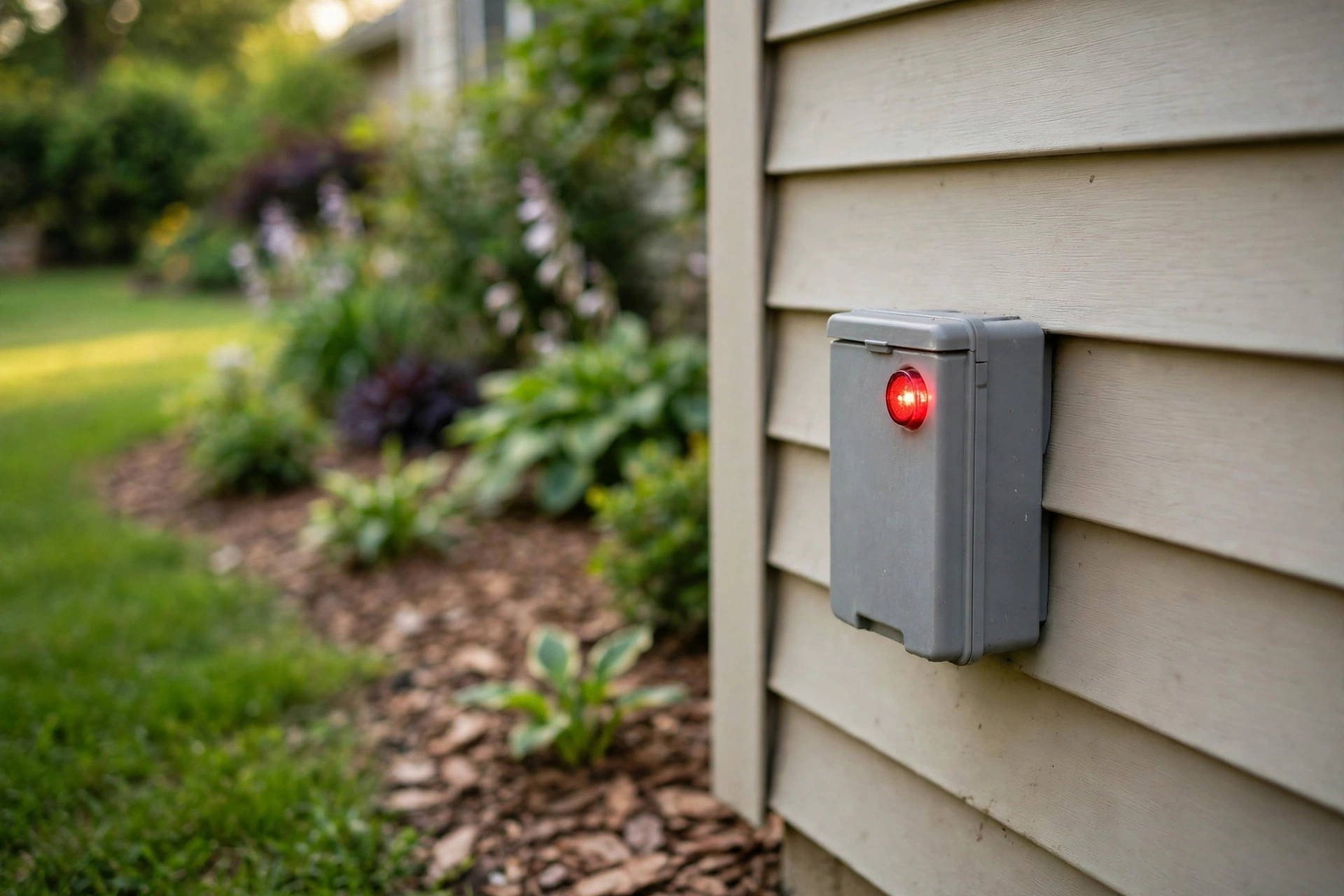
Most homes with a septic pump have a pump chamber, sometimes called a dosing tank, after the septic tank. Wastewater flows into this chamber, and a pump inside pushes it out to the drainfield in measured doses. The alarm is part of the control panel, usually a grey box on an outside wall or a post near the tank, with a red light and a buzzer.
Inside the chamber, the pump is controlled by float switches, small buoyant devices that rise and fall with the water level. A typical setup has three. The lowest turns the pump off when the chamber is nearly empty. The middle turns it on when the water reaches a set level. The highest is the alarm float. It sits above the pump-on level and is wired to the alarm, not to the pump, so if the pump float sticks or the pump motor fails, the alarm float still works.
When the water reaches the alarm float, the buzzer sounds and the red light comes on. Most panels have a silence button on the outside of the box. Pressing it stops the buzzer but leaves the red light on until the water level falls. That is by design. On aerobic systems, which have an air pump that pushes oxygen into the treatment tank, the alarm may also sound for low air pressure. A yellow or amber light usually points to the air pump, while a red light points to high water.
What to Do First When the Alarm Sounds Again
Do the same calm things you would do for a first alarm, but this time pay attention to the pattern, because the pattern is the clue. Press the silence button on the control panel. The buzzer stops and the red light stays on. Then cut water use back to the essentials. No laundry, no dishwasher, short showers only.
Next, check the breaker that feeds the pump. It will usually be a dedicated breaker in your main electrical panel, sometimes with a GFCI outlet at the tank. If it has tripped, reset it once. If it stays on and the alarm light clears within a few hours, a one-time trip may have been the whole story. If it trips again right away, leave it off and call for service.
While you wait, look for other warning signs. A strong sewage smell around the house or yard, slow drains, gurgling sounds, wet or spongy ground over the drainfield, or toilets that flush sluggishly all narrow the list of causes. A sewage smell often means the chamber is staying too full, and our guide to what a full septic tank smells like explains which smells point to a full tank and which point to other problems. Write down what you notice and when the alarm sounded. A short note is far more useful to a technician than a general sense that it happens a lot. Do not open the pump chamber or the septic tank yourself. The gases inside can be poisonous, and the electrical parts sit in standing wastewater.
Why Your Septic Pump Alarm Keeps Going Off
A recurring alarm almost always comes down to one of a handful of causes. They fall into three groups: the pump or its controls are not moving water out, too much water is coming in, or the drainfield cannot take the water the pump sends it. Start with the ones that match what you have observed, and the picture will narrow quickly.
A Stuck or Tangled Float Switch
The float switch is the most common reason a pump alarm keeps returning, and it is also one of the cheapest to fix. A float is a simple device that hangs from a cable or rides on a rod, and it tips or rises as the water level changes. But it lives in a chamber full of wastewater, grease, and solids, and it has to move freely to work. Over time, a float can get tangled in its own cable, caught against the side of the chamber, weighed down by grease and sludge, or snagged on the pump cord. When that happens, it may fail to tell the pump to switch on, so the water keeps rising until it reaches the alarm float, and the cycle repeats the next time the chamber fills.
The signs of a float problem are distinctive. The alarm tends to come and go without an obvious pattern, sometimes sounding when water use has been light. You may hear the pump run in short, irregular bursts, or not hear it at all when the chamber should be full. That on-again, off-again behaviour, with no clear link to how much water the household is using, is the classic fingerprint of a float switch that is tangled or coated in buildup.
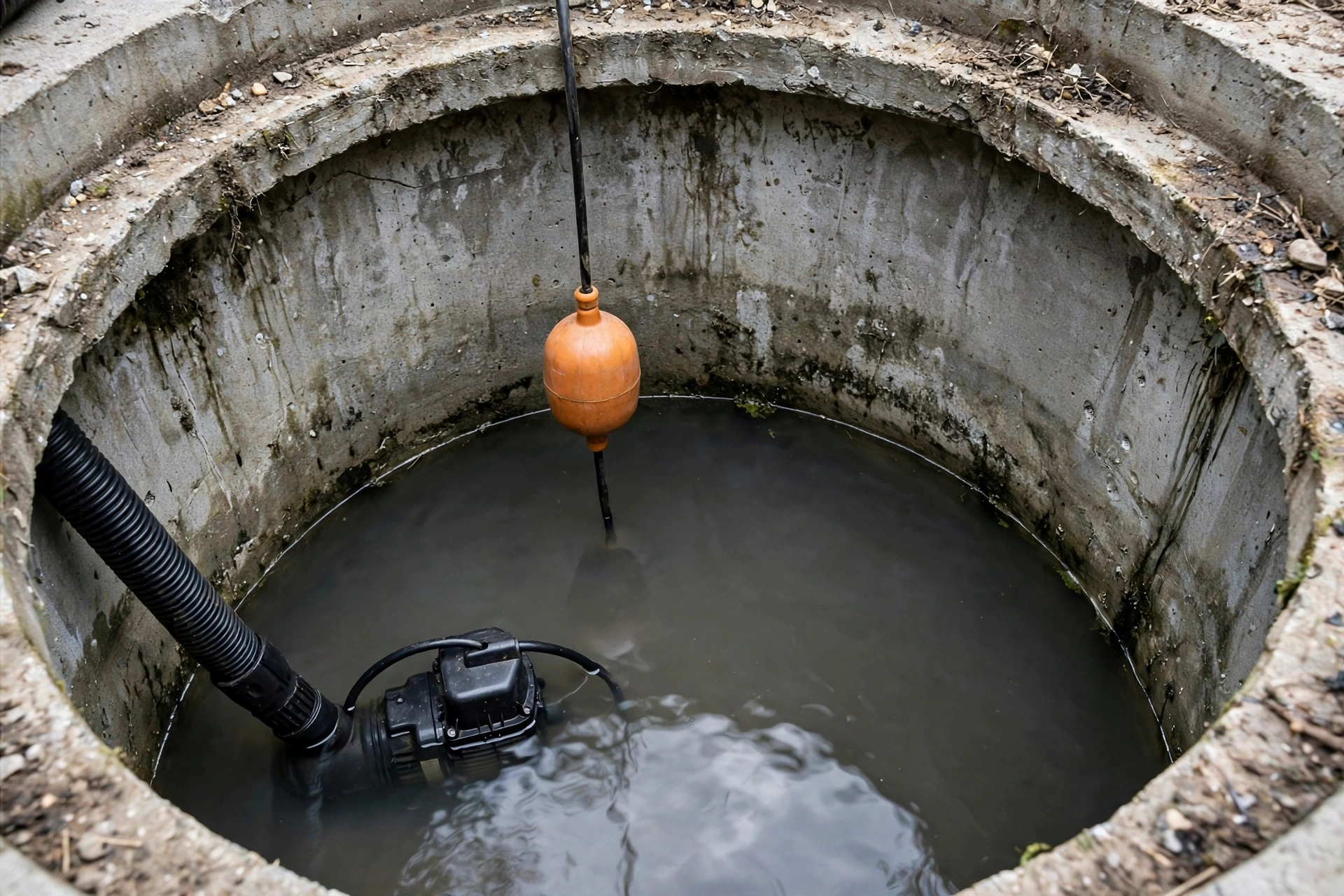
Float switches are inexpensive parts, and replacing one is a routine job for a septic technician, not a homeowner job, because it means opening the chamber and working around wastewater and electrical wiring. You can keep the problem from coming back by keeping grease, wipes, and other non-flushable items out of the system. Ask the technician to check the other floats at the same time and make sure each one hangs freely.
A Pump That Runs but Cannot Keep Up
Sometimes the pump itself is the problem. A pump can fail outright, in which case the alarm sounds and stays on until the pump is replaced. More often, in a recurring alarm, the pump is failing gradually. The motor still runs, but it moves less water than it used to, because the impeller is worn or partly clogged, or because corroded wiring or a loose connection is starving it of power. With every load of water, the pump falls a little further behind, and the alarm returns a little sooner each time.
A weakening pump shows a pattern you can learn to recognise. The alarm goes off after heavy water use, such as a morning of showers and laundry, and then clears after several hours of low use. Over weeks or months, the amount of water it takes to set the alarm off gets smaller. A system that used to handle a full day of guests without complaint now alarms after a single load of laundry. That slow shrinking of the margin is a sign that the pump is losing capacity, not that the household suddenly started using more water. If your pump is old and the alarm pattern has been getting steadily worse, ask a technician to test the pump output and check the impeller and wiring. A clogged pump can sometimes be cleaned and returned to service, while a failing motor needs replacing, and doing it before it stops entirely is far less disruptive than dealing with a backup.
A Breaker or Electrical Fault That Keeps Tripping
The pump and the alarm are often on separate circuits, which is why the alarm can keep working while the pump sits dead. A breaker that trips once and stays reset is a minor event. A breaker that trips again and again is a fault, and it is one of the more frustrating causes of a recurring alarm because it can look like several different problems at once.
The causes range from the simple to the serious. A GFCI outlet at the tank may be tripping because of moisture in the box. A connection may have corroded, which raises resistance and heat until the breaker gives up. The pump motor may be drawing too much current as it wears out, which trips the breaker under load. Or there may be damage to the wiring between the house and the chamber, sometimes from digging, roots, or rodents. In each case the sequence is the same: the pump loses power, the chamber fills, the alarm sounds, someone resets the breaker, and then it trips again. The rule is simple. Reset a tripped breaker once. If it trips again, stop resetting it and call for service. A breaker that will not stay on is protecting you from a fault, and overriding it can damage the pump, overheat wiring, or create a shock risk.
Too Much Water Coming In, Day After Day
Not every recurring alarm means something is broken. Sometimes the system is being asked to handle more water than it was designed for, and it falls behind a little more with every day. The most common hidden source of extra water is a running toilet. A toilet with a worn flapper or a faulty fill valve can send hundreds of gallons a day into the septic system without anyone noticing. Put a few drops of food colouring in the toilet tank and wait half an hour without flushing. If colour shows up in the bowl, the flapper is leaking and the toilet is feeding the system around the clock.
The sign that points to this cause is timing. The alarm sounds after heavy water use and clears when the household eases off for a day. If the alarm only ever appears on laundry day, or after guests visit, or on the days the softener runs, the system is probably working as designed and simply being overloaded. Spreading laundry across the week, fixing leaks promptly, and keeping an eye on softener settings often settle this kind of alarm without any repair at all. If the household has genuinely outgrown the system, talk to a septic professional about capacity, because no amount of careful water use will fix a system that is too small for the home it serves.
Heavy Rain and Groundwater Getting In
Rain is one of the most common triggers for a septic alarm, and it is especially common as a repeating cause. After a big storm, water can enter the system in several ways. Surface water can run toward the tank and drainfield if the ground slopes the wrong way. A cracked riser lid can let rainwater in directly. Groundwater can rise around the tanks and seep in through small cracks. And a saturated drainfield simply cannot absorb water as fast as the pump delivers it, so the chamber fills and the alarm sounds even though the pump is working perfectly.
If your alarm keeps going off after every significant rain, that pattern is the diagnosis. Note how long it takes to clear after the rain stops. A system that recovers within a day of dry weather is usually just waiting out saturated soil. A system that takes several days, or that alarms after even light rain, may have water getting in through a crack or a low lid, and that is worth investigating. Walk the yard after rain and look at where water collects. If puddles sit over the tank or the drainfield, or if a downspout discharges near them, redirecting that water away can make a real difference.
A Clogged Effluent Filter or Discharge Line
Many systems have an effluent filter fitted at the outlet of the septic tank, where water leaves for the pump chamber. Its job is to catch solids before they can reach the pump and the drainfield. When that filter clogs, water backs up and the pump chamber cannot fill and empty in its normal rhythm. The alarm may sound even though the pump itself is fine, because the water is not reaching the pump, or because the pump is pushing against a blocked discharge line.
A clogged filter often builds up gradually, which fits the recurring pattern well. The alarm starts appearing occasionally, then more often, then after every heavy use. Other signs: drains that run a little slower than they used to, gurgling sounds from the plumbing, and a tank that seems to need pumping sooner than expected. The discharge line itself can also clog, from roots, grease and solids, or a crushed section of pipe. Cleaning an effluent filter is a routine part of a professional inspection, and a technician can usually tell from the state of the filter whether it is the main problem or a symptom of something else, such as a tank that is overdue for pumping. Ask a technician to check it when the alarm keeps returning. It can save you from paying for a new pump when a cleaning would have done the job.
A Drainfield That Can No Longer Keep Up
This is the cause homeowners least want to hear, and it is the one that most often explains an alarm that has been returning for months and slowly getting worse. The drainfield is the final stage of the system, where treated water soaks into the soil. Over time, a layer of biological material can build up in the soil beneath the trenches, and the soil can lose its ability to absorb water as quickly as it once did. The pump chamber is where that shows up first, because the pump can only move water out as fast as the drainfield will take it.
The signs of a failing drainfield are different from the signs of a pump problem. The alarm appears after normal water use, not just heavy use, and it takes longer and longer to clear. The ground over the drainfield stays wet or spongy, sometimes with standing water, even in dry weather. The grass over the drainfield may grow unusually lush and green, fed by the extra moisture and nutrients. And you may notice a sewage smell in the yard, which is a sign that water is surfacing instead of soaking down. These signs need a professional assessment promptly, because a drainfield problem does not fix itself. Once a drainfield is genuinely failing, the fix is a professional job that may range from resting a section of the field to a partial or full replacement. Costs vary widely by region, system size, and soil conditions, so get a written quote before agreeing to any work.
The Alarm Itself Is Faulty
The alarm is a piece of equipment, and it can fail like any other. An alarm float can stick in the raised position, a wire can corrode, or moisture can get into the control panel. When that happens, the alarm may sound even though the water level is perfectly normal, and it may keep sounding after the real problem has been fixed.
A faulty alarm has a tell. The alarm sounds, but the pump is plainly running on its normal cycle, the drains are fine, and there is no smell or wet ground. The alarm may sound at random times with no link to water use or rain. If the water level in the chamber is normal and the pump is working, a technician can test the alarm float and the panel separately and replace whichever part has failed. It is a small repair compared with a pump replacement, but it still needs a professional, because it involves the same chamber and wiring.
How to Work Out Which Cause You Are Dealing With
You do not need tools or technical knowledge to narrow this down. You need a notebook and a few days of attention. Each time the alarm sounds, write down the time, what the household had been doing with water, whether it had rained, whether the breaker had tripped, and how long the red light stayed on. After a few alarms, the pattern usually speaks for itself.
If the alarm always follows heavy water use and clears within a day of light use, the system is being overloaded or the pump is falling behind, so check for a running toilet and leaks first. If it only ever appears after rain, and the yard stays wet over the drainfield, the problem is water getting in or a drainfield that cannot drain. If it comes and goes with no link to water or weather, and the pump sounds irregular or does not sound at all, a stuck float or a failing pump is the most likely explanation. One test costs nothing. After the alarm has cleared, use almost no water for a full day. If it stays silent through that quiet day and returns when normal use resumes, the system is right on the edge of its capacity. If it sounds again during that quiet day, the cause is almost certainly inside the system.
Fixes You Can Safely Try Yourself
There are a handful of fixes that belong to the homeowner. Spread your water use out. Do one load of laundry at a time and leave gaps between loads. Run the dishwasher at night rather than at the same time as showers. Check every toilet with the food colouring test and fix dripping taps and running toilets promptly. A hidden leak can feed a septic system hundreds of gallons a day, and finding it can end a recurring alarm overnight. Make sure downspouts drain away from the tank and the drainfield, and keep heavy vehicles off the drainfield, since compacted soil drains more slowly.
Keep a regular pumping and inspection schedule. A septic tank that is overdue for pumping sends more solids toward the pump chamber and the filter, and those solids are what clog filters, foul floats, and wear out pumps. Our month by month septic maintenance schedule lays out what to check and when. For a fuller picture of homeowner care for septic systems, the EPA septic homepage is a good starting point. What you should not try yourself is anything that involves opening the tank or the pump chamber, working on the pump or floats, or rewiring the control panel. The gases inside a septic tank can be dangerous, and the electrical parts sit in standing wastewater.
When to Call a Septic Professional
Some situations should not wait for another cycle of the alarm. Call a professional the same day if the alarm stays on after a day of minimal water use, if the breaker trips again after a single reset, if sewage is backing up into the lowest fixtures in the house, if there is standing water or a strong sewage smell over the drainfield, or if the alarm has been returning for weeks and the pattern is getting worse.
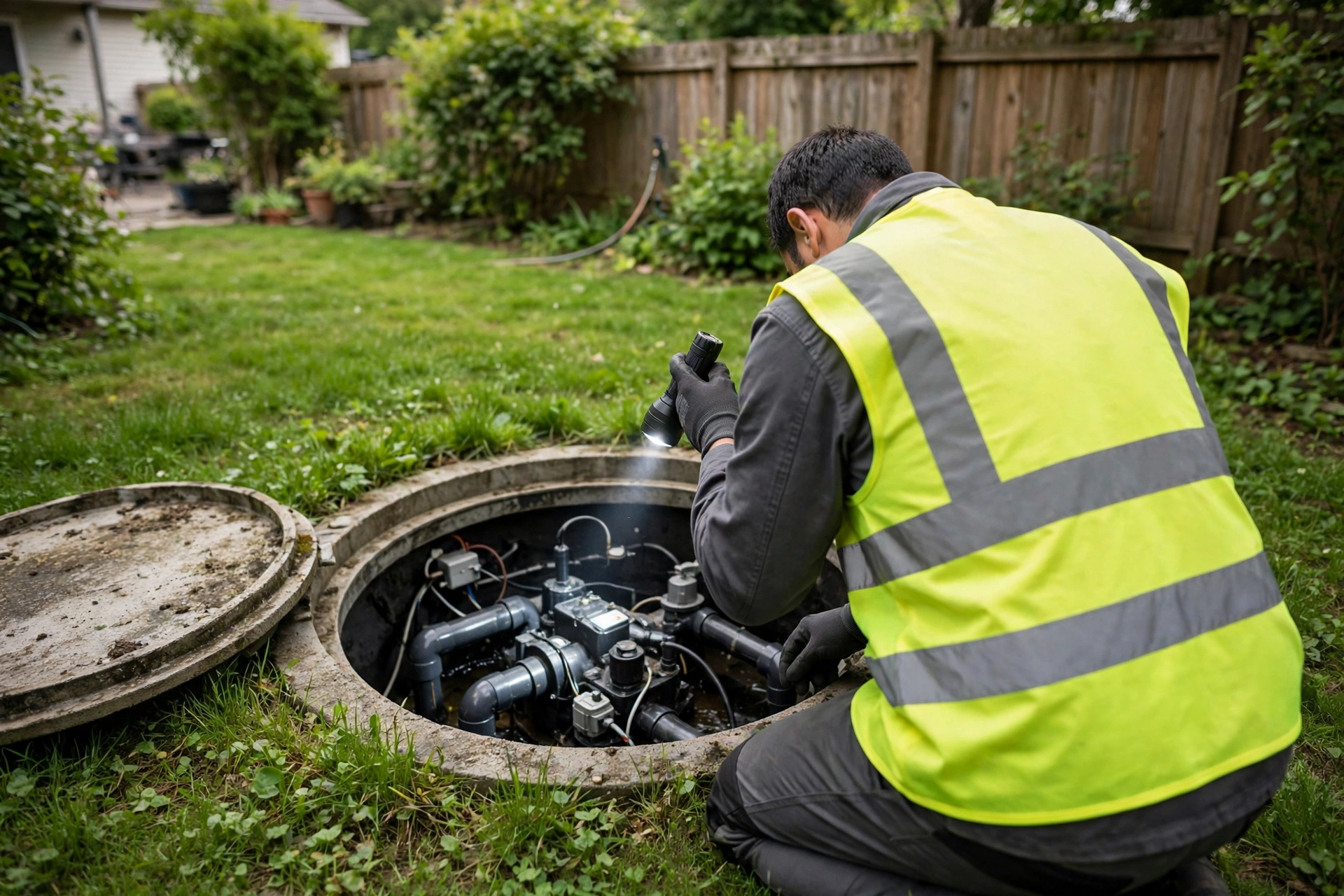
When you call, the notes you have kept are your most useful tool. Tell the technician when the alarm sounds, what makes it clear, whether it follows water use or rain, whether the breaker has tripped, and what you have already checked. That history helps a technician go straight to the likely cause. Our guide to when to call a septic professional immediately goes into more detail on the warning signs that mean same-day help rather than a routine appointment. If the technician finds a drainfield problem or a pump that needs replacing, ask for the diagnosis in plain language and a written quote before agreeing to the work, and ask what caused the failure, not just what part needs replacing, because a new pump in a system with a clogged filter will fail again.
How to Keep the Alarm From Coming Back
Fixing the cause sounding the alarm today is only half the job. Spread laundry across the week, fix leaks the week they appear, and keep an eye on appliances that use water on a schedule, such as softeners. Have the septic tank pumped on the schedule your installer or local health department recommends, which for most households is every three to five years, and have the pump, floats, filter, and panel inspected at the same time. Keep grease out of the drains, and do not flush wipes, sanitary products, or anything that does not break down in water.
Frequently Asked Questions
Why does my septic pump alarm keep going off at night?
Night-time alarms are common because the alarm often sounds hours after the water that caused it went down the drain. A day of heavy use fills the chamber gradually, and the water reaches the alarm float in the evening or overnight, when the house is quiet. The same steps apply: silence it, cut water use, check the breaker, and look for the pattern behind it.
Can I just turn the alarm off and ignore it?
You can silence the buzzer, and you should, because it is there to be silenced. But turning the alarm off at the panel or unplugging it is a different thing, and it is a mistake. The alarm is the only warning you get before a sewage backup. Without it, the first sign of trouble may be wastewater coming up through the lowest drain in the house.
Will pumping the septic tank stop the alarm?
Pumping the tank can quiet the alarm for a while, because it lowers the water level across the system. But if the cause is a failed pump, a stuck float, a clogged filter, or a drainfield that cannot absorb water, pumping is a temporary fix and the alarm will come back once the tank fills again. It is worth doing if the tank is genuinely due for it, but do not expect a pump-out to solve a recurring alarm on its own.
A septic pump alarm that keeps going off is annoying, especially at night, but it is also useful. It is the system giving you a clear and repeated warning while there is still time to act. The cause is usually one of a small number of things: a stuck float, a weakening pump, an electrical fault, too much water coming in, rain and groundwater, a clogged filter, a tired drainfield, or a faulty alarm. Work through the pattern, check what you safely can, and call a professional when the signs point inside the tank. Fix the cause rather than silencing the symptom, keep up with regular maintenance, and the alarm will go back to what it is supposed to be: a quiet box on the wall that you rarely have to think about.
Greetings Glows Team is dedicated to creating meaningful, helpful, and thoughtfully curated content for everyday inspiration and special moments.
What We Focus On:
Well-researched and reader-friendly articles.
Meaningful greetings, blessings, prayers, and inspirational messages.
Carefully curated ideas for everyday life and special occasions.
Clear, helpful, and engaging information.
Consistent quality and attention to detail in every publication.
Our goal is simple: to make every visit worthwhile with content that inspires, informs, and brings a little more positivity to your day.