If your county will not approve a conventional septic system for your lot, or your soil failed its perc test, you may have heard a term that sounds more like industrial equipment than something for a family home: aerobic treatment unit. It is often shortened to ATU, and it is essentially a small wastewater treatment plant that lives in your yard. For some homeowners it is the only way to build on their land. For others it is an expensive upgrade they never asked for. Either way, it helps to understand what you are getting into before you sign a contract or buy a house that already has one.
An aerobic treatment unit does the same basic job as a regular septic tank. It takes the wastewater from your home and treats it so it can be returned to the soil safely. The difference is how it does that job. A conventional system works quietly underground with bacteria that do not need oxygen. An aerobic system adds air, electricity, pumps, and regular professional service to the mix, and in return it produces much cleaner water. You get better treatment and more flexibility about where you can build, but you also get higher costs, more maintenance, and a system that depends on power and moving parts.
What Is an Aerobic Treatment Unit
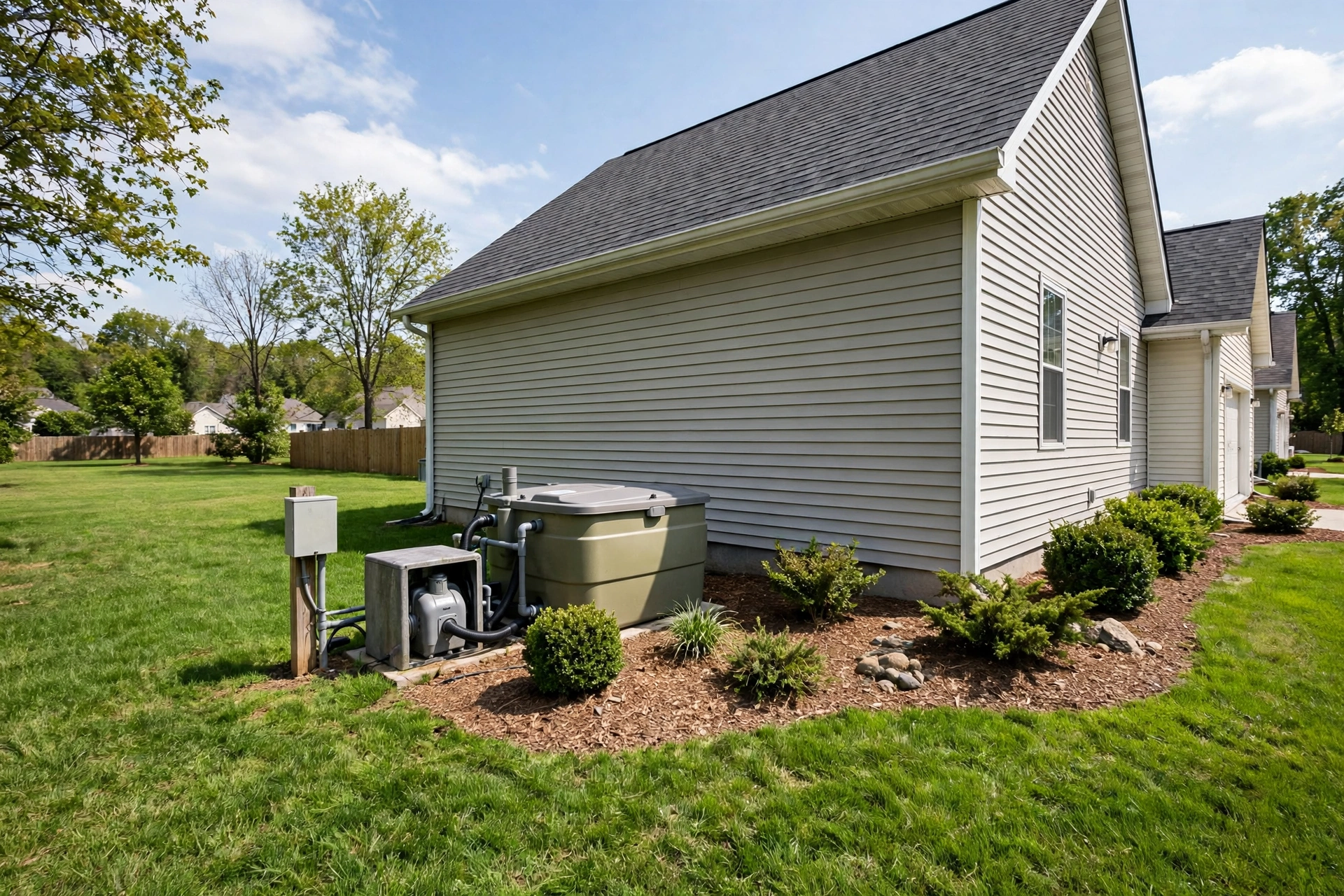
An aerobic treatment unit is an onsite wastewater system that injects air into wastewater so oxygen-loving bacteria can break it down. The added oxygen gives the wastewater extra treatment, according to the U.S. Environmental Protection Agency, and that extra treatment is what sets an ATU apart from a conventional septic tank. Where a standard tank mostly settles solids and lets anaerobic bacteria do slow, quiet work, an aerobic unit actively churns air through the wastewater. The bacteria that thrive in oxygen work much faster and more thoroughly, so the water leaving the system is considerably cleaner.
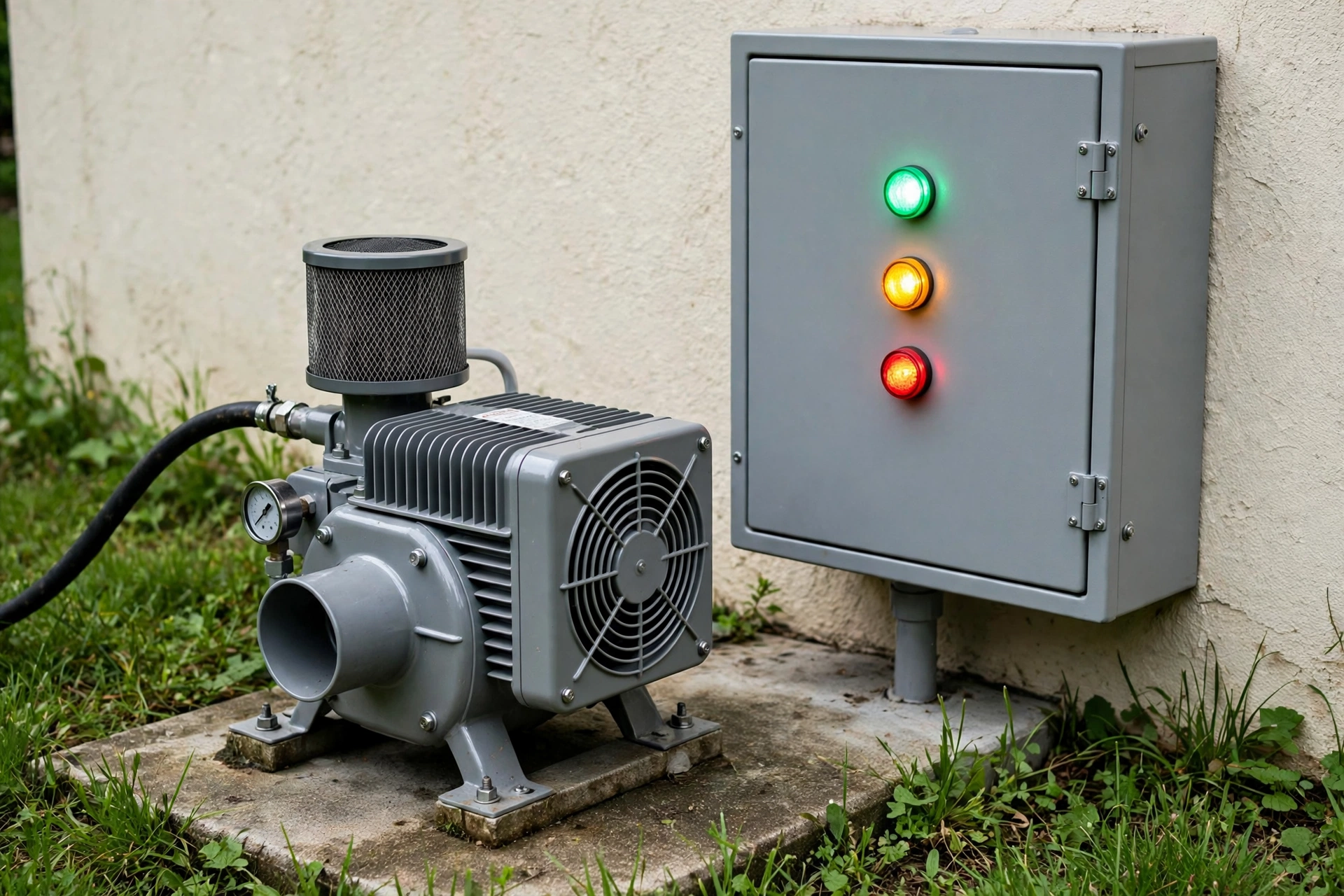
Most ATUs are built around the same basic layout, even though brands and models differ. Wastewater from the house first enters a pretreatment or trash tank, where solids settle and grease is caught, much like in a conventional system. From there it flows into the aeration chamber, which is the heart of the unit. An electric air pump, often called an aerator or compressor, pushes air through diffusers at the bottom of the chamber. The bubbles keep the water moving and feed oxygen to the bacteria, which digest organic matter far more aggressively than the bacteria in a passive tank.
After aeration, the water moves into a clarifier, a quiet chamber where any remaining solids settle out and are returned to the aeration chamber for another round of treatment. The clarified water then passes through a disinfection step, usually chlorine tablets or ultraviolet light, before it is released. The final step is dispersal. Depending on the design and local rules, the treated water may go to a smaller drain field, a drip irrigation setup, or, in some states, a spray system that distributes it over a section of lawn.
The whole process is closer to what a municipal treatment plant does than to what a conventional septic tank does. You get treatment quality that a passive system cannot match, but you also inherit the kind of equipment a treatment plant needs: a compressor, a control panel, alarms, pumps, and a schedule of professional inspections.
How an ATU Differs From a Conventional Septic System
The easiest way to understand an aerobic treatment unit is to compare it with the conventional system most people picture when they think of septic. A conventional system has three parts: a tank, a distribution box, and a drain field. Wastewater flows in by gravity, solids settle, and bacteria that live without oxygen slowly break down what remains. The partly treated water, called effluent, then soaks into the soil, where the soil itself finishes the treatment. It is simple, it has no moving parts, and it needs no electricity. Its main weakness is that it depends entirely on the soil. If the soil drains too slowly, too quickly, or not at all, the system cannot do its job, and the health department will not approve it.
An aerobic unit changes that equation. Because the treatment happens inside the tank with the help of forced air, the system does not lean on the soil nearly as much. The water leaving an ATU is already far cleaner, so it can be released into a smaller drain field, or in some places sprayed or dripped onto the surface. That is why ATUs are the go-to option for lots where a conventional system cannot work: heavy clay soil, a high water table, shallow bedrock, a small lot, or a home near a lake, stream, or other sensitive water body. It may be the only system your county will permit.
The trade is straightforward. A conventional system is simple and cheap to run but picky about where it can go. An aerobic system can go almost anywhere, but it asks more of you for as long as you own it: electricity every day, service visits several times a year, and replacement parts when the mechanical pieces wear out.
The Pros of an Aerobic Treatment Unit
It treats wastewater far better than a conventional tank
The U.S. EPA reports that aerobic units using suspended growth treatment typically achieve 70 to 90 percent reductions in biochemical oxygen demand and suspended solids, with treated water reaching levels as low as 20 milligrams per liter. In plain terms, the water leaving an aerobic unit is dramatically cleaner than the water leaving a standard septic tank. If protecting a nearby well or waterway is part of your situation, that treatment quality is worth real money.
It works on lots where a conventional system cannot
Many homeowners only learn about aerobic systems when a perc test comes back bad. Clay soil that drains too slowly, a water table that sits too high, bedrock close to the surface, or a lot too small for a full-size drain field can each rule out a conventional system. An aerobic unit can be approved on many of these sites because the treatment happens in the tank, not in the soil. The EPA notes that ATUs can be used on smaller lots, on sites with inadequate soil conditions, where the water table is too high, or for homes close to a surface water body that is sensitive to nutrients in wastewater.
That flexibility can be the difference between building on land you already own and not building at all. For a buyer looking at a beautiful lot with poor soil, an ATU can turn an unbuildable parcel into a home site.
It needs a smaller drain field
Because the water leaving an ATU is already well treated, many states allow a smaller dispersal area than a conventional system would need. On a tight lot, that smaller footprint can make the difference between fitting a system and not fitting one. It can also leave more of your yard usable for a garden, a patio, or a play area instead of being reserved for drain field lines.
Some systems go further and use spray or drip dispersal, which spreads the treated water over the lawn. In dry regions, homeowners sometimes value this because the treated water helps keep grass green. That benefit comes with rules and caveats of its own, including setback distances and times when spraying is not allowed, so check your local regulations before counting on it.
It can extend the life of your soil and drain field
One of the quieter causes of drain field failure is the slow buildup of a slimy layer of bacteria and solids, called a biomat, that clogs the soil and stops it absorbing water. Cleaner effluent from an aerobic unit carries far less organic matter into the soil, so that clogging layer forms more slowly. Over many years, that can mean a longer-lived dispersal area and fewer of the soggy-yard and backup problems that send homeowners calling a septic professional.
It is often the only legal option, which can protect your property value
When a county requires an ATU, installing one is not really optional, but it does solve the problem. A permitted, properly functioning aerobic system lets you build, sell, and insure a home on a lot that would otherwise be stuck. Buyers and lenders are far more comfortable with a permitted system that has a service history than with a property that cannot get a septic permit at all.
The Cons of an Aerobic Treatment Unit
It costs much more to install
There is no gentle way to put this: an aerobic system is a major purchase. Published cost guides put installation at roughly 10,000 to 20,000 dollars on average according to Angi, while HomeGuide lists aerobic systems at 20,000 to 40,000 dollars or more, compared with roughly 3,500 to 8,500 dollars for a conventional gravity system. Your actual price will depend on your state, your soil, the size of the system, and how much site work is needed, so get local quotes before you budget. But in almost every market, an ATU costs two to four times what a conventional system costs to install. The equipment itself is more expensive, the installation is more complex, and the permitting and engineering requirements are usually heavier too.
If you are building a new home, that cost lands on top of everything else. If you are replacing a failed conventional system and the county now requires an aerobic unit, the bill can come as a shock. Either way, it is worth getting more than one quote from licensed installers and asking each one to itemize the system, the tank, the electrical work, and the dispersal field separately, so you can compare like with like.
It needs electricity around the clock
The aerator is the heart of the system, and it runs on electricity all day, every day. The EPA puts electricity use at 2.5 to 10 kilowatt-hours per day for suspended growth units and 1 to 4 kilowatt-hours per day for fixed film units, depending on the design and size. That is a modest but permanent addition to your electric bill, and it never stops as long as the system is in service.
The bigger issue is what happens when the power goes out. Without electricity, the aerator stops, the oxygen supply stops, and treatment drops back toward the level of a plain settling tank. A short outage is usually not a crisis, but a long one can lead to odors, poor treatment, and alarms going off when power returns. Homeowners in areas with frequent or long outages should talk with their installer about backup power options and about what to do during an outage. Our guide on using your septic system during a power outage covers the practical steps to take when the lights go out.
Maintenance is mandatory, frequent, and ongoing for the life of the system
A conventional septic tank asks very little of you: pump it every three to five years and be careful about what goes down the drain. An aerobic unit asks for professional attention several times a year, for as long as you own it. Many states require a maintenance contract with a licensed service provider, and in places like Texas and Florida that contract is a legal requirement, not a suggestion. That is a permanent yearly expense, and it does not go away. If you skip service visits, the system will slowly lose performance, the bacteria can die back, and you may end up with odors, a failing drain field, or a violation notice from the county. For a full picture of what regular septic care looks like across the year, see our month by month septic system maintenance schedule.
It has moving parts that will wear out
Every mechanical component in an aerobic system has a working life. Aerator compressors, air pumps, float switches, control panels, and effluent pumps all wear out eventually, and when they do, they need professional replacement. A compressor might last several years, but it is not a lifetime part, and a failed aerator is not something you can ignore for a week. Without air, the bacteria that do the treatment begin to die, and the system quickly stops performing.
That means an ATU owner should budget for repairs as a matter of routine, not as a surprise. It also means the system needs a homeowner who pays attention. Alarms exist for a reason, and a system with a blinking light or a buzzing panel is asking for help. If you are the kind of homeowner who prefers a system you can forget about for years at a time, an aerobic unit will frustrate you. If you are comfortable with a service contract and a technician who visits regularly, it becomes manageable.
It is more sensitive to what goes down the drain
Aerobic systems are more sensitive to sudden heavy loads and to chemicals than a conventional tank is. A big party weekend with many extra showers and toilet flushes, a large load of laundry all at once, or a strong dose of bleach or antibacterial cleaner can upset the bacterial balance in the aeration chamber. The EPA lists vulnerability to upsets from sudden heavy loads or neglect as a known drawback of aerobic treatment. Recovery usually takes time, and during that time treatment quality drops.
That does not mean you have to live in fear of your own plumbing. It means the household habits that protect any septic system matter even more with an ATU: spread laundry loads across the week, avoid pouring harsh chemicals down drains, and fix leaking fixtures promptly so the system is not flooded with extra water.
Spray systems can be a nuisance
Some aerobic systems disperse treated water through spray heads in the yard. This works well when it is set up correctly, but it has its own headaches. Spray heads can mist on windy days, they can activate while children or pets are playing nearby, and they can freeze in cold climates. Most states set rules about when spraying can happen, how far spray must stay from wells, property lines, and play areas, and what kind of disinfection is required first. If you dislike the idea of treated wastewater being sprayed over part of your lawn, ask your installer about drip dispersal or a subsurface drain field instead. Both are common alternatives, though they may cost more.
Cold weather can reduce performance
Aerobic bacteria slow down when temperatures drop, and in very cold climates an ATU may treat water less effectively in winter. Spray heads can freeze, pipes can be at risk if they are shallow, and snow cover can make service visits harder. If you live somewhere with hard winters, ask your installer specifically how the system is protected against freezing.
Aerobic vs Conventional Septic System at a Glance
When you put the two side by side, the choice usually comes down to your land and your tolerance for ongoing maintenance. The table below sums up the main differences.
| Feature | Aerobic Treatment Unit | Conventional Septic System |
|---|---|---|
| How it treats wastewater | Forced air feeds oxygen-loving bacteria | Passive settling and oxygen-free bacteria |
| Treatment quality | High, typically 70 to 90 percent reduction in BOD and suspended solids | Moderate, roughly 40 to 60 percent BOD reduction |
| Works on poor soil or small lots | Yes, often the only permitted option | No, needs soil that drains well |
| Electricity needed | Yes, around the clock | No |
| Moving parts | Yes, aerator, pumps, controls, alarms | Usually none |
| Professional maintenance | Several visits a year, often under a required contract | Pumping every 3 to 5 years |
| Installation cost | Roughly 10,000 to 40,000 dollars or more | Roughly 3,500 to 8,500 dollars |
| Drain field size | Smaller, or spray or drip dispersal | Full-size drain field required |
| Lifespan with good care | About 15 to 25 years | About 20 to 30 years or more |
Neither is better in every situation. The right choice depends on your soil, your lot, your local rules, and how much ongoing maintenance you are willing to pay for.
What Does an Aerobic Treatment Unit Cost
Costs vary widely by state and by site, so treat any number you read online as a starting point and get local quotes. That said, the published ranges give a useful sense of scale. Installation commonly runs from about 10,000 to 20,000 dollars according to Angi, with HomeGuide listing 20,000 to 40,000 dollars or more for larger or more complex installs. Conventional systems, by comparison, typically run about 3,500 to 8,500 dollars. The gap comes from the equipment, the electrical work, the engineering and permitting, and the dispersal system.
Running costs are where an ATU keeps asking for money year after year. A maintenance contract typically runs about 400 to 900 dollars a year. Electricity for the aerator adds a smaller but constant amount to your power bill. Chlorine tablets or UV lamp replacements, periodic pumping of the pretreatment tank, and occasional part replacements add more. Over twenty years, that ongoing cost can add up to more than the installation itself, which is why it is important to budget for the whole life of the system, not just the day it goes in the ground.
Repairs deserve their own line in the budget. Aerator compressors, pumps, and control panels do fail, and replacement parts plus a service call can run into hundreds of dollars each time. A good installer will tell you the expected service life of each major component and what a replacement typically costs in your area. Ask for that information in writing before you sign, and keep it with your system records.
A neglected ATU can damage its drain field, and a failed drain field is one of the most expensive septic repairs a homeowner can face. Regular service is not just a legal requirement in many states. It is also the cheapest way to protect the large investment you made in the first place.
Maintenance: What an ATU Owner Actually Has to Do
Owning an aerobic system is a commitment, but it is a manageable one if you know what is expected. Here is what a typical year looks like.
Your service provider will visit three or four times a year in most states, sometimes more often if local rules require it. During each visit, the technician checks that the aerator is running and producing enough air, inspects and cleans the air filters, checks the chlorine supply and refills it if needed, tests the water quality, checks pumps and float switches, and looks at the control panel and alarms. They will also check the pretreatment tank to see whether it needs pumping. Pumping is usually needed every few years, depending on household size and use, and your technician can tell you when it is due.
Between visits, your responsibilities are simple but important. Keep the area around the aerator and control panel clear of plants, mulch, and stored items so air can flow and a technician can reach the equipment. Listen for the aerator. It should hum steadily. If it goes silent, that is a problem worth a phone call, not a wait and see. Check the control panel now and then for warning lights, and never ignore an alarm.
Household habits matter as much as the service visits. Spread laundry loads through the week instead of doing five loads on Saturday. Avoid pouring grease, paint, solvents, or strong antibacterial cleaners down the drain. Be careful with water softener discharge and large amounts of bleach, and talk to your service provider before adding any septic additive, because many additives are unnecessary and some can upset the bacterial balance. Keep records of every service visit, every repair, and every pumping. If you sell the home, that folder is worth real money in buyer confidence.
When an Aerobic Treatment Unit Is Required
In many cases, homeowners do not choose an aerobic system because they want one. They install one because the county requires it. The most common situations are a lot with clay soil that fails a perc test, a high water table that leaves too little separation between the drain field and groundwater, shallow bedrock, a lot too small for a full-size drain field, or a home near a lake, river, or other water body that local rules protect from nutrient pollution. In these situations, the health department may approve only an ATU, or an ATU plus a specific type of dispersal system.
Some states also tie aerobic systems to certification standards. For example, Texas, Florida, and Pennsylvania tie residential units to NSF and ANSI Standard 40, a testing standard for onsite wastewater treatment systems, and Texas and Florida require maintenance contracts. Your state and county will have their own list of approved models, approved installers, and inspection requirements, so the first step is always a call to your local health department or permitting office, before you sign a contract or order equipment.
It is also worth knowing that an ATU is sometimes the best choice even when it is not required. A homeowner with a small lot who wants to add a bedroom, a family building near a well, or someone replacing a failed system on difficult soil may all benefit from the better treatment and smaller footprint. The EPA maintains a helpful overview of septic system types and care on its septic systems homepage, which is a good starting point if you want to read the official guidance for homeowners.
Common Problems and Warning Signs
Aerobic systems give you more warning than a conventional tank does, because they have alarms and a control panel. Learning what those warnings mean is one of the most useful things an ATU owner can do.
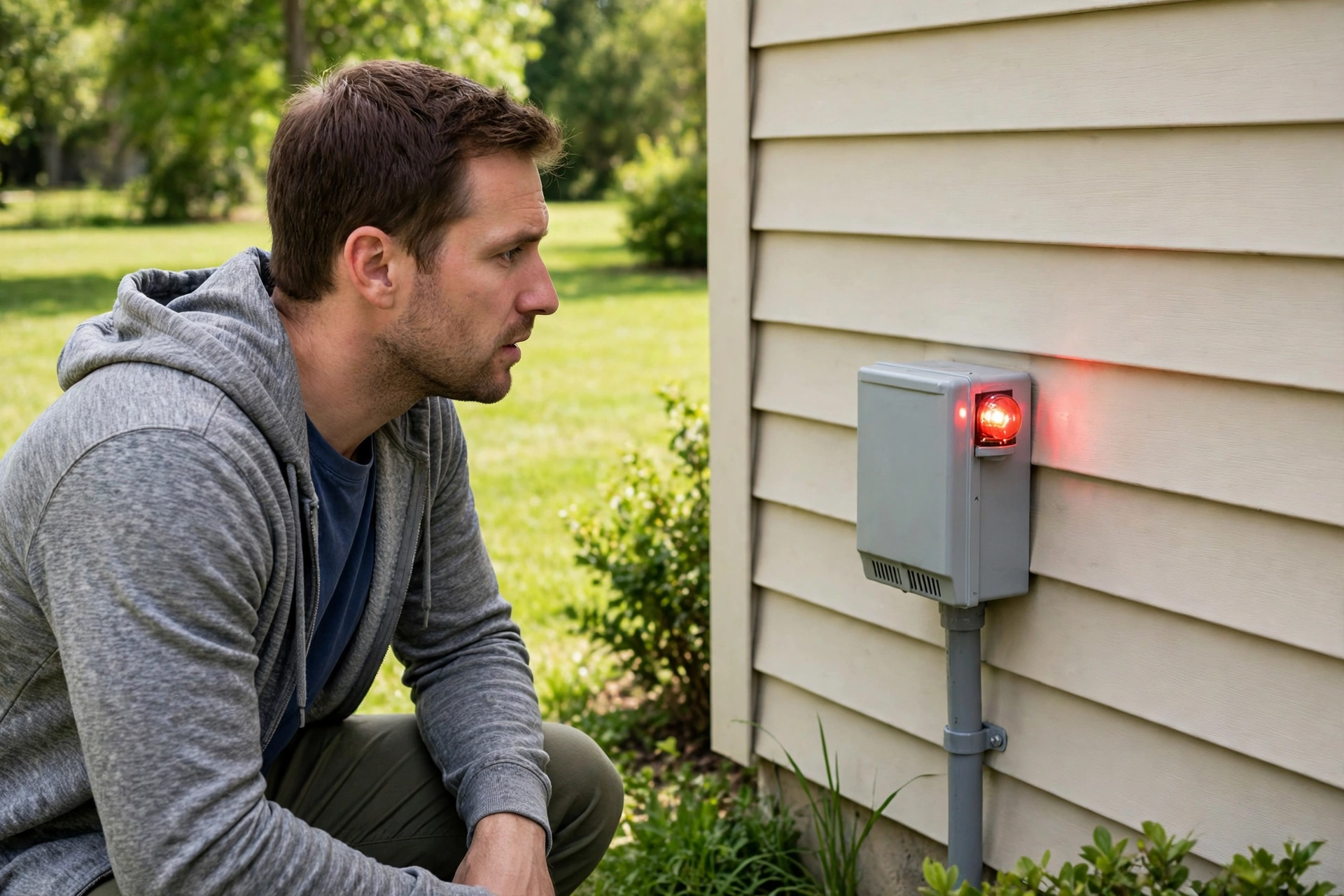
The most common warning is the alarm itself. A light, a buzzer, or both will activate when water levels get too high, a pump fails, or the aerator stops. If your alarm goes off, the first step is to cut back on water use, check whether the system has power, and call your service provider. Our guide on what to do when your septic alarm goes off walks through the steps in detail.
Odors are another early warning. A faint earthy smell near the aerator is normal from time to time, but a strong sewage smell in the yard or inside the house means something is wrong. It can point to a dead aerator, a chlorine supply that has run out, a clogged filter, or a system that is overloaded. If you notice a smell that was not there before, treat it as a service call, not a nuisance to live with.
Watch the yard, too. Soggy ground, standing water, or unusually lush green grass over the dispersal area can signal that the system is not treating or dispersing water properly. Slow drains, gurgling pipes, and toilets that flush sluggishly can point to the same problem from inside the house. Sometimes the cause is a clogged filter or a pump problem that a technician can fix quickly. The key is to act early, because a small problem caught in the first week is far cheaper than a drain field damaged over a season.
Finally, pay attention to the aerator sound. A healthy aerator hums steadily. A unit that has gone silent, or one that makes grinding or rattling noises, needs attention. If the aerator has failed, the bacteria in the tank begin to die within a day or so, and the longer the system runs without air, the longer it takes to recover. Keep a spare filter on hand if your technician recommends it, and know where your breaker panel is so you can check whether a tripped breaker is the cause before you call for service.
Is an Aerobic Treatment Unit Right for Your Home
The honest answer is that it depends on your land, your budget, and your willingness to maintain a mechanical system. An ATU is usually the right choice when your lot cannot support a conventional system, when you live near sensitive water, or when local rules require one. In those situations, the question is not whether the system is ideal. It is whether it lets you live on your land safely, and it does.
An ATU is also worth considering when you want the best treatment quality you can get and you are comfortable with the running costs. Some homeowners choose one voluntarily because they care about protecting a nearby well or stream, or because they want a smaller drain field and more usable yard. If you fall into that group, go in with your eyes open about the service contract, the electricity use, and the repair budget, and you will likely be happy with the system.
On the other hand, if your lot passes a perc test easily, you have plenty of room for a drain field, and you prefer a system you can mostly forget about, a conventional system is almost certainly the better fit. It costs far less to install, costs almost nothing to run, and needs only occasional pumping. There is no reason to pay for an aerobic system you do not need.
Before you decide, gather a few facts. Get a perc test and a site evaluation from your county or a licensed soil evaluator. Get written quotes from at least two licensed installers that itemize the system, the electrical work, and the dispersal field. Ask each installer for the expected yearly running cost, including the maintenance contract, electricity, chlorine, and typical repairs. Check whether your state requires a maintenance contract and which models are approved in your county. If you are new to septic ownership altogether, our first time homeowner septic system guide covers the basics every new owner should know.
Frequently Asked Questions
How long does an aerobic treatment unit last
With consistent professional maintenance, an aerobic system typically lasts about 15 to 25 years. The tank itself can last longer, but the mechanical parts, especially the aerator, pumps, and control panel, will need replacement during that time. Systems that are neglected often fail much sooner, and the failure usually shows up first in the drain field, which is the most expensive part to fix.
Do aerobic septic systems smell
A properly working aerobic system should not produce a strong odor. You may notice a faint smell near the aerator or the vent from time to time, but a persistent sewage smell in the yard or the house is a sign that something is wrong. Common causes are a failed aerator, an empty chlorine supply, a clogged filter, or a system that has been overloaded.
Can I use an aerobic system during a power outage
You can still flush and use water sparingly during a short outage, but the system will not be treating wastewater properly while the aerator is off. Keep water use to a minimum until power returns, avoid laundry and long showers, and check the control panel once power is back. If the alarm is sounding after power is restored, call your service provider.
Are aerobic treatment units worth the extra cost
They are worth it when they solve a problem nothing else can solve, such as a lot with poor soil or a high water table, or when local rules require one. They are harder to justify on a lot where a conventional system works fine, because the added cost buys treatment quality and flexibility you do not need.
Do I need a maintenance contract for an aerobic system
In many states, yes. Several states require a maintenance contract with a licensed provider as a condition of the permit, and many counties require proof of an active contract before they will approve the system or renew its operating permit. Even where it is not legally required, a contract is strongly recommended. An ATU that is not serviced regularly will lose performance, and the cost of fixing a damaged drain field is far higher than the cost of the contract.
Can an aerobic system be used for irrigation
In some states, treated water from an aerobic system can be used for surface irrigation through spray heads or drip lines, but only after disinfection and only under local rules that set distances from wells, property lines, and play areas. Check with your county health department before assuming irrigation is an option, and never use untreated or partially treated wastewater on a vegetable garden.
The Bottom Line
An aerobic treatment unit is a powerful tool for the right situation. It treats wastewater far better than a conventional tank, it works on land where other systems cannot, and it can protect nearby water and give you a smaller drain field. Those are real advantages, and for many homeowners they are the reason they can live on their land at all.
The cost of those advantages is just as real. An ATU costs two to four times as much to install as a conventional system, it needs electricity every day, it requires professional service several times a year under a contract that lasts as long as you own the system, and its pumps and compressors will wear out and need replacing. It is also more sensitive to what goes down the drain and to power outages, and it needs an owner who pays attention to alarms and service schedules.
If your county requires one, or your soil leaves you no other choice, an aerobic treatment unit is a good system to own, as long as you budget for the running costs and keep up with the service visits. If your land supports a conventional system and you value simplicity and low running costs, the conventional system is still the better choice. Either way, the decision is easier once you understand what each system asks of you, not just on installation day, but every year after.
Greetings Glows Team is dedicated to creating meaningful, helpful, and thoughtfully curated content for everyday inspiration and special moments.
What We Focus On:
Well-researched and reader-friendly articles.
Meaningful greetings, blessings, prayers, and inspirational messages.
Carefully curated ideas for everyday life and special occasions.
Clear, helpful, and engaging information.
Consistent quality and attention to detail in every publication.
Our goal is simple: to make every visit worthwhile with content that inspires, informs, and brings a little more positivity to your day.