So, can heavy rain cause septic tank backup? Yes, and it happens to homeowners more often than most people realize. A big storm does not have to flood your house to cause trouble. All it takes is enough rain to soak the ground around your drain field, and your septic system can start struggling to move wastewater away from your home. Drains slow down, toilets gurgle, and in the worst cases, sewage comes back up through the lowest fixtures in the house.
The good news is that most rain-related backups are temporary, and once the ground dries out, a healthy system usually recovers on its own. The bad news is that a backup can still be messy, stressful, and even unsafe if sewage gets inside your home, and if the same thing happens after every storm, it may be a sign that your system needs attention.
In this guide, we will explain how heavy rain leads to a backup, the warning signs to watch for, what to do if sewage backs up, and how to protect your system before the next storm.
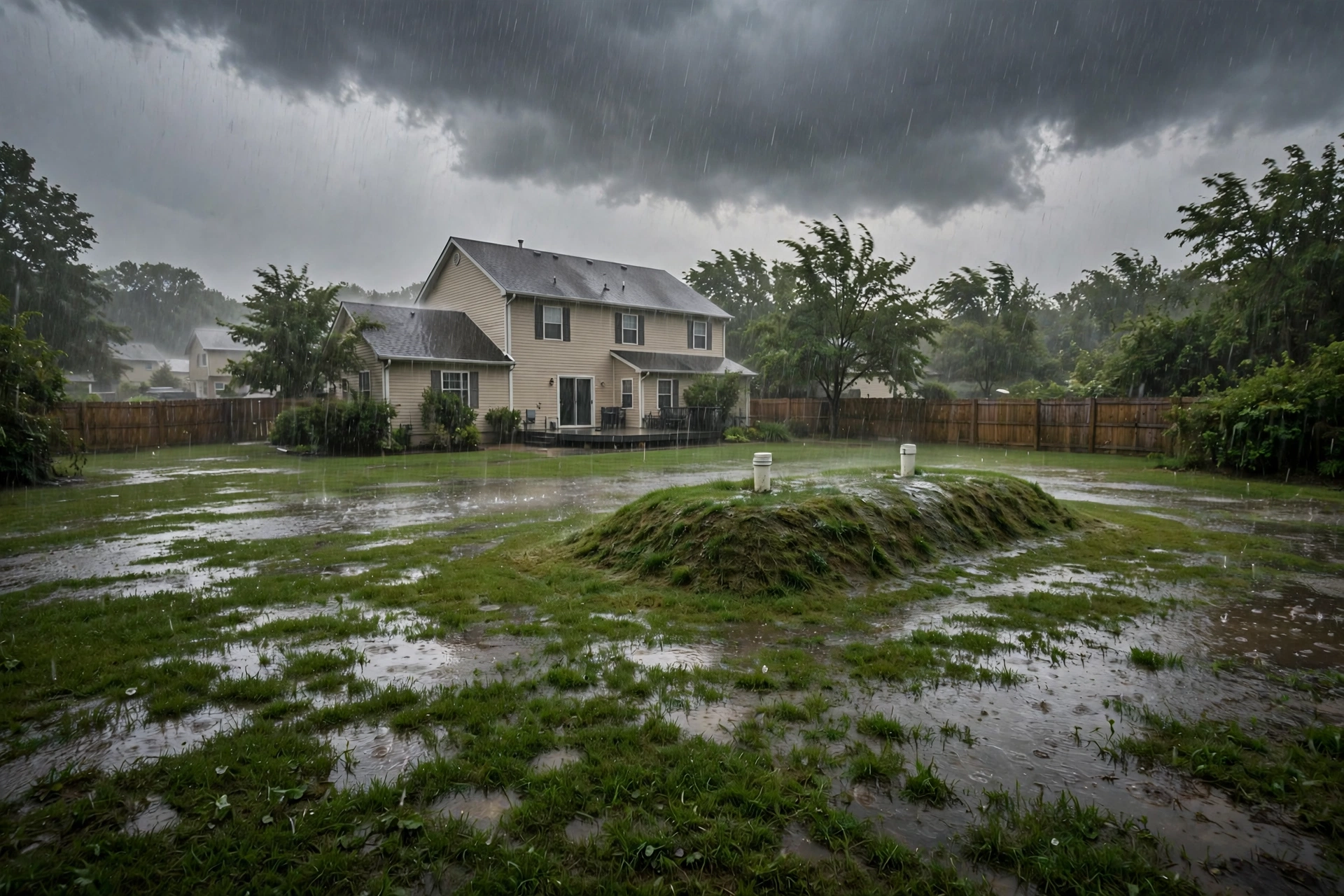
How a Septic System Normally Handles Water
To understand why rain causes problems, it helps to know how a septic system works on a dry day. Every time you flush a toilet, run a shower, or start the washing machine, wastewater flows out of the house and into the septic tank buried in your yard.
Inside the tank, the wastewater separates into layers. Heavy solids sink to the bottom and form sludge, lighter materials like grease float to the top and form scum, and the liquid in the middle, called effluent, flows out into the drain field, a network of shallow pipes buried in trenches under your yard.
The drain field is where the real treatment happens. The effluent seeps slowly out of the pipes and into the soil, which filters it as it moves downward. Tiny organisms in the soil break down harmful bacteria before the water reaches the groundwater below. This whole process depends on one thing above all else: soil that has room to absorb water.
On a normal day, your drain field handles your household wastewater without trouble. But the soil can only hold so much water at once, and when heavy rain fills the ground, there is no room left for the effluent. That is when the trouble starts.
How Heavy Rain Causes a Septic Tank Backup
Rain does not damage a septic system by itself. The problem is what rain does to the ground around it. If you have ever wondered, can heavy rain cause septic tank backup, the four mechanisms below explain why the answer is yes. A septic system is not a closed box. It depends on the soil around the drain field to do a large part of the work, and when that soil is full of rainwater, the system has nowhere to send the wastewater from your home.
Think of the soil around your drain field like a sponge. When it is dry, it soaks up water easily. When it is already full, it cannot take in another drop. After days of steady rain or a single hard downpour, the ground becomes saturated, the effluent leaving your tank has nowhere to go, and as your household keeps using water, the wastewater starts flowing backward toward your home.
This is why a backup often shows up during a storm or in the day or two after it, when the ground is at its wettest. As the rain stops and the soil gradually drains and dries, the system usually recovers, but while the ground is saturated, even a healthy system can struggle.
A Saturated Drain Field
Saturation of the drain field is the most common reason rain causes a backup. Your drain field is designed to release a steady amount of effluent into the soil every day, not that same amount when the soil is already full of rainwater.
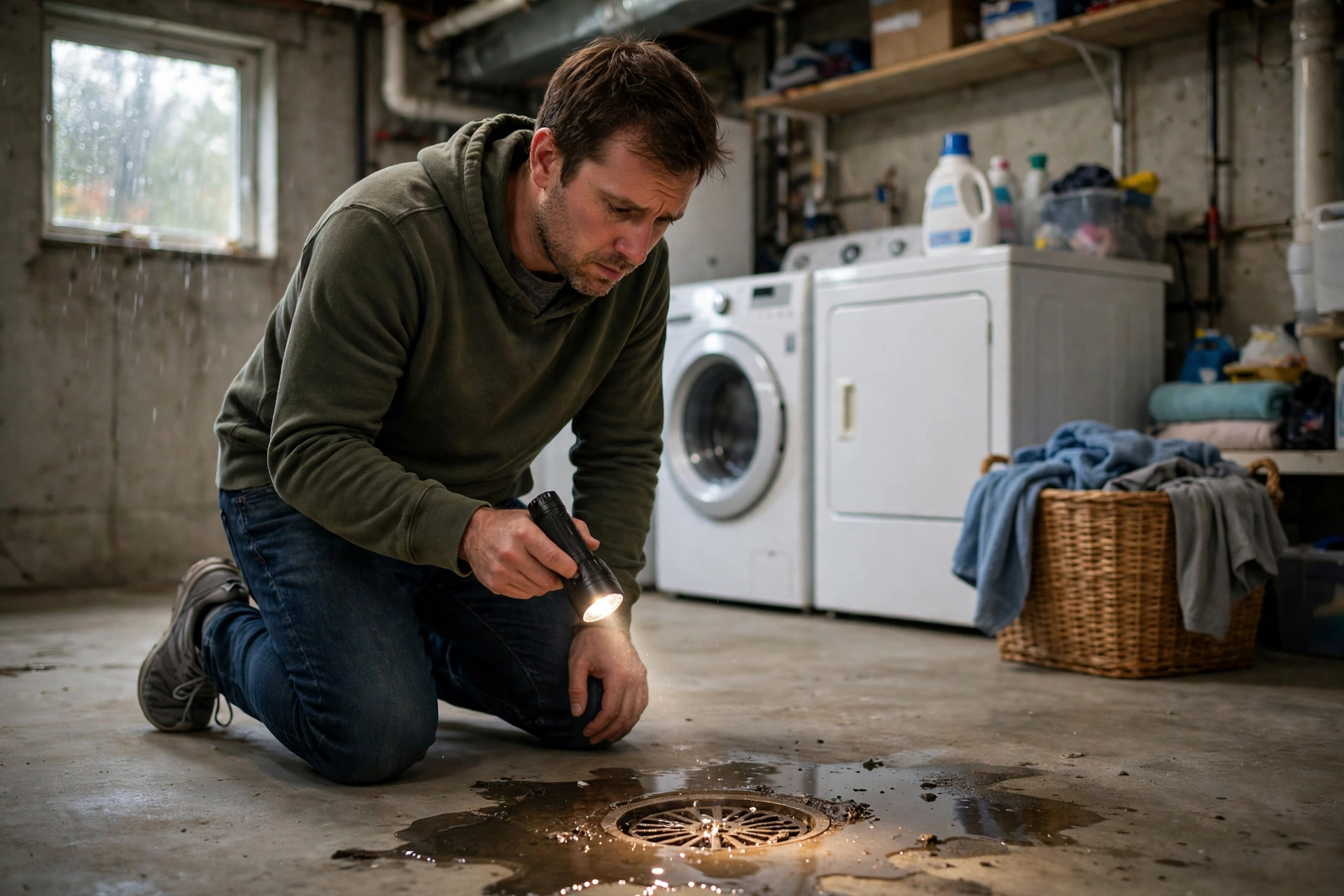
When the soil is saturated, the effluent cannot soak in. It pools in the drain field trenches, backs up into the tank, and pushes back through the main sewer line toward the house. The first signs are usually slow drains and weak-flushing toilets, and if the rain keeps coming, the backup can reach the lowest fixtures in the home, often a basement toilet, shower, or floor drain.
Clay soils make this worse because they drain slowly, while sandy soils drain faster and recover sooner. If your property has heavy clay soil, your system will be more sensitive to rain.
A Rising Water Table
Heavy rain does more than wet the surface soil. It also raises the water table, the level below ground where the soil is permanently full of water. In many areas, the water table sits well below the drain field, but after prolonged rain, it can rise close to the surface, sometimes right up to the level of the drain field pipes.
When that happens, the drain field is sitting in groundwater, the effluent has no dry soil to move into, and groundwater can even flow back into the field pipes. Homes in low-lying areas or near rivers and wetlands are most likely to see this, especially if the system backs up mainly in wet seasons and works fine in dry spells.
Surface Flooding and Runoff Flowing Onto the Field
Rain that falls on your roof, driveway, and patio has to go somewhere, and if your yard is graded toward the drain field, that water ends up right where your septic system needs dry soil. Downspouts that discharge near the drain field can dump a large amount of water onto it during a storm.
Standing water over the drain field is one of the clearest signs that runoff is adding to the problem. The soil under a puddle stays saturated far longer than the soil around it, and the drain field underneath cannot do its job until that water drains away. Grading matters too: if the ground slopes toward your drain field instead of away from it, every storm sends extra water to the worst possible place. If you want to learn more about this warning sign, read our guide on standing water over a septic drain field and what it means for your system.
Rainwater Getting Into the Tank Through Damaged Parts
Sometimes the rain does not just saturate the soil. It gets into the system directly. If a tank lid is cracked, a riser is not sealed properly, or a pipe joint has shifted, rainwater and surface runoff can flow straight into the tank, filling it faster than household wastewater ever would and pushing the system toward a backup in a hurry.
This is more common than homeowners expect, especially on older systems. Tank lids can crack from age or from being driven over, and risers can develop gaps where they meet the tank. Even a small opening can let in a steady stream of water during a hard rain, so if your system backs up during rain even when the drain field looks dry, have a professional inspect the lids, risers, and connections for leaks.
Warning Signs to Watch During and After Rain
A rain-related backup rarely arrives without warning. Catching the clues early can help you cut back on water use before things get worse, so watch for these signs during a storm and for a few days afterward.
Slow Drains Throughout the House
When one sink drains slowly, the problem is usually a local clog. When every drain in the house slows down at the same time, the problem is farther downstream, and a saturated drain field is a likely cause. Toilets may flush weakly and showers may drain slowly enough that water pools around your feet. If this starts during or right after heavy rain and clears up as the yard dries, the weather is almost certainly the cause. For a closer look, see our article on toilets flushing slowly all at once and what it means for your septic system.
Gurgling Sounds in Pipes and Toilets
Gurgling is one of the earliest warning signs. You may hear it in a toilet after flushing or in a sink when the washing machine drains. It happens because wastewater is backing up in the lines instead of flowing freely to the tank and drain field, and trapped air gets pushed back through the pipes.
A little gurgling now and then is not always a crisis, but gurgling that appears during a storm and affects more than one fixture is worth taking seriously. It means the system is under stress and has little spare capacity.
Sewage Smells Inside or Outside the Home
A sewage odor in the house during or after rain is a clear sign that wastewater is not moving where it should. The smell may come from a floor drain, a basement shower, or a toilet that is not holding its water seal, and outside you may notice it over the tank or drain field, especially where the ground is wettest.
Odors alone do not always mean a backup is coming, but they do mean the system is struggling. If the smell is strong or appears together with slow drains, cut back on water use and keep an eye on the lowest fixtures in the house.
Standing Water or Soggy Ground Over the Drain Field
Walk your yard after the rain stops, but stay out of any standing water. If puddles are still sitting over the drain field a day or more after the rain has ended, the soil there is saturated. The ground may also feel spongy underfoot, and grass over the field sometimes grows faster and greener than the surrounding lawn because it is getting extra moisture and nutrients.

Sewage Backing Up Into Fixtures
This is the most serious warning sign. Sewage may come up through a basement floor drain, a ground-floor shower, or the lowest toilet in the house. It can start as a small amount of dark water and get worse quickly if water use continues, so if you see sewage coming into your home, stop using water right away and follow the steps in the next section.
The Septic Alarm Going Off
If your system has a pump or an alarm, a light or buzzer going off during or after a storm means the liquid level in the pump tank has risen too high, which can happen when the drain field cannot take the water the pump is sending. Note which light is on and whether the power went out, and pass that information to your septic professional. Do not open the tank or the control panel yourself.
What to Do Right Away If Sewage Backs Up
A sewage backup is stressful, and it is natural to want to fix it fast. But the first priority is safety, not speed: sewage contains bacteria and other contaminants that can make people and pets sick, so treat any backup as a health hazard until it is cleaned up.
Here is what to do, in order, when sewage starts coming back into your home.
First, stop using water. Every flush, shower, and load of laundry sends more water into a system that cannot take it, so tell everyone in the household to stop running water until the problem is under control, and turn off the water supply to the house if you can, so no one uses a fixture by accident.
Second, keep people and pets away from the sewage. Do not let children or pets walk through backed-up water or standing water in the yard that may contain sewage, and avoid any room where sewage has come up until it is cleaned and disinfected.
Third, avoid contact with the sewage itself. If you need to move items or check the extent of the backup, wear rubber gloves and waterproof boots and wash your hands thoroughly afterward. Do not use a household vacuum or mop on raw sewage, and do not open the septic tank. Septic tanks contain gases that can be dangerous, and an open tank is a serious fall hazard.
Fourth, call a septic professional. A backup that brings sewage into your home is not a do-it-yourself job. A licensed professional can find out whether the cause is a saturated drain field, a full tank, a blocked line, or something else. If the backup is severe or sewage is spreading, call right away rather than waiting to see if it clears on its own. Our guide on when to call a septic professional immediately explains which situations need urgent help and which can wait for a scheduled visit.
Fifth, document what you see. Take photos of the backup, the affected fixtures, and the yard over the tank and drain field, and note the date, how much rain fell, and which fixtures were affected. This record is useful for your septic professional and for any insurance claim.
Sixth, if the backup is making the home unusable, consider staying elsewhere for now. If toilets cannot be flushed and sewage is present in living areas, the home is not safe to stay in, especially for young children, older adults, or anyone with a weakened immune system.
What Not to Do During and After Heavy Rain
When your system is struggling after a storm, some of the most natural reactions can make things worse, so knowing what to avoid is just as important as knowing what to do.
Do not have the tank pumped while the ground is still flooded or saturated. This is the mistake homeowners make most often, and it can be expensive. When the soil around the tank is full of water, groundwater pushes against the tank from the outside, and a tank that has just been pumped empty can float upward, shift out of position, or even crack. A shifted tank can break the inlet and outlet pipes, turning a temporary problem into a major repair. The EPA advises against pumping during flooded or saturated conditions for exactly this reason, so wait until the ground has drained and dried before scheduling a pump-out.
Do not keep using water as normal. It is tempting to carry on with laundry and long showers while you wait for the yard to dry, but every gallon you send down the drain competes for space the drain field does not have, so cut back to the essentials until the system recovers: postpone laundry, skip the dishwasher, and keep showers short.
Do not add septic additives or chemicals hoping to fix the problem. No additive can dry out saturated soil, and some can disturb the bacteria in your tank. Save your money and let the ground dry.
Do not drive or park on the drain field. Wet soil compacts far more easily than dry soil, and the weight of a vehicle can crush drain field pipes and destroy the soil structure your system depends on, so keep vehicles off the field until the ground firms up.
Do not try to drain standing water by digging trenches through the drain field. Cutting into the field can damage pipes and make the problem worse, so let the water drain naturally.
Do not open the tank yourself. Beyond the risk of dangerous gases, an unsecured opening is a fall hazard. Leave inspections to a professional.
How to Protect Your Septic System Before the Next Storm
You cannot control the weather, but you can do a lot to make your system more resilient before the next storm arrives. Most of the best protection comes from simple steps that keep extra water away from your drain field and keep your system in good shape.
Start with your gutters and downspouts. Check where each downspout discharges, and if any of them empty near the tank or drain field, add extensions to carry the water at least ten feet away. This one change can keep a large amount of stormwater off your drain field.
Next, look at the grading around your home and over the drain field. The ground should slope away from the house and away from the drain field, so rainwater flows past it rather than pooling on top of it. If you notice low spots where water collects, regrading may be needed, and even small improvements to the slope can make a real difference.
Keep up with regular maintenance. A tank that is pumped on schedule has room to handle the extra stress of a storm, while a tank that is overdue for pumping may already be close to its limit. Regular pumping also gives a professional a chance to spot cracked lids and damaged risers that let rainwater into the tank. For most households, pumping every three to five years is a good starting point, adjusted for tank size and household size, and our monthly septic system maintenance schedule can help you stay on track through the year.
Have the tank lids and risers checked and sealed. A professional can inspect the lids for cracks, replace any that are damaged, and make sure risers are properly sealed where they meet the tank, closing one of the easiest ways for rainwater to get directly into your system.
Know where your tank and drain field are. Many homeowners are not sure, which makes it hard to keep water away from them. If you do not have a diagram from your local health department, ask a septic professional to locate and mark the components, so landscaping, grading, and downspouts work with the system rather than against it.
Finally, watch your water use during wet weather. When a big storm is forecast, do laundry and run the dishwasher before the rain arrives, and spread out water use during the storm itself.
Helping Your System Recover After the Rain Stops
Once the storm passes, the most important thing you can do is give the ground time to dry. Most rain-related problems clear up on their own as the soil regains its ability to absorb water.
Keep water use low for at least a day or two after heavy rain. Even if the drains seem back to normal, the soil may still be close to saturation, and a heavy load of laundry or a long shower can push the system back into trouble. Ease back into normal use gradually.
Walk the yard once the rain stops. Look for standing water over the drain field, soggy patches, and any sewage odor, and take photos of anything unusual. If puddles are still sitting over the field a day or two after the rain has ended, the soil is still saturated, and the system needs more time.
Stay off the drain field while the ground is soft. Foot traffic is fine, but keep vehicles and heavy equipment away until the soil firms up, since wet soil compacts easily.
Check your downspouts and grading while the evidence is fresh. Note where water collected during the storm and whether any downspout was discharging toward the drain field. These observations will help you fix the problem before the next storm.
Most systems recover within a few days after the rain stops, though clay soils can take longer. If your drains are still slow, the yard is still soggy, or odors persist after the ground has dried out, the problem is probably more than just saturation, and that is the point to call a professional.
When to Call a Professional
Not every rain-related problem needs a professional visit. If your drains slow down during a storm and recover within a few days after the ground dries, your system is probably fine, but some situations should not wait.
Call a septic professional right away if sewage is backing up into your home, if the backup is getting worse rather than better, or if standing water over the drain field smells like sewage. These are signs of a problem that will not fix itself.
Call for an inspection if the same problem happens after every storm, even a moderate one. A system that struggles with ordinary rain may have a drain field that is aging, undersized, or overdue for maintenance, and a professional can check the tank and field to tell you what it needs.
Also call if symptoms last more than a few days after the rain has completely stopped and the yard has dried. Slow drains or odors that persist in dry weather point to a problem beyond saturation, such as a blocked pipe, a full tank, or a failing drain field. The sooner you find out what it is, the easier and cheaper it is likely to be to fix.
When you call, be ready to describe what happened: when the rain fell, which fixtures were affected, whether the alarm went off, and what the yard looked like afterward.
Frequently Asked Questions
Can heavy rain cause septic tank backup even if the system is new?
Yes, it can. A new system handles normal rain without trouble, but a long period of heavy rain can saturate the soil around any drain field. The difference is that a healthy system usually recovers quickly once the ground dries, while an older or neglected system may struggle longer and need professional help.
How long does it take for a septic system to recover after heavy rain?
It depends on your soil and how much rain fell. Systems on sandy soil often recover within a day or two after the rain stops, while clay soils can take several days or longer. If your drains are still slow a few days after the yard has dried out, have the system inspected rather than waiting longer.
Should I pump my septic tank after a flood?
Not right away. The EPA advises against pumping a tank while the ground is still flooded or saturated, because the tank can float or shift once it is emptied. Wait until the floodwater has receded and the ground has drained, then have a professional assess the tank and pump it if needed. For general guidance, see the EPA septic systems page.
Why does my septic only back up when it rains?
A backup that happens only during rain is a strong clue that the cause is outside the house, not a clog in your plumbing. When the ground is dry, the drain field absorbs effluent normally, but when rain saturates the soil or raises the water table, the field cannot take the wastewater, and it backs up toward the house. If this happens after every storm, have a professional check the drain field and the tank.
Can I use my toilets during a septic backup?
If sewage is already backing up into your home, stop using the toilets and all other fixtures until the problem is under control. Every flush adds water to a system that cannot take it and makes the backup worse. If only the drains are slow, limit use to the essentials and avoid laundry, dishwashers, and long showers until the system recovers.
Final Thoughts
Heavy rain can cause a septic tank backup, but it does not have to become a disaster. When rain saturates the soil around your drain field, the system has nowhere to send wastewater, and it backs up toward your home. Most of the time, the problem is temporary, and the system recovers once the ground dries.
What matters most is how you respond. Cut back on water use during and after a storm, watch for the warning signs, and never have the tank pumped while the ground is still saturated. Keep your gutters and grading directing water away from the drain field, stay on top of regular pumping, and fix small problems like cracked lids before they let rainwater in.
If a backup brings sewage into your home, treat it as a safety issue, stop using water, and call a professional. And if the same trouble returns after every storm, get the system inspected. A little attention now can save you from a much bigger repair later.
Greetings Glows Team is dedicated to creating meaningful, helpful, and thoughtfully curated content for everyday inspiration and special moments.
What We Focus On:
Well-researched and reader-friendly articles.
Meaningful greetings, blessings, prayers, and inspirational messages.
Carefully curated ideas for everyday life and special occasions.
Clear, helpful, and engaging information.
Consistent quality and attention to detail in every publication.
Our goal is simple: to make every visit worthwhile with content that inspires, informs, and brings a little more positivity to your day.
2 thoughts on “Can Heavy Rain Cause a Septic Tank Backup? What Homeowners Should Know”