Most septic problems give you time. A drain runs a little slow, a faint smell comes and goes, and you can put the call on your list for next week. But some septic problems do not wait. When sewage is coming back into your home, pooling in your yard, or your alarm is sounding, every hour matters. Knowing when to call a septic professional immediately can save you from serious damage to your home, a ruined drainfield, and a health risk for your family.
This guide walks you through the signs that count as a true emergency, the problems that can safely wait a day or two, what to do while you wait for help, and how to pick a professional you can trust. If you are reading this because something is wrong right now, start with the emergency signs below. If one of them matches what you are seeing, stop using water and call a licensed septic company.

What Counts as a Septic Emergency
A septic emergency is any failure that puts raw sewage where it does not belong, creates a health hazard, or threatens to damage your home or your system beyond repair. The common thread is that waiting makes it worse. Sewage does not stay put, and a system that cannot move wastewater forward will keep pushing it back toward your house or up through the ground.
The signs below are the ones professionals treat as urgent. You do not need all of them to be in trouble. Any single one is enough reason to pick up the phone.
Sewage Is Backing Up Into Your Home
This is the most serious septic emergency a homeowner can face. When wastewater comes back up through a floor drain, a basement sink, a shower, or a toilet, it means your system has nowhere left to send it. The tank may be full, the outlet line may be blocked, or the drainfield may have stopped accepting water. Whatever the cause, raw sewage is now inside your living space.
Raw sewage carries bacteria, viruses, and parasites, and it can make people sick through skin contact or by contaminating surfaces where food is prepared. Do not try to clean it up yourself beyond keeping people away from it, and do not keep flushing or running water to see if it clears. That only adds to the volume coming back in. Call a septic professional right away, and be ready to arrange professional cleanup of the affected area once the system is under control.
If the backup is coming up through the lowest drain in your house, that is a strong clue the problem is in the septic system rather than a single clogged pipe. A clog in one bathroom usually stays in that bathroom. A backup at the lowest point in the home means the whole system is struggling.
Sewage Is Surfacing in Your Yard
When dark, foul-smelling liquid pools on the ground near your septic tank or over your drainfield, your system is overflowing above the surface. This is not just unpleasant. It is a health hazard and, in many areas, a violation of local health regulations. Children and pets should be kept away from the area, and you should not walk through it.
Surfacing sewage usually means the drainfield is saturated or the tank is overfull, and the wastewater has nowhere to go but up. This can also be a sign that the soil around the drainfield has stopped absorbing water, which is a serious problem that needs a professional diagnosis. Do not cover the area with soil or try to dig it out. Call for help and let the technician see the problem as it is.
Your Septic Alarm Is Going Off
Many homes have a septic alarm, usually a light or a buzzer near the tank or in the house, that sounds when the water level in the tank or pump chamber gets too high. A brief alarm after a single heavy water use, like filling a large bathtub, can sometimes clear on its own once the system catches up. A continuous alarm is different.
If the alarm keeps sounding after you have stopped using water, it is telling you the pump has failed or the system cannot move effluent forward. A backup is likely on its way. Turn off the alarm only to stop the noise if you must, but do not treat silencing it as solving the problem. Reduce water use to the bare minimum and call a professional the same day.
If you have an aerobic treatment unit, the alarm is even more important to respect. These systems are designed to alert you the moment something fails, and ignoring the alarm can damage the treatment unit itself.
Gurgling and Slow Drains Throughout the House
One slow drain is usually a local clog. When several drains slow down at once, and toilets gurgle when you run a sink or flush another toilet, the problem is further down the line, in the main drain or the tank itself. Air is getting trapped because wastewater cannot flow out freely, and that air is forced back up through your fixtures.
Gurgling on its own, with drains still working at normal speed, is worth watching but not always an emergency. Gurgling combined with slow drains everywhere, water rising in a toilet bowl, or a toilet that will not flush is a different story. That combination means the system is close to backing up, and it is time to call right away. For more on what slow drains across the house can mean, see our guide to all your toilets flushing slowly at once.
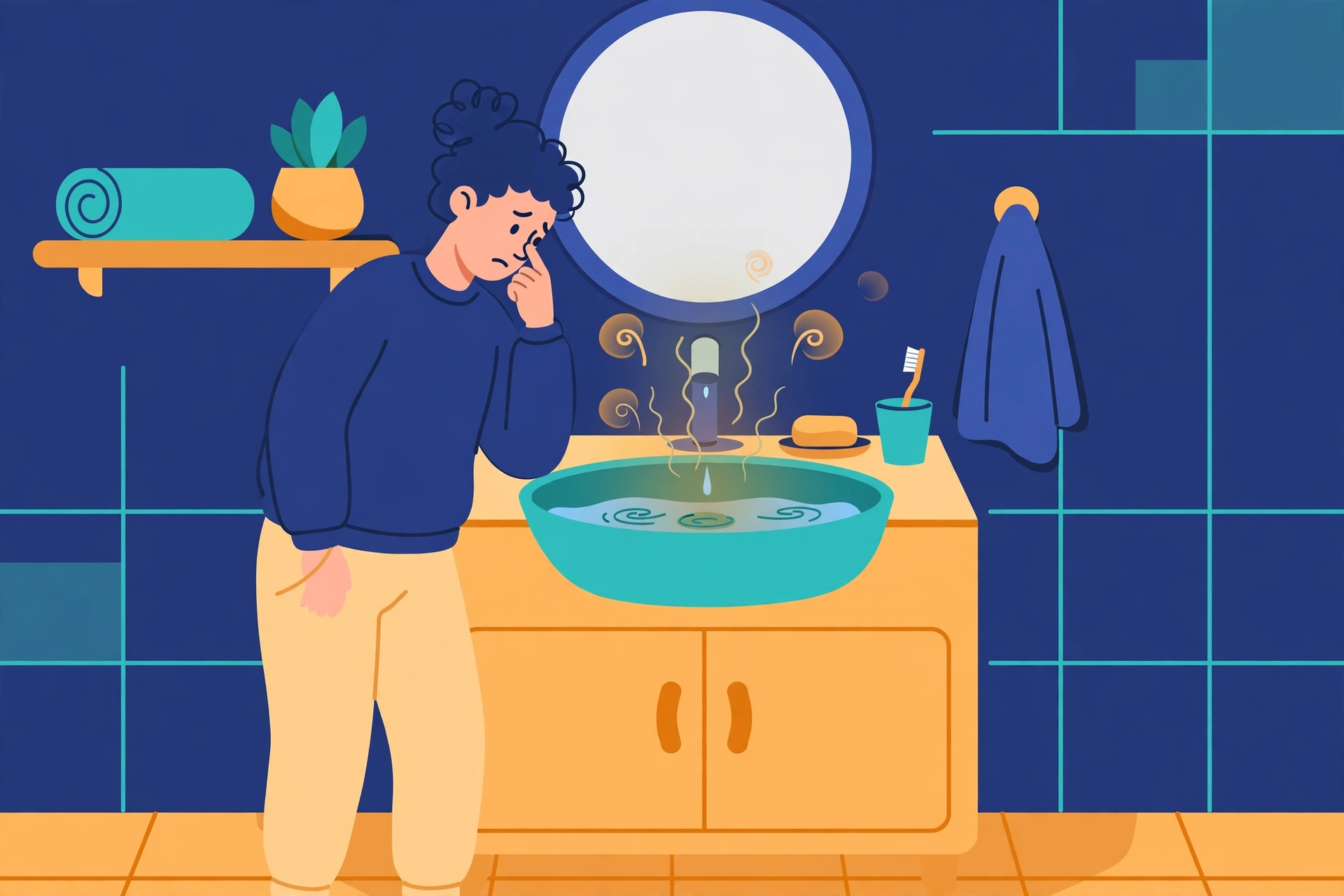
A Strong Sewage Smell Inside Your House
A sudden, strong sewage odor indoors is a warning that should never be ignored. It can mean a broken pipe, a failed seal, or a full tank pushing sewer gas back through your plumbing. A faint smell that appears near one drain and disappears may be a dry trap, which is easy to fix by running water. A strong smell that fills a room or spreads through the house is another matter entirely.
Pay attention to when the smell appeared and whether it is getting worse. A smell that arrived suddenly, with no change in how you use the system, points to a failure somewhere in the system. Open a window for ventilation, avoid running more water, and call a professional. You can read more about tracing indoor odors in our article on sewage smell in your house and our guide to what a full septic tank smells like.
Standing Water Over the Drainfield
The ground over your drainfield should be firm and dry in normal weather. If you find standing water or soggy, spongy ground over the field when it has not rained recently, the field is saturated and wastewater is rising to the surface. This often goes hand in hand with unusually lush, green grass over the drainfield, since the grass is being fed by effluent it should not be getting.
Standing water over the field is an emergency because it usually means the drainfield can no longer absorb water at the rate your household produces it. Continuing to use water will only add to the problem. Stop nonessential water use, keep people and pets off the wet area, and call a professional the same day.
What Is Urgent and What Can Wait a Day or Two
Not every septic symptom is an emergency, and knowing the difference saves you from paying for an after-hours call you did not need, while also making sure you do not put off a call you do need. The table below is a practical way to sort what you are seeing.
| What You Are Seeing | How Urgent It Is | What to Do |
|---|---|---|
| Sewage backing up into sinks, tubs, or toilets | Call immediately | Stop using water and call a licensed septic company now |
| Sewage or foul liquid pooling in the yard | Call immediately | Keep people and pets away and call now |
| Septic alarm sounding continuously | Call immediately | Cut water use to the minimum and call the same day |
| Strong sewage smell inside the house | Call immediately | Ventilate, limit water use, and call the same day |
| Multiple drains gurgling and slow at once | Call immediately | Stop running water and call the same day |
| Standing water over the drainfield with no recent rain | Call immediately | Stop nonessential water use and call the same day |
| One slow drain, everything else normal | Can wait a few days | Try a plunger, monitor the other fixtures, and schedule a routine visit |
| Faint outdoor odor near the tank area | Can wait a few days | Note when it appears and schedule an inspection soon |
| Alarm sounded once and cleared after reducing water use | Monitor, call within a day or two | Watch for a repeat and book a routine inspection |
| Occasional gurgle from one fixture, drains normal | Can wait | Keep an eye on it and mention it at your next scheduled service |
The key question to ask yourself is whether the problem is spreading. A single slow drain that stays a single slow drain is usually a plumbing issue. A problem that shows up at several fixtures at once, or gets worse over a few hours, is a system problem, and system problems do not fix themselves.
When in doubt, call. A reputable septic company will talk you through what you are seeing over the phone and tell you honestly whether it needs a same-day visit or can wait for a scheduled appointment. That phone call costs nothing, and it is far better than guessing wrong.
What to Do Right Away While You Wait
Once you have decided to call a professional, the most helpful thing you can do is stop adding water to the system. Every gallon that goes down a drain has to go somewhere, and if the system is backed up or saturated, that water will come back into your home or out onto your yard.
Stop running the dishwasher and the washing machine. Skip long showers and baths. Flush only when you must, and do not let anyone run taps while you wait. Use water only for drinking and basic hygiene until the technician arrives. If you have a large household, talk to the company on the phone about how long the wait will be so you can plan accordingly.
Next, protect your living space. If sewage has come into the house, keep children and pets out of the affected rooms. Avoid touching the water or walking through it in bare feet. If you need to move anything out of the way, wear rubber gloves and boots. Open windows for ventilation if the smell is strong, but do not use fans to blow air from the affected area into the rest of the house.
Outside, mark off any area where sewage is surfacing so nobody walks through it by accident. A few stakes with string or a row of garden chairs will do. If the wet area is near a well, let the septic company know right away, since well contamination is a serious concern.
Before the technician arrives, gather a few facts that will help them diagnose the problem faster. When was the tank last pumped? How many people live in the home? When did the problem start, and has it been getting worse? Have you noticed any warning signs in the past few weeks, like slow drains or odors? Write these down so you do not forget them in the stress of the moment. If you know where the tank access lids are, clear the area so the technician can reach them without delay. Do not open the lids yourself.
What Not to Do
A septic emergency brings out the urge to fix things fast, and some of the most common reactions make the problem worse. The first rule is to avoid chemical drain cleaners. These products are harsh on septic systems at the best of times, and in an emergency they can damage the pipes, kill the bacteria your system depends on, and create a safety hazard for the technician who will be working with the wastewater. They also rarely help, because the blockage in a septic emergency is usually in the tank or the main line, not in a single fixture drain.
Do not dig around the tank or the drainfield. The tank lids are heavy, the gases inside a septic tank are dangerous, and digging can damage pipes and the drainfield itself. A cracked distribution box or a crushed lateral line turns a repairable problem into a major replacement. Leave the ground alone and let the professional locate and expose what needs to be seen.
Do not drive vehicles over the drainfield or park heavy equipment on it. The weight compacts the soil and can crush the pipes underneath, which reduces the field’s ability to absorb water and can cause exactly the kind of failure you are trying to fix. If a pump truck needs access, the technician will tell you where it can safely go.
Do not keep flushing or running water to test whether the problem has cleared. Each flush sends more wastewater into a system that is already overwhelmed. And do not add septic additives or treatments hoping for a quick fix. Additives cannot clear a blocked line, empty a full tank, or revive a saturated drainfield. They can, however, give you a false sense of progress while the real problem gets worse. If you want a clear-eyed look at what additives can and cannot do, see our article on whether you can pump your own septic tank and the regulations around septic work in your area.
Finally, do not ignore the problem and hope it goes away. Septic failures do not resolve on their own. A tank that is full stays full, a blocked line stays blocked, and a saturated drainfield stays saturated until a professional intervenes. Waiting usually means more damage and a larger bill.
What the Professional Will Check and What to Expect on the Visit
Knowing what happens during an emergency visit takes some of the stress out of it. The technician will start by asking what you have noticed and when it began, then work through the system in a logical order to find the cause.
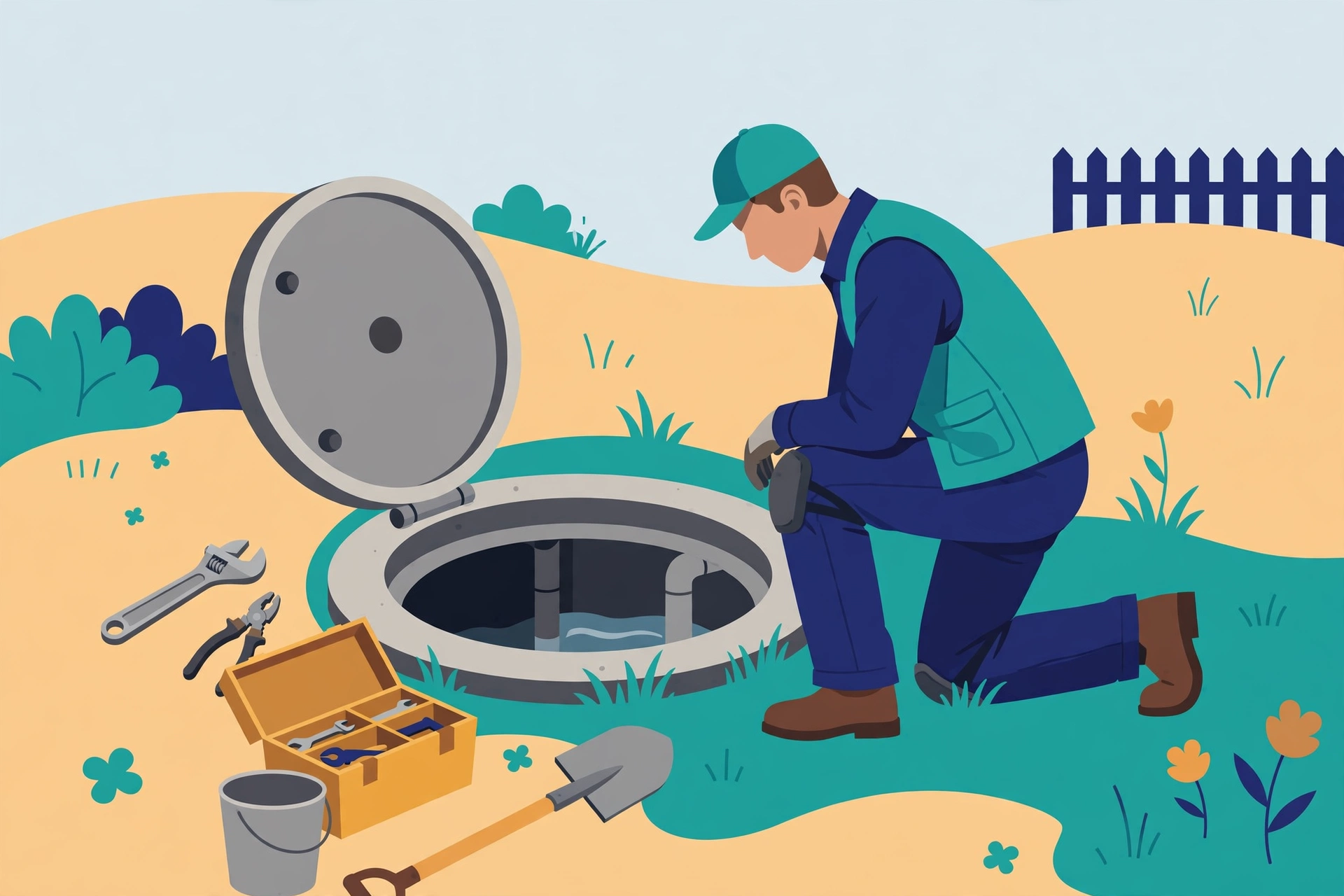
The first step is usually to check the tank itself. The technician will open the access lid, measure the levels of sludge and scum, and look at the water level. A high water level tells them the outlet is blocked or the drainfield is not accepting water. A normal level with a backup in the house points more toward a blockage in the line between the house and the tank.
Next, they will check the inlet and outlet baffles or filters. A clogged outlet filter is one of the most common causes of a sudden backup, and it is also one of the easiest to fix. They will also look at the pump chamber and the pump itself if your system has one, and test whether the pump and the alarm are working properly.
If the tank looks fine, the technician will check the drainfield. They may probe the soil, look for standing water, and check the distribution box to see whether effluent is reaching the field evenly. In some cases they will run a camera through the main line to find a blockage or a broken pipe without digging up the yard.
Emergency pumping is often the first step, because emptying the tank gives the system room to work again and lets the technician see the tank and its components clearly. A typical emergency visit takes one to two hours depending on the size of the tank, how easy it is to reach, and how much is wrong. More complex problems, like a failed drainfield, take longer to diagnose and cannot always be fixed in a single visit.
The technician should explain what they found in plain language, what they did, and what still needs attention. Ask them to show you anything they found, such as a clogged filter or a damaged baffle, so you can see it for yourself. A good professional will also tell you what to watch for in the days after the visit and when to schedule follow-up work.
How to Choose a Reputable Septic Professional
In an emergency, it is tempting to call the first number you find. A few quick checks will help you avoid a company that overcharges, does poor work, or is not properly qualified.
Start with licensing and insurance. Septic work is regulated in most states, and a legitimate company will be licensed to do the work and insured in case something goes wrong on your property. Ask for the license number and confirm it if you can. If a company cannot or will not provide it, call someone else.
Your local health department is one of the best sources for finding qualified professionals. Many health departments keep a list of licensed septic installers and pumpers in the area, and some publish inspection records. You can also find general guidance on how septic systems work and how to care for them from the U.S. Environmental Protection Agency at epa.gov/septic.
Look for a company with local experience. Septic systems vary by soil type, climate, and local regulation, and a company that has worked in your area for years will know what to expect. Ask how long they have been in business and whether they handle emergencies around the clock. Many established companies offer 24-hour emergency lines staffed by a dispatcher or an on-call technician who can assess your situation by phone.
Ask a few direct questions before they start work. What will the visit include, and what will it cost? Is there an additional fee for after-hours or weekend calls? Will they give you a written estimate before starting any repair beyond the initial pumping? How will they dispose of the waste they pump out? A professional company will answer these questions plainly and will not pressure you into work you do not need.
Be cautious of a company that insists on a full system replacement before doing basic diagnostics, or that quotes a major repair over the phone without seeing the system. Replacements are sometimes necessary, but they should come after inspection, not before it. Getting a second opinion is reasonable when the proposed work is expensive, and a reputable company will not object.
After the visit, keep the paperwork. Save the invoice, any notes about what was found, and the date of the service. That record helps the next technician who works on your system, and it gives you a clear history if problems come back.
What an Emergency Visit Usually Costs
Costs vary widely by region, tank size, time of day, and how much work is needed, so be wary of any specific price quoted online without context. What you can expect in general terms is that an emergency visit costs more than a routine scheduled pumping, and an after-hours, weekend, or holiday call costs more still. The extra charge reflects the fact that a crew is being sent out on short notice, often outside normal working hours.
A straightforward emergency pumping is usually the least expensive outcome. If the technician finds a clogged filter or a blocked line, the repair may add to the bill, but these are generally manageable fixes. Repairs involving a damaged baffle, a failed pump, or a broken pipe cost more, and drainfield work is the most expensive category of all. That is why catching a problem early matters so much. A routine pumping every few years is a modest expense compared with replacing a drainfield.
When you call, ask for the price of the emergency visit and what it includes before the truck rolls. Ask whether the quote covers pumping, inspection, and any minor parts, or whether those are billed separately. Get the answer in writing if you can, even if it is just a text message confirming the quoted amount. If the final bill is far above the quote without a clear explanation, ask for an itemized breakdown before you pay.
Some homeowners have a home warranty or insurance that covers part of a septic repair. It is worth checking your policy while you wait, but do not delay the emergency call to sort out coverage. Stop the damage first and deal with the paperwork after.
How to Prevent the Next Emergency
Most septic emergencies are preventable. The single most effective habit is regular pumping. The EPA recommends pumping every three to five years for most households, and more often for larger families or smaller tanks. A tank that is pumped on schedule rarely backs up without warning.
Watch your water use, especially during heavy-use periods. Spreading laundry loads across the week instead of running them all in one day gives the system time to process the water. Fixing leaking fixtures also helps, since a running toilet or a dripping tap can send a surprising amount of extra water into the system every day.
Be careful about what goes down your drains. Only human waste and toilet paper belong in a septic system. Grease, wipes, feminine hygiene products, and household chemicals should stay out. These items clog pipes, block filters, and disrupt the bacteria that break down waste in the tank.
Keep the area over your tank and drainfield clear. Do not plant trees or large shrubs near the field, since roots can grow into the pipes. Do not pave over it or build structures on it, and keep vehicles off it. Know where your system components are located, and keep a simple record of service dates, pumping dates, and any repairs. That record is one of the most useful things you can hand to a technician in an emergency.
Finally, pay attention to the early warning signs. A drain that has started running slowly, a faint odor that was not there before, or a toilet that gurgles now and then are all worth a routine call. Catching these early is what keeps a small problem from becoming an emergency at the worst possible time.
The Bottom Line
Call a septic professional immediately if sewage is backing up into your home, surfacing in your yard, or pooling over your drainfield. Call the same day if your alarm will not stop sounding, if several drains are slow and gurgling at once, or if a strong sewage smell has appeared inside your house. These are not problems that improve with time, and the sooner a professional looks at the system, the smaller the damage and the bill are likely to be.
While you wait, stop using water, keep people and pets away from any sewage, and avoid chemical cleaners, digging, and driving over the field. When the technician arrives, expect an inspection of the tank, the baffles, the pump, and the drainfield, and ask them to explain what they found in plain language. Choose a licensed, insured company with local experience, and get the cost confirmed before work begins.
Septic systems are quiet and reliable when they are cared for, and most emergencies trace back to a missed pumping or a warning sign that went unnoticed. A little attention now, and a phone call at the right moment, is what keeps your home safe and your system working for years.
Greetings Glows Team is dedicated to creating meaningful, helpful, and thoughtfully curated content for everyday inspiration and special moments.
What We Focus On:
Well-researched and reader-friendly articles.
Meaningful greetings, blessings, prayers, and inspirational messages.
Carefully curated ideas for everyday life and special occasions.
Clear, helpful, and engaging information.
Consistent quality and attention to detail in every publication.
Our goal is simple: to make every visit worthwhile with content that inspires, informs, and brings a little more positivity to your day.
4 thoughts on “When to Call a Septic Professional Immediately”