
If you’re the self-reliant type, the thought has probably crossed your mind: instead of paying someone to pump the septic tank, why not rent a pump, do it yourself on a Saturday, and save the money? It’s your property, your tank, your waste — so it ought to be legal, right?
Here’s the honest answer, and I’ll put it up front so you don’t have to hunt for it: in most US states, you cannot legally pump your own septic tank — or more precisely, you almost certainly cannot complete the job legally, because pumping is only half the work. The part that stops nearly every DIY attempt isn’t getting the waste out of the tank. It’s what you’re supposed to do with a thousand-plus gallons of raw septage once it’s out. That disposal step is tightly regulated, and in the vast majority of jurisdictions it’s limited to licensed haulers. Without legal access to an approved disposal facility, a DIY pump-out has no lawful ending.
Some states go further and explicitly require that pump-outs be performed by registered, licensed septic contractors. Others don’t ban the physical act of pumping in so many words, but make the disposal requirements so strict that a homeowner effectively can’t comply. Either way, the practical answer is the same. Let’s walk through exactly why — the law, the disposal rules, the safety issues, the equipment reality, and the cost math that usually surprises DIY hopefuls.

The Short Answer: In Most States, No
Septic systems sit at the intersection of public health and environmental law, and they’re regulated at the state and county level — typically by health departments or environmental agencies. Across most of the country, the rules share a common shape: the handling, transport, and disposal of septage (the official term for what’s pumped out of a septic tank) requires a license or permit that a homeowner simply doesn’t have.
That licensing exists for a reason. Septage is concentrated human waste containing pathogens — bacteria, viruses, and parasites — along with everything else that goes down household drains. Regulators treat it as a controlled material, not as something you can haul in barrels and pour anywhere convenient. Licensed septage haulers are registered with the relevant authority, operate inspected equipment, and are required to document where every load goes. That paper trail is the whole point: it guarantees the waste ends up at an approved facility instead of in a ditch, a field, or a storm drain.
And it’s worth knowing that improper disposal isn’t a minor ticket in many places. Depending on the state and what you do with the waste, illegal dumping of septage can bring fines that run into the thousands or even tens of thousands of dollars, and in serious cases it can be a criminal matter. The fines alone can exceed the cost of hiring a professional several times over.
Why the Law Isn’t the Same Everywhere
One thing to be straight about: there is no single federal law that says “homeowners may not pump their own tanks.” The regulation happens at the state and county level, and it varies. A few things that are consistent almost everywhere, though:
- Septage transport is licensed. States require anyone hauling septic waste on public roads to hold a septage hauler license or permit. That covers how the waste is contained, how the vehicle is placarded, and where it’s delivered.
- Disposal facilities only take waste from licensed haulers. Approved treatment plants and land-application sites work with permitted haulers who submit manifests and have pre-approved accounts. A homeowner showing up with a tank of septage will be turned away.
- Some states require licensed contractors for the pump-out itself. In places like Florida, pump-outs must be done by registered septic contractors — the physical pumping isn’t a DIY-legal activity at all.
- Documentation matters. Many jurisdictions require records of pump-outs and inspections for property sales and refinancing. A DIY job with no manifest or invoice from a licensed company may not satisfy those requirements.
Because the details differ by state and county, the one rule that never changes is this: check with your local health department before doing any hands-on work on your system. They can tell you in a two-minute phone call what’s permitted where you live. That’s far cheaper than learning the rules from an enforcement letter.
The Disposal Problem: Where Would 1,000+ Gallons of Septage Go?
Let’s say your jurisdiction doesn’t explicitly forbid you from pumping your own tank, and you decide to try. Here’s where the plan hits the wall.
A typical residential septic tank holds 1,000 to 1,500 gallons, and a proper pump-out removes most of the liquid and solids — that’s well over a thousand gallons of septage you now own and must dispose of. Septage is regulated under the federal EPA’s 40 CFR Part 503 standards for the use and disposal of sewage sludge, and by state rules layered on top. The legal disposal routes are narrow:
- An approved wastewater treatment plant that accepts septage — and only from permitted haulers with manifest paperwork.
- A licensed land-application site (in states that allow it), which again requires permits, setback rules, pathogen-reduction treatment, and documentation a homeowner can’t produce.
- Nowhere else. Dumping it on your own land, pouring it into a ditch or storm drain, or sneaking it into a municipal sewer system is illegal in essentially every jurisdiction.
This is the dead end every honest discussion of DIY pumping has to confront: you cannot legally dispose of the waste yourself. That makes the whole project a failed effort before it starts — you’d be left with thousands of gallons of hazardous waste in your yard and no lawful place to take it. Disposal isn’t an afterthought to the job; it is the job, and it’s the part reserved by law for licensed professionals.

The Health and Safety Risks Are Real
Even setting the law aside, pumping a septic tank yourself is genuinely dangerous in ways that aren’t obvious until you’re standing over an open tank. A septic tank is, in effect, a confined space filled with decomposing waste, and it produces a cocktail of gases that can injure or kill:
- Hydrogen sulfide (H2S): the “rotten egg” gas. At high concentrations it paralyzes your sense of smell almost instantly — so the fact that you can’t smell it anymore doesn’t mean it’s gone, it means you’re in trouble. It can cause rapid unconsciousness and death.
- Methane: odorless and highly flammable. It can displace oxygen in and around the tank, causing asphyxiation, and it’s an explosion risk around any spark or open flame.
- Ammonia and carbon dioxide in concentrations high enough to cause respiratory distress.
Professionals deal with these hazards with ventilation equipment, gas monitoring, and training. A homeowner leaning over an open access port to maneuver a pump intake can be exposed to a dangerous concentration of gases in seconds — and if someone collapses into or over a tank, rescue attempts have historically ended with multiple fatalities, because the rescuer is overcome by the same gases. These aren’t freak accidents; they’re a documented pattern with septic tanks and similar confined spaces.
Then there’s the pathogen load. Septage contains high concentrations of bacteria (including E. coli and salmonella), viruses, and parasites. A splash, a spill, or contaminated equipment that isn’t properly decontaminated can contaminate your yard, your well water area, or your household — the exact public health outcome the disposal regulations exist to prevent. This is a big part of why regulators don’t treat pumping as a casual weekend chore.
The Equipment Reality: A Shop Pump Won’t Do It
Another thing the “rent a pump Saturday” plan runs into: pumping a septic tank properly requires specialized equipment that isn’t sitting on the rental shelf next to the carpet cleaners.
- You need a high-volume, solids-handling pump. Septic sludge is thick, heavy material — not the clean water a standard utility or sump pump is designed for. An ordinary pump will clog, overheat, or simply fail to move the sludge layer. Professionals use vacuum trucks for a reason.
- Proper pump-outs agitate the tank. A thorough job doesn’t just skim liquid off the top; it breaks up the compacted sludge layer (by jetting water back into it) so the solids actually leave the tank. Otherwise you’re leaving the worst of it behind.
- The waste has to be contained safely. Licensed haulers use sealed, inspected tanks on dedicated trucks. Septage sloshing in unapproved containers or a rented trailer is a spill — and an environmental violation — waiting to happen.
- Someone has to do the inspection. A professional pump-out includes checking baffles, tees, the outlet filter, and the tank’s structural condition. A DIY pump-out skips the part that often matters most: finding out whether anything in the tank needs repair before it becomes a drain-field failure.
Even the parts of the job that look simple aren’t. Finding the tank, excavating to the access ports (if you don’t have risers), and handling heavy concrete or fiberglass lids are all injury-prone tasks that pros do with the right tools and experience.
DIY vs. Hiring a Pro: The Honest Cost Comparison
Cost is usually the whole motivation for the DIY idea, so let’s look at the math honestly. Exact numbers vary by region and tank size — our breakdown of septic tank pumping costs walks through the pricing factors in detail — but the shape of the comparison is the same everywhere:
| DIY attempt | Licensed professional | |
|---|---|---|
| Pump-out service | Rental of a solids-capable pump (if you can even find one), plus fuel, hoses, and containment | Typically a few hundred dollars for a standard residential pump-out, varying by state and tank size |
| Disposal | No legal option — facilities won’t accept septage from unlicensed haulers | Included — the hauler’s permits and manifests cover transport and legal disposal |
| Inspection | None — you’d miss baffle damage, filter issues, and early warning signs | Included — baffles, tees, filter, and tank condition checked during the visit |
| Legal exposure | Potential fines from hundreds to tens of thousands of dollars for unlicensed hauling or illegal dumping, depending on the state | None — the company’s licenses and insurance cover the work |
| Safety gear | Gas monitoring, ventilation, and protective equipment you’d need to buy or rent | The crew brings it — it’s part of the job |
| Your time | A full day or more of difficult, hazardous work | An hour or two of standing in the yard |
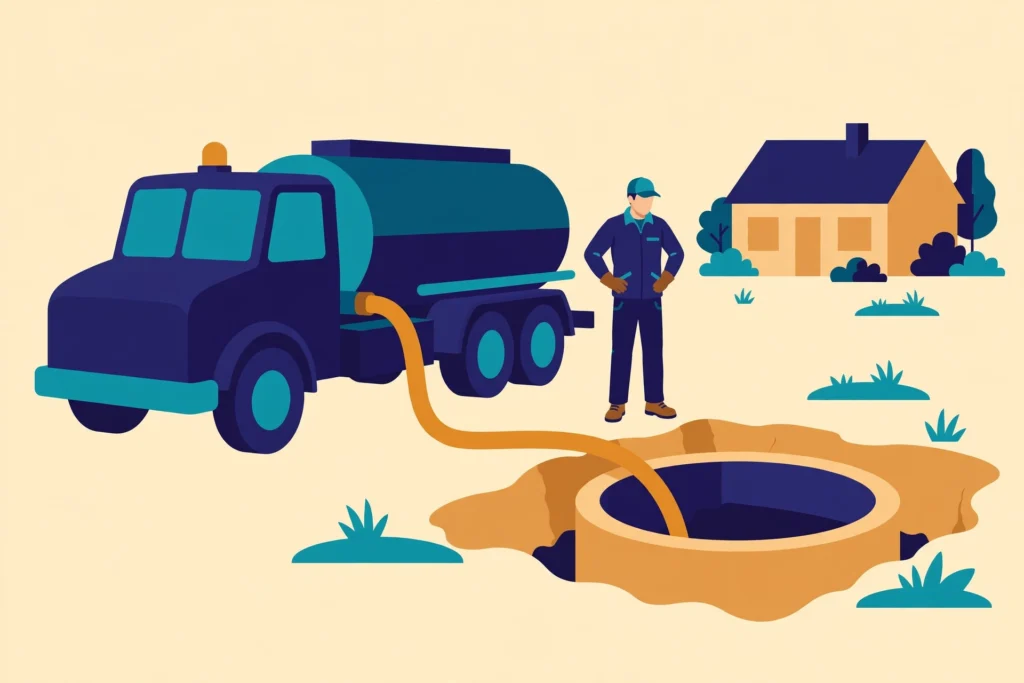
The key line in that table is the disposal one. A DIY pump-out can’t actually save you money because it can’t be completed legally — you’d spend money on equipment and still have nowhere lawful to take the waste. Meanwhile, the fines for getting the disposal wrong can dwarf the price of a professional pump-out many times over. It’s one of those rare cases where the DIY option isn’t just risky, it’s the more expensive choice on any realistic accounting.
What You CAN Legally Do Yourself
Here’s the good news: pumping is only one piece of septic care, and plenty of the rest is perfectly legal — and smart — for homeowners to handle themselves. The line is basically this: you can monitor, maintain, and protect; the pros pump and dispose.
- Monitor your sludge and scum levels. Some jurisdictions allow homeowners to check tank levels themselves using a simple tool (a “sludge judge” tube or a homemade measuring stick lowered through the inspection port). Knowing your levels tells you when a pump-out is actually due — check our pumping frequency chart to see where your household falls.
- Keep the tank accessible. If your access ports are buried, having risers installed (by a pro) means future pump-outs are faster and cheaper — and you can visually check ports without digging.
- Watch what goes down the drains. The biggest DIY win costs nothing: keeping grease, “flushable” wipes, chemicals, and other tank-killers out of the system extends the time between pump-outs more than anything else. Our first-time homeowner guide has the full list of what never goes down a drain.
- Keep maintenance records. Save every pumping invoice, inspection report, and permit in one file. These records protect your property value and make future service visits more effective.
- Spot problems early. Walk the drain field seasonally, watch for slow drains, odors, or soggy ground — and call a pro at the first sign rather than the tenth.
- Skip the additives. Products marketed as DIY pumping substitutes don’t remove sludge and can’t replace a real pump-out. We broke down the claims in our article on whether septic tank additives really work.
All of this is free or nearly free, completely legal everywhere, and genuinely useful. It’s also where homeowners have the most leverage over their system’s lifespan.
How to Hire a Pro: What to Ask
Since a professional is doing the pumping, it’s worth knowing how to pick a good one. Not all pumpers are equal:
- Verify the license. Ask for their septage hauler license or permit number and confirm it with your state or county health department. Legitimate companies expect this question.
- Ask where the waste goes. A good pumper can name the approved facility they use. Vague answers are a red flag — you’re liable for what happens to your waste in some jurisdictions.
- Ask what the pump-out includes. A proper visit should include agitating and removing the sludge (not just skimming liquid), plus checking baffles, tees, and the outlet filter. Ask for a report on what they found.
- Get the paperwork. Keep the invoice and any manifest or service report. It’s your proof of maintenance for future sales, refinancing, and your own records.
- Ask about your schedule. While they’re there, have them tell you when the next pump-out should happen based on your actual sludge levels — that’s more reliable than any generic timetable.
- Use local word of mouth. Neighbors with septic systems are the best review system ever invented. Ask who they use and whether they’d hire them again.
The Bottom Line
So, can you pump your own septic tank legally? In most states, no — and even where the physical act of pumping sits in a legal gray area, the disposal of the septage is tightly regulated and closed to unlicensed homeowners. There’s simply no lawful way to finish the job yourself: treatment facilities won’t accept your waste, dumping it anywhere else is illegal, and the fines can far exceed the cost of hiring a professional.
But this isn’t a story where the homeowner is powerless. The things that determine whether your septic system lasts 20 years or 40 — what goes down the drains, how water use is spread out, whether problems get caught early, whether pump-outs happen on schedule — are all in your hands. Leave the pump truck to the licensed crew, and put your DIY energy into the maintenance that actually moves the needle. Your system, your wallet, and your local health department will all be happier for it.
The EPA’s septic system resources are a solid starting point if you want to read the federal guidance behind the rules discussed here. And for the full picture of everything a homeowner can and should do, our first-time homeowner septic guide walks through it phase by phase.
Greetings Glows Team is dedicated to creating meaningful, helpful, and thoughtfully curated content for everyday inspiration and special moments.
What We Focus On:
Well-researched and reader-friendly articles.
Meaningful greetings, blessings, prayers, and inspirational messages.
Carefully curated ideas for everyday life and special occasions.
Clear, helpful, and engaging information.
Consistent quality and attention to detail in every publication.
Our goal is simple: to make every visit worthwhile with content that inspires, informs, and brings a little more positivity to your day.