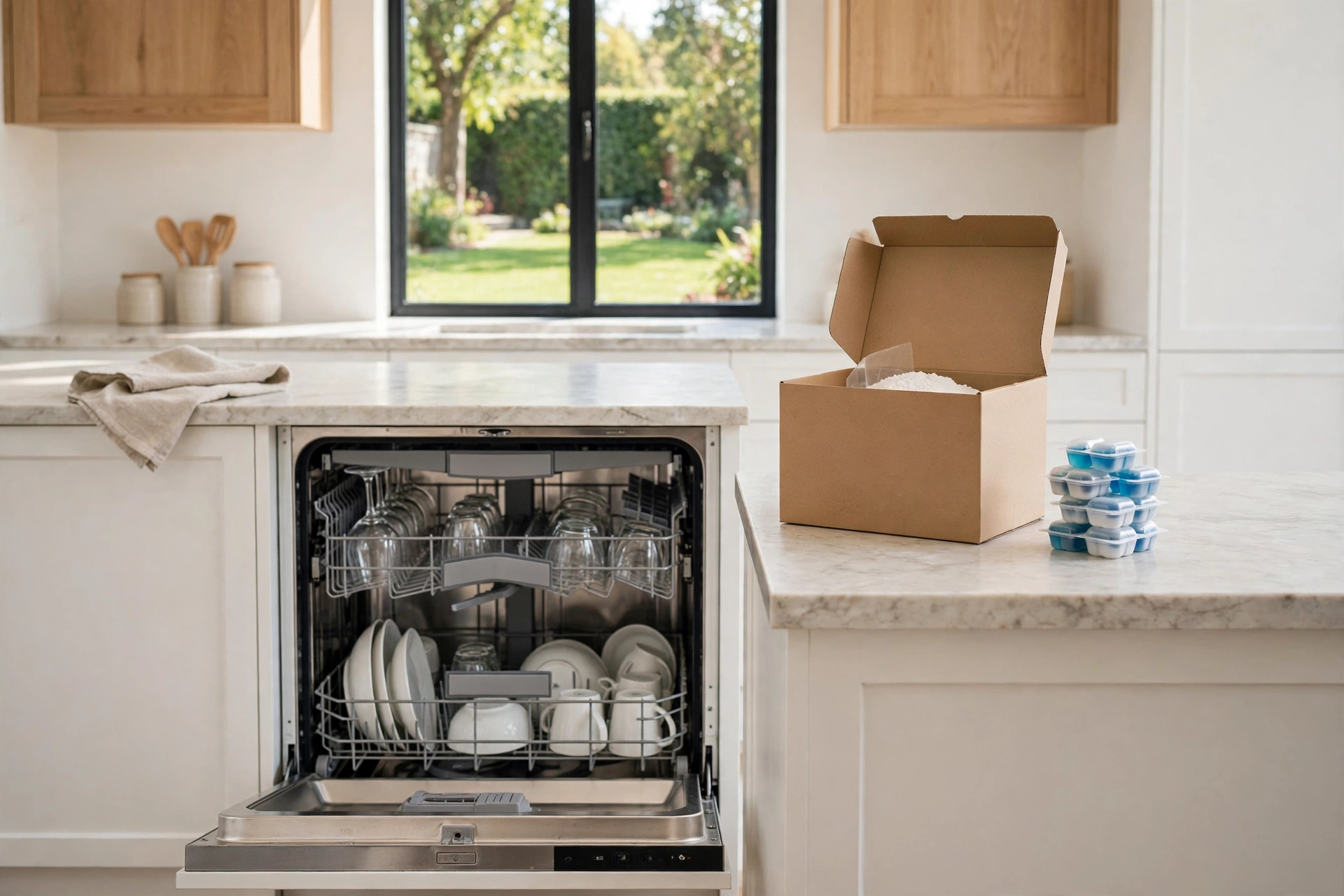
Every time your dishwasher runs, the water it uses goes somewhere, and if your home has a septic system, that somewhere is the tank buried in your yard. Dishwasher detergent is one of the most regular chemicals a septic system receives, often once or twice a day, every day of the year. The wrong product will not destroy your system overnight, but a poor choice used load after load can slowly wear down the bacteria that do the real work in your tank, and it can add chemicals that the soil in your drain field was never designed to handle. The right product cleans your dishes just as well while leaving the living system underneath your home alone to do its job.
Finding the best dishwasher detergent for septic systems is not about hunting for one magic brand. It is about understanding what makes a detergent hard on a septic system, knowing which ingredients to avoid, and choosing a format that fits the way your household actually runs the dishwasher. Some of the most widely sold detergents on the shelf are fine for a septic system, and some are not. This guide explains what to look for, what to skip, and which products homeowners on septic systems most often rely on.
Why Dishwasher Detergent Matters for a Septic System
A septic system is a living system, not a drain. Wastewater from your home flows into a buried tank, where solids settle and bacteria break down organic waste, and the liquid that leaves the tank is then filtered further by the soil in your drain field. The bacteria in the tank are the engine of the whole process. They arrive with normal household wastewater and are renewed with every flush, shower, and wash. What a tank can run short of is a safe environment for them to work in.
A dishwasher is a steady source of chemical input. Unlike a bottle of drain cleaner that you might use once in a blue moon, detergent goes down the drain with every load, and most households run the dishwasher daily. Over a year, that adds up to hundreds of doses, each one carrying surfactants, builders, enzymes, and sometimes bleach or antibacterial agents into the tank. A single load of a harsh detergent will not crash a healthy system. The risk is cumulative. Small amounts of the wrong ingredients, repeated day after day, are what gradually make life harder for the bacteria in the tank.
There is a second reason detergent matters, and it has to do with water. Dishwashers use a significant amount of water per cycle, and a septic system can only handle so much water at a time. When too much water enters the tank too quickly, solids do not have time to settle properly, and liquid carrying solids can escape into the drain field. Running the dishwasher only when it is full helps on both fronts.
How a Septic Tank Handles Detergent
To judge a detergent, it helps to know what happens to it after it leaves the dishwasher. The wash water travels through your plumbing and into the septic tank, where it joins everything else the household has sent down the drains that day. Inside the tank, the contents separate into layers. Grease and oils float to the top as scum, heavier solids sink to the bottom as sludge, and the mostly clear liquid in the middle flows onward to the drain field.
Surfactants deserve a closer look, because they are the main cleaning ingredient in every dishwasher detergent. A surfactant loosens grease and food and holds it in the wash water so it can be rinsed away. In a septic system, surfactants are broken down by the same bacteria that break down other organic waste, provided the surfactants are biodegradable and the dose is reasonable. The problem comes with quantity. Very high surfactant loads can create foaming in the tank, and foam can interfere with settling and carry solids toward the outlet.
Enzymes are the other key ingredient in modern dishwasher detergents, and they are good news for septic owners. Enzymes such as protease and amylase break down proteins and starches on your dishes, and they are themselves proteins that bacteria can digest easily. An enzyme-based detergent does its cleaning work and then becomes food for the tank.
What Makes a Detergent Septic Safe
There is no official government certification that labels a dishwasher detergent as septic safe. The phrase is a manufacturer claim, not a regulated standard, and different brands mean slightly different things by it. That does not make the claim useless, but it does mean you should read the label and the ingredient list behind it rather than trusting a badge alone.
First, it is phosphate-free. Phosphates were once the workhorse ingredient in dishwasher detergents, because they soften water and help cleaning agents work. They were also a serious problem for septic systems and for waterways, and most US states banned phosphates in dishwasher detergents around 2010. Today, almost every dishwasher detergent sold in the United States is phosphate-free, but it is still worth checking on imported products or old stock.
Second, it contains no chlorine bleach. Chlorine bleach, or sodium hypochlorite, is an antibacterial agent, and that is exactly the problem. It does not distinguish between the germs on your dishes and the bacteria in your septic tank. In the small amounts found in a single dishwasher load, it is usually diluted enough to cause little harm, but repeated use adds up.
Third, it uses biodegradable, plant-based surfactants and avoids antibacterial additives. Surfactants derived from plant sources break down more readily than many synthetic alternatives, and a formula without antibacterial agents leaves the tank bacteria alone. Dyes and synthetic fragrances add chemicals that serve no cleaning purpose, so a fragrance-free and dye-free formula is the cleaner choice all round.
Fourth, it carries independent verification where possible. The EPA Safer Choice label is the most useful one to look for. It means the EPA has reviewed the ingredients in the product and found them to be safer for human health and the environment than conventional alternatives. It is not a septic certification, but it is a genuine third-party check on the formula.
Reading the Ingredient List
The ingredient list on a dishwasher detergent is usually short. Look for sodium carbonate, sodium citrate, and enzymes such as protease, amylase, and lipase. Sodium carbonate softens water and lifts grease, sodium citrate helps prevent spots, and enzymes dissolve food residue. If you see those, and you do not see chlorine bleach, phosphates, or antibacterial agents, the product is very likely a reasonable choice for a septic system.
Watch for sodium tripolyphosphate, which is the chemical name for phosphate, and for sodium hypochlorite, which is chlorine bleach. Triclosan is an antibacterial agent that sometimes appears in cleaning products, and it should be avoided with a septic system for the same reason bleach should be. Fragrance and colorants will usually appear by those plain words on the label.
Ingredients to Avoid With a Septic System
Not every ingredient that is bad for a septic system is obvious from the front of the box, so it is worth going through the main offenders one by one. Understanding why each one causes trouble makes it easier to remember the list.
Phosphates
Phosphates feed algae in waterways, and in a septic system they can disrupt the bacterial balance in the tank and add nutrients to the soil in the drain field. The good news is that phosphates are now rare in dishwasher detergents sold in the United States, thanks to state bans and industry changes. They still appear in some imported products and in detergents sold for commercial use. Check the label, and if you see sodium tripolyphosphate or any phosphate compound, put it back.
Chlorine Bleach and Antibacterial Agents
Chlorine bleach kills bacteria, and that is the whole point of using it on a cutting board or a bathroom floor. In a septic tank, though, bacteria are not the enemy, they are the workforce. A detergent that contains chlorine bleach sends a small dose of antibacterial chemical into the tank with every load, and over weeks and months that steady exposure can suppress the bacterial colony that breaks down waste. The same logic applies to antibacterial agents such as triclosan.
This is also why bleach deserves care in other parts of the house. A small amount of diluted bleach used occasionally for cleaning is unlikely to harm a healthy system, but regular, heavy use is a different story. If you want the full picture of how bleach interacts with a septic system, our guide on whether you can use bleach with a septic system explains the dose question in detail.
Excess Surfactants and Overdosing
Surfactants are necessary in a detergent, and biodegradable surfactants in normal amounts are fine for a septic system. The problem is excess. Using more detergent than the load needs sends more surfactant into the tank than the bacteria can break down quickly. The result can be foaming in the tank, and foam can carry solids toward the outlet and into the drain field. The fix is simple. Measure your powder and use one pod per load.
Heavy Fragrances, Dyes, and Fillers
Fragrances and dyes do not clean anything. They make the product smell pleasant and look appealing on the shelf, and they add chemicals that the tank and the drain field have to process for no benefit. A fragrance-free, dye-free detergent is the simplest option for a septic system. Fillers are similar. Some cheaper detergents bulk out their formula with inert ingredients that add to the solid load in the tank without contributing to cleaning.
What to Look for on the Label
Choosing a septic-friendly dishwasher detergent gets much easier once you know what to look for on the box. You do not need a chemistry degree. A short checklist will carry you through any store aisle.
Start with the front of the package. Look for the words phosphate-free and chlorine-free, and check for an EPA Safer Choice label if one is present. A fragrance-free and dye-free statement is also a good sign. Then turn the package over and read the ingredient list. You are looking for enzymes, sodium carbonate, and sodium citrate, and you are checking that phosphate, chlorine bleach, and triclosan are absent.
Powder vs Pods vs Liquid: Which Format Is Best for Septic
Dishwasher detergent comes in three main formats, and each one has something to recommend it for a septic household. There is no single winner, because the best format depends on your water, your dishwasher, and how your household actually uses it. What matters most is the formula inside the format, not the format itself.

Powder
Powder is the oldest format, and it has several advantages for septic owners. It usually contains no wrapper or film, so there is nothing extra to dissolve and send into the tank. It lets you control the dose, using less for a light load and a full scoop only when the load is heavily soiled. Powder is also typically the cheapest format per load. The main downside is convenience. You have to measure it, and if it gets damp in storage it can clump. In very hard water, some powders can leave a film on glassware unless the formula includes a good water softener.
Pods and Tablets
Pods and tablets are the most popular format. They are pre-measured, so you cannot accidentally overdose, and that built-in dose control is genuinely helpful for a septic system. Most pods are wrapped in a polyvinyl alcohol film that dissolves in the wash, and while that film is designed to be biodegradable, it does add a small amount of material to the wastewater. The amount is small and it breaks down readily, so it is not a serious concern for most systems. Tablets are similar to pods but are usually pressed solid with no film at all, which makes them a good middle ground.
Liquid and Gel
Liquid and gel detergents are the least common format for dishwashers, and they are the hardest to dose accurately. It is easy to pour too much, and excess liquid detergent sends more surfactant into the tank than the load needs. Liquid formulas also tend to contain more water and fillers relative to cleaning power. A well formulated liquid or gel that is phosphate-free, chlorine-free, and enzyme-based is still a reasonable choice if you measure carefully.
Which Format Should You Choose
For most septic households, powder or tablets are the best starting point. Powder gives you the most control over the dose and the least packaging to dissolve, and tablets give you the convenience of a pre-measured dose without a dissolving film. Pods are a close second, and they are the best choice if convenience is what keeps your household using the right dose consistently. Liquid is workable but demands more care, and it is the easiest format to overuse.
The Best Dishwasher Detergents for Septic Systems
The products below are all real, widely sold dishwasher detergents that are commonly recommended for septic households. Each one is phosphate-free and chlorine-free, uses enzymes rather than bleach for cleaning, and is sold by a brand that publishes its ingredients or carries independent certification. Formulas change, so check the current label before you buy.
Seventh Generation Free and Clear Dishwasher Detergent Packs
Seventh Generation Free and Clear packs are the most widely recommended septic-friendly dishwasher detergent. The packs are phosphate-free, chlorine-free, and free of synthetic fragrances and dyes. They clean with plant-based surfactants and enzymes, and they carry EPA Safer Choice certification, which means the EPA has reviewed the formula. The brand also publishes a full ingredient list on its own website and states directly that the product is septic safe. The packs are pre-measured, so dosing is simple, and they are widely available in grocery stores and online. The main limitation is hard water. In areas with very hard water, the manufacturer recommends pairing the packs with a rinse aid.
Ecover Zero Automatic Dishwasher Tablets
Ecover Zero tablets are a good choice for households that want a fragrance-free, dye-free tablet with no dissolving film. Ecover uses plant-based and mineral ingredients, avoids phosphates and chlorine entirely, and formulates its tablets to biodegrade readily. The Zero range is the fragrance-free version of the brand’s dishwasher tablets. The tablets are pressed solid, so there is no plastic-like film to dissolve, and the dose is fixed, which keeps things simple. Ecover products are widely sold in natural grocery stores and online.
Biokleen Automatic Dish Powder
Biokleen Automatic Dish Powder is a good fit for households that prefer powder and want to control the dose. The powder contains no phosphates, chlorine, or artificial fragrances, and it cleans with plant-based surfactants and enzymes. Because it is a loose powder, you can use a smaller amount for a light load and a full scoop for a heavily soiled one, which means less chemical entering the tank on an average day. Powder also has the lowest cost per load of the formats listed here. The trade-off is convenience, since you have to measure it and keep it dry in storage.
Molly’s Suds Dishwasher Detergent Pods
Molly’s Suds Dishwasher Pods are a fragrance-free pod option from a brand that states all of its cleaning products are septic safe. The pods are phosphate-free and chlorine-free, use enzymes for cleaning, and contain no synthetic fragrance or dyes. Molly’s Suds is a smaller brand than Seventh Generation, and it is most often found online and in natural grocery stores. The pods are pre-measured, so dosing is easy, and the fragrance-free formula suits households with sensitivities as well as septic systems.
Finish Quantum
Finish Quantum is worth mentioning because it is one of the most widely sold dishwasher detergents in the United States, and Finish states on its own product page that Quantum is safe for septic systems. It is phosphate-free and uses enzymes and oxygen-based cleaning agents rather than chlorine bleach. It is not marketed as a natural or plant-based product, and it does not carry the same third-party certifications as the options above, but for households that want a mainstream, widely available detergent that the manufacturer itself describes as septic safe, it is a practical choice.
Other Options Worth Knowing About
A few other products come up often in septic-friendly lists. Nellie’s Dishwasher Powder is a concentrated, fragrance-free powder with no wrapper, sold in a tin. Grab Green Dishwasher Detergent Pods are fragrance-free pods with a published ingredient list. ECOS Dishmate Gel is a plant-based gel that is phosphate-free and chlorine-free. Any of these can serve a septic household well provided the formula on the label matches the checklist above.
Dishwasher Detergents to Be Careful With
Most dishwasher detergents sold today are phosphate-free, so the old problem of phosphate-heavy formulas is largely behind us. The products to be careful with now are the ones that still rely on chlorine bleach or antibacterial agents, and the ones that are so concentrated or so heavily fragranced that they send more chemical into the tank than the load needs. Check the label of any detergent you are already using. If it lists sodium hypochlorite or any antibacterial agent, consider switching to an enzyme-based alternative.
Be cautious with detergents marketed for commercial or institutional use, which sometimes contain higher levels of active chemicals than household products. Also be cautious with imported detergents that were not formulated for the US market, since phosphate regulations vary by country.
It is also worth saying plainly that a single load of a less than ideal detergent will not ruin your system. If you have been using a chlorine-based detergent for months, switching now is still worthwhile, because the benefit comes from reducing the steady, repeated exposure.
How to Use Dishwasher Detergent Wisely on a Septic System
Choosing the right detergent is only half the job. How you use it matters just as much. The first habit is the simplest one. Run the dishwasher only when it is full. A full load uses the same amount of water and detergent as a half load, and running two half loads instead of one full load doubles the water and the chemical entering the tank.
The second habit is to use the recommended dose and no more. One pod, one tablet, or one measured scoop of powder is the right amount for a full load. Adding extra detergent does not make dishes cleaner, because the dishwasher is designed to work with the recommended dose. If dishes are coming out dirty, the problem is usually a clogged spray arm, a filter that needs cleaning, or water that is too cold, not a shortage of detergent.
The third habit is to scrape rather than rinse. Scraping food residue into the trash before loading keeps solid food out of the tank, where it would add to the sludge layer. Modern dishwashers and modern enzyme detergents are designed to handle a dirty plate without pre-rinsing, and pre-rinsing wastes water that the tank then has to process.
The fourth habit is to keep an eye on rinse aid. Rinse aid helps water sheet off dishes and prevents spots, especially in hard water, and most rinse aids are fine for a septic system in the small amounts used per load. If your detergent already includes a rinse aid, you may not need a separate one.
Finally, watch your water use across the whole household on dishwasher days. A septic system handles water best when it arrives in a steady flow rather than in bursts. Running the dishwasher, the washing machine, and several showers in the same hour floods the tank and gives solids less time to settle.
Frequently Asked Questions
Is Cascade safe for septic systems?
Cascade’s current dishwasher detergents are phosphate-free and do not contain chlorine bleach, which meets the basic safety threshold for a septic system. Cascade does not make a specific septic safety claim for all of its products, and it does not publish the same level of ingredient detail as some of the brands above. If you already use Cascade and your system is healthy, it is not a product to worry about.
Are dishwasher pods bad for septic systems?
Pods are not bad for septic systems. The main concern people raise is the polyvinyl alcohol film that wraps most pods, but that film is designed to dissolve fully in the wash and to biodegrade afterward. The amount of film in a single pod is small, and it breaks down readily in a healthy tank. The bigger advantage of pods is dose control, since one pod is the right amount for one load. Tablets, which have no film at all, are a good alternative if you would rather avoid the wrapper entirely.
Can I use regular dishwasher detergent with a septic tank?
Yes, in the sense that most regular dishwasher detergents sold today are phosphate-free and will not cause immediate harm. The question is whether the detergent is the best choice for long-term use. A regular detergent that contains chlorine bleach or heavy fragrance sends chemicals into the tank with every load that a septic-friendly detergent leaves out. Over months and years, that difference adds up.
Does dishwasher detergent kill septic tank bacteria?
It can, depending on the formula and the dose. Chlorine bleach and antibacterial agents are designed to kill bacteria, and they do not distinguish between the bacteria on your dishes and the bacteria in your tank. In the diluted amount from a single load, the effect is usually small, but a daily dose of a bleach-based detergent gives the bacterial colony no chance to recover between exposures. For the official position, see our guide to what the EPA says about septic additives.
Do I need a septic tank additive if I use a septic-safe detergent?
No. A healthy septic system does not need additives, and a good detergent does not change that. The bacteria your tank needs arrive with normal household wastewater, and they are renewed with every use of the house. If you are considering one, our guide to whether septic tank additives really work walks through the evidence. The money is better saved toward regular pumping.
How much dishwasher detergent should I use per load?
Use the recommended dose and no more. One pod, one tablet, or one measured scoop of powder is the right amount for a full load, and less for a light load. Extra detergent does not clean better, and it sends more chemical into the tank for no benefit. If dishes are not coming clean at the recommended dose, clean the dishwasher filter and check the spray arms, because those are the usual causes.
The Bottom Line on Dishwasher Detergent and Septic Systems
The best dishwasher detergent for septic systems is one that cleans well with enzymes and biodegradable surfactants, contains no phosphates and no chlorine bleach, and carries no unnecessary fragrance or dyes. Seventh Generation Free and Clear packs are the easiest default choice, with EPA Safer Choice certification and a fully published ingredient list. Ecover Zero tablets suit households that want a fragrance-free tablet with no dissolving film. Biokleen powder gives you the most control over the dose at the lowest cost per load. Molly’s Suds pods are a good fragrance-free pod option, and Finish Quantum is a practical mainstream choice.
Remember that detergent is only one part of septic care, and it is not the most important part. Pumping the tank every three to five years, watching your water use, and keeping the wrong things out of your drains will do far more for your system than any detergent choice. If you want a refresher on what should never go down a drain in a septic home, our guide to what not to flush with a septic system covers the full list. For the official guidance, the EPA septic systems page is a good place to start.
Greetings Glows Team is dedicated to creating meaningful, helpful, and thoughtfully curated content for everyday inspiration and special moments.
What We Focus On:
Well-researched and reader-friendly articles.
Meaningful greetings, blessings, prayers, and inspirational messages.
Carefully curated ideas for everyday life and special occasions.
Clear, helpful, and engaging information.
Consistent quality and attention to detail in every publication.
Our goal is simple: to make every visit worthwhile with content that inspires, informs, and brings a little more positivity to your day.