No, you should not drive over a septic drain field. A vehicle parked or driven across your drain field can crush the shallow distribution pipes and compact the soil so it no longer absorbs wastewater. Either kind of damage can shut down the part of your system that treats your effluent, and repairs often cost thousands of dollars. Your drain field needs nothing on top of it but grass.
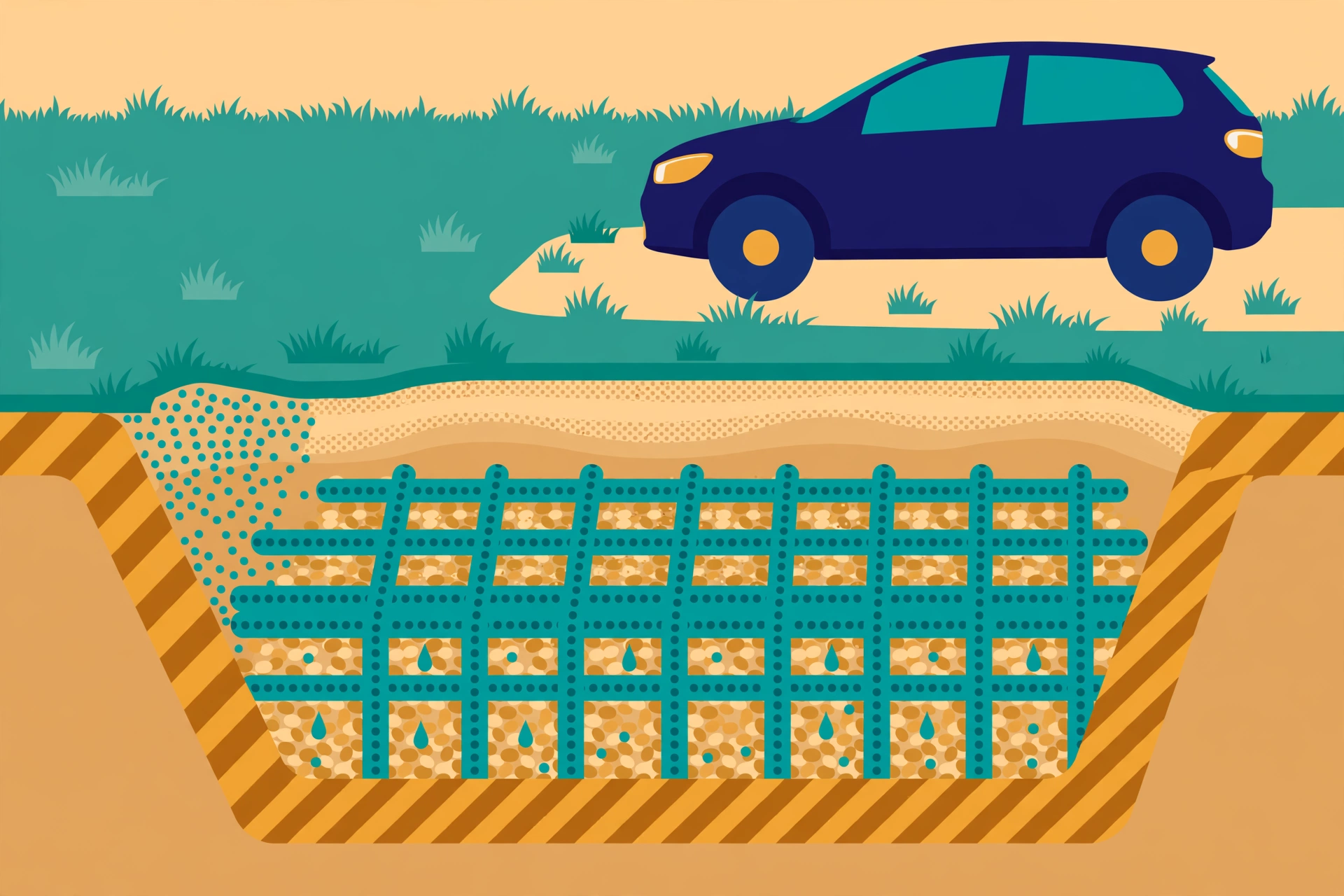
If you have a septic system, the drain field is probably the most expensive and least forgiving part of it. The tank can be pumped and inspected easily. The drain field, buried out of sight across your yard, cannot. One careless pass by a delivery truck or a guest parking on the lawn can set off problems that take months to surface and years to fully fix. This article explains exactly what happens under your grass, why vehicle weight is so destructive, the rare exceptions, and how to keep your drain field safe.
Why driving over your drain field is a bad idea
Your drain field, also called a leach field, is a network of perforated pipes or chambers buried in trenches of gravel and soil. After wastewater leaves your septic tank, it flows into this network and slowly seeps into the surrounding soil, where natural bacteria finish treating it. The whole design depends on two things staying intact: the pipes staying whole and open, and the soil staying loose enough to absorb water. Vehicle traffic threatens both.
Reason one: shallow pipes crush under weight
Drain field pipes sit much closer to the surface than most homeowners realize. In a typical system, they rest only 18 to 36 inches below grade. They are made of perforated PVC or lightweight plastic chambers, and they were never designed to carry a load. They are meant to distribute water, not support a car.
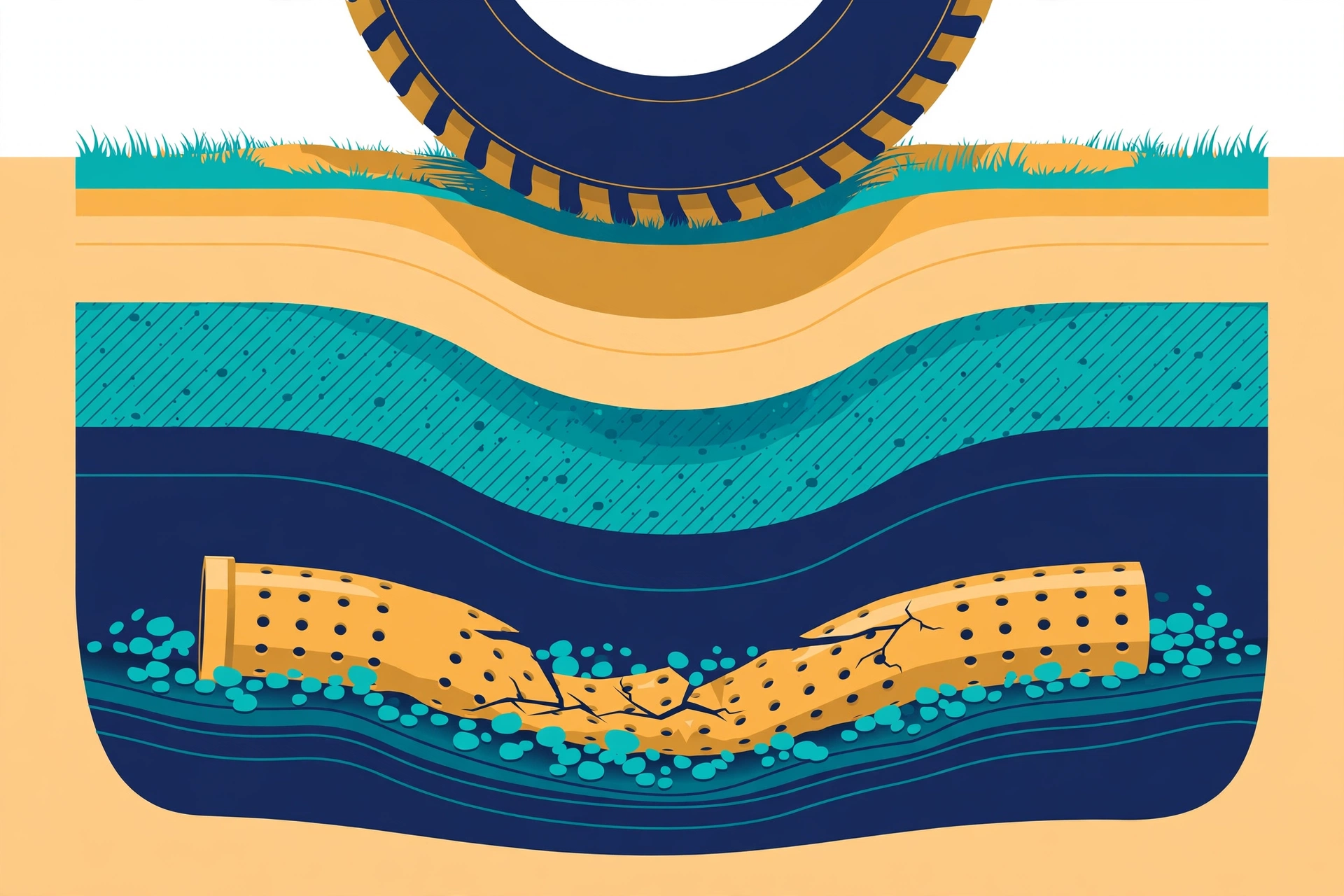
When a vehicle drives over the field, its weight pushes down through the soil onto those pipes. The pressure can crack a PVC pipe, flatten a plastic chamber, or break the joints where sections connect. A cracked pipe no longer distributes effluent evenly. It dumps too much wastewater in one spot and too little in another, which overwhelms the soil below and starves the rest of the field. Because the damage is underground, you will not see it happen. The first sign is usually a problem weeks or months later.
Reason two: soil compaction, the invisible killer
Crushed pipes are dramatic, but soil compaction is the more common and more frustrating damage from vehicle traffic. Your drain field works because the soil beneath it has structure. Loose soil is full of tiny air pockets that let water drain downward and let oxygen reach the bacteria that break down contaminants. That living, breathing soil is the final treatment stage of your entire septic system.
A vehicle pressing down on that soil squeezes the air pockets shut. The soil becomes dense and hard, and water can no longer pass through it at the rate your system was designed for. Effluent backs up instead of percolating. Just as important, the beneficial bacteria that treat your wastewater need oxygen to survive. Compacted soil starves them, so the biological treatment your system depends on quietly shuts down.
The worst part is that compaction is invisible. A crushed pipe can be found and replaced. Compacted soil across an entire drain field often cannot be fixed at all. You cannot fluff soil back up once heavy weight has packed it down below the surface. In many cases, a compacted field has to be abandoned and rebuilt somewhere else on the property, assuming you even have the space.
How heavy is too heavy?
Almost every common vehicle is heavy enough to damage a drain field. To put the numbers in perspective, here is what typical vehicles weigh:
| Vehicle type | Typical weight | Risk to drain field |
|---|---|---|
| Compact car | 2,800 to 3,200 lbs | Can damage pipes and compact soil |
| Midsize SUV | 4,000 to 5,000 lbs | High risk of pipe and soil damage |
| Full-size pickup | 4,500 to 6,000 lbs | Very high risk, especially when loaded |
| Delivery or box truck | 10,000 to 26,000 lbs | Severe damage likely |
| Construction equipment | 15,000 lbs and up | Can destroy a field in a single pass |
The important takeaway is that even a regular passenger car concentrates several thousand pounds onto four small patches of rubber. That is far more pressure per square inch than your drain field was built to handle. And damage does not require repeated traffic. A single pass by a heavy truck, such as a concrete mixer or a loaded dump truck during a home project, can crush pipes in one crossing.
Weight also matters when a vehicle is parked rather than moving. A parked RV or boat trailer sitting on the field for a season presses down continuously, compacting the soil the whole time it sits there. Long-term parking is just as harmful as driving across.
What about driving over the septic tank itself?
The same rule applies to the tank, with one exception. A standard residential septic tank is not built to carry vehicle weight either. Driving over it can crack the tank walls, crush the lid, or collapse a riser. A cracked tank leaks wastewater into the ground and lets groundwater flood in, which can overload your drain field downstream. A collapsed lid is also a serious safety hazard, since it can drop a person or animal into the tank.
The exception is a tank that is specifically rated for traffic loads. Engineers rate buried structures using AASHTO load ratings, the same standards used for bridges and culverts. An H-10 rating means the structure can handle a 10-ton vehicle, and an H-20 rating covers a 20-ton vehicle. If your tank was installed with a traffic-rated lid at a proper depth, driving over that specific spot is acceptable. But you need to know for certain that the rating exists. Never assume your tank is traffic-rated. Most residential tanks are not, and the lid buried a few inches under your lawn will not survive a pickup truck.
This is one more reason knowing where your system components are matters so much. Many homeowners drive across their yard for years without realizing they are crossing the tank lid every time.
The rare exceptions
There are only two situations where driving over a drain field or tank area is genuinely safe.
The first is a system that was explicitly engineered as traffic-rated from the start. Some commercial properties and a few homes have drain fields designed to sit under a driveway or parking area. These systems are built differently: pipes buried deeper, structural backfill instead of ordinary soil, reinforced chambers or concrete distribution structures, and traffic-rated lids throughout. This kind of installation costs more and requires engineering approval, so it is never accidental. If you did not pay for it and do not have the engineering paperwork, you do not have it.
The second is a designated crossing approved by your installer or a licensed engineer. Sometimes a property layout makes it unavoidable for equipment to cross near a system during construction. In that case, a professional may approve a specific crossing point with temporary protection, such as steel plates or timber mats that spread the load. This is a planned, supervised, one-time event, not permission to use the field as a driveway.
Everything else is a gamble. Your cousin swearing he has driven over his field for years without a problem proves nothing except that his damage has not surfaced yet. Septic failures from compaction and cracked pipes often take one to three years to show up, long after anyone connects them to the truck that crossed the yard.
A vehicle already crossed your drain field. Now what?
If a delivery truck, contractor, or guest has already driven across your field, do not panic, but do not ignore it either. Watch for these warning signs over the coming weeks and months:
Soggy or unusually green grass over the drain field area is an early clue that effluent is surfacing instead of draining downward. Sewage odors in the yard, especially after rain, suggest the system is under stress. Inside the house, slow drains, gurgling toilets, or sewage backing up into tubs and showers point to a system that can no longer move water through the field. Any of these symptoms after a vehicle crossing deserves a prompt call to a licensed septic professional.
An inspection is the only way to know what actually happened underground. A professional can probe the field, check distribution box levels to see if effluent is flowing evenly, and use a camera to look inside accessible pipes. If you catch a cracked pipe early, replacing one section is a manageable repair. Left alone, uneven distribution overloads part of the field and shortens the life of the whole system.
While you are getting the system checked, it is a good time to make sure the rest of your maintenance is on track. Following a sensible pumping schedule for your household size keeps solids out of the drain field, which matters even more when the field may already be stressed.
How to protect your drain field
Protecting your drain field is mostly about making it obvious and inconvenient to drive on. Use this checklist:
- Find out exactly where it is. Get the as-built drawing from your county health department. It shows the precise location and boundaries of your tank and field. If you have never seen it, this guide to knowing your system layout walks through how to track down your records.
- Mark the boundaries visibly. Low decorative rocks, a mulch border, landscape edging, or small marker posts make the field area read as a no-drive zone without looking ugly.
- Never park on it. No cars, no RVs, no boat trailers, no equipment storage. If guests need parking space, direct them to the driveway before they choose your lawn.
- Fence it off during projects. Construction is the highest-risk time. Before any work starts, walk contractors through the field location and mark it with stakes and caution tape.
- Tell delivery and service drivers. A quick word to the furniture delivery crew or the tree service about where not to drive takes thirty seconds and prevents the most common accidents.
- Plan construction access routes. If heavy equipment must come onto the property, agree on a route that avoids the system entirely, and put it in writing with the contractor.
- Keep it grass only. Grass is the ideal cover for a drain field. Avoid patios, sheds, sports courts, fire pits, and raised garden beds over the field. Even structures without vehicle traffic add weight and block the evaporation the field relies on.

The EPA drives this point home in its SepticSmart homeowner guidance: never drive over or park on your drainfield. The agency lists vehicle traffic as one of the fastest ways homeowners damage a system, right alongside flushing the wrong things and skipping maintenance. You can read their full guidance at epa.gov/septic.
Protection also extends to the rest of the system. Protecting your system components from winter damage is another part of the same habit: know where everything is buried and keep heavy or harmful things away from it.
What does drain field repair actually cost?
The cost of vehicle damage is the strongest argument for prevention. Replacing a single crushed pipe section might run a few hundred dollars if it is caught early and easy to reach. But once compaction or widespread pipe damage has ruined a field, you are looking at a full replacement.
A full drain field replacement typically costs between $5,000 and $20,000 or more, depending on your soil, local permit requirements, and how much of the system has to be rebuilt. If your property does not have room for a new field in a different spot, you may need an engineered alternative system, which costs considerably more. Compared to the price of some decorative rocks and a conversation with your contractor, prevention is not even close.
Homeowners insurance rarely helps here. Most policies exclude septic system failures caused by neglect or gradual damage, and damage from driving over the field usually falls into that category.
The bottom line
Your drain field is a working treatment system, not empty yard space. It needs its pipes intact and its soil loose, and vehicles destroy both. Keep every vehicle off it, from the family SUV to the contractor’s dump truck, unless a licensed professional has specifically approved a traffic-rated installation or a protected crossing.
Mark the boundaries, tell anyone who works on your property where they are, and keep the area as simple grass. That is all a drain field asks for, and it is a small price for a system that can serve your home for decades. If you are new to septic ownership and want the full picture of how the system works, start here for the basics every homeowner should know.
Greetings Glows Team is dedicated to creating meaningful, helpful, and thoughtfully curated content for everyday inspiration and special moments.
What We Focus On:
Well-researched and reader-friendly articles.
Meaningful greetings, blessings, prayers, and inspirational messages.
Carefully curated ideas for everyday life and special occasions.
Clear, helpful, and engaging information.
Consistent quality and attention to detail in every publication.
Our goal is simple: to make every visit worthwhile with content that inspires, informs, and brings a little more positivity to your day.