If you own a home beyond the reach of a city sewer line, a septic system handles everything your household sends down the drain. It sits in your yard, out of sight, doing that work every day. When a system fails, or when you are building a new home on rural land, a practical question comes up. Can you save money by installing the system yourself, and is it illegal to install your own septic system?
The honest answer is that it depends on where you live. In some parts of the country, a homeowner may install a septic system on their own property if they first get a permit, follow an approved design, and pass every required inspection. In other parts, the work must be done by a licensed installer, and a homeowner who tries to do it themselves is breaking the rules even if the work is done well. There is no single national rule that covers every home, so the first step is never to start digging. The first step is to find out what your state and county require, and to get that answer before you spend money on materials or equipment.
Is It Illegal to Install Your Own Septic System? The Short Answer
Is it illegal to install your own septic system? In many places, the answer is no, it is not automatically illegal, but it is almost never as simple as buying a tank and digging a hole. In other places, the answer is yes, it is not allowed at all unless a licensed installer does the work. Both answers are correct somewhere in the United States, which is why a simple yes or no would mislead you.
Most areas fall somewhere in the middle. A homeowner may be allowed to do the physical installation on property they own and live in, but only after a permit has been issued, a site evaluation has been completed, a soil test has been passed, and an approved system design is on file. Even then, the work is usually inspected at one or more stages, and the system cannot be covered up or put into use until an inspector has signed off on it. In some of those areas, the design itself must still be prepared by a licensed designer or engineer, even if the homeowner does the digging and the pipe laying.
Other areas take a stricter approach. They require a licensed installer for every new septic installation, with no homeowner exception. In those places, it does not matter how skilled you are or how carefully you work. The law ties the right to install a system to a license, and doing the work without one is a violation. The consequences of getting this wrong are not small. An unpermitted system can fail inspection, create problems when you try to sell your home, and leave you with a system that does not treat wastewater properly, which puts your household, your neighbors, and the groundwater in your area at risk.
Why Septic Installation Is So Heavily Regulated
A septic system is not like a fence or a deck. It is a wastewater treatment system, and it works by letting bacteria break down waste in a tank and then letting the remaining liquid filter slowly through soil in a drain field. When the system is designed and installed correctly, the soil finishes the treatment process before the water reaches groundwater. When it is designed or installed poorly, untreated or partly treated wastewater can reach groundwater, a nearby stream, or the surface of your yard.
Groundwater is the part that worries regulators most. Many rural homes draw drinking water from a private well on the same property or a neighboring property, and that well may draw from the same groundwater that a failing septic system can contaminate. A system that is too close to a well, too shallow, installed in soil that drains too quickly, or installed in soil that does not drain at all can create a health risk that is not visible from the surface. You may not see or smell a problem until the water in a well tests positive for bacteria, and by then the contamination has already spread.
Who Actually Makes the Rules
There is no single federal law that tells homeowners whether they can install their own septic system. The United States Environmental Protection Agency provides guidance on septic systems and encourages proper care and maintenance, and you can read its general information for homeowners on the EPA septic systems page. But the EPA does not issue septic permits or inspect residential installations. That work happens at the state and local level.
In most states, the state government sets the broad standards. It may define what counts as a septic system, what kinds of systems are allowed, how far a system must sit from a well or a waterway, and what qualifications an installer or designer must hold. The state may also delegate much of the day to day work to counties or local health departments. In some states, the county health department is the office that issues permits, reviews designs, runs soil tests, and performs inspections. In others, a state environmental agency handles permitting directly, or a local building department shares the responsibility with the health department.
Permits and Site Evaluations: The Steps You Cannot Skip
In almost every part of the country, you need a permit before you install a new septic system, repair a major part of one, or replace one. The permit is the official approval to do the work, and it is issued only after the local authority has reviewed your plans and confirmed that your lot can support the system you want to install. Installing a system without a permit is the most common way a homeowner gets into trouble, even in areas that allow homeowner installation, because the permit is what triggers the inspections that make the installation legal.
The process usually starts with an application. You or your installer submit information about the property, the home, and the proposed system. The size of the system is based on the number of bedrooms and the expected water use, not on the number of people living in the home at the moment. A three bedroom home needs a system sized for three bedrooms even if only one person lives there now, because the next owner may have a larger household. The application may also ask for a site plan showing the location of the home, the well, the driveway, property lines, and any nearby waterways.
Once the site evaluation is complete, a system design is prepared. The design specifies the tank size, the drain field size and layout, the pipe depths and slopes, and the setbacks from wells and other features. In many areas, the design must be prepared or reviewed by a licensed designer, engineer, or installer, even when the homeowner is allowed to do the physical work. The permit itself is not the end of the process. It comes with conditions, usually including inspections at specific stages, a requirement that the system not be covered until it has been inspected, and a final approval that must be obtained before the system is put into use. Keep the permit and every inspection record in a safe place. You will need them if you sell the home, refinance, or if a future problem needs to be diagnosed. If you are new to septic ownership, our first time homeowner septic system guide explains how the system works and what to watch for once it is in service.
Soil Tests and Perc Tests: Why Your Dirt Decides the Design
Before any septic system can be designed, someone has to find out what is under the surface of your lot. That is the job of a soil test, which is often called a perc test because it measures how quickly water percolates, or drains, through the soil. The result of that test shapes nearly every decision that follows, from the size of the drain field to the type of system your lot can support.
A perc test is a straightforward idea with a careful procedure. Test holes are dug in the area where the drain field would go, water is added, and the rate at which the water level drops is measured over time. Soil that drains too quickly may not treat wastewater well enough before it reaches groundwater. Soil that drains too slowly may not be able to absorb the wastewater a household produces, which can lead to surfacing or backups. Soil that is mostly clay, soil that sits over shallow bedrock, and soil with a high water table each create their own problems, and each one points toward a different kind of system or a different placement on the lot.

What a Legal Installation Looks Like, Step by Step
A legal septic installation follows a sequence, and the sequence matters as much as the work itself. Each step depends on the one before it, and skipping a step usually means going back and redoing work that has already been done. It starts with research. Before you buy anything or hire anyone, you contact your local health department or permitting office and ask what is required for your property. You describe the lot, the home, and whether this is a new installation or a replacement, and you ask whether a homeowner may do the work, whether a licensed installer is required, what kind of design is needed, and what the inspection schedule looks like.
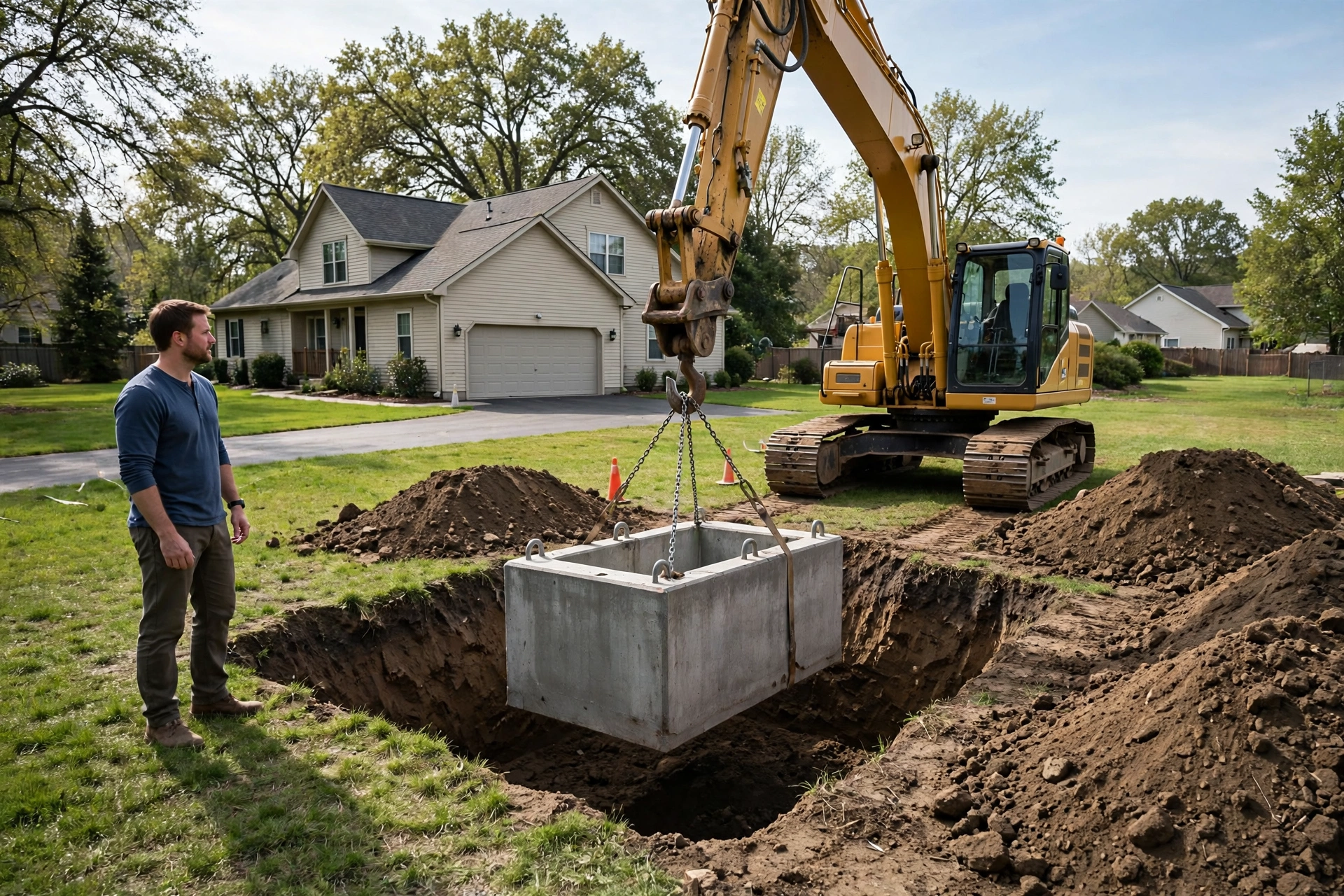
Construction begins with excavation. The area for the tank and the drain field is dug to the depth and dimensions in the approved design. The tank is set in place and leveled, the inlet and outlet pipes are connected at the correct slope, and the drain field is built with the right materials and the right depth of gravel or other approved media. The pipes that carry wastewater from the home to the tank and from the tank to the drain field must slope gently and consistently, because a pipe that is too flat will not drain and a pipe that is too steep can let solids settle in the wrong place.
| Stage | What happens | Who is usually involved |
|---|---|---|
| Check local rules | You contact the health department and confirm whether homeowner installation is allowed | Homeowner and local authority |
| Site evaluation and soil test | Test holes are dug, soil conditions are recorded, and the percolation rate is measured | Qualified soil evaluator and local authority |
| System design | Tank size, drain field size, pipe layout, depths, and setbacks are specified on an approved plan | Licensed designer, engineer, or installer |
| Permit application | Design and site information are submitted for review, and a permit is issued if the plan meets local standards | Homeowner or installer and permitting office |
| Excavation and installation | Tank is set, pipes are laid at the correct slope, and the drain field is built to the approved design | Homeowner where allowed, or licensed installer |
| Inspection before backfill | Inspector checks the open system, including tank placement, pipe slopes, and drain field construction | Local inspector |
| Backfill and final approval | System is covered, the surface is graded, and final approval is issued before the system is used | Installer and local inspector |
What Homeowners Can Legally Do Themselves in Some Places
In areas that allow homeowner installation, the permission is usually narrow and conditional. It does not mean that you can design the system yourself, skip the permit, or decide where the drain field goes based on what looks convenient. It usually means that you can perform the physical labor of the installation, under a permit, following an approved design, and subject to inspection at each stage.
The tasks a homeowner may be allowed to do often include excavation, setting the tank in place with the right equipment, laying pipe, and backfilling after inspection. Some homeowners also handle the landscaping and grading after the system is approved, and the ongoing care of the system once it is in use. That ongoing care is where most homeowners will spend their time over the years, and it includes watching water use, keeping heavy vehicles off the drain field, and keeping up with regular pumping and inspections. Our septic system maintenance schedule by month lays out that routine in a simple seasonal rhythm so the system gets attention before problems appear.
There are usually clear limits on what a homeowner cannot do, even in permissive areas. Designing the system is often reserved for a licensed designer or engineer. The soil test is usually done by a qualified evaluator. Connecting the system to the home plumbing may require a licensed plumber in some areas, and any electrical work for a pump or an advanced treatment unit almost always requires a licensed electrician. The final inspection is always done by the local authority, never by the homeowner. Owner occupied property is another common condition. Many homeowner exemptions apply only when the person doing the work owns the property and lives there as their primary home. Rental properties, investment properties, and homes built for sale are often excluded, and the work on those properties must be done by a licensed installer.
What Must Be Done by a Licensed Professional
Some parts of a septic installation are almost always reserved for licensed professionals, and understanding which parts those are will help you plan the project and budget for it. System design is the first item on that list in many places. A licensed designer or engineer takes the soil report, the size of the home, the expected water use, and the layout of the lot, and turns those facts into a plan that meets local standards. The plan specifies the tank size, the drain field size, the pipe depths, and the setbacks. A design drawn without that training may look reasonable on paper and still fail in practice, because the designer has to anticipate how the system will behave over years of use, not just on the day it is installed.
Electrical and plumbing connections are also commonly restricted. A septic system that uses a pump, an alarm, or an advanced treatment unit needs electrical work that must meet code and must be done safely. A pump that stops working can cause a backup into the home. Plumbing connections between the home and the tank must also be done correctly, with the right fittings and the right slope, and in some areas that work must be done by a licensed plumber. Pumping a septic tank is a separate task with its own rules. Once a system is in service, the tank needs to be pumped on a regular schedule to remove the solids that build up over time. That work is done by a licensed pumper who has the equipment to remove the waste and the authorization to dispose of it at an approved facility. Homeowners should not attempt to pump a tank themselves. If you are wondering where the line sits between homeowner tasks and licensed work, our guide on whether you can pump your own septic tank legally explains that boundary in detail.
DIY Versus Hiring a Licensed Installer
The choice between doing the work yourself and hiring a licensed installer is not only about cost. It is about risk, time, equipment, and what happens if something goes wrong. A homeowner who is allowed to install their own system may save on labor, but they take on the responsibility for the design, the scheduling, the inspections, and the outcome. A licensed installer charges for that responsibility, and in return the homeowner gets experience, equipment, insurance, and a single point of accountability if the work needs to be corrected.
Experience is the first difference. A licensed installer has done this work many times, on many different lots, and has seen the problems that a first time installer would not expect. They know how to read a soil report, how to handle a tank that is heavier than it looks, how to keep pipe slopes consistent across a long run, and how to grade the surface so rainwater does not pool over the drain field. A homeowner doing the work for the first time is learning those lessons on a system that has to work for decades, and a mistake made during installation may not show up for months or years.
| Factor | Homeowner installation, where allowed | Licensed installer |
|---|---|---|
| Legal permission | Allowed in some areas, only with a permit, approved design, and inspections | Allowed everywhere a license is held and the permit is in order |
| Design | Usually still needs a licensed designer or engineer | Design is handled or coordinated by the installer or their designer |
| Experience | Often first time work, learning on a system that must last for decades | Repeated experience across many lots and soil conditions |
| Equipment | Rented or borrowed, operated by the homeowner or helpers | Professional equipment and a trained crew |
| Inspections | Homeowner must schedule and be present, and must correct any failed work | Installer schedules inspections and corrects failed work |
| Accountability | Homeowner bears the full cost if the work fails | License, insurance, and regulatory oversight provide a path to correction |
| Time | Often slower, with a steeper learning curve | Usually faster, with an established schedule |
How to Hire a Licensed Septic Installer
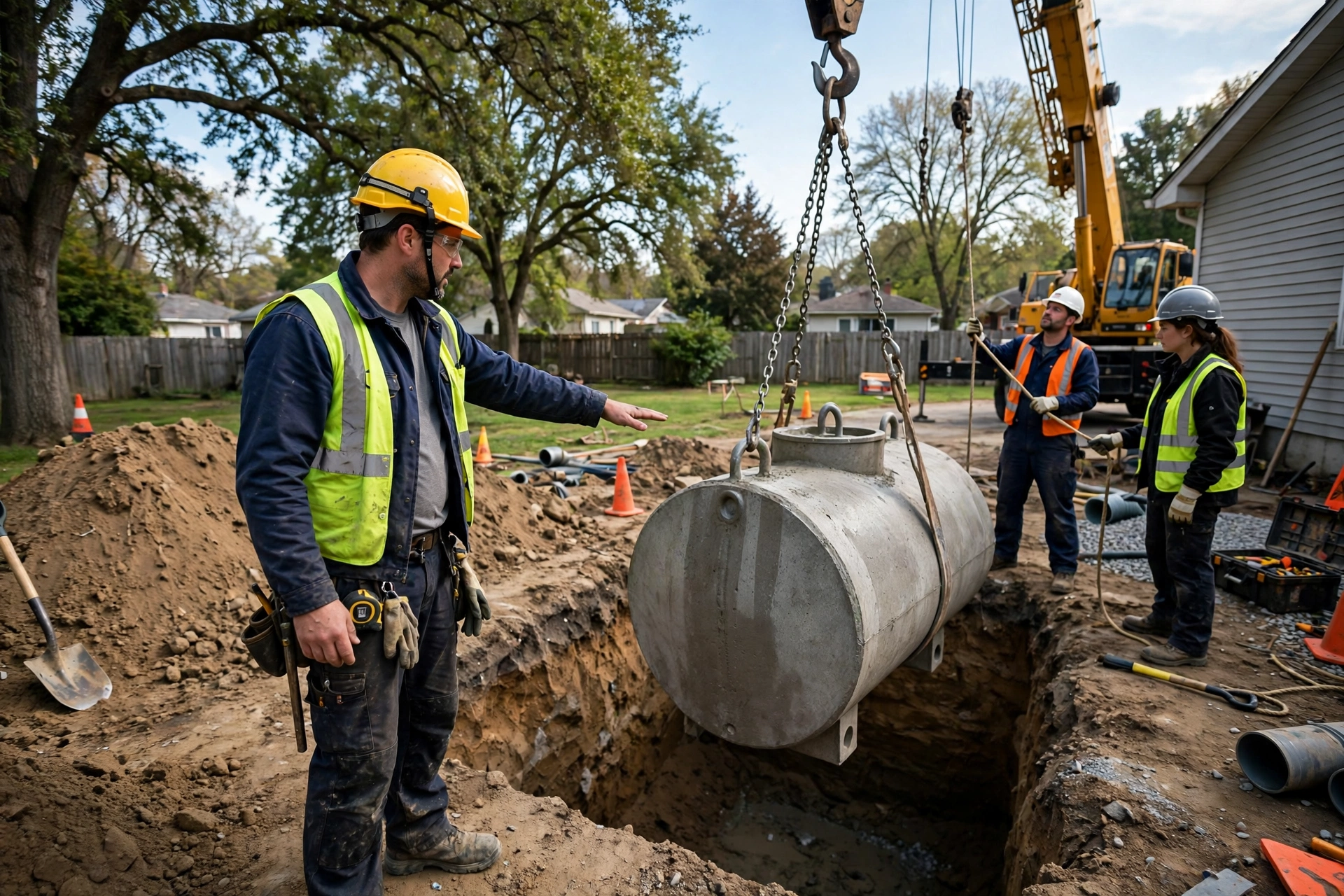
If your area requires a licensed installer, or if you decide that hiring one is the better choice, the hiring process deserves the same care as the installation itself. A good installer will guide you through the permit, the design, and the inspections, and will explain what is happening at each stage. Start by asking your local health department or permitting office for a list of licensed installers who work in your area. That office can also confirm that a license is current and whether any complaints have been filed. You can also ask neighbors, your builder, or a local real estate agent for recommendations, but treat those recommendations as a starting point, not as a substitute for checking the license yourself.
The Risks of Unpermitted Work
The second risk is to your health and to the water in your area. A system installed without a site evaluation or a soil test may be the wrong size, in the wrong place, or built with the wrong materials. It may not treat wastewater well enough before it reaches the soil, and it may contaminate a well or a nearby waterway. That contamination may not be visible, and it may not be discovered until a well test comes back with a problem or a neighbor reports a smell or surfacing wastewater. By then, the damage is done, and the repair is far more costly than a permitted installation would have been.
If you already have a system that was installed without a permit, do not ignore the problem. Contact your local health department or permitting office, explain the situation honestly, and ask what is needed to bring the system into compliance. In many areas, there is a process for evaluating an existing system, and the authority can tell you whether it can be approved, whether it needs repair, or whether it needs to be replaced. That conversation is uncomfortable, but it is far better than leaving the problem for a future buyer or a future inspection to discover.
How to Check the Rules Where You Live
Checking the rules where you live is not complicated, but it does require a direct conversation with the office that enforces them. A general search online can give you background, but it cannot tell you what applies to your address. The rules for your lot depend on your state, your county, the size and shape of your lot, the soil conditions, and the kind of system you are considering. Only your local authority can put those pieces together for you.
Ask for the answer in writing where possible. A permit application, a set of local regulations, or a written summary from the permitting office is more reliable than a memory of a phone call. If the office offers a pre application meeting or a site visit, take advantage of it. It is also worth checking whether your property has any existing records. If you are buying a home, ask the seller for the permit record, the system design, and the inspection history. If you already own the home, check with the health department to see what records exist for your address. If you are trying to work out whether your home even has a septic system or is connected to a sewer, our guide on how to check if your house has septic or sewer walks through the clues to look for and the records to check.
Common Questions Homeowners Ask
Can I install a septic system on land I just bought?
Buying land does not automatically mean you can install a septic system on it. The lot has to pass a site evaluation and a soil test, and the system has to meet the setback requirements for wells, homes, and property lines. Some lots cannot support a conventional system, and some cannot support any system at all. Before you buy land with the intention of building a home, ask the local health department whether the lot has been evaluated, and if it has not, ask what the evaluation process looks like. That information is far more useful before the purchase than after it.
What happens if my system fails inspection?
A failed inspection does not mean the project is over. It means that something in the work does not meet the approved design or the local standards, and it needs to be corrected before the system can be covered and used. The inspector will explain what failed and what needs to change. In many cases, the correction is straightforward, such as adjusting a pipe slope, resetting a tank, or adding material to a drain field. The correction must be made while the system is still open, and the inspector will return to check the work. That is why the inspection happens before backfilling, and why covering a system before inspection is such a costly mistake.
The Bottom Line for Homeowners
Is it illegal to install your own septic system? The answer depends on where you live, and that is not a vague answer. It is the honest one. In some places, a homeowner may install a system on their own property with a permit, an approved design, and inspections at every stage. In other places, a licensed installer is required, and a homeowner who does the work themselves is breaking the rules. In almost every place, a permit is required, a site evaluation and a soil test are required, and the system cannot be covered or used until it has been inspected and approved.
If you are considering installing a septic system yourself, start with a call to your local health department or permitting office. Ask whether homeowner installation is allowed in your area, what the permit process looks like, and what kind of design and inspections are required. Get the answer in writing, keep it with your project records, and follow the sequence that your area requires. If a licensed installer is required, hire one with care, check the license, get a written quote, and make sure the contract covers the permit, the inspections, and the final approval. Once your system is installed and approved, keep up with regular care, including pumping on schedule, watching water use, and keeping vehicles off the drain field. A septic system that is installed legally and correctly is an investment in your home and in the water your family depends on, and it is worth doing right the first time.
Greetings Glows Team is dedicated to creating meaningful, helpful, and thoughtfully curated content for everyday inspiration and special moments.
What We Focus On:
Well-researched and reader-friendly articles.
Meaningful greetings, blessings, prayers, and inspirational messages.
Carefully curated ideas for everyday life and special occasions.
Clear, helpful, and engaging information.
Consistent quality and attention to detail in every publication.
Our goal is simple: to make every visit worthwhile with content that inspires, informs, and brings a little more positivity to your day.