Buying a house is exciting, and it is easy to get caught up in the kitchen, the school district, and the size of the backyard. The septic system rarely gets the same attention, and that is a mistake. A septic system quietly handles every flush, shower, and load of laundry, and if it is in poor shape, it can turn a dream home into an expensive problem within weeks of moving in. A few direct questions, asked before you sign anything, can tell you whether the system is healthy, how much care it will need, and whether the price still makes sense.
This guide walks through the questions to ask about septic when buying a house, who to ask them of, and what the answers actually mean. You do not need to become a septic expert. You only need to know which questions matter, which answers should make you pause, and when to bring in a professional before you commit.

Why the Septic System Deserves a Place on Your Checklist
Most buyers treat the septic system as an afterthought, somewhere below the roof and the furnace on the list of things to check. That is understandable. The system is buried, it works silently, and a house can look perfect on the surface while the tank or drain field underneath is nearing the end of its life. Replacing one is a major project that involves excavation, permits, and weeks of disruption, and it is the kind of cost that can wipe out a moving budget.
There is another reason the septic system deserves early attention. Your general home inspection, thorough as it may be, usually does not cover the septic system in detail. Many inspectors will flush a toilet, run the taps, and note whether anything backs up, but that tells you almost nothing about the condition of the tank, the drain field, or the pipes in between. The EPA recommends getting a septic inspection before you buy, and most septic professionals agree. A separate inspection by someone who works on these systems every day is the single most valuable step in this whole process, and it is most useful while you still have the right to ask for repairs, renegotiate, or walk away.
Start with the Basics: Is It Septic or Sewer, and Where Is Everything?
The first question sounds almost too simple, but it matters more than most buyers realize. Ask whether the home is on a septic system or connected to a public sewer. In some areas the answer is obvious. In others, especially on the edge of town or in older neighborhoods, it is not. Knowing which system serves the house shapes everything else you need to ask.
If the home is on septic, your next question should be where the parts of the system are located. Ask the seller or the listing agent to point out the tank, the drain field, and any access lids. The drain field is the area where treated wastewater soaks into the soil, and you will want to know exactly where it is before you plan a patio, a pool, a driveway, or even a garden shed.
If nobody can tell you where the system is, treat that as a warning sign. It often means the current owner has never had the tank serviced or simply never paid attention to it. That does not automatically mean the system is failing, but it does mean you are starting with very little information, and you will need an inspection and a records search to fill in the gaps. Our guide on how to find septic system records for a property explains where to look when the seller cannot help.
How Old Is the System, and What Kind Is It?
Age is one of the most useful facts you can learn about a septic system. A well maintained system can last around 25 years on average, though some last longer and some fail much sooner, depending on the soil, the design, and how the household used it. A system that is five years old with good records is a very different purchase than a system that is thirty years old with no paperwork at all. Neither one is automatically a deal breaker, but each one calls for a different level of caution and a different budget for what comes next.
Ask the seller for the installation date, and check it against the permit records if you can. If the seller does not know, the local health department or permitting office may have the original permit on file, and that record usually shows the installation year. A system that was installed when the house was built is easy enough to date from the home’s age, but if the system was ever replaced or upgraded, the replacement date is the one that matters.
The type of system matters too. A conventional gravity system, with a tank and a drain field, is the simplest and most common setup. Some homes have advanced treatment units, aerobic systems, pumps, alarms, or filters, and these need more regular attention and sometimes a service contract. Ask whether the system has a pump, an alarm panel, or any electrical components, and ask who services them. If the seller has a maintenance contract, ask to see it and find out whether it can transfer to you.
When Was the Tank Last Pumped, and Is There a Maintenance History?
Pumping history is one of the clearest windows into how a system has been treated. Most tanks need pumping every three to five years, depending on the size of the tank and the size of the household. Ask for the date of the last pumping and the name of the company that did the work. A seller who can hand you receipts from a regular pumping schedule is giving you real reassurance. A seller who has no idea when the tank was last pumped is telling you something too, even if they do not mean to.
If the tank has not been pumped in many years, do not panic, but do take it seriously. A tank that goes too long without pumping can push solids into the drain field, and drain field damage is far harder and more expensive to fix than a simple pumping. That is why the inspection matters so much. An inspector can measure the sludge and scum levels inside the tank and tell you whether the drain field shows signs of stress. Our pumping frequency chart by household size gives a useful sense of how often a tank like the one at the house should be serviced.
Beyond pumping, ask what other maintenance has been done. Has the filter been cleaned? Has anything been repaired or replaced, and if so, when and by whom? A system with a thin file of receipts is fine as long as the work was done and the dates make sense. What should worry you is a complete blank, especially on an older system.
Get a Dedicated Septic Inspection, Not Just a General Home Inspection
This is the most important advice in this guide, so it is worth saying plainly. Hire a qualified septic inspector to evaluate the system before you buy. A general home inspector is trained to look at the structure, the roof, the electrical panel, and the plumbing inside the house. That is a different job, and it needs a different professional.
Ask your real estate agent for a recommendation, or check with the local health department for licensed inspectors in the area. Look for someone who inspects septic systems regularly, not someone who does it as a side job once in a while. Ask what the inspection includes and whether you will get a written report. A good report will describe the type and age of the system, the condition of the tank and its components, the sludge and scum levels, the condition of the drain field, and any repairs or further testing it recommends.
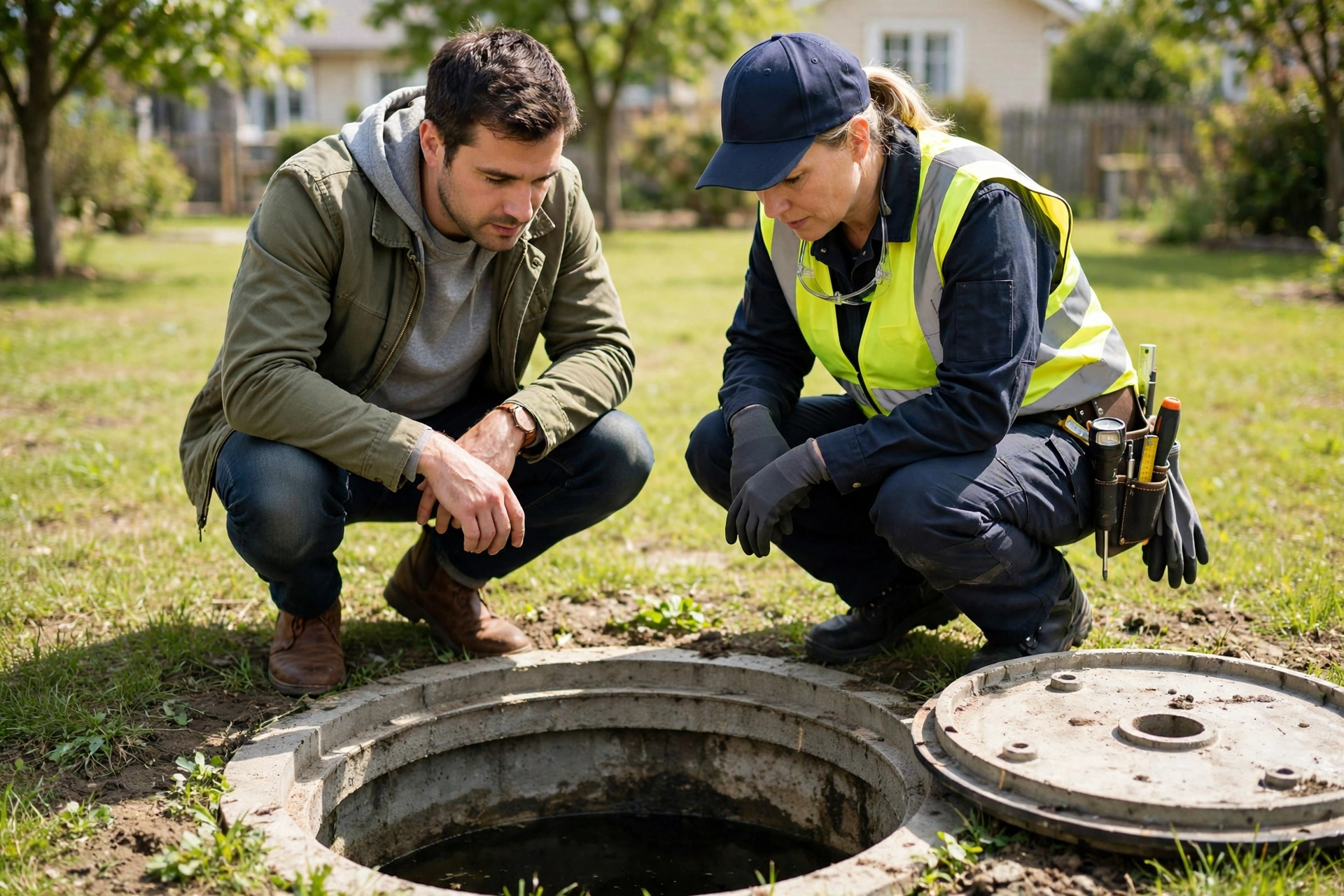
Try to be present for the inspection if you can. Watching the inspector work and asking questions on the spot will teach you more about the system in an hour than any amount of reading. Schedule the inspection during your due diligence period, so the results arrive while you still have the right to ask for repairs, renegotiate, or walk away.
What the Septic Inspection Should Cover
Not all septic inspections are equal, so it helps to know what a thorough one looks like. At a minimum, the inspector should locate and open the tank, check the liquid level, and measure the layers of sludge at the bottom and scum at the top. Those measurements show whether the tank has been pumped on schedule and whether solids are at risk of flowing into the drain field. The inspector should also check the baffles, the inlet and outlet pipes, and the tank walls for cracks, corrosion, or damage.
The drain field deserves just as much attention. The inspector will look for soggy ground, standing water, unusually lush grass, and odors, all of which can signal that the field is struggling to absorb wastewater. In some cases the inspector may run a hydraulic load test, which involves running water into the system and watching how the drain field handles it.
The inspection should also cover the parts of the system you cannot see from the yard. That includes the distribution box, which splits wastewater evenly between the drain field lines, and any pump, alarm, or filter the system has. If the system has an alarm panel, the inspector should test it. The inspector should also compare what is in the ground with what the permit allows, since bedrooms or bathrooms added after installation can leave a system undersized for the home as it stands today.
Ask for the Paperwork: Permits, Records, and the System Drawing
Paperwork may not be the most exciting part of buying a house, but for a septic system, it is where the truth lives. Ask the seller for the original septic permit, the system drawing or as-built plan, any inspection reports, pumping receipts, repair invoices, and equipment manuals. If the system has a maintenance contract or an operating permit, ask for those too. A seller who has kept these records is usually a seller who has taken care of the system.
The permit and the system drawing are the two most important documents. The permit shows the system was approved by the local authority and tells you what size and type of system was allowed. The drawing shows where the tank and drain field are buried, which is essential for future maintenance and for planning any work in the yard. Without a drawing, a pumping company may have to probe the yard to find the tank, which costs time and money and risks damaging the system.
If the seller does not have the records, the local health department or permitting office usually does, or at least has copies of the permit and the original design. You can often request these yourself, and in many counties the records are available online. Pay attention to what is missing, not just what is there. A permit for a three bedroom home on a house that now has five bedrooms is a real finding, and a string of repeat repairs to the same component may point to a deeper problem.
Has the System Ever Had Problems?
Ask directly whether the system has ever backed up, produced odors, triggered an alarm, or shown standing water in the yard. Ask whether any part of it has been repaired or replaced, and whether the seller knows of any problems that were never fully fixed. These are straightforward questions, and in many states the seller is required to disclose known defects, but the answers are only as good as the seller’s knowledge and honesty.
Ask specifically about backups. A single backup caused by a clogged pipe is a different matter from repeated backups that point to a failing drain field. Ask whether sewage has ever surfaced in the yard or backed up into a basement drain or a low shower. If the answer is yes, find out what was done about it. A repair that solved the problem is reassuring. A problem that keeps returning is not.
Also ask about the everyday signs that homeowners sometimes dismiss. Slow drains in several fixtures at once, gurgling sounds in the pipes, and odors near the tank or the drain field can all point to a system under strain. If the seller mentions any of these, even casually, pass the detail along to your inspector. Our article on when to call a septic professional immediately explains which warning signs need urgent attention and which ones simply need a closer look.
Is the System Big Enough for Your Household?
A septic system is sized for a certain number of bedrooms, and that sizing is based on the expected wastewater flow for a household of that size. When you buy a house, you need to know whether the system matches the home you are buying and the household you plan to live in. A system permitted for three bedrooms may work fine for a couple, but it can struggle with a family of six, frequent guests, or a home office with a second kitchen.
Ask the seller how many bedrooms the system was designed for, and compare that number with the number of bedrooms in the home today. If the home has been expanded since the system was installed, the system may now be undersized, even if it has never caused a visible problem. An undersized system will need pumping more often, and it is more likely to develop drain field trouble over time, because it is being asked to handle more wastewater than it was built for.
Think about your own water use as well. A household that does several loads of laundry a day, runs a dishwasher nightly, and takes long showers will put far more strain on a system than a household with lighter habits. None of this means you should walk away from a home with a smaller system, but it does mean you should go in with your eyes open.
What Will It Cost to Own and Maintain?
Every septic system needs regular care, and the cost of that care should be part of your homebuying math. Routine pumping is the biggest recurring expense, and it is not a large one compared with most home costs, but it is real, and it repeats for as long as you own the home. Ask the seller what they typically pay for pumping and how often they have it done. Local prices vary, and the seller’s actual bills are more useful than any general estimate.
Beyond pumping, ask about the other costs that come with the system. Filters need cleaning. Pumps and alarms eventually need replacing. Advanced treatment systems often need an annual service visit, and some require a maintenance contract. These are normal costs of owning a septic system, and they should not scare you off, but they should be in your budget.
The bigger financial question is what a major repair would cost. A failed drain field is the repair every buyer worries about, and rightly so, because it is a large job that involves excavation and new permits. Costs vary so much by region, soil, and system design that a useful general figure is hard to give, and you should be skeptical of anyone who quotes one without seeing the property. What you can do is ask your inspector to give you a sense of the system’s remaining life and what a replacement would involve on that particular lot. That conversation is worth more than any national average.
Rules, Regulations, and Who Pays for What
Septic systems are regulated locally, and the rules change from place to place. In the United States, state and local health departments typically permit and inspect septic systems, and the requirements can differ sharply between counties. Before you buy, find out what the local rules require when a home with a septic system changes hands. Some areas require a septic inspection or a transfer inspection before the sale can close. Others require the system to meet current standards, or require a repair before the title transfers.
Ask whether the system has any outstanding notices, violations, or permit conditions. A system that was installed without a permit, or one that was modified without approval, can create problems that fall to the new owner. If the system is not in compliance, find out what it would take to bring it into compliance and who is expected to pay for it.
Lenders can also have a say. Some mortgage lenders require a septic inspection before they will approve the loan, so ask your lender early whether they have any septic requirements, so a last-minute demand does not delay your closing. Finally, sort out who pays for the inspection itself. In many transactions the buyer pays, just as the buyer pays for the general home inspection. In some areas, the seller pays, or the cost is negotiated. There is no single rule, and the custom varies by market. What matters is that the cost is agreed on before the inspection is booked, and that the inspector works for you and reports to you, regardless of who writes the check. The EPA’s septic pages at epa.gov/septic are a useful starting point for understanding how these systems work and what homeowners are responsible for.

Red Flags to Watch for During a Showing
You do not need an inspector’s tools to notice some warning signs. When you walk the property, take a slow look at the yard, especially over the tank and drain field. Standing water or soggy ground in a spot that has not seen rain can mean the drain field is not absorbing wastewater properly. A patch of grass that is noticeably greener and lusher than the rest of the lawn, particularly in a dry spell, can mean the same thing. Neither sign proves the system is failing, but both are worth mentioning to your inspector.
Use your nose as well. A faint sewage smell near the tank, the drain field, or a vent pipe is a sign that something is not right. Either way, an odor that you notice during a showing is a question to ask, not a detail to ignore.
Inside the house, run the water and flush the toilets. Watch how quickly the fixtures drain and listen for gurgling. Slow drains in one sink may be a simple clog, but slow drains in several fixtures at the same time can point to a problem further down the line. Look in the basement or the lowest bathroom for any signs of past backups, such as staining around a floor drain. These are the kinds of clues that are easy to miss when you are focused on the layout and the light, so it helps to walk through with a short list in mind.
How to Use What You Learn in Negotiations
Once you have the inspection report and the records, you will know far more about the system than most buyers ever do. The next step is to decide what that information means for your offer. A healthy system with good records is simply good news, and there is nothing to negotiate. A system that needs a pumping, a minor repair, or a filter replacement is usually a small matter, and many buyers ask the seller to handle it before closing or offer a modest credit.
A bigger finding, like a failing drain field or a system that is undersized for the home, calls for a more serious conversation. You have a few options. You can ask the seller to make the repair before closing. You can ask for a price reduction or a closing credit that reflects the cost of the repair, which gives you control over who does the work. Or, if the problem is serious enough and the seller is unwilling to address it, you can walk away. Your contract’s inspection contingency exists for exactly this reason, and a major septic problem is one of the clearest cases for using it.
Whatever you decide, get it in writing. Verbal promises about repairs are hard to enforce, and they are easily forgotten in the rush toward closing. If the seller agrees to pump the tank, replace a pump, or repair the drain field, the agreement should say what work will be done, by whom, and by when, and it should give you the right to verify the work before closing.
A Simple Checklist to Take to the Showing
It is a lot to remember, so here is a short checklist you can take with you. Bring it to the showing and to the inspection, and note the answers as you get them.
- Is the home on septic or public sewer, and where are the tank, drain field, and access lids?
- How old is the system, what type is it, and what is the tank made of?
- When was the tank last pumped and inspected, and who did the work?
- Are there permits, a system drawing, pumping receipts, and repair records?
- Has the system ever backed up, produced odors, or needed a repair?
- How many bedrooms was the system designed for, and does that match the home today?
- Does the system have a pump, alarm, filter, or maintenance contract?
- Is there a reserve area for a replacement drain field?
- Are there any outstanding violations, notices, or permit conditions?
- What do the seller’s pumping and maintenance bills typically run?
- Has anything been built, parked, or planted over the drain field?
- Will the seller allow a dedicated septic inspection before closing?
If the seller can answer most of these questions easily, you are in good shape. If several of them draw a blank, the inspection and the records search become even more important. Either way, you will walk into the negotiation knowing what you are buying, and that is the whole point.
Frequently Asked Questions
Do I really need a separate septic inspection if the general home inspection looks fine?
Yes. A general home inspection covers the visible parts of the house, but it does not open the septic tank, measure sludge levels, or test the drain field. A septic inspector does all of that, and the report they produce is the only reliable picture of the system’s condition. The cost of the inspection is small compared with the cost of a repair you discover after closing.
What if the seller has no septic records at all?
Missing records are common, especially with older homes and homes that have changed hands several times. Start with the local health department or permitting office, which often holds the original permit and system drawing. Then rely on the inspection. A thorough inspection can tell you a great deal even without paperwork, including the age, type, and condition of the system. Missing records should make you more careful, but they do not have to end the deal.
Can I buy a house with an old septic system?
You can, and many people do. Age alone is not a reason to walk away. What matters is the condition of the system, how it has been maintained, and how much life the inspector thinks it has left. An old system with a clean inspection and good records can be a fine purchase. An old system with no records and a struggling drain field is a different story. Let the inspection, not the calendar, make the decision.
What happens if the inspection finds a problem?
It depends on how serious the problem is. Minor issues, like a tank that needs pumping or a filter that needs cleaning, are usually easy to resolve before closing. Larger problems, like a failing drain field, become a negotiation point. You can ask the seller to repair it, ask for a price reduction or credit, or walk away if your contract allows it.
The Bottom Line
A septic system does not have to be a source of anxiety when you buy a house. It only becomes one when it is ignored. Ask where the system is, how old it is, when it was last pumped, and whether the records exist. Get a dedicated inspection from someone who works on these systems every day. Walk the yard with your eyes open, and read the report before your contingency period ends.
Most of the time, those steps will confirm that the system is in good shape, and you can move forward with confidence. When they turn up a problem, they give you the facts you need to negotiate fairly or to walk away before a bad purchase becomes yours. Either way, you will have done the work that protects you, and that is what good homebuying looks like. If you are new to septic ownership altogether, our first-time homeowner septic guide covers what to expect in your first year and how to keep the system healthy from the start.
Greetings Glows Team is dedicated to creating meaningful, helpful, and thoughtfully curated content for everyday inspiration and special moments.
What We Focus On:
Well-researched and reader-friendly articles.
Meaningful greetings, blessings, prayers, and inspirational messages.
Carefully curated ideas for everyday life and special occasions.
Clear, helpful, and engaging information.
Consistent quality and attention to detail in every publication.
Our goal is simple: to make every visit worthwhile with content that inspires, informs, and brings a little more positivity to your day.