If you own a home in Texas with a septic system, pumping the tank is one of those routine jobs that is easy to put off until it turns into an emergency. It is also one of the most affordable pieces of home maintenance you will ever pay for, especially when you compare it with the cost of repairing a failed drain field. The trouble is that most homeowners have no idea what a fair price looks like, so they either overpay without realizing it or delay the job because they assume it will cost far more than it does. This guide walks through the septic tank pumping cost in Texas in plain terms, with realistic price ranges, the factors that move your quote up or down, and practical advice for getting the work done right.
Before getting into the numbers, it helps to understand what you are actually paying for. A pump-out is not just someone showing up with a truck. The technician locates and opens your tank, removes the accumulated sludge and scum, checks the baffles and the liquid level, and hauls the waste to a licensed disposal facility. A good company will also tell you what it found, such as whether the tank was fuller than expected or whether a baffle looks damaged.
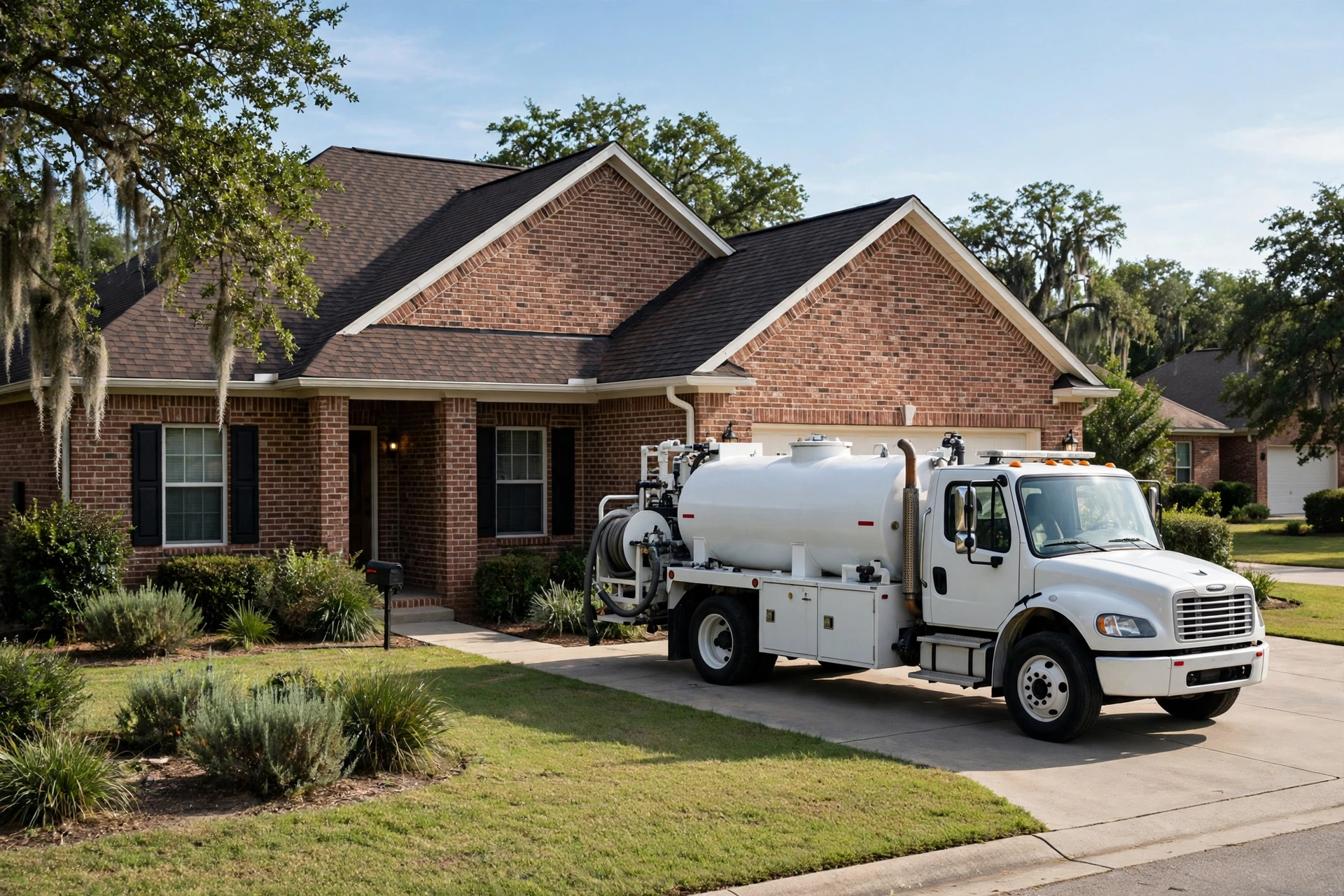
How Much Does Septic Tank Pumping Cost in Texas?
For a standard 1,000-gallon residential tank, most Texas homeowners pay somewhere in the range of 275 to 525 dollars for a routine pump-out. That range reflects published pricing data from multiple sources, and it covers the truck, the pumping, and disposal under normal conditions. The full spread of prices across the state is wider, roughly 225 to 650 dollars, because Texas is a big state with very different local markets. A straightforward job in a competitive metro area can come in at the low end, while a rural property or a neglected tank can push toward the high end.
It is worth being honest about what these numbers are. They are typical ranges drawn from published cost guides and contractor pricing surveys, not quotes from any one company, and your actual price will depend on your tank, your property, and where you live. Prices also drift over time as fuel, labor, and disposal fees change. Treat the ranges in this guide as a way to judge whether a quote is reasonable, not as a promise of an exact price.
Most homeowners land near the middle of the range. If your tank is a standard size, your lids are easy to reach, and the tank was pumped within the last few years, you should expect a quote in the lower to middle part of that range. If several of the cost factors below work against you at once, the price climbs, but it is still far cheaper than dealing with a backup or a damaged drain field.
Septic Tank Pumping Cost in Texas by Tank Size
Tank size is the single biggest driver of price, because it decides how much waste the truck has to remove and how long the job takes. Most Texas homes have a 1,000-gallon tank, and that is the size most published price ranges are built around. Smaller tanks are cheaper to pump, and larger tanks cost more, but the increase is gradual rather than dramatic.
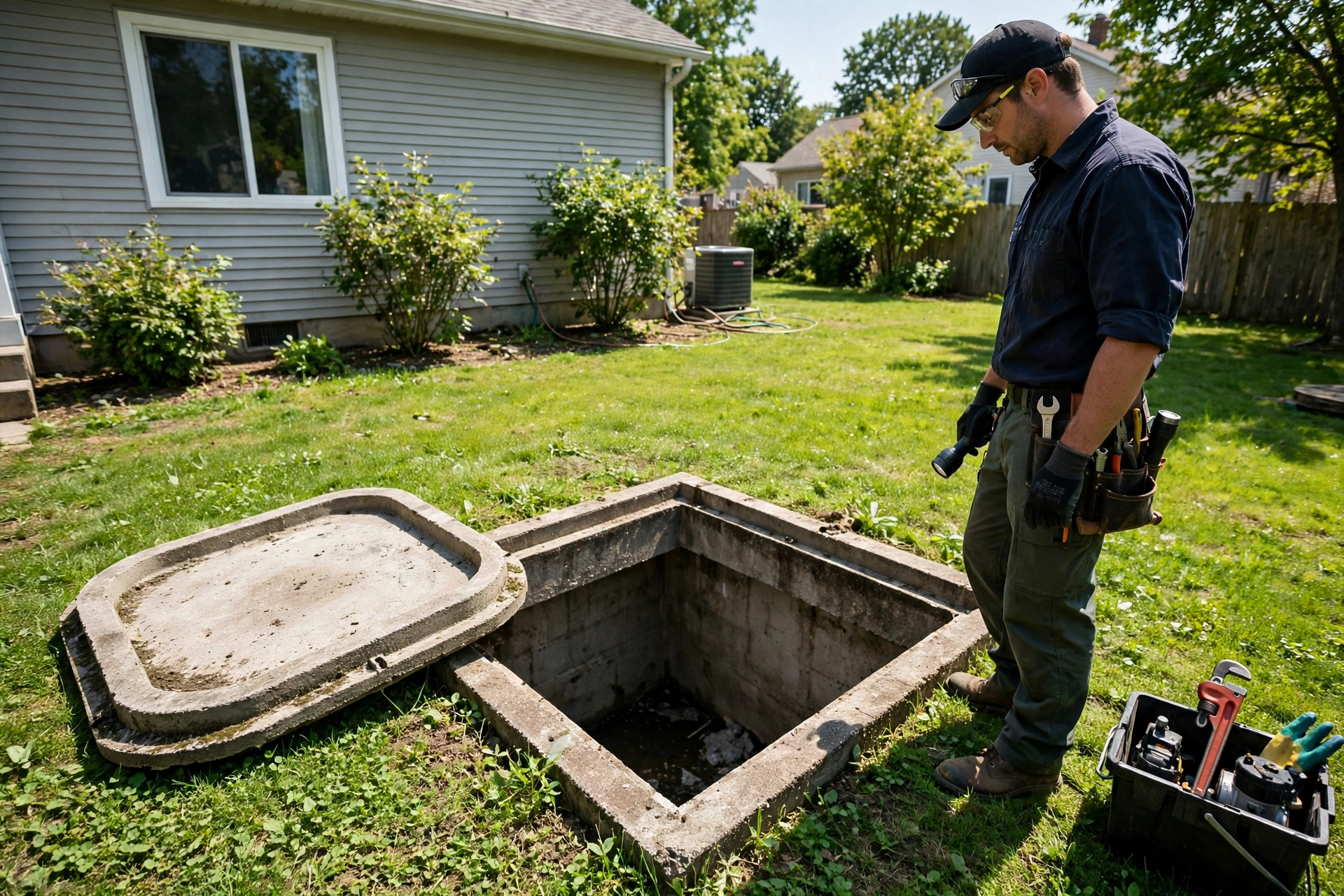
A 750-gallon tank, common in smaller or older homes, typically costs around 225 to 350 dollars to pump. A 1,000-gallon tank, the most common residential size in Texas, usually runs about 250 to 425 dollars. A 1,250-gallon tank typically falls in the range of 350 to 475 dollars, and a 1,500-gallon tank or larger usually costs 400 to 550 dollars or more. Very large tanks, the kind found on bigger properties or homes with many bedrooms, can go higher still, especially when the tank has not been pumped in a long time.
If you do not know your tank size, you are not alone. Many homeowners have never looked at their original permit paperwork. The pumping company can usually estimate the size once it opens the tank, and you can also look up your original on-site sewage facility permit through your county. Knowing the size before you call for quotes helps you judge whether a price is fair, because a quote that sounds high for a 1,000-gallon tank might be reasonable for a 1,500-gallon one.
Household size matters here too, though indirectly. A bigger household fills a tank faster, which means the tank holds more solids by the time it is pumped, and that can add time and cost to the job. It also means you will need pumping more often. A family of five on a 1,000-gallon tank will reach the pumping point much sooner than a retired couple on the same tank. That is why the right pumping schedule depends on both your tank and the number of people using it, and a pumping frequency chart by household size is a useful way to work out how often your home needs the service.
What Texans Pay by Region
Where you live in Texas moves the price as much as anything else. The state has several large metro markets, wide rural stretches, and the Hill Country in between, and each of those has its own pricing pattern. Competition, travel distance, soil conditions, and disposal fees all vary from place to place.
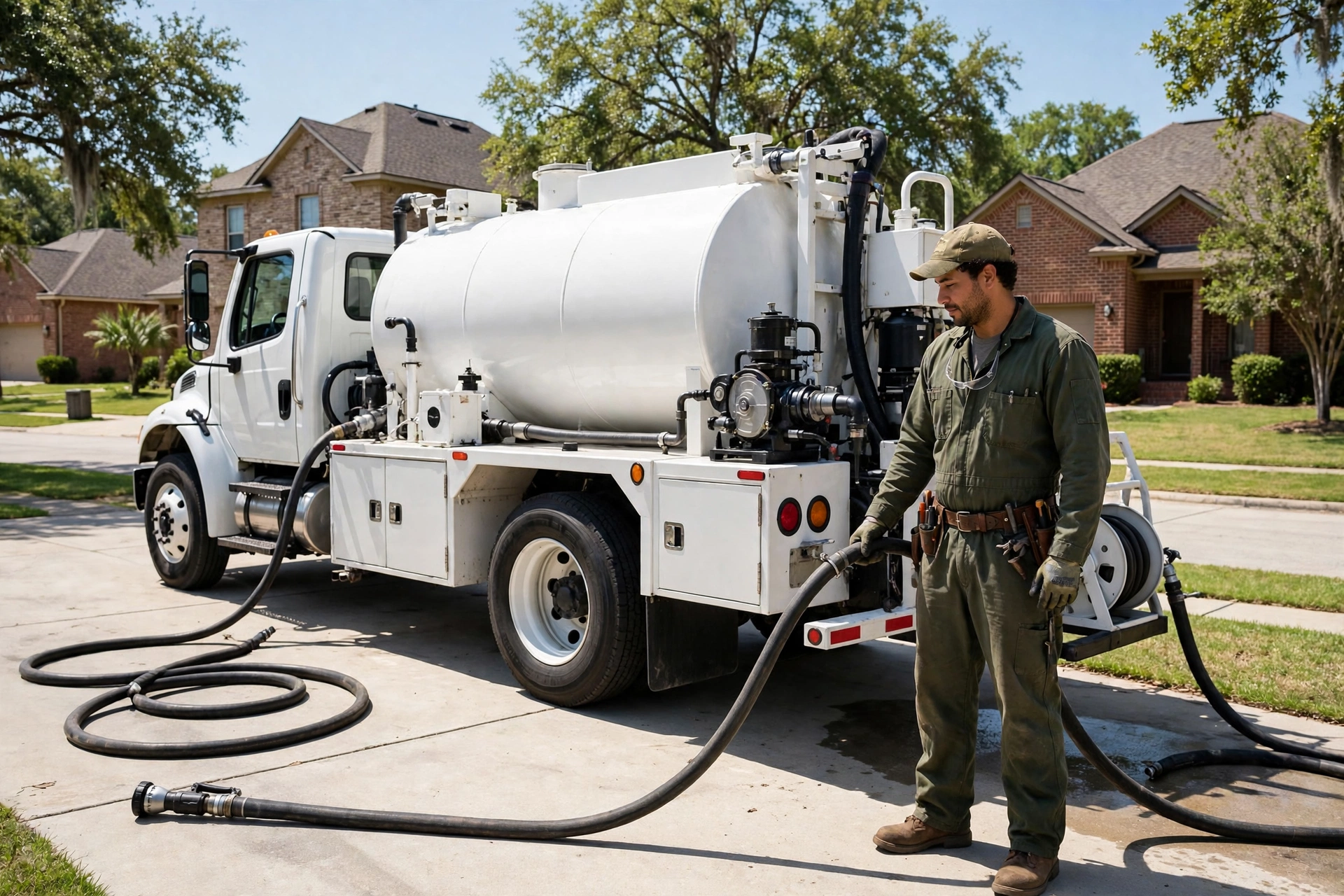
Published metro averages from Angi give a useful sense of the spread. Dallas tends to be the most affordable of the big metros, with an average around 314 dollars and most jobs falling between 225 and 400 dollars. Houston sits in the middle, averaging around 375 dollars, with most jobs between 275 and 600 dollars. Austin is the most expensive of the three, averaging around 435 dollars, with most jobs between 250 and 600 dollars. These are averages for a standard 1,000-gallon tank, so individual quotes in each city will still vary.
Central Texas and the Hill Country often run higher than the big metros, with some local providers pricing standard pump-outs in the 350 to 650 dollar range. The reasons are practical rather than mysterious. Limestone bedrock and heavy clay soils can make access and disposal more difficult, and properties are often spread out, which means longer drives for the truck. Rural properties anywhere in the state can also cost more, simply because the pumping company has to travel farther and may have fewer nearby disposal options.
The pattern to remember is that the cheapest price is not always in the cheapest city. A rural homeowner outside a low-cost metro might pay more than a homeowner inside a higher-cost metro, once travel time is factored in. Compare quotes against prices in your own area, and be wary of any quote that sits far below the local range, since it often means the company is cutting corners on disposal or skipping the inspection that a proper pump-out includes.
Aerobic Systems Cost More to Pump
Texas has a high number of aerobic treatment systems, and if you have one, your pumping costs will look different from the ranges above. An aerobic system is more complex than a conventional septic tank. It has an aerator, spray heads, and a chlorination system in addition to the tank itself, and the technician needs to inspect and service those parts as well as remove solids.
For an aerobic system, a pump-out typically costs in the range of 400 to 900 dollars, depending on the size of the system and how much additional service is needed. That is noticeably more than a conventional tank, but it reflects real extra work and time on site, not a markup for its own sake. Aerobic systems also come with ongoing maintenance contracts, which typically run 200 to 400 dollars per year for quarterly inspections, and those inspections are separate from the pump-out itself.
If you are not sure whether your system is conventional or aerobic, look for a control panel, an alarm box, or sprinkler heads in your yard. Aerobic systems usually have an alarm and a spray field, while conventional systems drain quietly underground. Your pumping company can confirm which type you have, and it is worth asking, because it changes both the price and the maintenance schedule you should follow.
What Affects the Price of Pumping Your Septic Tank
Beyond tank size and location, several smaller factors can push a quote up or down by a meaningful amount. None of them is a mystery once you know what the pumping company is dealing with, and several of them are things you can control before the truck arrives.
Access is the first one. If your tank lids are buried under a foot or more of soil, the technician has to dig to reach them, and that takes time. Digging can add 50 to 150 dollars or more to the job, depending on how deep the lids are and how hard the soil is. Installing risers, which are short extensions that bring the lids up to ground level, costs money up front but saves you that digging charge on every future pump-out. Many homeowners find that risers pay for themselves within a couple of pumping cycles, and they also make it much easier to find the tank next time.
The condition of the tank matters too. A tank that was pumped on schedule is a quick, straightforward job. A tank that has not been pumped in eight or ten years is a different story. The sludge layer is thicker, the solids may have hardened, and the technician may need extra time and water to break everything up and remove it. Some companies charge more for a neglected tank, and a few will quote a higher price once they see the condition. This is one more reason that regular pumping is cheaper in the long run than waiting until there is a problem.
Extra services add to the bill as well. A basic pump-out covers the tank itself, but many companies offer add-ons such as a filter cleaning, a baffle inspection, a camera inspection of the lines, or a full system inspection. A standalone septic inspection, the kind often done for a real estate transaction, typically runs 150 to 400 dollars depending on the scope. These services can be worth paying for when you have a specific concern, but you should know what is included in your quote before the work starts, so you are not surprised by add-ons you did not ask for.
Timing plays a role as well. Emergency and after-hours calls cost more, and the difference is not small. Published guides put emergency pumping at roughly 350 to 700 dollars, compared with 250 to 400 dollars for a scheduled visit, with the extra charge reflecting the urgency and the disruption to the company’s schedule. Weekend and holiday calls carry similar premiums. If your tank is showing warning signs, scheduling a regular appointment now is almost always cheaper than waiting for a weekend emergency.
How Often Should You Pump Your Septic Tank?
The standard guidance is to pump every three to five years for most residential systems, and that figure is consistent with the advice published by the EPA. But three to five years is a starting point, not a rule that fits every home. The right interval depends on your tank size, the number of people in your household, and how much water you use.
A small household on a large tank can often stretch toward the longer end of that range, while a large family on a small tank may need pumping every two to three years. A household of one or two people with a 1,000-gallon tank might reasonably go five to seven years, while a household of five or six on the same tank should plan on every two to three years. The tank does not care about the calendar. It cares about how much solid waste has accumulated, and that depends on use.
Garbage disposals, heavy laundry use, and long showers all add to the load. So does anything that should never go down the drain in the first place, such as grease, coffee grounds, and wipes labeled as flushable. These do not break down in the tank, and they take up space that your system needs. Reducing what goes into the tank is the simplest way to stretch the time between pump-outs, and it costs nothing.
The EPA publishes straightforward guidance on septic care, including how often pumping is needed and what homeowners should watch for, and its advice is a good reference point for any homeowner who wants a second opinion beyond what a contractor says. You can read the EPA guide to septic systems for a clear overview of how these systems work and how to keep them healthy.
How to Get Quotes and Avoid Overpaying
Getting a fair price starts with getting more than one quote. Call at least two or three licensed pumping companies in your area and ask each one the same questions, so you are comparing like with like. A quote that looks cheap can turn expensive if it leaves out disposal fees, digging charges, or the inspection, while a higher quote may include services the cheaper one does not. Ask what is included, and ask what would cost extra.
Start by asking whether the company is licensed. In Texas, on-site sewage facilities are regulated by the Texas Commission on Environmental Quality, and installers and maintenance providers are required to be licensed. A legitimate company will be happy to confirm its license, and it should be able to tell you where the waste will be disposed of. Any company that is vague about licensing or disposal is one to avoid, because improper disposal is both an environmental problem and a legal one.
When you call, have a few details ready. The size of your tank, if you know it, the number of people in your household, when the tank was last pumped, and whether the lids are at ground level or buried all help the company give you a realistic estimate. If you do not know some of these things, say so. A good company will work with what you have and confirm the details on site.
Ask each company to put the quote in writing before the work begins, with the price, what is included, and any conditions that could change it. A verbal price that changes when the truck arrives is a common source of frustration, and a written quote protects both sides. Also ask how payment works and whether there is a fee for paying by card. None of this is confrontational. It is simply how a careful homeowner hires a contractor, and reputable companies expect it.
Be cautious about prices that sit far below the local range. A quote under 200 dollars for a full pump-out is a warning sign, not a bargain. It may mean the company plans to add charges once it is on site, or it may mean the job will be rushed, with the tank only partly emptied or the waste disposed of improperly. A proper pump-out takes time, and a legitimate company has real costs for fuel, labor, insurance, and disposal. If a price does not cover those costs, something is being skipped.
On the other hand, a high quote is not automatically a bad one. A company that includes digging, a thorough inspection, and a written report may be worth more than a cheaper company that only pumps and leaves. Compare the full service, not just the headline number. If one quote is much higher than the others, ask the company to explain why. Sometimes there is a good reason, such as difficult access or an aerobic system, and sometimes there is not.
Timing your pumping well can save money too. Book during normal business hours and avoid emergency calls whenever possible. If you know your tank is due, schedule it a few weeks ahead rather than waiting for a holiday weekend. A scheduled job is almost always cheaper than an urgent one, and some companies offer better availability during slower periods.
Finally, keep a record of each pump-out. Note the date, the company, the price, and anything the technician found. This record helps you track your pumping interval, it gives the next technician useful history, and it is valuable if you ever sell the home. Buyers and their inspectors like to see a maintenance history, and a well-documented system is easier to sell than one with no records at all. If you want to know roughly how long the visit itself will take, our guide on how long pumping usually takes explains what happens during the appointment and what can make it run longer.
Warning Signs That Pumping Is Overdue
Your septic system usually gives you warning before it fails outright, and learning to recognize those signs can save you from an emergency call and a much larger bill. The most common sign is slow drains throughout the house. One slow drain is usually a clog in that fixture. Several slow drains at once, especially toilets and showers on the lowest floor, often point to a full tank or a problem further down the system.
Bad smells are another early warning. A sewage smell inside the house, near drains or toilets, or a strong odor in the yard above the tank or drain field means something is wrong. Sometimes the cause is simple, such as a dry trap in a rarely used drain, but a persistent smell that does not go away is worth taking seriously. Our guide on the smell of a full septic tank explains what a full septic tank smells like and what to do when you notice it.
Gurgling sounds from pipes or toilets are also worth attention. A gurgling toilet or a drain that makes noise when another fixture is used often means air is trapped in the system because the tank is full or a line is partly blocked. It is easy to dismiss as a quirk of an old house, but it is one of the more reliable early signs that the tank needs attention.
Look outside as well. Standing water or soggy ground over the drain field, especially during dry weather, is a sign that wastewater is not draining properly. Unusually lush or fast-growing grass over the drain field can mean the same thing, since the grass is feeding on nutrients in wastewater that is surfacing instead of filtering through the soil. Neither of these means you should panic, but both mean you should call a professional rather than wait for the next scheduled pump-out.
The most serious sign is sewage backing up into the house. If wastewater is coming up through a toilet, shower, or floor drain, stop using water immediately and call a septic professional. Do not try to fix it yourself, and do not keep flushing or running water while you wait, because every gallon you add makes the backup worse. This is the emergency that regular pumping is meant to prevent, and it is the situation where an after-hours call, with its higher price, becomes unavoidable.
What Happens If You Skip Pumping
Skipping a pump-out does not save money. It moves the cost to later, and when it arrives, it is usually much larger. A septic tank works by giving solids time to settle and partially break down, while the liquid flows out to the drain field to be filtered by the soil. When the tank is not pumped, the sludge layer grows until it reaches the outlet, and solids start flowing into the drain field.
Once solids reach the drain field, the damage begins. The small pores in the soil that filter wastewater become clogged, and the field slowly loses its ability to absorb liquid. This process is gradual, which is why it is so easy to ignore, but it is also very difficult to reverse. A clogged drain field can sometimes be rested or partially rehabilitated, but in many cases the only real fix is replacing part or all of the field, and that kind of repair runs into the thousands of dollars.
The costs do not stop with the drain field. A neglected tank can damage baffles, crack under pressure, and allow untreated wastewater to reach the surface or groundwater. That creates a health hazard for your household and your neighbors, and it can bring you into conflict with local regulations. Texas counties enforce rules on on-site sewage facilities, and a failing system can draw attention you do not want, including orders to repair or replace it on a deadline.
There is also the simple matter of daily life. A system that is overdue for pumping is more likely to back up at the worst possible moment, such as during a holiday gathering or when guests are staying over. The inconvenience, the cleanup, and the emergency call-out fee all land at once, and the total is far more than the price of a routine pump-out would have been. For a fuller picture of the consequences, read our guide on what happens if you never pump your septic tank.
The math is straightforward. Pumping every three to five years costs a few hundred dollars each time, spread over years. Replacing a drain field or a full system costs many thousands, all at once, and it comes with disruption to your yard and your routine. Regular pumping is not an expense to avoid. It is the cheapest insurance your septic system will ever have.
How to Make Your Next Pump-Out Cheaper
There are a few practical steps that can keep your pumping costs down over the life of your system. The most effective is also the simplest: pump on schedule. A tank that is pumped every three to five years is a quick job with no surprises, and quick jobs are cheaper jobs. Letting the interval stretch to eight or ten years turns a routine visit into a difficult one, and difficult jobs cost more.
Watch what goes down your drains. Grease, coffee grounds, wet wipes, and feminine hygiene products do not break down in the tank, and they take up space that shortens the time between pump-outs. Keeping them out of the system is free, and it directly extends the life of your tank and your drain field. Fixing a running toilet or a dripping faucet also helps, because it reduces the volume of water the system has to handle and gives solids more time to settle.
Septic Tank Pumping Cost in Texas: What to Remember
The septic tank pumping cost in Texas is manageable for most homeowners. For a standard 1,000-gallon tank, expect a typical range of about 275 to 525 dollars, with the exact price depending on your tank size, your location, and how easy the tank is to reach. Dallas tends to be the most affordable of the big metros, Austin the most expensive, and rural and Hill Country properties often run higher because of travel and soil conditions. Aerobic systems cost more, usually 400 to 900 dollars, because they need more work on site.
The price of pumping is small compared with the price of not pumping. A routine pump-out every three to five years protects your drain field, keeps your home free of backups and smells, and keeps your system in compliance with Texas rules. The homeowners who pay the most for septic care are almost always the ones who waited the longest. Get a few quotes, ask what is included, keep a record of each visit, and treat pumping as a normal part of owning your home, like servicing your air conditioner or cleaning your gutters.
If you are unsure whether your tank is due, err on the side of having it checked. A quick inspection is inexpensive, and it gives you a clear answer instead of a guess. Your septic system works quietly underground every day, and a little attention every few years is all it asks in return.

Greetings Glows Team is dedicated to creating meaningful, helpful, and thoughtfully curated content for everyday inspiration and special moments.
What We Focus On:
Well-researched and reader-friendly articles.
Meaningful greetings, blessings, prayers, and inspirational messages.
Carefully curated ideas for everyday life and special occasions.
Clear, helpful, and engaging information.
Consistent quality and attention to detail in every publication.
Our goal is simple: to make every visit worthwhile with content that inspires, informs, and brings a little more positivity to your day.