If you own a home with a septic system, you have probably seen Rid-X on the shelf at the hardware store. The box promises to help break down waste and keep your system running smoothly, and plenty of homeowners buy it every month without a second thought. Others have heard that additives are a waste of money, or worse, that they can damage a septic system. So which is it?
Here is the short answer. For most standard septic systems, Rid-X is not bad for the system when it is used as directed. It is a biological product made of bacteria and enzymes, not a harsh chemical, and there is no solid evidence that it directly damages a healthy tank or drain field. But that is only half the story. The other half is that most healthy septic systems do not need it at all. Your tank already contains the bacteria Rid-X is trying to add, and no additive can take the place of regular pumping and sensible daily habits. The real risk is the false sense of security it can create when a homeowner treats a monthly packet as a substitute for real maintenance.

What Is Rid-X?
Rid-X is a septic tank treatment made by Reckitt, one of the best known septic additives in the United States, sold in powder, liquid, and dissolving pouch forms. You flush a dose down the toilet once a month, and the product goes to work in your septic tank.
Inside each dose are two kinds of active ingredients. The first is a set of four natural enzymes: cellulase, lipase, protease, and amylase. Enzymes are not living things. They are proteins that speed up the breakdown of specific kinds of waste, with each enzyme targeting a different type, such as paper and plant fiber, fats and grease, proteins, or starches. The second ingredient is a culture of live bacteria, naturally occurring strains of the Bacillus family, which are meant to keep digesting organic waste after the enzymes have done their initial work.
According to the manufacturer, one standard dose is meant for a tank of up to 1,500 gallons and is used once a month. The product contains no bleach and no corrosive chemicals, and its safety data sheet classifies it as a nonhazardous biological product.
What Rid-X Claims to Do
Every claim about Rid-X should be read as the manufacturer’s claim, not as an established fact. The company says the product is scientifically formulated with natural bacteria and advanced enzymes that start working immediately to break down paper, protein, oils, grease, and other household waste, with the goal of helping prevent costly and messy septic backups when used monthly along with occasional pumping.
Even the manufacturer does not present Rid-X as a replacement for pumping. Its own guidance says the product may slow the buildup of solids in the tank, and it still recommends regular pumping. The company describes Rid-X as a supplement to normal maintenance, not a substitute for it.
One more manufacturer position is worth knowing. Rid-X has said that its product has not been tested in aeration type systems, also called aerobic treatment units, and that it cannot recommend the product for those systems. If your home has an aerobic system, check with your service provider before adding anything to the tank.
How Your Septic Tank Already Works
To understand why Rid-X is usually unnecessary, it helps to understand what is already happening inside your tank. A septic system is not a passive holding tank. It is a living treatment system, and it comes with its own workforce.
Every time someone in your home uses the toilet, showers, or runs the dishwasher, wastewater flows into the septic tank carrying a large and diverse population of microorganisms. Human waste alone introduces bacteria, enzymes, yeasts, and fungi into the system, and these organisms break down organic solids continuously, day and night, without any help from a store bought product.
Inside the tank, the contents separate into three layers. Light materials such as fats, oils, and grease float to the top and form a scum layer. Heavier solids sink to the bottom and form sludge. In the middle sits a layer of relatively clear liquid called effluent. The bacteria work mainly in the scum and sludge layers, digesting the solids and reducing their volume over time, and the clarified liquid then flows out to the drain field, where soil organisms provide a second round of treatment.
This natural process is the reason your system works at all. The bacteria in your tank have been living with your particular mix of waste, water chemistry, and temperature for years, and they are already producing the same kinds of enzymes that Rid-X contains. Adding a monthly packet introduces a small number of additional bacteria and enzymes into a tank that already holds an enormous microbial population. You are adding a little of something your tank already has in abundance.
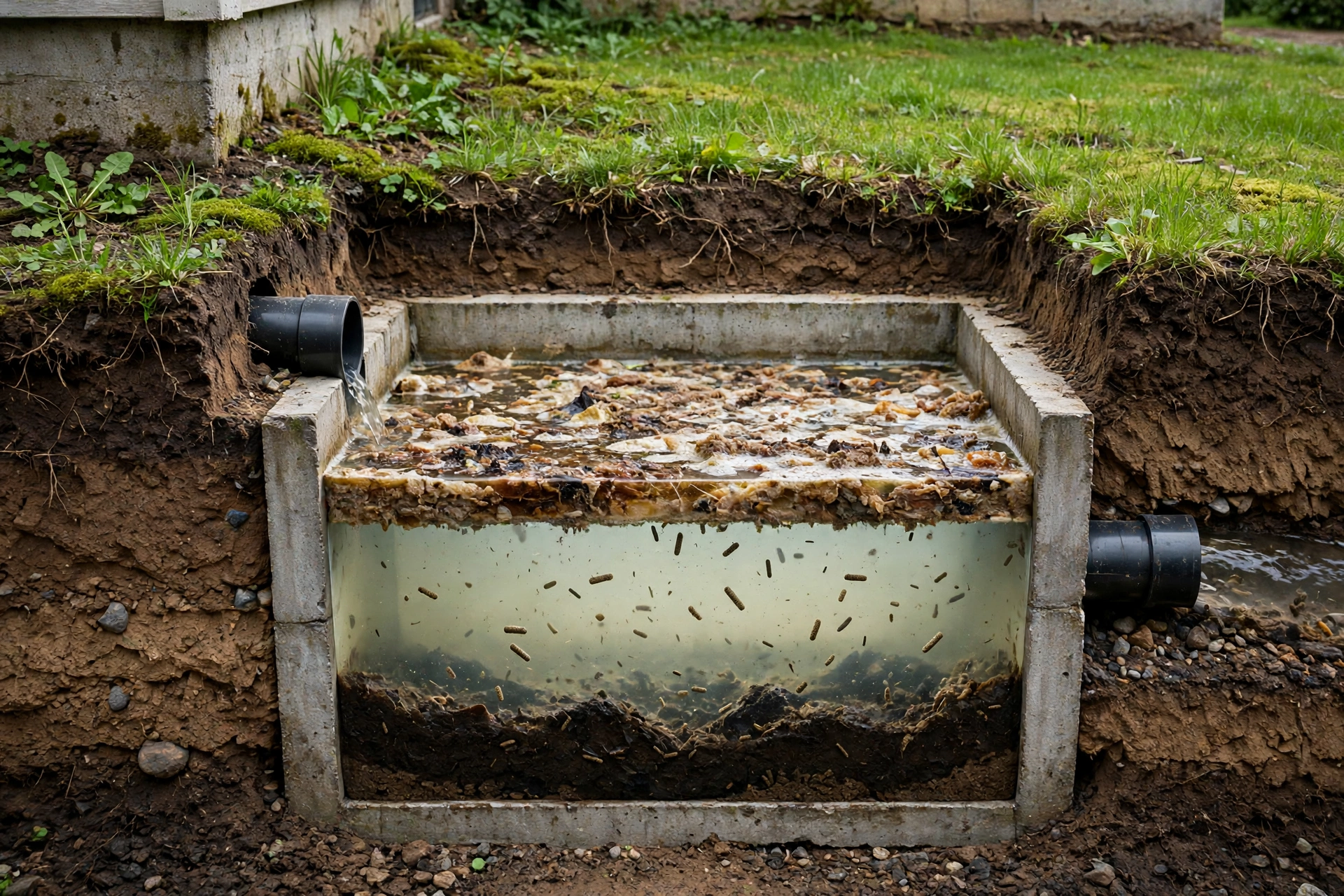
None of this means the bacteria in your tank are invincible. They can be knocked back by a large dose of household bleach, a round of strong antibiotics, or a long period when the house sits empty and no fresh waste arrives. In those cases the population thins out and takes time to recover. But under normal everyday conditions, a healthy tank is self sustaining. It does not run out of bacteria, and it does not need to be restocked every month.
For a deeper look at this question, our guide on whether you need to add bacteria to your septic tank covers the same ground in more detail, including the situations where a bacterial boost is and is not worth considering.
What the EPA Says About Septic Additives
The United States Environmental Protection Agency, or EPA, has taken a clear and consistent position on septic additives. The agency does not recommend the use of septic system additives containing bacteria or chemicals for domestic wastewater treatment. Its reasoning is straightforward. There is already a significant presence of bacteria, enzymes, yeasts, fungi, and other microorganisms in a functioning system, so additives are unnecessary for normal operation.
The EPA goes further than simply calling additives unnecessary. In its frequently asked questions on septic systems, the agency notes that additive products can be ineffective or can even harm system operation and the environment, and it advises that operational issues should be assessed by a septic system professional or a local regulator. The agency also warns specifically against additives made of organic solvents or strong alkali chemicals, because they pose a potential threat to soil structure and groundwater.
The EPA does not single out Rid-X by name, and it does not make recommendations on individual products. Its guidance applies to the whole category of additives.
The EPA has also stated that claims that additives eliminate the need for pumping are false. Pumping remains necessary on a regular schedule regardless of what additives are used. For most households, the EPA recommends pumping every three to five years, depending on tank size and household size.
You can read the EPA guidance for yourself on the EPA septic systems page, and our own summary of what the EPA says about septic additives walks through the agency position in plain language.
What Independent Research Has Found
The EPA position is not just a bureaucratic opinion. It lines up with what university researchers and state health departments have found when they tested additives in real systems.
A widely cited review from the University of Minnesota Extension looked at biological, enzymatic, and chemical additives across controlled field conditions and found no scientific evidence that additives improve the performance of a properly functioning septic system. Researchers at the University of Arkansas tracked systems over time and found no significant difference in sludge accumulation between tanks receiving monthly biological additives and tanks receiving none. Other extension programs, including the University of Wisconsin, reached similar conclusions.
State health departments have added their own assessments. The Washington State Department of Health reviewed biological additives and found no measurable improvement in effluent quality, sludge reduction, or drain field performance. The Georgia Department of Public Health has stated that additives are not beneficial to septic systems and will never eliminate the need for regular inspection and pumping.
For a fuller picture of the evidence, our article on whether septic tank additives really work reviews the same research and explains why the results come out the way they do.
So, Is Rid-X Bad for Septic Systems?
For a standard conventional septic system that is working normally, Rid-X used as directed is unlikely to cause direct harm. There is no documented evidence that it damages tanks, corrodes pipes, or harms drain fields. Its ingredients are biological, not chemical. It contains no bleach, no corrosive acids, and no solvents, and the bacteria it adds are naturally occurring strains already present in the environment.
That does not mean Rid-X is good for your system either. The honest answer sits in the middle. It is probably harmless and probably useless, at least for a healthy system. A single monthly dose adds a small number of organisms to a tank that already contains an enormous, well established microbial population. The research consistently finds that this addition does not change anything measurable, not the rate of sludge buildup, not the quality of the water leaving the tank, and not how often the tank needs to be pumped.
The genuine risk with Rid-X is not chemical or biological. It is behavioral. A homeowner who believes a monthly packet is maintaining the system may start to skip the maintenance that actually matters. Pumping gets postponed, inspections get skipped, and warning signs get ignored because the product is supposed to be handling things. Over years, sludge builds up, solids start to escape into the drain field, and the drain field slowly clogs. By the time the problem is obvious, the repair can be far more expensive than years of pumping would have been.
That is why public health agencies are skeptical even though they do not claim the product itself is toxic. The product is not the danger. The danger is what a homeowner stops doing because of the product. If you use Rid-X and still pump on schedule, still watch your water use, and still pay attention to warning signs, the product is unlikely to hurt anything except your wallet. If you use it as a reason to delay pumping, it has done real harm, just not in the way the label would suggest.
Biological Additives Versus Chemical Additives
| Type of product | Examples | Effect on a healthy system | What to do |
|---|---|---|---|
| Biological additives | Rid-X and similar bacteria and enzyme treatments | Unlikely to cause direct harm, but no proven benefit in a healthy system | Optional at most, and never a substitute for pumping |
| Chemical solvents and degreasers | Products containing organic solvents | Can kill helpful bacteria, damage drain field soil, and contaminate groundwater | Do not use |
| Strong acids and alkalis | Acid based drain cleaners and caustic products | Can damage pipes, kill bacteria, and harm soil structure | Do not use |
| Hydrogen peroxide treatments | Products marketed to clear clogs or add oxygen | Can disrupt the bacterial balance a septic system depends on | Do not use without professional advice |
Rid-X falls squarely in the first row of that table. That is the good news. The bad news is that the first row is also the row with the weakest case for spending money on it. A product can be safe and still not be worth buying.
When Rid-X Does Nothing, and When It Might Seem to Help
The value of Rid-X depends entirely on the condition of your system. In a healthy, properly maintained system, it does nothing measurable. If your tank is pumped on schedule, your household is not overloading the system with water, and nothing harmful is going down the drains, the bacteria already in your tank are handling the job.
There are narrower situations where a biological additive might seem to help. After a tank has been completely pumped out, the bacterial population is reduced and needs time to rebuild. After a large accidental bleach spill, a course of strong antibiotics, or a long period when the house sat empty, the same thing happens. In those recovery situations, a single dose may help the population reestablish itself a little faster, though the evidence is modest and the system would recover on its own in time.
None of these situations call for ongoing monthly use. At most, the research supports an occasional dose after a specific disruption, not a permanent monthly habit.
| Situation | What Rid-X is likely to do |
|---|---|
| Healthy system, pumped on schedule | Nothing measurable, the tank already has the bacteria it needs |
| Right after a complete pump out | May help the bacterial population rebuild a little faster, the tank recovers on its own either way |
| After a large bleach spill or strong antibiotics | May help reseed the tank, normal use will also restore bacteria over time |
| Seasonal home reopening after months empty | May help restart activity, the population rebuilds naturally once the home is in use |
| Slow drains, odors, or sewage backup | Nothing, these are signs of a problem that needs inspection, not an additive |
| Clogged or failing drain field | Nothing, no additive can reverse drain field damage |
| Tank overdue for pumping | Nothing, only pumping removes accumulated sludge and scum |
What Rid-X Cannot Do
It is just as important to know what Rid-X cannot do, because the misunderstandings here are what get homeowners into trouble. First, it cannot replace pumping. Sludge and scum accumulate in every tank no matter what is added to it. Bacteria reduce the volume of solids, but they do not eliminate them. Only a pump truck removes the material that settles and floats in the tank, and the EPA recommends pumping every three to five years for most households whether or not additives are used.
Second, Rid-X cannot fix a clogged drain or a slow drain field. If water is backing up into the house or draining slowly throughout the home, the cause is usually a blockage, a full tank, or a drain field that is no longer absorbing water properly. An enzyme packet cannot clear a blockage or restore soil that has become clogged with solids and biomat. Pouring more product into a system that is already struggling only delays the professional attention the problem needs.
Once solids have escaped a full tank and clogged the drain field, no bacteria or enzyme product can undo the damage. A cracked baffle or a broken pipe is a mechanical problem that needs a mechanical fix.
Finally, Rid-X cannot make up for bad habits. Flushing wipes, feminine hygiene products, paper towels, or grease down the drain will overwhelm a system whether or not an additive is used, and so will sending far more water into the system than it was designed to handle.
What Actually Keeps a Septic System Healthy
If Rid-X is not the answer, it is fair to ask what is. The real maintenance routine is simpler and cheaper than a monthly product habit, and every item on the list is backed by the EPA and by septic professionals.

Pump the tank on schedule
This is the single most important thing you can do for your system. A professional pump out removes the sludge and scum that bacteria cannot fully break down. Without it, solids eventually escape into the drain field, where they cause damage that is expensive and sometimes impossible to reverse. For most households, the EPA recommends pumping every three to five years. The right interval for your home depends on tank size and household size. Our septic tank pumping frequency chart by household size can help you work out a sensible interval for your own home, and a local pumper can confirm it when they see the tank.
Watch your water use
A septic system is designed to handle a certain amount of water each day. When a household sends much more than that into the system, solids do not have time to settle properly in the tank, and partially treated water can be pushed into the drain field before it is ready. Spread laundry loads through the week instead of doing them all in one day. Fix leaky toilets and faucets promptly, because a running toilet can send a surprising amount of water into the tank. Shorter showers and water efficient fixtures help too.
Be careful what goes down the drain
Your septic tank can handle human waste and toilet paper. It is not designed for much else. Wipes, even those labeled flushable, do not break down the way toilet paper does and can clog pipes and build up in the tank. Feminine hygiene products, paper towels, cotton swabs, and dental floss belong in the trash. Grease and cooking oil should go in a container and out with the household trash, not down the kitchen sink, because grease adds to the scum layer and can clog the drain field. Household chemicals, paint, and medications should never go down the drain either.
Protect the drain field
Keep vehicles and heavy equipment off it, because the weight can crush pipes and compact the soil. Do not pave over it or build on it, keep trees with aggressive roots at a distance, and direct roof drains and surface water away so the soil does not stay saturated. A drain field that stays dry and undisturbed can last for decades.
Get regular inspections
A professional inspection every few years can catch small problems before they become large ones. An inspector can measure sludge and scum levels, check the baffles and filters, and look for early signs of drain field trouble. This matters most when you are buying a home with a septic system or when your system is more than twenty years old.
Should You Keep Using Rid-X?
The answer depends on why you are using it. If you enjoy the routine and you are already pumping on schedule, watching your water use, and keeping harmful items out of the drains, then continuing to use Rid-X is unlikely to hurt your system. It is a low risk habit, but according to the research it has no measurable payoff. The money you spend on it each year could instead go toward the pumping and inspections that actually protect your system.
If you are using Rid-X because you are worried about your system, ask what you are actually worried about. If the tank is overdue for pumping, the right move is to call a pumper, not to buy another box. If the drains are slow or you notice odors, the right move is an inspection. If you recently had a disruption such as a large bleach spill or a pump out, a single dose as a recovery measure is the one situation where the product makes the most sense, and even then the system would recover on its own.
For many homeowners, the simplest decision is to stop the monthly habit and redirect that attention to the maintenance that actually works. Keep a record of your pumping dates, note the next pump out on the calendar, and walk the drain field now and then to look for wet spots or unusually lush grass. These small habits protect your system far more than any packet flushed down the toilet.
When to Call a Professional
Some septic problems are not do it yourself jobs, and waiting too long can turn a manageable repair into a major expense. Call a licensed septic professional if you notice any of the following.
Sewage backing up into the house is an emergency. Stop using water immediately and call a professional. Slow drains throughout the whole house, rather than a single slow sink, can point to a full tank or a drain field problem. Gurgling sounds from drains or toilets and strong sewage odors inside the home or in the yard are also early warning signs worth investigating.
Outside, look for wet or soggy patches over the drain field during dry weather, and for grass that is suddenly much greener or grows much faster there than elsewhere in the yard. Both can mean effluent is reaching the surface instead of being absorbed. Settling or a depression in the ground over the tank or drain field also deserves a professional look.
Call a professional as well if your tank is overdue for pumping, if you are unsure when it was last pumped, or if you are buying or selling a home with a septic system. A pumping company can measure the sludge and scum levels and tell you exactly where you stand.
Do not try to open the tank yourself or pump it yourself without the right equipment and knowledge. Septic tanks contain gases that can be dangerous, and an open tank is a serious safety hazard. Leave the tank work to licensed professionals who have the equipment and the training to do it safely.
Frequently Asked Questions
Can I use Rid-X instead of pumping my septic tank?
No. Rid-X cannot remove the sludge and scum that accumulate in every tank. Only pumping does that. The manufacturer itself says the product may slow solids buildup and still recommends regular pumping, and the EPA has stated that claims that additives eliminate the need for pumping are false. If you use Rid-X as a reason to skip pumping, you are putting your drain field at risk.
Will Rid-X help if my drains are slow?
No. Slow drains throughout the house usually mean the tank is full, a pipe is blocked, or the drain field is struggling. An additive cannot clear a blockage or restore a clogged drain field. If your drains are slow, have the system inspected and pumped if needed. Adding a packet to a struggling system only delays the repair.
Is Rid-X safe for aerobic septic systems?
The manufacturer has said that Rid-X has not been tested in aeration type systems and that it cannot recommend the product for them. If your home has an aerobic treatment unit, ask your service provider before using any additive. Aerobic systems work differently from conventional systems and have their own maintenance requirements.
Are there any septic additives that are actually dangerous?
Yes. Chemical additives are the ones to worry about. Products containing organic solvents, strong acids, strong alkalis, or hydrogen peroxide can kill the helpful bacteria in your tank, damage the soil in your drain field, and contaminate groundwater, and some states regulate or restrict these products. If a product promises to dissolve clogs or clean your system with chemicals, do not put it in a septic system. Biological products like Rid-X are a different category, and the concern with them is wasted money, not damage.
The Bottom Line
Rid-X is not bad for most septic systems in the way many homeowners fear. It will not corrode your pipes, kill your tank, or poison your drain field when used as directed. But it is not the maintenance shortcut it appears to be. Your septic tank already contains the bacteria and enzymes that Rid-X adds, and the research consistently finds that adding more makes no measurable difference in a healthy system. The EPA does not recommend additives for normal operation, and no additive can take the place of regular pumping.
The best thing you can do for your septic system has nothing to do with a monthly packet. Pump the tank every three to five years, watch your water use, keep wipes, grease, and chemicals out of the drains, protect the drain field, and get the system inspected now and then. Those habits do not come in a box on a store shelf, but they are what keeps a septic system working for decades.
Greetings Glows Team is dedicated to creating meaningful, helpful, and thoughtfully curated content for everyday inspiration and special moments.
What We Focus On:
Well-researched and reader-friendly articles.
Meaningful greetings, blessings, prayers, and inspirational messages.
Carefully curated ideas for everyday life and special occasions.
Clear, helpful, and engaging information.
Consistent quality and attention to detail in every publication.
Our goal is simple: to make every visit worthwhile with content that inspires, informs, and brings a little more positivity to your day.