A sewage smell in your yard is one of those problems that is hard to ignore and easy to worry about. You step outside to enjoy a quiet evening and instead you get a whiff of something that smells like a sewer. It might be faint, drifting in and out with the breeze, or it might be strong enough that you avoid a whole corner of the yard. Either way, it usually means something in your septic system needs attention, and the sooner you figure out where the smell is coming from, the simpler the fix tends to be.
The good news is that a smelly yard does not automatically mean your system has failed. Sometimes the cause is as simple as a loose cleanout cap or a vent pipe blocked by a bird’s nest. Other times it is a sign that the tank is full or the drain field is struggling. This guide walks you through finding the source step by step, so you can narrow down the cause before you pick up the phone.
First, Make Sure the Smell Is Coming From Your Septic System
Before you start digging into septic causes, it is worth ruling out the simpler explanations. A sewage smell outdoors does not always come from your own system. A neighbor’s failing system, a nearby sewer line problem, or even a dead animal under a deck can produce a similar odor. The key difference is location. If the smell is strongest in one specific spot in your yard and fades as you walk away from it, it is almost certainly coming from your property.
Take a slow walk around your yard on a calm day, when there is not much wind to scatter the smell. Notice where it is strongest and where it disappears. That single observation is more useful than almost anything else you can do at this stage, because every part of a septic system produces a smell for a different reason. A smell over the tank points to one set of problems. A smell over the drain field points to another.
It also helps to know whether the smell reaches inside your house. If you can smell sewage indoors as well as outdoors, the cause may be a vent or drain problem inside the home rather than something buried in the yard. If the smell is strictly outdoors, you can focus on the tank, the drain field, and the pipes that connect them. Our guide to sewage smell inside the house covers the indoor side in detail if that sounds like your situation.
Why a Septic Yard Smells Like Sewage
A healthy septic system should not smell. The tank and drain field are designed to contain waste and treat it underground, out of sight and out of the air. When everything is working, the only gases that escape are routed up through a vent pipe on your roof, where they disperse high above nose level. You might catch a faint odor near the vent on a still day, but you should not be smelling sewage while standing in your yard.
The smell itself comes mostly from hydrogen sulfide, a gas produced as bacteria break down waste in the tank. It has the classic rotten egg odor that most people associate with sewage. In small amounts it is unpleasant. In larger amounts it can be dangerous, which is why the safety warnings later in this article matter. When gas escapes somewhere it should not, or when untreated wastewater reaches the surface, you get the smell in your yard.
You are looking for a place where gas or wastewater is getting out. That could be a crack, a loose cap, a full tank pushing gas back through the system, or soil so saturated that wastewater has nowhere to go but up. Each of those has its own signature, its own location, and its own fix.
The 15 Minute Diagnostic Walkthrough
You do not need tools or experience for this. You need your nose, your eyes, and a little patience. Walk your yard slowly and pay attention to four places: the tank lids, the drain field, any cleanout pipes, and the area right next to the house. Check each one in turn, and note what you find at each stop. Do this on a day when the smell is present, since it can come and go with weather and water use.
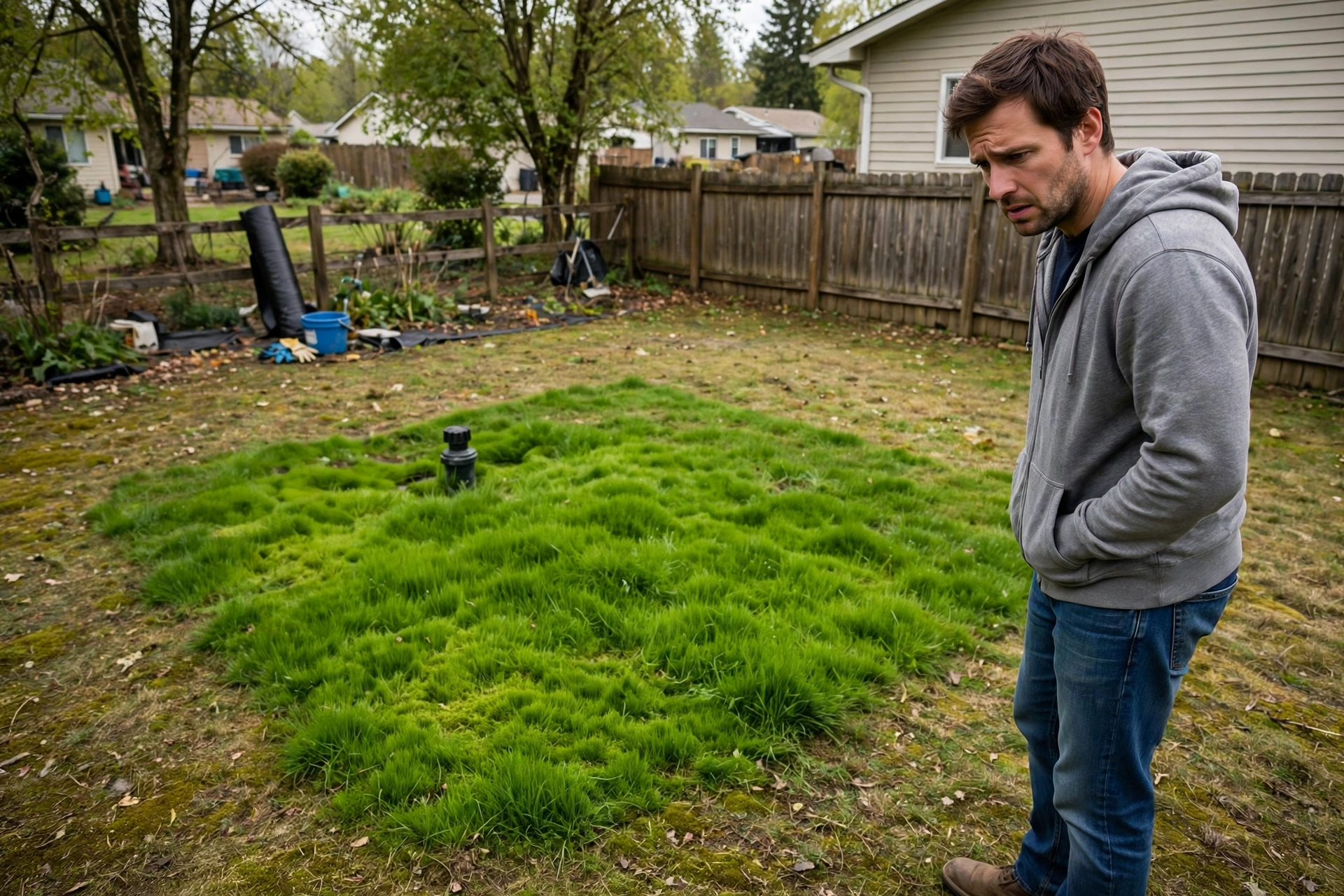
Start by finding your system layout if you can. Your county records, your home inspection report, or the sketch from your last pumping visit will usually show where the tank and drain field sit. If you do not have any of that, look for clues in the yard: a rectangular patch of greener grass, a slight depression, a round or square lid at ground level, or a short white pipe sticking out of the ground. Those marks are often the only map you need.
Stop 1: Near the Tank Lids
Walk to the spot where the tank is buried and stand over the lids. If the smell is strongest here, gas is escaping directly from the tank. The most common reason is a lid that is cracked, loose, or not sealed properly. Concrete lids can crack with age or under the weight of a vehicle. Plastic risers, the extensions that bring lids up to ground level, can shift or develop gaps at the joints. Even a lid that looks fine from above can have a broken seal underneath.
Look closely at the ground around the lids. Is the grass greener or growing faster there than in the rest of the yard? Is the soil damp when the rest of the yard is dry? Any of those signs suggest wastewater or gas is leaking at the tank itself. Do not lift the lid to check. Opening a septic tank exposes you to toxic gases and the risk of falling in, and it is a job for a professional with the right equipment.
A smell at the tank can also mean the tank is full. When sludge and scum build up to the point that the tank has little room left, gases have less space to go and wastewater can back up toward the outlet. If it has been several years since your last pumping, this moves to the top of the list. The EPA recommends pumping every three to five years for a typical household, and many families need it more often than they expect. Our pumping frequency chart by household size can help you work out whether you are overdue.
Stop 2: Over the Drain Field
Next, walk the drain field, the area where perforated pipes spread treated wastewater into the soil. If the smell is strongest here, the soil is no longer absorbing wastewater the way it should. This is the stop that worries homeowners the most, and with reason, because drain field trouble can be expensive. But not every drain field smell means the field has failed. Sometimes the field is simply overloaded for a few days, after heavy rain or a stretch of heavy water use, and it recovers once things dry out.
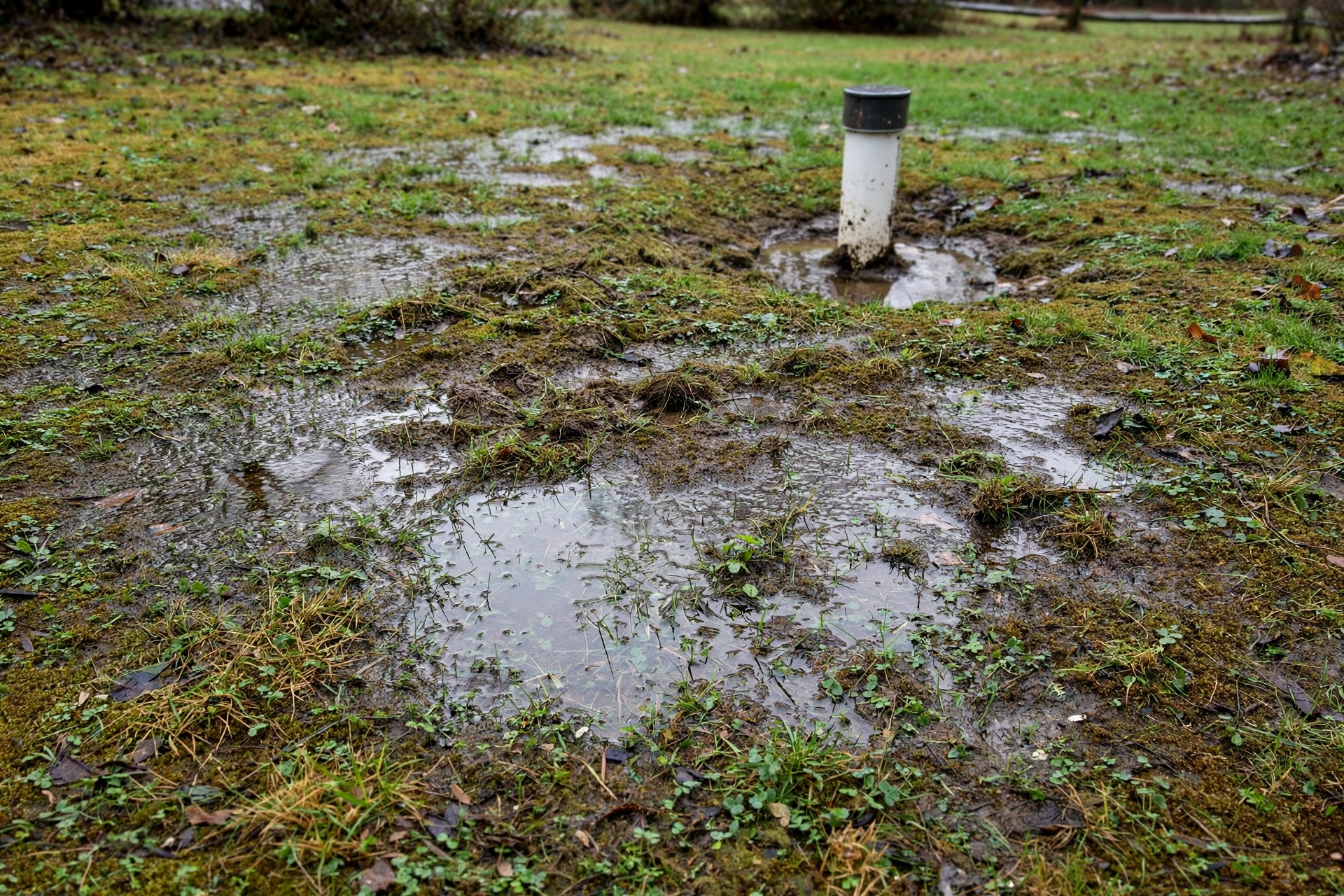
Look for wet spots, standing water, or patches of grass that are much greener and faster growing than the surrounding lawn. Wastewater acts like fertilizer, so a lush stripe of grass over a drain line is a classic warning sign. If the ground feels spongy underfoot, the soil is saturated. If you see dark, foul smelling water pooling on the surface, that is surfacing effluent, and it is a health hazard. Keep children and pets away from it, do not walk through it, and call a septic professional promptly.
Stop 3: Near a Cleanout
A cleanout is a short vertical pipe, usually white plastic with a cap, that gives access to the sewer line between your house and the tank. Many homes have one in the front or side yard. If the smell is strongest right around a cleanout, the fix is often simple. The cap may be cracked, loose, or missing entirely. A lawnmower can knock one off, and a cap left off after a plumbing visit will vent sewer gas straight into your yard.
Check whether the cap is present and sitting snugly. If it is cracked or missing, you can usually replace it yourself with a matching cap from a hardware store. It is a cheap part and a quick job. If the cap looks fine but the smell persists around the pipe, the pipe itself may be cracked underground, or the smell may be coming from a different source nearby. Either way, a cleanout is a good place to check early because it costs almost nothing to rule out.
Stop 4: Near the House
Finally, walk along the foundation and sniff near the spot where the sewer line leaves the house. A smell concentrated here can mean a cracked or disconnected pipe close to the house, or it can mean the problem is actually the roof vent, with gas drifting down along the wall on a calm day. Look for damp soil or a sunken patch near the foundation, and check whether any fixtures inside the house are draining slowly.
What the Timing Tells You
Where the smell is tells you a lot. When it appears tells you almost as much. Septic smells are rarely constant. They come and go with weather, water use, and temperature, and those patterns narrow the cause quickly.
If the smell gets worse after rain, the soil is likely saturated. Rain adds water to ground that is already working hard to absorb wastewater from your drain field. When the soil cannot take any more, gases and moisture push upward instead of filtering down. A smell that appears only after heavy rain and fades as the yard dries is often a drainage and saturation problem rather than a broken part. If it lingers for days after the rain stops, though, the field may be struggling even in normal conditions.
If the smell shows up on laundry day, or after several showers, baths, and dishwasher loads in a row, your system is probably being asked to handle more water than it can process at once. A big surge of water can push gases out through vents and weak seals, and can flood a drain field temporarily. Spreading laundry loads across the week instead of doing them all in one day is one of the simplest things a septic homeowner can do, and it often makes a real difference.
If the smell is worst in hot weather, that is normal to a degree. Heat speeds up bacterial activity in the tank, which produces more gas, and warm air holds odors close to the ground instead of dispersing them. A faint smell on a hot, still afternoon that disappears in cooler weather may not mean anything is broken. But a strong smell that appears every hot day deserves a closer look.
If the smell is always in one spot and never moves, that points to a physical problem at that spot, a cracked lid, a broken pipe, a failed section of drain field, or a missing cleanout cap. A fixed location usually means a fixed cause, and that is actually helpful, because it tells the professional exactly where to start.
The Most Common Causes, One by One
Once you know where and when the smell appears, you can match it to the usual suspects. Most yard sewage smells come from one of the following causes, and they range from a five dollar cap to a repair that costs thousands. Going through them in order, from simplest to most serious, keeps you from assuming the worst before you need to.
A Full or Overdue Septic Tank
This is the most common cause, and the one most homeowners can prevent. As a tank fills with sludge and scum, the working space inside shrinks. Gases build up, wastewater moves through too fast, and solids can start reaching the drain field, where they clog the soil. The smell often appears gradually, getting stronger over weeks, and it may come with slow drains or gurgling sounds inside the house.
The fix is pumping, which for most households costs a few hundred dollars and takes a couple of hours. A standard pumping visit usually runs in the range of three to six hundred dollars, depending on your region, tank size, and how easy the tank is to access. That is a small price compared to the cost of a damaged drain field, which is exactly what regular pumping protects. If you are not sure when your tank was last pumped, treat that uncertainty as a reason to schedule it. You can read more about what a full septic tank smells like and the other warning signs that pumping is due.
A Blocked or Damaged Vent Pipe
Every septic system relies on a vent pipe that runs up through the roof. Its job is to carry gases safely above the house and to let air into the plumbing so drains flow properly. When the vent is blocked by leaves, a bird’s nest, or ice in winter, gases look for another way out, and that way is often through the weakest seal in the system, which can mean odors in the yard or the house. A vent that is too short, or one that ends near a window or a patio, can also drop odors right where you sit outside. Clearing a blocked vent or extending a short one is usually a modest plumbing job, and the cost is typically far lower than any underground repair.

A Cracked Lid, Riser, or Baffle
Tank lids and risers take a beating. Concrete cracks, plastic warps, and seals wear out. A vehicle driving over a buried tank can crack a lid that was never meant to carry weight. When a lid or riser seal fails, gas escapes right at the surface, which is why the smell is strongest directly above the tank. The fix usually means replacing the lid or resealing the riser, which is a straightforward job for a septic company but not a do it yourself task, because the tank has to be opened safely.
Baffles are the internal walls that keep scum and sludge from flowing out of the tank into the drain field. When a baffle breaks or corrodes, solids escape into the field and clog it over time. You cannot see a baffle without opening the tank, so this is something a professional discovers during pumping or inspection. A broken baffle is worth fixing promptly, because the longer solids reach the field, the more damage they do.
A Saturated or Failing Drain Field
The drain field is where wastewater gets its final treatment, filtering slowly through soil. When the soil is clogged with solids, compacted by heavy vehicles, or simply worn out after decades of use, it stops absorbing. Wastewater backs up and surfaces, bringing the smell with it.
A drain field can also be overwhelmed by too much water. Long showers, frequent laundry, a leaking toilet, or a water softener that regenerates too often can all send more water into the system than the field can handle. Cutting back water use for a few days and seeing whether the smell fades is a useful test. If the field recovers, water use was part of the problem. If it does not, the field itself may need professional attention.
Drain field repairs are the most expensive item on this list, and the cost varies too widely to quote fairly without knowing the size of the field, the soil, and local rules. Minor repairs, such as replacing a broken distribution pipe, can run into the low thousands. A full field replacement is a major project that can cost many thousands of dollars. That range is exactly why early action matters. A problem caught when the field is only overloaded costs far less than one caught after the soil has been damaged for months.
A Broken Cleanout Cap or Pipe
As mentioned in the walkthrough, a missing or cracked cleanout cap is one of the cheapest causes and one of the easiest to miss. The cap sits at ground level, often partly hidden by grass, and a mower or a weed trimmer can damage it without anyone noticing. Replacing it costs a few dollars and takes minutes. If the pipe below the cap is cracked, a plumber can usually repair it without major digging.
Heavy Water Use and Household Habits
Sometimes there is no broken part at all. The system is simply being asked to do more than it was designed for. A household that has grown, guests staying for a week, or a new high volume appliance can push a system past its limits. The same goes for things that should never go into a septic system, such as grease, wet wipes, and harsh chemicals, which can upset the bacteria that break waste down. Our guide to what not to flush with a septic system is a good refresher if you are unsure what belongs in the tank and what does not.
What You Can Safely Check Yourself
There is a clear line between a homeowner check and a professional job, and staying on the right side of it keeps you safe. Here is what you can do without any special equipment.
Walk the yard and find where the smell is strongest, as described above. Check cleanout caps and replace a cracked or missing one. Look at the ground over the tank and drain field for wet spots, lush grass, or sinking soil. Check your water use and think about whether laundry day or a leaking toilet lines up with the smell. Note when the tank was last pumped and whether you are overdue. And cut back on water use for a few days to see if the smell eases, which is useful information to pass on to a professional.
That is plenty. You do not need to dig, probe the soil with tools, or open anything to get a useful diagnosis. Digging near a drain field can damage pipes, so leave the underground work to the people who do it every day.
What You Should Never Do
Septic gases are not just unpleasant. Hydrogen sulfide and methane can be toxic in enclosed spaces, and they can displace oxygen.
Never open a septic tank lid yourself. Never climb into a tank or lean into an open one. Never let children or pets play near surfacing wastewater, wet patches that smell, or an open excavation around a septic system. Do not try to pump the tank yourself or add chemicals, treatments, or so called shock products to make the smell go away. These products do not fix a full tank or a failing field, and some can damage the bacteria your system depends on. Do not drive or park over the tank or drain field, and do not dig in those areas without knowing exactly where the pipes run.
If you ever feel dizzy, nauseous, or short of breath near a septic tank or a strong sewage odor, move to fresh air immediately and seek medical help if the symptoms do not pass quickly. This is rare in an open yard, but it is worth knowing.
When to Call a Professional Right Away, and When It Can Wait a Day or Two
Not every sewage smell is an emergency, but some are. The difference usually comes down to whether wastewater is surfacing or backing up, and whether anyone’s health is at risk.
Call a septic professional right away if you see wastewater pooling on the surface of your yard, if sewage is backing up into sinks, tubs, or toilets, if the smell is very strong and getting worse quickly, or if the ground over the drain field is soft, sinking, or collapsing. These are signs that wastewater is escaping where it should not, and they can become a health hazard and a much bigger repair if left alone. You can find the full list of warning signs in our guide to when to call a septic professional immediately.
It can usually wait a day or two if the smell is faint, comes and goes, and there is no standing water, no slow drains, and no sewage indoors. A faint smell after heavy rain, or a whiff on a hot still afternoon that fades by evening, is worth noting and monitoring, not panicking over. Use the time to do the walkthrough, note where and when the smell appears, and check when the tank was last pumped. That information will make the professional’s visit faster and cheaper.
One thing to avoid is waiting weeks to see if the smell goes away on its own. A smell that persists for more than a few days, even a mild one, usually has a cause that will not fix itself. The earlier a professional looks at it, the more options you have, and the less likely you are to face a drain field repair.
What a Professional Will Actually Do
Knowing what happens on a service visit takes some of the mystery out of the call. A septic technician will usually start by asking the same questions you have just answered for yourself: where is the smell strongest, when did it start, and when was the tank last pumped. Then they will inspect the tank, measure the sludge and scum levels, check the baffles, and look at the drain field. If pumping is due, they will pump the tank and check how the system responds. A typical diagnostic visit and pumping takes a few hours, and you can learn more about the timing in our article on how long it takes to pump a septic tank.
How to Stop the Smell Coming Back
Fixing the cause is the main step. Keeping it fixed is a matter of habits, and most of them are simple.
Pump the tank on schedule, every three to five years for most households, or more often if your household is large. Spread laundry and other heavy water use across the week instead of doing it all in one day. Fix leaking toilets and dripping faucets promptly, since a silent toilet leak can send a surprising amount of extra water into the system every day. Keep vehicles, heavy equipment, and new construction off the tank and drain field, and do not plant trees or deep rooted shrubs over them. Keep grease, wipes, feminine products, and harsh chemicals out of your drains.
A simple seasonal routine helps here. Our month by month septic maintenance schedule lays out the small tasks worth doing through the year, so nothing important slips through the cracks.
The Bottom Line
A yard that smells like sewage is your septic system asking for attention, not necessarily failing. Start with a slow walk around the yard and find where the smell is strongest. Pay attention to when it appears. Check the simple things first, a cleanout cap, your pumping schedule, and your water use. And respect the safety line. Looking and noting is your job. Opening tanks, digging near pipes, and handling wastewater is a professional’s job.
Most of the time, the cause turns out to be manageable, a tank that needs pumping, a vent that needs clearing, or a cap that needs replacing. The cases that turn expensive are usually the ones that were ignored for months while a small problem quietly became a big one. A few minutes of attention now is the cheapest repair you will ever make. If you are unsure, or if anything in the urgent list above applies to your yard, call a licensed septic professional and describe what you found on your walkthrough.
For a broader overview of how septic systems work and what the EPA recommends for homeowners, the EPA septic systems page is a reliable place to start.

Greetings Glows Team is dedicated to creating meaningful, helpful, and thoughtfully curated content for everyday inspiration and special moments.
What We Focus On:
Well-researched and reader-friendly articles.
Meaningful greetings, blessings, prayers, and inspirational messages.
Carefully curated ideas for everyday life and special occasions.
Clear, helpful, and engaging information.
Consistent quality and attention to detail in every publication.
Our goal is simple: to make every visit worthwhile with content that inspires, informs, and brings a little more positivity to your day.
2 thoughts on “Why Does My Yard Smell Like Sewage?”