A frozen septic system feels sudden when it happens, but it rarely comes out of nowhere. The ground cools slowly, the water in the system slows down, and a shallow pipe or an exposed tank finally gives way on the coldest night of the year. Most of that can be prevented, and most of the prevention work is simple: insulation, snow, and sensible water use, done before the ground freezes hard.
This guide is about the doing. The steps are organized by the part of the system at risk, so you can work through your property in order. In short: insulate the pipes, tank, and drainfield before the first hard freeze, leave the snow alone so it can insulate for you, keep warm water moving in a normal, steady pattern, fix leaks before winter, and make a plan if you leave home for a long stretch.
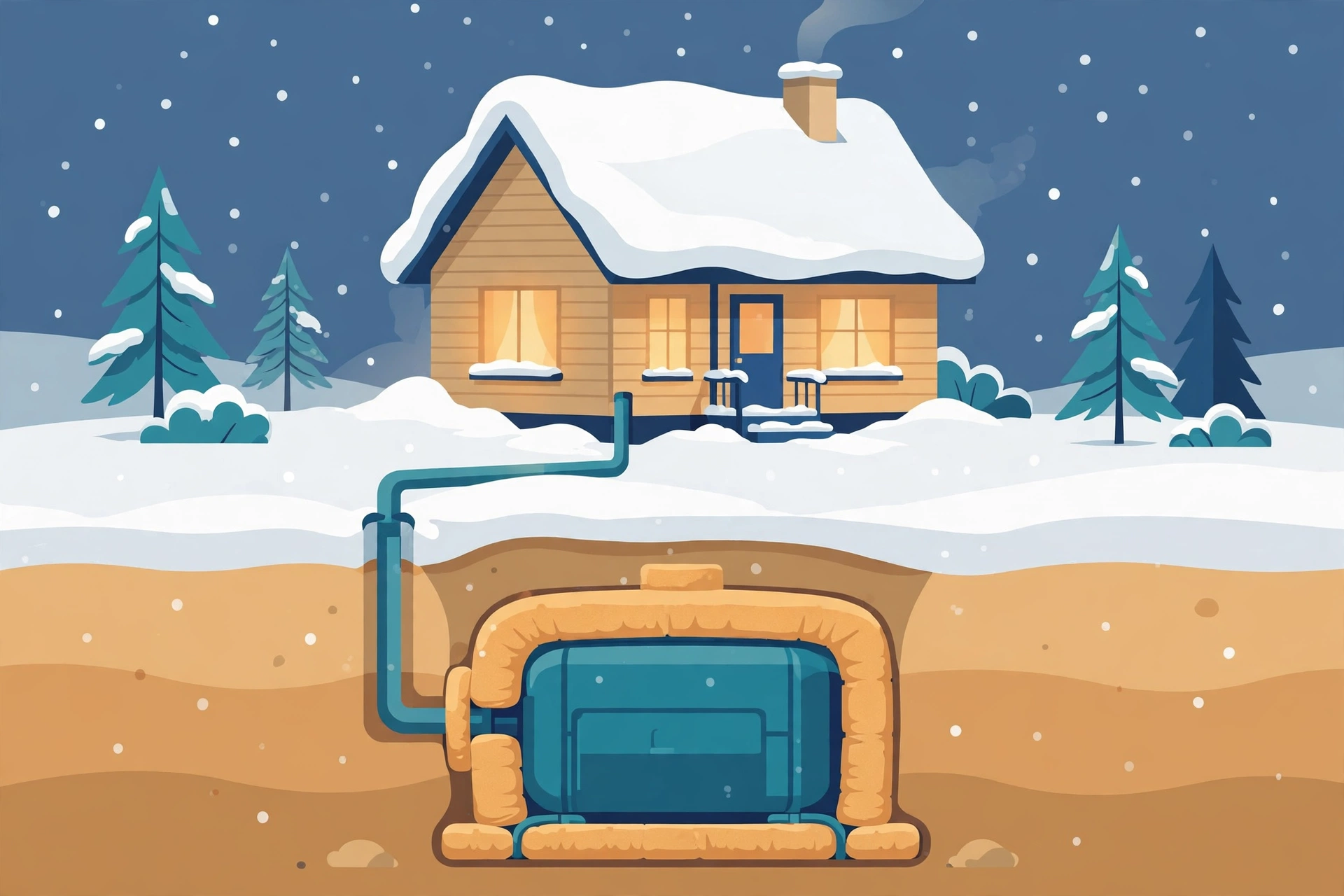
Know the Four Places Freezing Starts
Freezing does not hit a septic system all at once. It starts in one place, usually the place with the least protection, and then spreads. The first is the pipe from the house to the tank. It leaves the warm house, passes through the coldest soil near the foundation, and may sit fairly shallow. A small trickle from a leaking fixture can freeze in this pipe long before the tank is in trouble.
The second is the tank. A tank that sits shallow, or one installed late in the year before grass and soil cover had time to settle, has less natural insulation above it. The liquid in a tank usually stays warm enough when the system is in regular use, but a tank that sits idle for weeks in cold weather loses that warmth.
The third is the drainfield. It is wide and shallow by design, and it depends on soil and cover to stay warm enough for water to keep moving. A drainfield that stays wet into winter is more vulnerable than a dry one, because wet soil freezes more readily than dry soil. The fourth is the set of openings that stick up through the ground: the risers, inspection pipes, and manhole covers. These are direct paths for cold air to reach the system, and a missing or loose cover can undo a lot of good insulation elsewhere.
Insulate Before the Ground Freezes
Insulation is the single most effective thing you can do, and the time to do it is in the fall, before the ground freezes. Once frost is in the soil, adding cover helps much less, because you are insulating cold ground rather than keeping warmth in.
Minnesota Pollution Control Agency guidance recommends a layer of vegetative insulation eight to twelve inches thick over the pipes, tank, and drainfield. Straw, leaves, or other loose material works well, as long as it stays in place and does not compact into a thin mat. Spread several bales of straw over the tank and drainfield, extending a few feet beyond the edges of the tank. This matters most for new systems installed late in the year, where grass and other vegetative cover has not had time to establish. A new system with bare soil above it has almost no natural protection, and a thick straw layer stands in for the cover that has not grown yet.
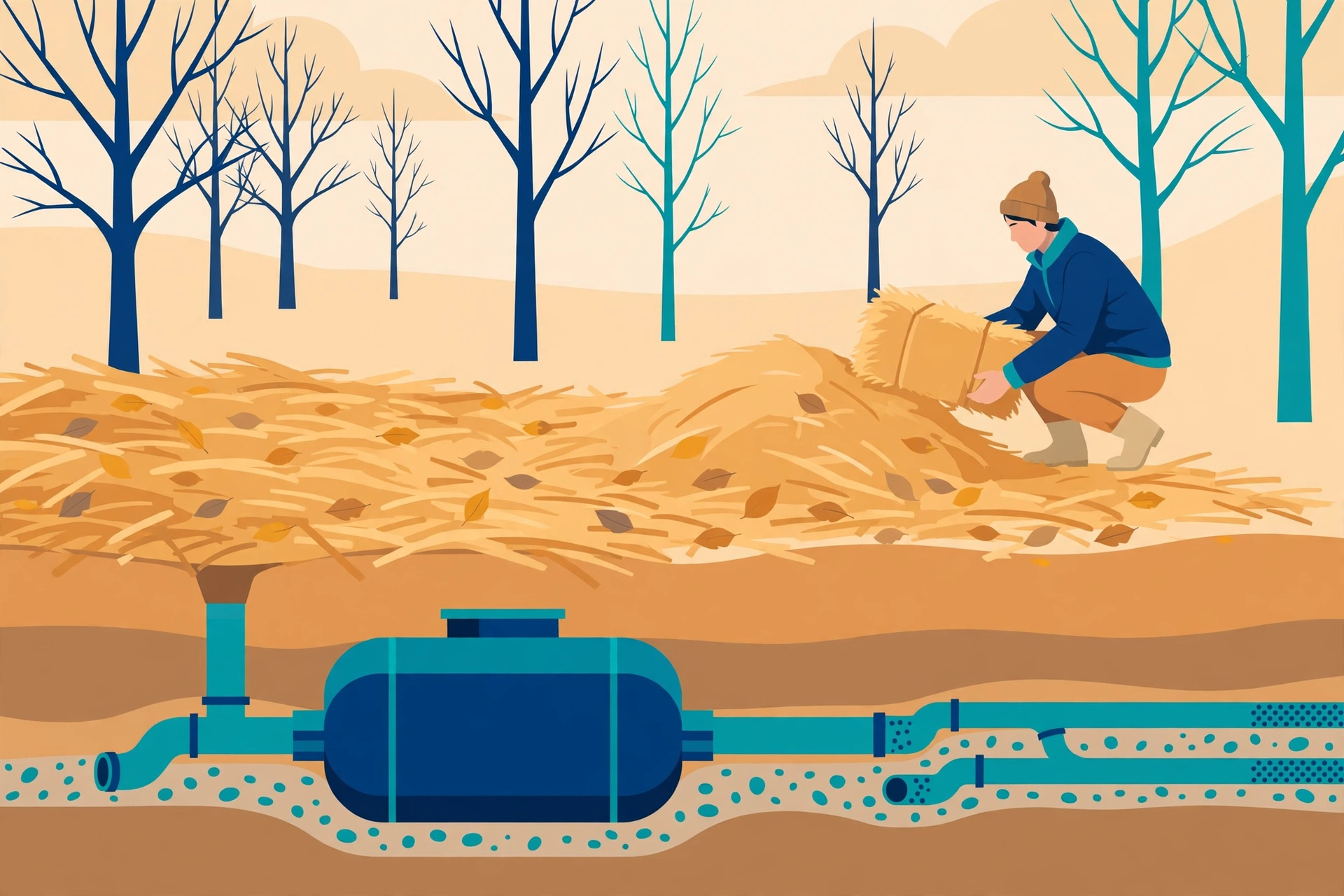
For a system that is used infrequently, go deeper and wider. Place insulation at least a foot deep over the tank and extend it at least five feet past the tank edges on all sides. The same applies to the point where the pipe leaves the house: insulation at least a foot thick and at least five feet wide at that spot, with snow piled over it once winter arrives. You can also add rigid foam panels over the tank for extra protection, or replace an exposed section of pipe with insulated pipe if a professional recommends it. Whatever material you choose, check it after the first heavy wind and after the first snow. Straw blows around and leaves drift, and a gap in the cover is a gap in the protection. Do not pile soil on top of the straw to hold it down, because compacted soil conducts cold more readily than loose material.
Let the Snow Work for You
Snow is one of the best insulators you already have, and it costs nothing. About ten inches of fresh, fluffy snow insulates roughly like a six inch layer of fiberglass insulation, according to North Dakota State University Extension.
The key word is undisturbed. Fresh snow insulates because it is full of tiny pockets of air. Once you pack it down, those pockets collapse and the insulation value drops sharply. Compacted snow and soil let frost go deeper and faster. So the rule for winter is simple: do not plow, shovel, or drive over the tank or drainfield. That means no vehicles, no snowmobiles, and no ATVs crossing that part of the yard, even when the ground looks solid.
Think about this before the first snowfall, because winter habits form fast. If your normal path to a woodpile or shed crosses the drainfield, pick a different route for the season. If a snowplow driver clears your driveway, make sure they know where the system sits. Mark the edges of the tank and drainfield in the fall with stakes or flags, so the boundaries are clear even under a foot of snow. Our guide on whether you can drive over a septic drainfield explains why vehicle weight is a problem for the drainfield in every season.
A snow fence can help in an open yard where wind scours snow off the system and piles it somewhere else. Set the fence on the windward side, far enough back that the drift it creates settles over the tank and drainfield. The aim is a steady, fluffy layer through the coldest weeks. If your yard already holds snow well, you may not need a fence at all.
Keep Water Moving the Right Way
A septic system in regular use generates its own warmth. Warm water from showers, laundry, and dishwashing flows through the pipes and into the tank every day, and that steady flow keeps the system above freezing in all but the most exposed spots. The trick is to keep that flow steady and sensible, not to flood the system and not to let it sit idle.
Spread your laundry out so you run one warm or hot load a day through the coldest part of winter, rather than saving it all for one big wash day and then using almost no water for the rest of the week. Use the dishwasher regularly, and take hot baths and showers in your normal pattern. Each of these sends a pulse of warm water through the pipes and tank, and a regular pattern of pulses is far better than a long quiet stretch broken by one large surge.
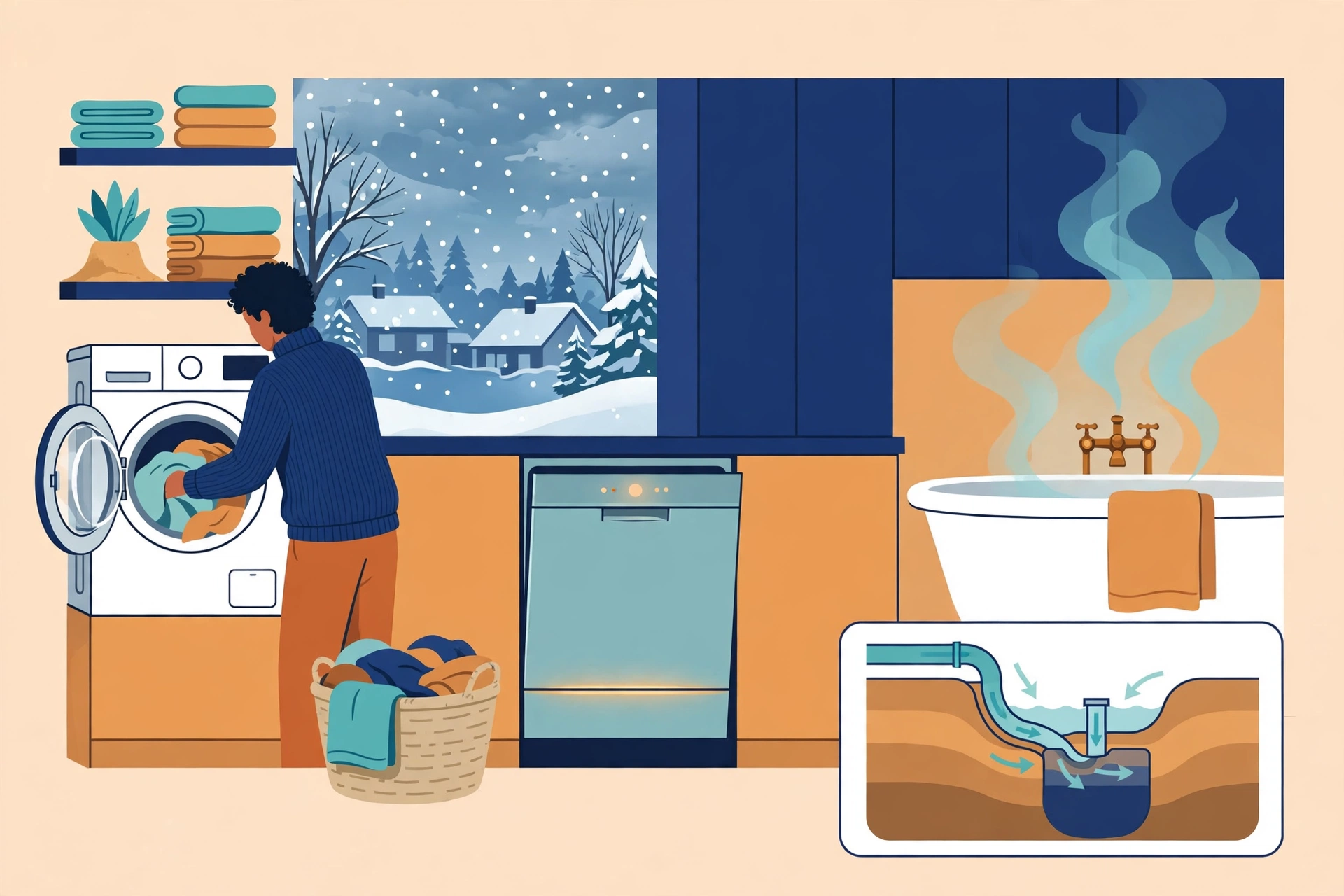
Do not leave a tap running all the time to keep the pipes warm. A constant flow hydraulically overloads the system, pushing more water into the tank and drainfield than they can handle, and it can saturate the drainfield just when you need it driest. Fix leaky fixtures and running toilets before winter. A constant trickle from a leak is one of the most common freeze causes, especially where the pipe leaves the house, because a thin stream of water has very little warmth in it and freezes easily in a cold pipe.
The balance to aim for is ordinary, daily use. You do not need to use more water than usual. You need to use it in a steady pattern and stop the small, constant leaks that waste water and invite freezing at the same time. A system that is pumped on time also handles winter water flow better than one that is overdue, and our septic tank pumping frequency chart by household size can help you check whether your tank is due before cold weather arrives.
Protect the Pipes That Leave the House
The pipe where it exits the house deserves its own attention, because it is the spot where warm indoor water meets cold outdoor soil, and it is often shallower than the rest of the run to the tank. If your system has frozen before, this is the first place to look.
Make sure the pipe has insulation where it leaves the house, at least a foot thick and at least five feet wide at the exit point, with snow piled over it once winter sets in. Check the foundation penetration for gaps where cold air can blow straight onto the pipe. A small gap can let in a surprising amount of cold air on a windy night, and sealing it is a quick job with a large payoff. Inside the house, check that the pipe is not running through an unheated crawl space without any protection.
Heat tape can help on a pipe that has frozen before or that sits too shallow to insulate any other way. It is an electric heating cable that wraps around the pipe and keeps it just warm enough to prevent freezing. It needs to be installed correctly, with a thermostat so it only runs when the pipe is cold. If you are not comfortable with electrical work in a damp location, have a professional install it. A badly installed heat tape is worse than none, because it can fail silently and leave you thinking the pipe is protected when it is not.
Low flow appliances can create a freezing problem at this same spot. High efficiency furnaces, for example, produce a small, steady stream of condensate that drains slowly through the plumbing. That thin flow can freeze where the pipe exits the house, because it never arrives in a warm pulse the way a shower or a laundry load does. If you have a high efficiency furnace and a history of freezing at the house exit, ask a professional about heat tape on that section of pipe, or about a small condensate pump that collects the water and discharges it in cycles. For a plain explanation of what is safe to put down the drains, our guide on whether you can use bleach with a septic system covers the household products most people ask about.
Protect Risers, Inspection Pipes, and the Drainfield Surface
Risers, inspection pipes, and manhole covers are the openings that let you and a professional reach the system without digging. They are also openings that let cold air in. Before winter, walk the yard and check every one of them. Each cover should be in place, closed tight, and sitting flat. A cracked cover, a missing cap, or a lid that rocks when you step on it is a direct path for cold air to reach the tank.
Add insulation around risers and inspection pipes where they stick up or sit close to the surface. A thick layer of straw or mulch around the base, held in place so it does not blow away, makes a real difference. Do not seal an inspection pipe shut in a way that blocks access, since a professional will need to open it for service, but do make sure it is capped and insulated. A soggy or wet drainfield is more vulnerable to freezing than a dry one, so if yours stays wet into the fall, have a professional examine it before winter. Standing water can mean a drainage problem or a system that is not keeping up with the household, and each of those is easier to deal with before the ground freezes than after.
Prepare for a Long Absence
A house that sits empty through the cold months is one of the highest risk situations for a septic system. Without daily water use, the tank slowly cools to the temperature of the surrounding soil, and a shallow tank left full for several winter months can freeze. If you leave for the winter, or even for several weeks in the coldest part of the year, make a plan before you go.
The simplest plan is to have someone use warm water in the home regularly while you are gone. That does not mean running a tap all day. It means a trusted neighbor or family member stopping by to run a hot shower or a warm laundry load on a regular schedule, ideally several times a week through the coldest stretch.
The other option is to have the tank pumped out before you leave. An empty tank has no liquid to freeze, and it removes the risk of a full tank sitting cold for months. This is the better choice for a seasonal home that will sit empty all winter, or for a long absence where no one can reliably visit. Talk to your septic professional about the timing, since pumping right before departure is the cleanest approach. When you return, run water gradually rather than flooding the system all at once, and watch the drains for slow draining or gurgling. If you are unsure, have the system inspected before you settle back into normal use.
A Before-First-Freeze Timeline
Start in early fall, while the weather is still mild and the ground is easy to work. Walk the yard and locate the tank, the drainfield, and every riser and inspection pipe. Mark them with stakes or flags so you can find them under leaves and later under snow. Check every cover, replace any that are cracked or missing, and fix any leaky fixtures or running toilets inside the house.
In mid fall, check your pumping schedule and have the tank pumped if it is due. This is also the time to have a professional look at a drainfield that stays wet, or at a pipe exit that froze in a previous winter. Those are problems that need a professional eye before the ground hardens, not a quick fix in January.
In late fall, before the first hard freeze, lay down the insulation. Spread straw or leaves eight to twelve inches thick over the pipes, tank, and drainfield, extending a few feet beyond the tank edges, and deeper and wider over any spot that is shallow or lightly used. Add rigid foam panels or insulated pipe where a professional has recommended them. Pile snow over the pipe exit at the house once it starts falling, and set a snow fence if your yard loses snow to the wind. Tell anyone who plows your driveway where the system sits. Once the first hard freeze arrives, keep the snow undisturbed, keep the water use steady, and keep an eye on the drains.
During a Deep Cold Snap
Even a well prepared system deserves extra attention during a deep cold snap, meaning several days in a row of temperatures well below freezing, especially when the wind is strong and the snow cover is thin. The main thing to watch is how your drains behave. A drain that suddenly slows or backs up during a cold snap can be an early sign that a pipe is starting to freeze.
During a cold snap, keep the warm water pattern going. Run one warm or hot laundry load a day, use the dishwasher, and take hot showers as normal. If the house will be empty for a day or two during the snap, ask someone to come by and run warm water rather than leaving the system idle through the coldest nights. Do not try to make up for the cold by leaving a tap running, since that overloads the system.
Check the snow cover after a windy spell. Wind can strip snow off the drainfield and leave it exposed just when the temperature drops hardest. If the cover has blown thin, add straw or mulch over the exposed spot, or pile loose snow back over it by hand. Do not pack it down. You want a loose, fluffy layer, not a hard crust. Keep vehicles off the system even when the ground feels frozen solid, since a vehicle crossing a frozen drainfield can compact the snow and soil beneath it and let frost drive deeper.
What Not to Do
If the system does freeze despite your preparation, do not try to thaw it with open flames, boiling water, antifreeze, or salt, and do not pour chemicals into the system to force it open. Those methods can damage pipes, kill the bacteria the tank depends on, and contaminate the soil and groundwater around the system. Call a septic professional instead. For a fuller picture of how freezing happens and how a frozen system is handled, our guide on whether a septic tank can freeze in winter explains the process and the thawing steps a professional will take.
The Bottom Line
Preventing a septic system from freezing is mostly fall work, and mostly simple work. Insulate the pipes, tank, and drainfield with a thick, loose layer before the ground freezes. Let the snow stay where it falls and keep vehicles off it. Keep warm water moving in a steady daily pattern, and fix the leaks that send a constant trickle into a cold pipe. Protect the pipe where it leaves the house, close every riser and inspection cover tight, and make a plan for any long absence.
None of these steps is complicated on its own, but together they cover the four places freezing starts, and they cover them before the coldest weather arrives. A little work in the fall, done in the right order, is what keeps a septic system running quietly through winter. For a broader reference on how septic systems work and how to care for them year round, the U.S. Environmental Protection Agency septic pages at epa.gov/septic are a solid place to start, and the North Dakota State University Extension guidance on precautions that can prevent frozen septic systems goes into the insulation and water use details behind this guide.
Greetings Glows Team is dedicated to creating meaningful, helpful, and thoughtfully curated content for everyday inspiration and special moments.
What We Focus On:
Well-researched and reader-friendly articles.
Meaningful greetings, blessings, prayers, and inspirational messages.
Carefully curated ideas for everyday life and special occasions.
Clear, helpful, and engaging information.
Consistent quality and attention to detail in every publication.
Our goal is simple: to make every visit worthwhile with content that inspires, informs, and brings a little more positivity to your day.