
If you have booked a septic pumping for the first time, or you are trying to fit one around work and family life, one question usually comes first. How long will the crew actually be at your house. The good news is that pumping a septic tank is a routine job, and for most homes it does not take up the whole day. The pumping itself is often the quickest part of the visit. Finding the tank, getting to it, and checking things over afterward usually take up the rest of the time.
This guide walks through a realistic timeline, what the technician does at each stage, and what can make the job run longer. Once you know what to expect, it is much easier to plan your day and to avoid surprises on the morning of the appointment.

The short answer
For a typical home, the actual pumping usually takes somewhere around half an hour to an hour. A smaller tank that is easy to reach and has been pumped on schedule will often be on the quicker end of that range. A larger tank, or one that has not been pumped in a long time, will naturally take longer because there is simply more material to remove and it may be thicker and harder to move.
The full visit takes longer than the pumping alone. From the time the truck arrives to the time it leaves, most straightforward appointments last roughly one to two hours. That extra time covers parking and setup, locating and opening the tank, running the hose, a basic inspection, and tidying up before the crew leaves. If the lid is buried and has to be dug up, or if the technician finds a problem that needs attention, the visit can stretch beyond that range.
It helps to think of the appointment in two parts. There is the pumping, which is the work inside the tank, and there is everything around it, which is the work of getting to the tank and making sure the job is done properly. Both parts matter, and both affect how long the crew will be on your property. Pumping costs also vary by location and by the details of the job, so time and price tend to move in the same direction. A simple, accessible tank is usually quicker and simpler all round.
What happens during a pumping visit
A pumping visit follows a fairly steady pattern, even though every property is a little different. Knowing the steps in advance takes away most of the mystery, and it also helps you see why the visit takes as long as it does. Nothing here should be disruptive inside your home. Almost all of the work happens outside, around the tank itself.
Arrival and setup
The technician starts by parking the vacuum truck where the hose can reach the tank. That sounds simple, but hose length and the layout of your yard matter a great deal. A truck parked close to the tank makes everything faster. A tank tucked behind a fence, down a slope, or far from the driveway means more hose, more handling, and more time.
Once the truck is in place, the technician will confirm where the tank is and check the access points. If you know roughly where your tank sits, or you have a sketch or a record from a previous service, share it when you book or when the crew arrives. That one detail can save a surprising amount of time.
Locating and opening the tank
Some tanks have lids at ground level, clearly visible in the yard. Those are the fastest to open. Others are buried under soil, grass, or landscaping, and the technician has to locate them first and then dig down to the lid. This is often the stage that adds the most time to an otherwise simple job, especially on a property where the tank has not been serviced in years and nobody remembers exactly where it is.
Modern tanks may have risers, which are extensions that bring the lid up to or near the surface. If your tank has risers, future visits will be noticeably quicker. If it does not, it is worth asking the technician whether adding risers makes sense for your setup. It is a one time change that can save time at every visit after that.
Pumping the tank
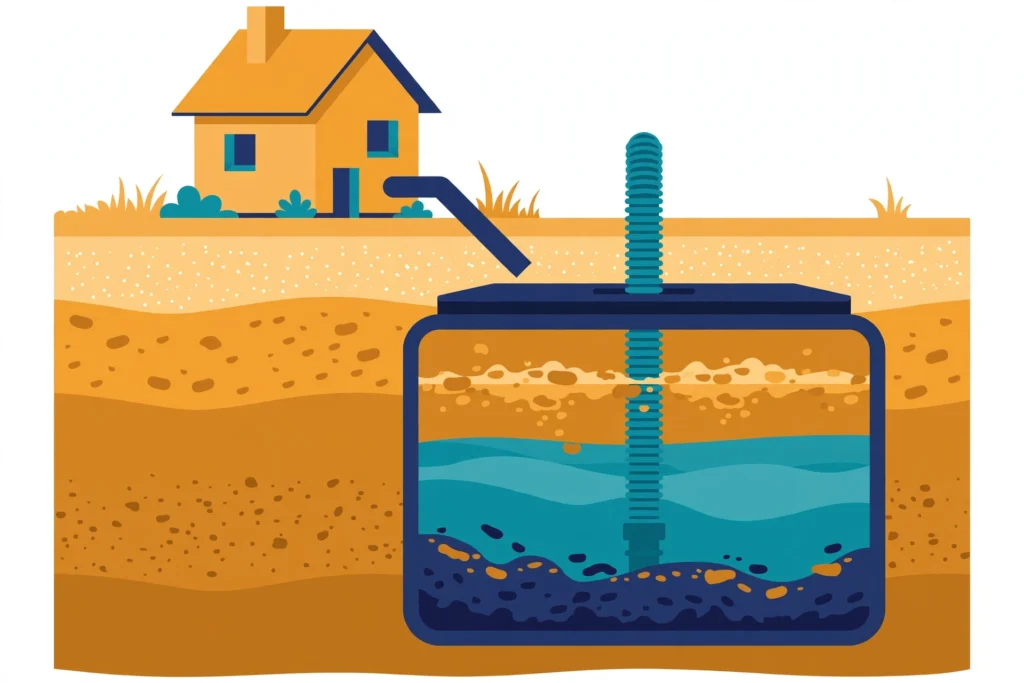
With the lid open, the technician lowers a large vacuum hose into the tank and starts removing the contents. A septic tank holds three layers. There is a floating scum layer on top, a mostly liquid layer in the middle, and a heavier sludge layer settled at the bottom. A proper pumping removes all three, not just the liquid. The technician will usually move the hose around and stir up the sludge so that as much of it as possible is drawn out.
This is the stage most people picture when they think about pumping, and it is also the stage where tank size matters most. A bigger tank holds more, so it takes longer to empty. A tank that is overdue for pumping may have a thicker sludge layer, which can slow the work down because the material does not flow as easily. In some cases the technician may need to add a little water and break up compacted material before it can be vacuumed out.
Inspection and cleanup
After the tank is empty, a good technician will take a few minutes to look things over. That usually means checking the condition of the tank itself, the baffles that direct flow inside it, and the inlet and outlet pipes. This is not a full system inspection, but it is a useful chance to spot early signs of wear, cracks, or damage while the tank is open and visible.
The crew will then close the lid securely, replace any soil or turf that was moved, and pack up the hose and equipment. They should leave the area tidy. Before they go, ask what they noticed and when they would suggest booking the next pumping. That short conversation is worth having while the details are fresh.
What affects how long it takes
No two pumping visits are identical, because no two properties are identical. The biggest factors are easy to understand once you know what the technician is dealing with.
Tank size
Size is the most straightforward factor. A small tank for a one or two bedroom home empties faster than a large tank serving a bigger household. The difference is not dramatic in most cases, but it is real. If your household has grown since the tank was installed, or if you have added bathrooms, your tank may be working harder than it was designed for, and pumping may take a little longer as well as being needed more often.
How full the tank is
A tank pumped on a regular schedule is usually easier and quicker to service than one that has been left for many years. When pumping is overdue, sludge builds up and compacts. Thick, settled material takes more effort to loosen and remove. Regular pumping keeps the job simple, which is one more reason to stay on schedule rather than waiting until a problem forces your hand.
Access to the tank
Access is often the deciding factor between a quick visit and a long one. A lid at the surface, close to where the truck can park, makes for a fast job. A lid buried under a deep layer of soil, hidden under a patio or deck, or located far from the driveway adds digging, hose handling, and walking back and forth. Fences, gates, slopes, and soft or muddy ground can all add time too, especially if the truck cannot get close.
Condition of the tank and its parts
Most visits go smoothly, but sometimes the technician finds a cracked lid, a damaged baffle, or a worn seal. Small repairs may be handled on the spot, which adds time to the visit but saves a second callout. Larger problems may need a separate appointment. Either way, it is better to find these issues during a routine pumping than to discover them after a backup.
What can slow the job down
Beyond the main factors above, a few common situations can stretch a visit out. None of them are unusual, and a good company will have seen them all before, but they are worth knowing about so the day of the appointment holds no surprises.
Rain and wet ground can slow things down, particularly if the truck has trouble getting traction or if the digging area turns muddy. Very cold weather can make lids and soil harder to work with. A tank that has not been located before, with no records and no visible markers, can take a while to track down. And if previous work left debris, roots, or non biodegradable items in the tank, removing them takes extra care.
Another slowdown comes from the tank having more than one compartment. Many tanks have two chambers, and both need to be pumped. That is normal and correct, but it does mean opening a second lid and repeating the process. If your tank has two compartments and only one lid is easy to find, the second one can add time while it is located and opened.

How to help the visit go faster
You do not need to do the technician’s job for them, but a little preparation on your side can genuinely shorten the visit. Clear the area around the tank if you know where it is. Move vehicles, bins, garden furniture, and anything else that might block the truck or the path of the hose. Make sure gates are unlocked and that the crew can get to the tank without climbing over obstacles.
It also helps to have any records ready. Previous pumping receipts, a system diagram, or notes about where the tank and drain field sit can all save time. If you are unsure where the tank is, say so when you book. The company may allow extra time or bring locating equipment, which is far better than discovering the problem after the truck has arrived.
One more simple step is to cut back on water use on the morning of the appointment. The tank does not need to be full for pumping, and heavy water use right before the visit adds liquid that then has to be pumped out. Normal household use is fine. There is no need to stop using water altogether, but avoiding laundry and long showers just before the crew arrives is a sensible courtesy.
Do you need to stay home
In most cases, you do not need to be home for the entire visit, but it is a good idea to be there at the start. That way you can point out the tank location, mention any known issues, and make sure the crew can get into the yard. Many companies are happy to carry out the work while you are out, provided access is arranged in advance and they can reach you by phone if a question comes up.
If you do stay, you do not need to watch the work or stand over the technician. The job is outdoors, and there is very little for a homeowner to do during it. Some people prefer to be around for the final conversation, when the technician reports what they found and suggests a date for the next pumping. That closing chat is the most useful part of the visit for you, so try to be available for it if you can.
Pumping is also a job best left to a professional with the right truck and equipment. It involves heavy, sealed equipment and the safe disposal of waste at an approved facility, which is not something a homeowner can handle with household tools. If you have ever wondered whether doing it yourself is an option, the rules around pumping your own septic tank explain why it is rarely practical or permitted.
How often should you pump
How long a visit takes is only half the story. How often you need one matters just as much. For a typical household, pumping every three to five years is a common guideline, but the right interval depends on your tank size, household size, and water use. Larger households and smaller tanks need pumping more often. A detailed look at timing by household size can help you work out a sensible schedule, and our septic tank pumping frequency chart by household size breaks that down in a practical way.
The US Environmental Protection Agency septic pages also offer general homeowner guidance on care and maintenance. Keeping to a regular schedule does more than prevent backups. It keeps each pumping visit shorter and simpler, because the tank never reaches the heavily compacted state that slows the work down.
If you have just moved into a home with a septic system and you do not know when it was last pumped, it is wise to book a pumping and inspection sooner rather than later. That first visit establishes a baseline. After that, you can settle into a routine interval with confidence, knowing the tank is starting from empty.
Planning your day around the appointment
For most homes, setting aside a morning or an afternoon is plenty. You do not need to clear your whole day, but you should avoid scheduling something that cannot be moved right after the appointment, just in case the visit runs long. If the company gives you a time window rather than an exact time, plan around the window, not the start of it.
Let the company know about anything unusual in advance. Mention a buried lid, a long distance from the driveway, a locked gate, a steep slope, or a previous problem. The more they know before they arrive, the more accurately they can plan, and the less likely you are to face delays or a rescheduled visit.
Finally, keep the paperwork from the visit. Note the date, what was pumped, and anything the technician flagged. That record makes the next appointment easier to book and quicker to carry out, because the next technician will not be starting from scratch. A well kept record, a clear path to the tank, and a regular schedule are the three simplest ways to keep every future pumping visit as short as possible.
Septic pumping is not a job most homeowners look forward to, but it is a short, routine piece of maintenance that protects your home, your yard, and your wallet. Knowing that the pumping itself often takes under an hour, and that the whole visit usually fits comfortably within a couple of hours, makes it much easier to get it booked and done. Book it, prepare the access, and let the crew do the rest.

Greetings Glows Team is dedicated to creating meaningful, helpful, and thoughtfully curated content for everyday inspiration and special moments.
What We Focus On:
Well-researched and reader-friendly articles.
Meaningful greetings, blessings, prayers, and inspirational messages.
Carefully curated ideas for everyday life and special occasions.
Clear, helpful, and engaging information.
Consistent quality and attention to detail in every publication.
Our goal is simple: to make every visit worthwhile with content that inspires, informs, and brings a little more positivity to your day.