Most homeowners notice it on an ordinary day. You walk across the yard, glance down, and one patch of grass looks far greener than everything around it. It is thicker, taller, and a deeper shade of green, and it sits in a neat shape that does not match the rest of the lawn. If that patch happens to sit over your septic tank or drain field, the first question is a fair one. Is this normal, or is something wrong underground?
A bright green grass patch over septic tank areas is one of the most common things septic owners see, and it is also one of the most misunderstood. In many yards it is simply what a working system looks like from above. Wastewater leaving your home carries nutrients that grass loves, and the soil over a drain field gets a steady supply of moisture and food. The result is a patch of lawn that grows faster and looks healthier than the grass a few feet away.
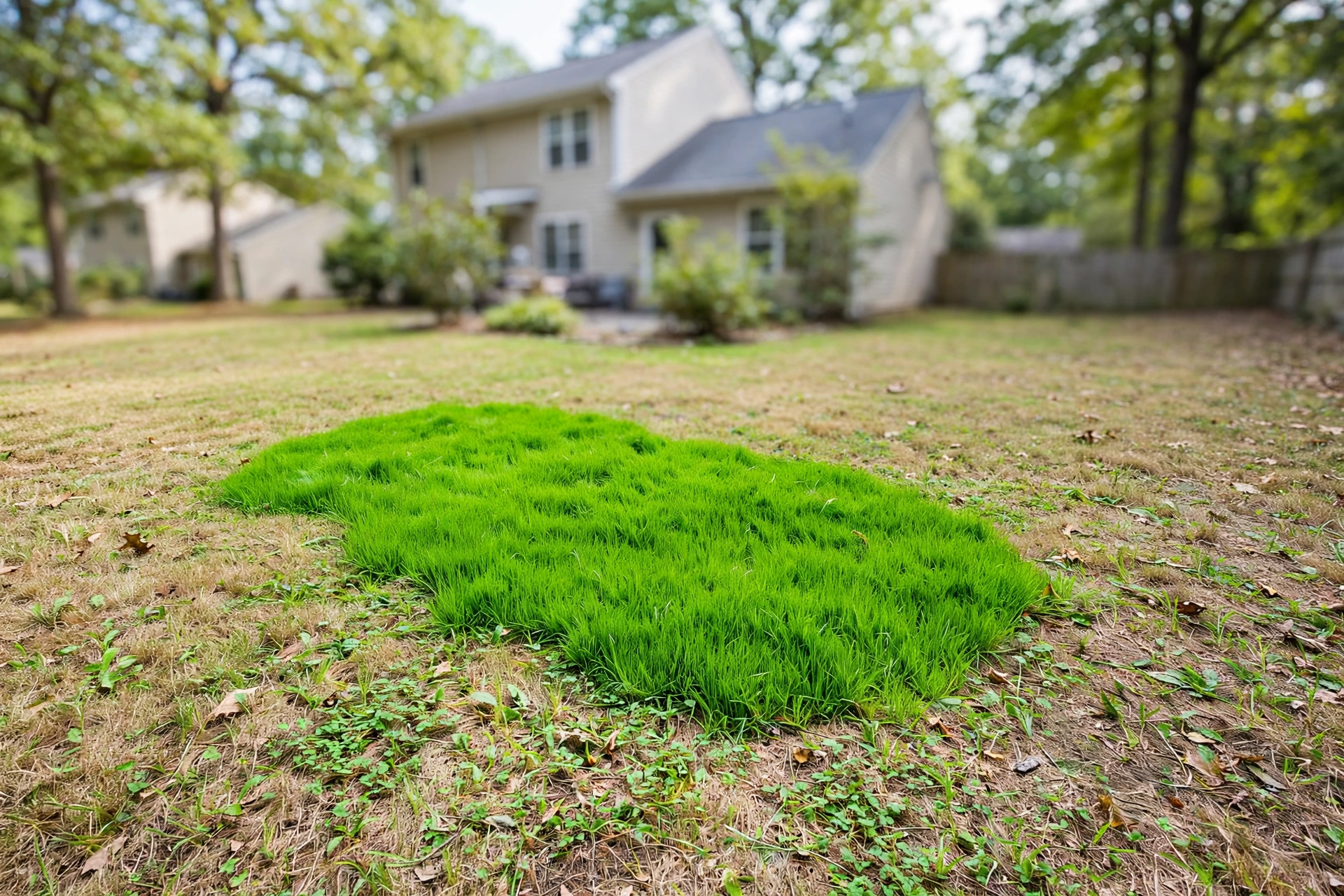
Why Grass Grows Greener Over a Septic Tank or Drain Field
To understand the green patch, it helps to understand what happens below the surface. A septic system does far more than hold wastewater. It treats it in stages, and the soil is the final stage of that treatment. When the system is working as it should, the grass above is simply enjoying the side effects.
How a Healthy Septic System Feeds the Grass Above It
Everything that goes down your drains ends up in the septic tank, where solids settle and lighter material floats. The liquid in the middle, called effluent, flows out to the drain field through a network of buried pipes. From there it trickles down through gravel and soil, where tiny organisms break down what remains and the soil filters the water before it rejoins the groundwater.
That effluent is rich in nitrogen and phosphorus. Those are the same two nutrients that sit at the heart of most lawn fertilizers, and grass responds to them eagerly. As treated wastewater moves through the soil, grass roots pick up the moisture and nutrients on the way. The grass above a drain field therefore gets a regular supply of water and plant food that the rest of the lawn does not get, and it shows.
This is why a slightly greener area over the drain field is expected in many homes. The system is designed to release liquid into the soil there. The grass is not stealing anything or hiding a problem. It is simply growing where the soil stays a little more moist and a little more fertile than the surrounding ground.
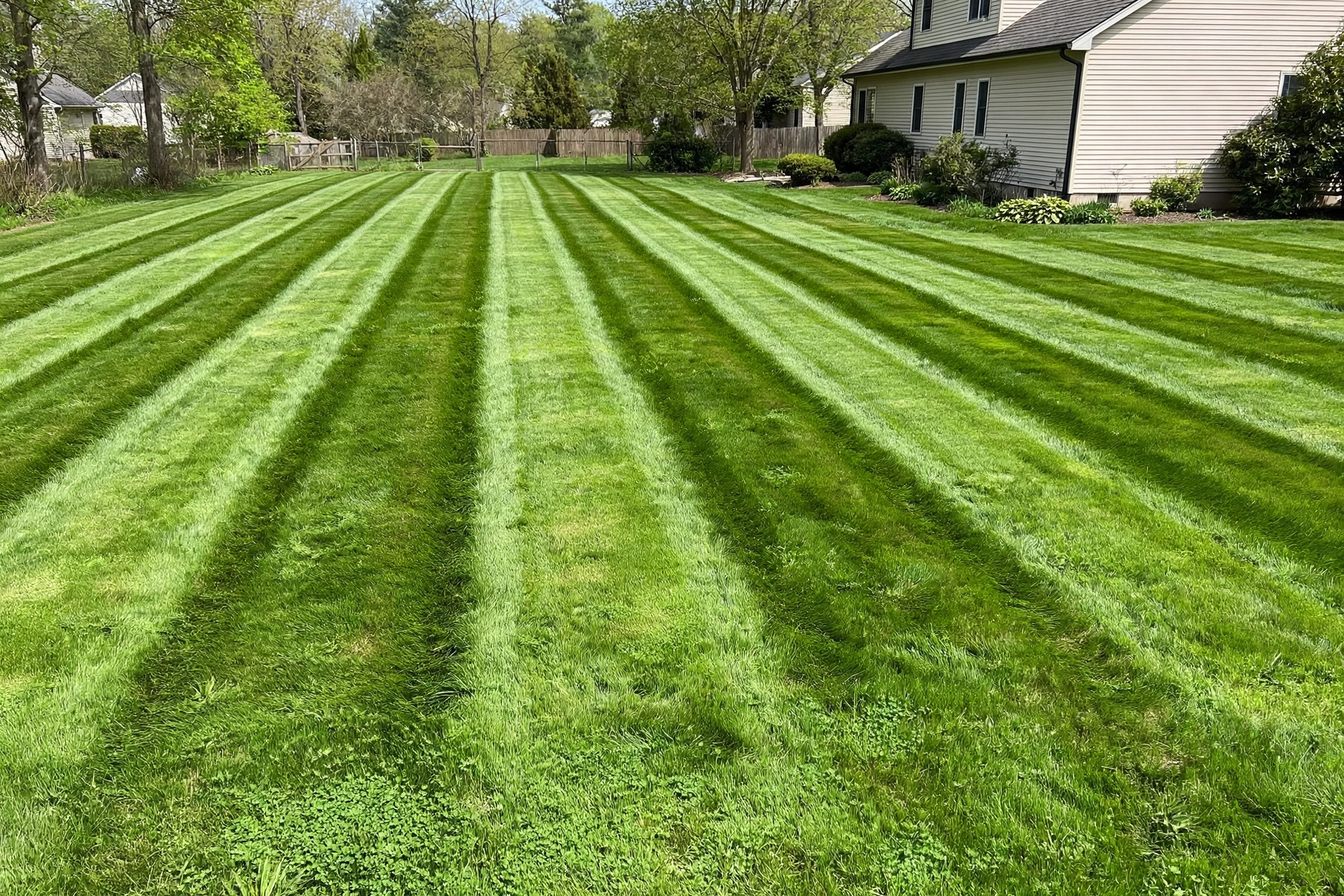
Is a Bright Green Patch Normal or a Warning Sign
The honest answer is that it can be either, and the grass alone cannot settle the question. What matters is the context around the patch. A green patch that has been there for years, looks the same every summer, and comes with no other symptoms is very different from a patch that appeared suddenly and keeps getting brighter while the drains in your house slow down. Learning to read those differences saves you from worrying over nothing and from missing a real problem.
Signs the Green Patch Is Probably Normal
A green patch is most likely harmless when the grass is only a little greener than the rest of the lawn and the difference is steady rather than sudden. If you have lived in the home for a while, think back to previous summers. If the same area has always greened up first and stayed green longest, that is simply your yard and your system working the way they always have.
The ground is another good clue. Step onto the green patch and press down with your foot. In a normal situation, the ground feels firm and dry, just like the rest of the yard. The grass is greener because its roots reach moisture and nutrients deeper down, not because wastewater is pooling at the surface. There is no smell, no standing water, and no change in how your drains behave inside the house.
Signs the Green Patch Is a Warning
The picture changes when the green patch comes with other symptoms. The most important one is wet or spongy ground. If the grass over the septic area feels soft underfoot, sinks slightly when you step on it, or stays damp days after the last rain, the soil below may be saturated. That means wastewater is reaching the surface instead of filtering down through the soil, and that is one of the clearest early signs of a drain field under stress.
Smell is another warning that should never be ignored. A healthy drain field does not produce a sewage odor in the yard. If you notice a faint sewage smell near the green patch, especially on warm or still days, take it seriously. Odors mean that wastewater is closer to the surface than it should be, or that gases are escaping somewhere they should not. To understand the different causes of outdoor septic smells and how to track them down, read our guide on why your yard smells like sewage.
A sudden change in the patch is also worth attention. If a bright green area appears in a spot that was ordinary last year, grows noticeably over a few weeks, or becomes far brighter than the rest of the lawn in a short time, something underground may have changed. A new leak, a pipe that has shifted, or a drain field that has started to clog can all push extra effluent toward the surface in one place.
Watch for standing water as well. Puddles or persistently wet spots over the drain field, especially when the rest of the yard is dry, suggest that the soil can no longer absorb the volume of wastewater leaving the house. Our guide on standing water over the drain field explains what that looks like and what steps to take next.
Bright Green Grass Over the Tank Versus Over the Drain Field
Where the patch sits is one of the most useful details you can note, because the tank and the drain field are supposed to behave differently. Grass over the drain field has a built in reason to be green. Grass over the tank does not, and a bright patch there carries a little more weight.
When the greenest grass spreads across the drain field area, the system is likely doing exactly what it was built to do. Effluent leaves the tank, spreads through the pipes, and filters down through the soil. The grass above benefits along the way. As long as the ground is firm and there is no odor, this kind of greening is part of normal life with a septic system.
When the brightest patch sits directly over the tank, there are two main possibilities. The first is simple and harmless. A shallow buried tank lets warmth and moisture reach the surface more easily, and the thin soil above it dries out faster in some seasons and stays fed in others. Some homeowners see a neat rectangular patch of green that matches the shape of the tank lid or the tank itself, and it stays the same year after year.
The second possibility is a leak. A tank can develop cracks over time, particularly an older concrete tank, and a damaged inlet or outlet baffle can let wastewater escape where it should not. A leaking tank feeds the grass directly above it with nutrient rich liquid, and the patch that results tends to be intense, localized, and sometimes fast growing. A tank that is overflowing because it has not been pumped can cause a similar effect.
You do not need to decide which one it is by looking at the grass. You need to look at the whole picture. A patch over the tank with firm dry ground and no odor is far less concerning than the same patch with soft soil or a smell. If the patch over the tank is new, growing, or paired with any other symptom, treat it as a reason to get the system checked rather than a reason to panic.
How a Green Patch Relates to Leaks
A leak is one of the first things homeowners worry about when they see bright green grass, and it is a fair concern. Wastewater is an excellent fertilizer, and any place it escapes underground will often announce itself with unusually lush growth. But not every green patch means a leak, and the way to tell the difference is to think about where the liquid is coming from and how it behaves.
A leaking tank usually produces a patch that is small, round or rectangular, and centered over the tank. The grass there may grow noticeably faster than the surrounding lawn, so you may find yourself mowing that spot more often. If the leak is steady, the patch may stay green through dry weather when the rest of the yard fades. The ground may feel slightly damp even when it has not rained.
A leaking or broken pipe produces a different pattern. A crack in a drain line often shows up as a green stripe that is brighter than the other stripes, or as a green patch along one line while the rest of the field looks normal. A broken pipe near the house can create a green patch closer to the home, and it may come with damp soil or a faint odor near the foundation. A damaged baffle inside the tank can also send solids into the drain field, which clogs the soil over time and pushes liquid upward.
How Overloading the System Creates Green Patches
A septic system is built to handle a certain amount of water each day, and that amount is based on the size of the household it was designed for. When the volume of water going in regularly exceeds what the soil can absorb, the drain field becomes saturated. Effluent that cannot filter downward starts to rise, and the grass above responds with a flush of bright green growth. Overloading is one of the most common reasons a green patch appears in a home where nothing was wrong before.
Overloading often builds up gradually rather than arriving all at once. A household grows, guests stay for a long visit, or a new high water use appliance is added, and the system that once kept up begins to fall behind. The drain field never quite dries out between uses, the soil stays wet, and the grass over the field grows faster and greener than the rest of the lawn. Because the change is slow, many homeowners do not connect the green patch to the extra water use until other symptoms appear.
Leaks inside the house are a frequent and overlooked source of extra water. A running toilet can send a surprising amount of water into the septic system every single day, and it does so quietly, often for weeks before anyone notices. A dripping faucet, a leaking water softener, or a washing machine that runs many extra loads all add to the same problem. Fixing household leaks is one of the simplest ways to reduce the load on your system, and it often costs nothing more than a flapper or a washer.
Heavy rain can overload a system too, even when the household is using water normally. When the ground is already soaked, the soil in the drain field has little room left to absorb effluent. A long wet spell can leave the field saturated for days, and the grass above may surge with growth as wastewater lingers near the surface. If you notice green patches or wet spots after a storm, our guide to septic problems after heavy rain explains how to tell storm related stress from a deeper failure.
Skipping regular pumping adds to the problem from the other direction. When a tank is not pumped, solids build up and eventually flow out into the drain field, where they clog the soil and the pipes. Clogged soil absorbs water far more slowly, so effluent stays near the surface longer and the grass above grows greener. If you are unsure what happens when pumping is put off for too long, our guide on what happens if you never pump your septic tank walks through the damage that neglected maintenance can cause.
Green Grass and Drain Field Failure
It is important to be honest about what a bright green patch can mean, because it is genuinely one of the early signs of drain field failure. The United States Environmental Protection Agency includes bright green, spongy grass over the tank or drain field among the signs that a system may be failing. That does not mean every green patch is a failure. It means the sign is worth understanding, because catching a problem early is far cheaper and far easier than dealing with a full failure later.
A drain field fails when the soil can no longer absorb and treat the wastewater it receives. This usually happens for a combination of reasons rather than a single event. Solids from an unpumped tank clog the soil. Years of heavy water use wear down the soil’s ability to absorb. A layer of biological material builds up where effluent meets soil, and over time that layer thickens until water passes through it too slowly. Once the soil is clogged, effluent has nowhere to go but up.
The green patch is often one of the first visible signs, and it appears before the more obvious ones. At this stage the ground may still feel fairly firm, the drains in the house may still work, and there may be no odor at all. The only clue is grass that grows faster and greener than it should. That is why it pays to notice changes in your lawn rather than dismissing them. A patch that keeps getting brighter over several months is a pattern worth watching even if nothing else seems wrong.
What to Check When You Notice a Green Patch
Seeing a bright green patch does not mean you should panic, but it does mean you should spend a little time looking closer. A careful check takes less than half an hour, costs nothing, and gives you the information you need to decide what to do next. Work through the checks below in order, and write down what you find so you can describe it clearly if you end up calling a professional.
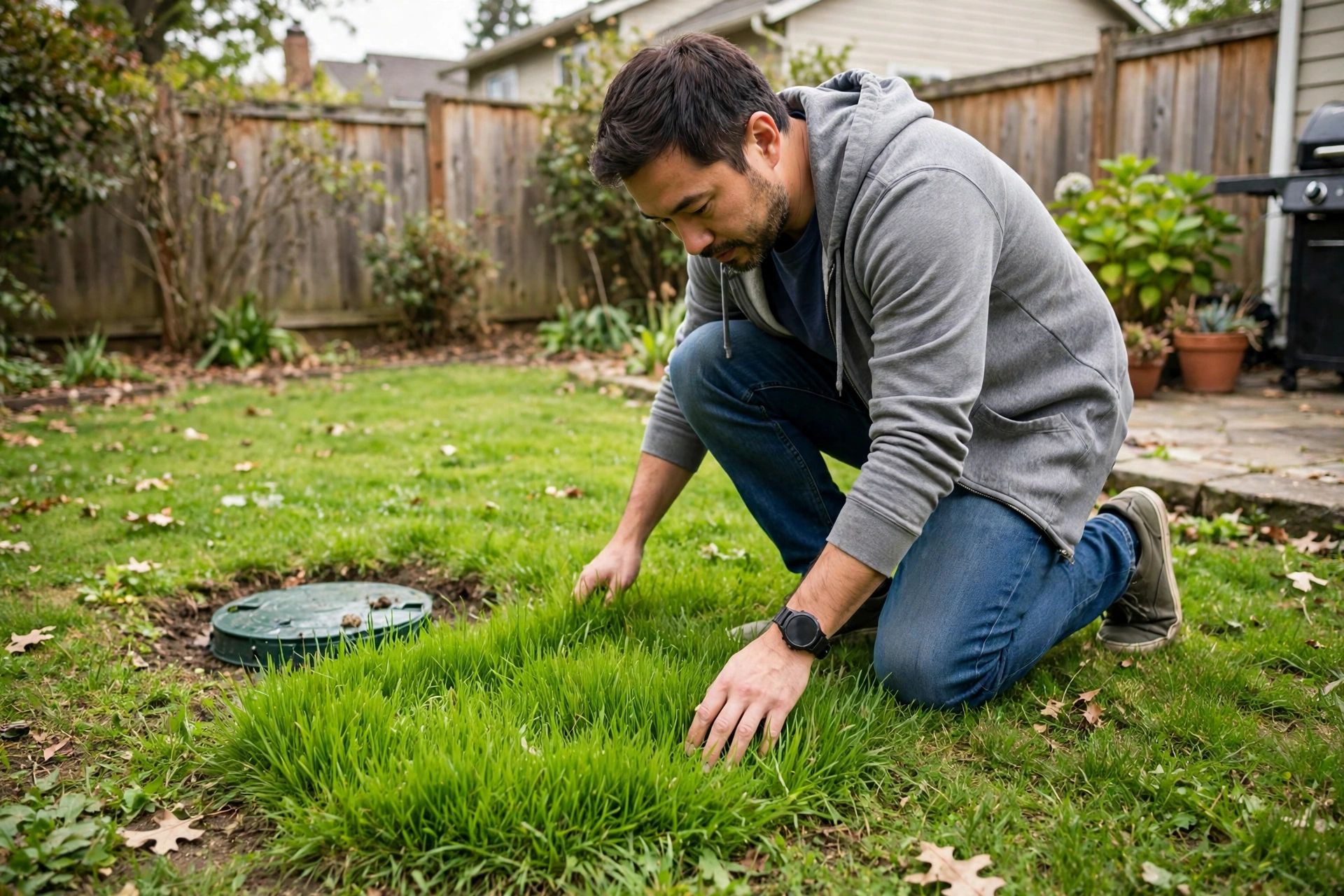
Start With the Patch Itself
Look at the shape and size of the green area first. Is it a broad patch spread across the drain field, neat stripes following the drain lines, or a small intense spot in one place? Compare it with the rest of the lawn and ask yourself whether the difference is slight or dramatic. A slight difference spread over a wide area is normal. A dramatic difference concentrated in one spot is more concerning.
Then think about timing. Has this patch been there for years, or did it appear recently? Did it show up after a period of heavy rain, after guests visited, or after you started using more water? A patch that has been stable for a long time is far less worrying than one that appeared suddenly or keeps growing. If you take a photo now and another in two or three weeks, the comparison will tell you whether the patch is stable or spreading.
Next, test the ground. Walk onto the patch and press down firmly with your foot. Healthy ground over a working drain field feels solid and dry, even if the grass is green. If the soil feels soft, spongy, or wet, or if your foot sinks slightly, make a note of it. Check the ground again a few days after the last rain. If it is still damp while the rest of the yard is dry, that is a meaningful clue.
Check for Smell and Standing Water
Stand near the green patch on a warm, still day and take a slow breath. A working system should not produce any sewage odor in the yard. If you smell anything unpleasant near the patch, that is a warning sign worth taking seriously, even if the smell is faint and only noticeable up close.
Check Inside the House
What happens indoors is just as informative as what you see in the yard. Run the taps and flush the toilets, and watch how quickly the water drains. Slow drains throughout the house, rather than in a single fixture, can point to a system problem rather than a simple clog. Listen for gurgling sounds from drains or toilets, which can mean air is trapped in the system because wastewater is not flowing freely.
Check Your Water Use and Maintenance Records
Think about how much water your household has been using lately. Have you had guests, done extra laundry, or left a toilet running? Have you noticed any fixture that leaks or runs longer than it should? Extra water use is a common and fixable cause of a green patch, and it is worth ruling out before assuming the worst.
What Not to Do When You See a Green Patch
It is natural to want to fix a strange green patch quickly, but some of the most common reactions make things worse. The first mistake is to ignore it completely. A green patch on its own may be harmless, but a green patch that is growing, spreading, or paired with other symptoms is information you should act on. Waiting until sewage backs up into the house turns a manageable inspection into an emergency repair.
The opposite mistake is to panic and dig. Never dig into the drain field or open the septic tank yourself. A septic tank contains gases that can be dangerous, and an open tank is a serious safety hazard for people and pets. Digging can also damage pipes, crush the drain lines, and disturb the soil that treats your wastewater. Locating and opening a tank is work for a professional with the right equipment.
When to Call a Professional
Most green patches do not need a professional visit, but some do, and knowing where the line sits saves you from guessing. Call a licensed septic professional promptly if the green patch comes with soggy or spongy ground, a sewage smell, or standing water. Call as well if the patch appeared suddenly and keeps growing, if it sits directly over the tank and looks intense, or if it appears alongside slow drains, gurgling pipes, or any sign of sewage backing up.
If the professional finds a problem, the fix depends on the cause. A full tank needs pumping. A broken pipe needs repair. A clogged field may need resting, which means reducing water use and giving the soil time to recover, or it may need more extensive work. A professional can explain the options honestly and help you choose the right one. For general guidance on septic care and what a properly working system looks like, the EPA septic systems page is a reliable place to start.
How to Prevent Green Patch Problems
The best way to deal with a bright green patch is to keep your system healthy so that the patch stays a harmless quirk rather than a warning. Prevention is not complicated, and it mostly comes down to regular maintenance and sensible water use.
Have the tank pumped on a regular schedule. For most households, that means every few years, though the right interval depends on the size of the tank, the size of the household, and how much water you use. A professional can tell you how often your tank needs pumping based on the sludge and scum levels they measure. Regular pumping is the single most effective thing you can do to protect your drain field, because it keeps solids out of the soil where they do the most damage.
Fix leaks quickly. A running toilet or a dripping faucet may seem like a small thing, but the water it wastes goes straight into your septic system day after day. Repairing a leak promptly is one of the cheapest ways to protect your drain field, and it often stops a green patch from getting worse.
Frequently Asked Questions
Is bright green grass over my septic tank always a bad sign?
No. In many homes, grass over the drain field is a little greener than the rest of the lawn, and that is normal. Wastewater contains nitrogen and phosphorus, which feed grass roots as it filters through the soil. The patch becomes a concern when it is dramatically brighter than the rest of the lawn, appears suddenly, sits directly over the tank, or comes with soggy ground, a sewage smell, or slow drains.
Why is the grass green only in stripes?
Stripes follow the buried drain lines. Each pipe releases effluent along its length, so the grass directly above each line gets more moisture and nutrients than the grass between the lines. This pattern is common and usually means the system is distributing water evenly. A single stripe that is far brighter than the others is more likely to signal a problem with that one line.
Does green grass mean my septic tank is leaking?
Not necessarily. Green grass over the drain field is expected. A leak is more likely when the brightest patch sits directly over the tank, is small and intense, and comes with damp soil or an odor. Even then, a shallow buried tank can produce a green patch without any leak. The way to tell the difference is to check the ground, look for other symptoms, and have the tank inspected if you are unsure.
How do I know if my drain field is failing?
A failing drain field usually shows several signs together. The grass over it becomes bright green and spongy. Wet spots or standing water appear and do not dry out. A sewage smell develops. Drains in the house slow down, toilets gurgle, and sewage may back up. Any one of these signs deserves attention. Several together mean the system needs a professional inspection.
Is it safe to let children play on the green patch?
If the ground is firm and dry and there is no smell, the area is generally fine for normal yard use. If the ground is soggy, wet, or smells of sewage, keep children and pets away until a professional has checked the system. Wastewater that reaches the surface can carry bacteria and other contaminants, so it is better to be cautious.
The Bottom Line
A bright green grass patch over septic tank or drain field areas is one of those sights that can mean very little or quite a lot, and the difference lies in the details. A broad area of slightly greener grass over the drain field, with firm dry ground and no smell, is usually just your system doing its job. The grass is enjoying the moisture and nutrients that filter through the soil, and there is nothing to fix.
The picture changes when the patch is intense, sudden, or paired with other symptoms. Soggy ground, a sewage smell, standing water, slow drains, or a patch that keeps growing all point to a system under stress. Those signs deserve attention, not panic, and the right response is a careful check followed by a professional inspection if anything looks wrong.
Pay attention to your yard. Take a photo when you first notice a change, check the ground and the drains, and keep up with pumping and sensible water use. Your lawn is one of the earliest and most honest indicators of how your septic system is doing. Listening to it early is the simplest way to catch a small problem before it becomes an expensive one.
Greetings Glows Team is dedicated to creating meaningful, helpful, and thoughtfully curated content for everyday inspiration and special moments.
What We Focus On:
Well-researched and reader-friendly articles.
Meaningful greetings, blessings, prayers, and inspirational messages.
Carefully curated ideas for everyday life and special occasions.
Clear, helpful, and engaging information.
Consistent quality and attention to detail in every publication.
Our goal is simple: to make every visit worthwhile with content that inspires, informs, and brings a little more positivity to your day.