Every home has to send wastewater somewhere, but not every home sends it to the same place. Some homes connect to a public sewer system. Others treat wastewater right on the property with a septic system. If you just bought a house, inherited one, or have lived in yours for years without ever thinking about it, you may honestly not know which one you have. That is more common than most people realize, and it is worth finding out. The answer affects your monthly bills, your maintenance responsibilities, and what you should do when a drain backs up or a smell appears.
The good news is that you can usually figure it out in under an hour, without digging anything up and without calling a professional first. A few simple checks, done in the right order, will point you clearly in one direction or the other. This guide walks through those checks from the easiest to the most certain, so you can stop guessing and start taking care of your system the right way.
Septic and Sewer in Plain Terms
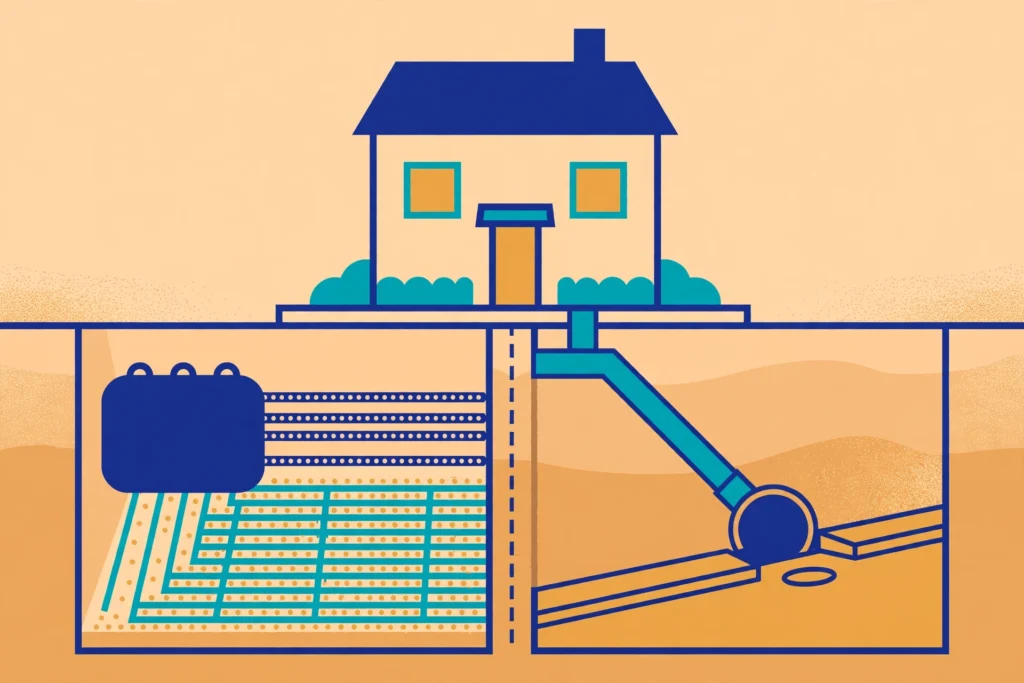
Before you start checking, it helps to know what you are looking for. A public sewer system is a shared network. Wastewater leaves your home through a pipe, joins a larger main under the street, and travels to a treatment plant run by your city or utility. You pay for that service, usually as a monthly or quarterly sewer charge on your utility bill.
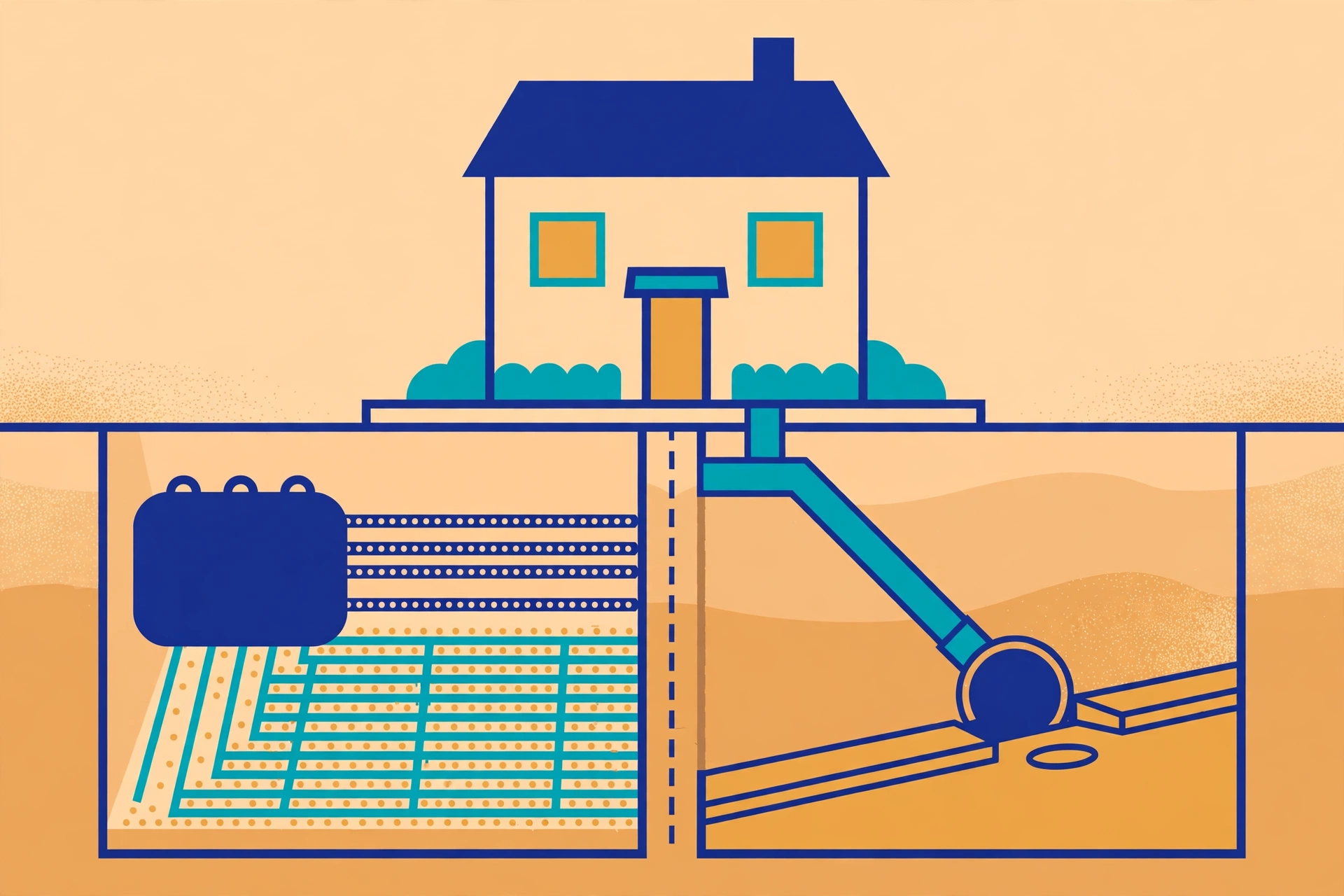
A septic system is private and on site. Wastewater leaves your home and flows into a buried tank on your own property. Solids settle in the tank, and the remaining liquid flows out to a drainfield, where soil filters it further. The U.S. Environmental Protection Agency describes a typical system as having these two main parts, a septic tank and a drainfield. You do not pay a sewer utility for treatment, but you are responsible for keeping the system working, including regular inspections and pumping.
Neither setup is better in every situation. Sewer service is convenient because someone else handles treatment, but it comes with an ongoing bill and you have little control over rate changes. A septic system gives you independence and no sewer bill, but it asks more of you as a homeowner. Knowing which one you have is the first step to handling either one well.
Start With Your Utility Bill
The fastest check, and the one worth doing first, is your water or utility bill. Pull up a recent bill and look at the line items, not just the total. If you see a charge labeled for sewer or wastewater service, your home is almost certainly connected to a public sewer. That charge is the utility billing you for treating your wastewater, and it only appears when you are on their system.
If your bill shows water service but no sewer charge at all, that points toward septic. The Environmental Protection Agency notes that homes with septic systems typically show no charge for wastewater or sewer services, or they receive no sewer bill whatsoever. Some homeowners on septic do not receive a utility bill at all, because they also get their water from a private well. In that case the absence of any bill is itself a strong clue.
There are a couple of wrinkles to watch for. In some areas, sewer charges appear on a property tax bill rather than a monthly utility bill, so check that document too if your utility bill is unclear. Also, if you are buying a home and do not yet have bills in your name, ask the seller for a recent bill. It is a reasonable request during a purchase, and it can save you from an unpleasant surprise later. A single bill will not prove everything on its own, but it will usually narrow the answer down fast.

Check Where Your Water Comes From
Your water source is the next useful clue, because water and wastewater often travel together in terms of infrastructure. If your home uses a private well, there is a strong chance it also uses a septic system. Homes that are beyond the reach of city water mains are often beyond the reach of city sewer lines too, so the two private systems commonly go together.
You can check this in a few ways. Look for a wellhead in your yard, usually a capped pipe sticking out of the ground, or check whether your home has a water meter. A home on city water normally has a meter where the line enters the property. A home on a well typically does not. Your home inspection report, if you have one, should also state whether the water supply is public or private.
This clue is strong but not absolute. Some homes use city water and still have a septic system, especially in neighborhoods where sewer lines were never extended even though water lines were. So treat well water as a strong hint toward septic, not as final proof. Combine it with the bill check above, and the picture usually becomes much clearer.
Walk Your Yard and Look for Physical Clues
Your yard can tell you a lot, because a septic system leaves visible traces and a sewer connection mostly does not. Take a slow walk around your property, especially the area between your house and the street and the flatter, open parts of the lawn.
On a septic property, look for a round or rectangular lid sitting flush with the grass or slightly raised. That lid is an access point to the tank, sometimes called a riser. You may also notice a short vent pipe in the yard, a patch of grass that stays greener than the rest of the lawn, or a large flat grassy area that could be the drainfield. These signs are not always obvious, since lids can be buried under a thin layer of soil or hidden by landscaping, but they are worth looking for.
On a sewer property, you will generally find a cleanout instead. That is usually a capped pipe near the house or near the property line, used to access the lateral line that runs to the street. What you will not find is a tank lid or a drainfield, because there is no on-site treatment happening. If you find a cleanout and no sign of a tank anywhere, sewer becomes the more likely answer.
One caution here is worth keeping in mind. Do not try to open a tank lid or dig around it yourself. Lids can be heavy, and the area around a tank is not a place to explore without experience. Looking is enough for this step. If you find something that looks like a tank lid, note where it is and move on to the records check below.
Consider Your Location and the Age of Your Home
Location is another helpful piece of context. Homes in cities, towns, and dense subdivisions are usually connected to public sewer, because the infrastructure is already there and serving many homes close together makes sense. Homes in rural areas, or on larger lots with wide gaps between neighbors, are far more likely to be on septic. If your street is a country road with a handful of houses spread out, septic is a reasonable first guess.
The age of your home can matter too. If your house was built before the local sewer system reached your area, it may still be running on its original septic system even if neighbors who built later are on sewer. On the other hand, a home built in a newer subdivision was very likely connected to sewer from the start, since that is the standard for new development in served areas.
Ask your neighbors as well. Homes on the same street were often built around the same time and connected the same way. If everyone on your street is on septic, yours probably is too. If everyone pays a sewer bill, that tells you something as well. Neighbors are often happy to share what they know, especially if they went through the same question when they moved in. For a broader overview of settling into a home with a septic system, our first time homeowner septic system guide covers the basics new owners most often need.
Check Your Property Records
When the quick clues point in different directions, or you want a definite answer, go to the records. This is the step that settles most remaining doubt, and it costs nothing but a little time.
Start with the paperwork you already have. Your deed, your home inspection report, and any seller disclosures may name the wastewater system directly. If you bought the home recently, look through the closing documents for a septic inspection report or a note about a sewer connection. Builders and previous owners sometimes leave behind an as built drawing, which is a simple sketch showing where the tank and drainfield sit on the lot. That drawing is gold if you can find it, because it answers both what system you have and where it is.
If your own paperwork does not say, contact your local permitting authority, usually the county health department or environmental health office. That office typically holds septic permits, inspection reports, and installation records for properties in its area. The Environmental Protection Agency suggests this as a reliable next step, and notes that it does not keep a national database of septic systems, so the answer lives at the local level. Be prepared for the possibility that very old systems have incomplete records, but even a partial record is often enough to confirm the system type.

What to Do If You Are Still Not Sure
Sometimes the clues conflict. Maybe you have city water but no sewer charge, or you found something in the yard that could be a tank lid but could also be something else. When that happens, it is time to bring in a professional rather than keep guessing.
A septic professional or a plumber can locate your system and confirm what you have. They may use a camera inspection to follow your main line and see where it actually goes, or they may use a dye test, where harmless dye flushed down a toilet shows up in the tank or drainfield if one exists. Either method gives you a clear answer, and it also gives you useful information for the future, such as the location of your tank if you do have one. Knowing where the tank sits matters a great deal later, and our guide on how deep a septic tank is buried explains what to expect when it comes time to find it for service.
If you are in the middle of buying a home, make this check part of your due diligence before closing. A general home inspection does not always cover septic systems in depth, so a dedicated septic inspection is worth arranging when the system type is unclear. Finding out after closing that you own a septic system you did not budget for is an avoidable surprise.
Why Knowing Matters, and What Comes Next
Once you know which system you have, your responsibilities become clear. If you are on public sewer, your main job is to pay the bill, avoid flushing things that do not belong in a sewer, and call your utility or a plumber when a problem appears. The treatment side is handled for you.
If you are on septic, you take on a maintenance routine. The system needs periodic inspection and pumping, and what goes down your drains matters more, because everything you flush ends up in your own tank and drainfield. The exact schedule depends on your household size, tank size, and how much water you use. Our septic tank pumping frequency chart by household size gives you a practical starting point for planning that routine, so you are not guessing at intervals.
Either way, the answer you just found is worth writing down and keeping with your other home records. Note the system type, the date you confirmed it, and where you found the proof, whether that was a bill, a permit, or a professional inspection. The next time a drain problem comes up, or the next time you sell the home, you will be glad you did. And if you ever need a refresher on how these systems work and how to care for them, the U.S. Environmental Protection Agency septic systems pages at epa.gov/septic are a solid, authoritative place to start.
Quick Recap
Check your utility bill first. A sewer charge means public sewer, and no sewer charge points toward septic. Then look at your water source, since a private well usually goes with a septic system. Walk your yard for a tank lid or drainfield, or for a cleanout that suggests sewer. Consider your location, your neighbors, and the age of your home. Finally, confirm it all in your property records or with your county health department. Most homeowners will have a confident answer after the first two or three steps, and the records check will settle the rest.
Finding out whether your house has septic or sewer is a small job with a big payoff. It turns a mystery under your lawn into a known part of your home, and it lets you maintain it properly from here on out. Take the hour, run through the checks, and write the answer down. Your future self will thank you.
Greetings Glows Team is dedicated to creating meaningful, helpful, and thoughtfully curated content for everyday inspiration and special moments.
What We Focus On:
Well-researched and reader-friendly articles.
Meaningful greetings, blessings, prayers, and inspirational messages.
Carefully curated ideas for everyday life and special occasions.
Clear, helpful, and engaging information.
Consistent quality and attention to detail in every publication.
Our goal is simple: to make every visit worthwhile with content that inspires, informs, and brings a little more positivity to your day.